What Do Irizar Coach Names Mean? (i4, i6, i8 and the Electric ie)
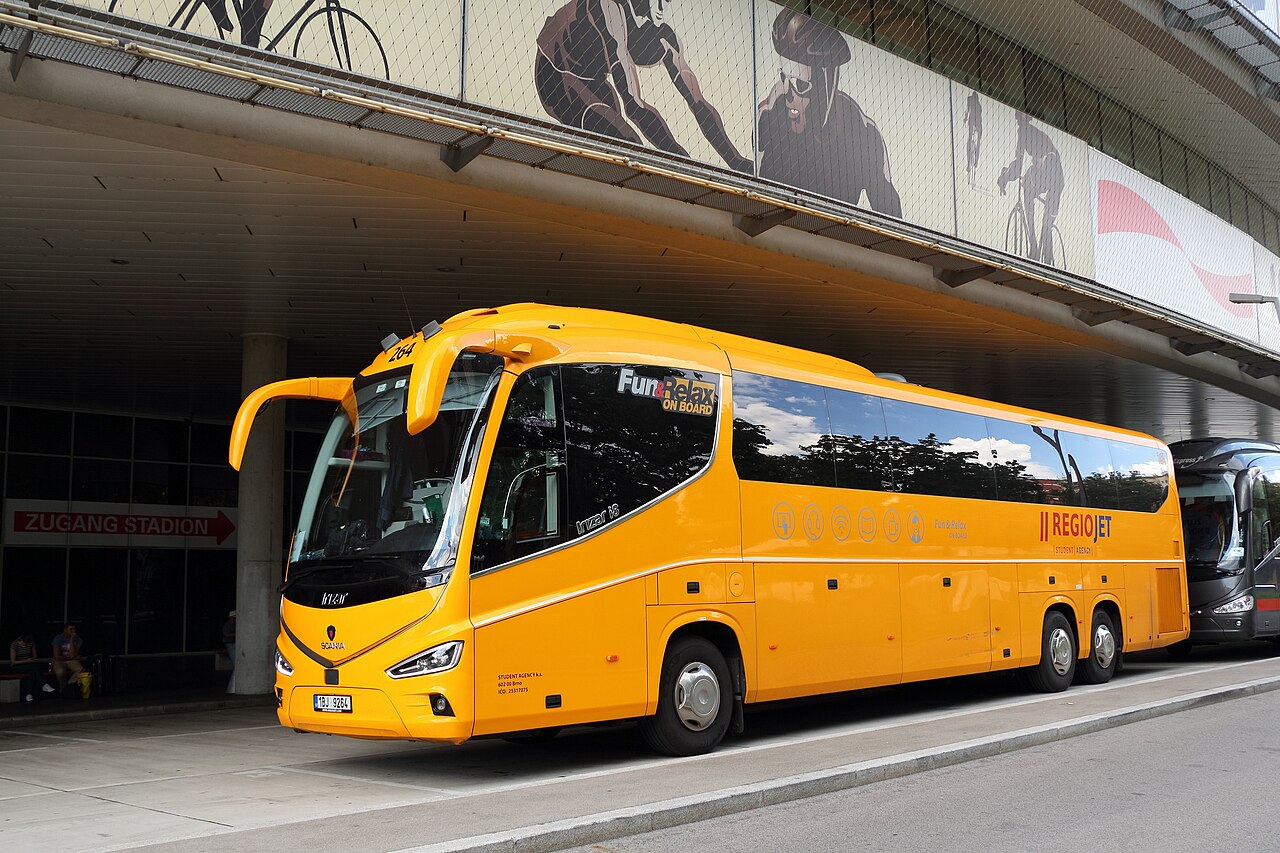
Spot a sleek European coach with a lower-case i and a number on the back — i4, i6, i8 — and you're looking at an Irizar, one of the most successful coach names most people can't place. It's Spanish, it's Basque, and unlike a lot of badges, its numbers actually mean something.
The good news for anyone browsing a catalog: the Irizar range is a simple ladder. Learn what the number stands for and you can read the coach's whole personality before you climb aboard — which matters more than you'd think once you're driving one in Proton Bus Simulator.
From a blacksmith's forge to a workers' cooperative
Irizar is not a modern start-up. It began in 1889, when José Francisco Irizar, a blacksmith in the village of Ormaiztegi in the Basque Country, started building horse-drawn wooden carts. The company is older than the motor car it would eventually body.
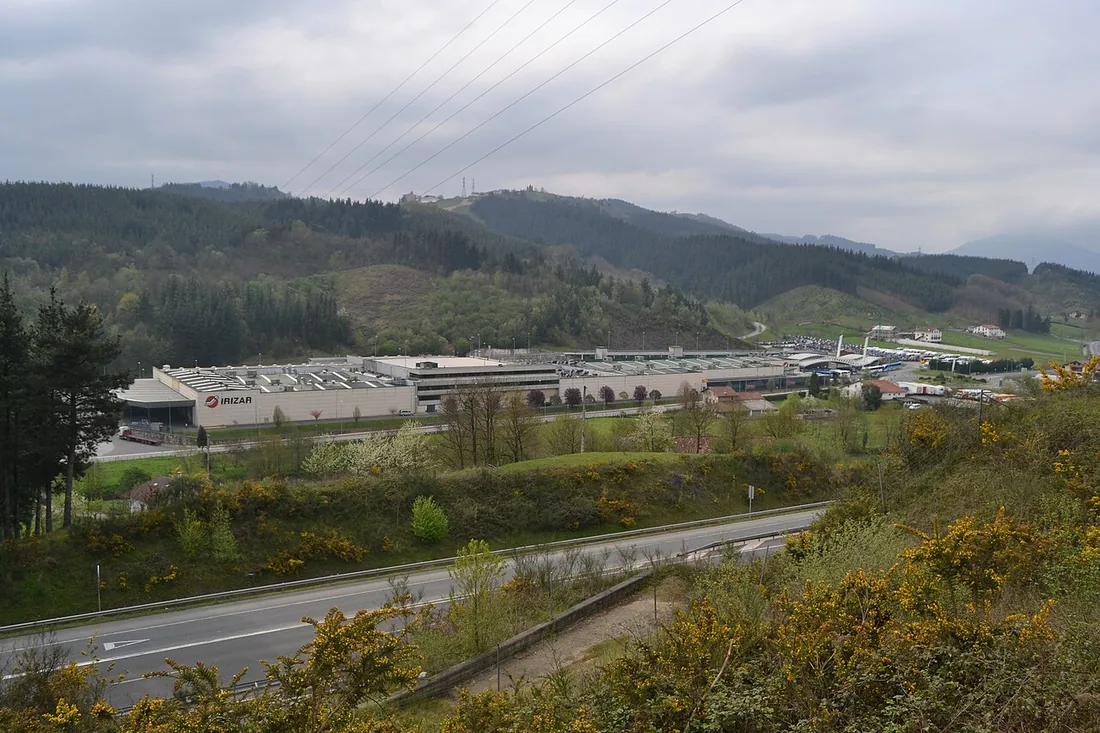
The ownership story is the unusual part. At the end of the 1950s the Irizar family sold the business to its own workforce, and in 1963 it was formally constituted as a cooperative with 60 members — later joining the Mondragón Corporation, the Basque cooperative federation. It stayed there for decades. Then, in May 2008, the members voted to cut their links with Mondragón and go it alone.
That is worth pausing on. The coach you are looking at is not built by a division of a multinational. It is built by a firm its own employees bought, in a Pyrenean village of a few hundred people.
The "i" ladder: what the number means
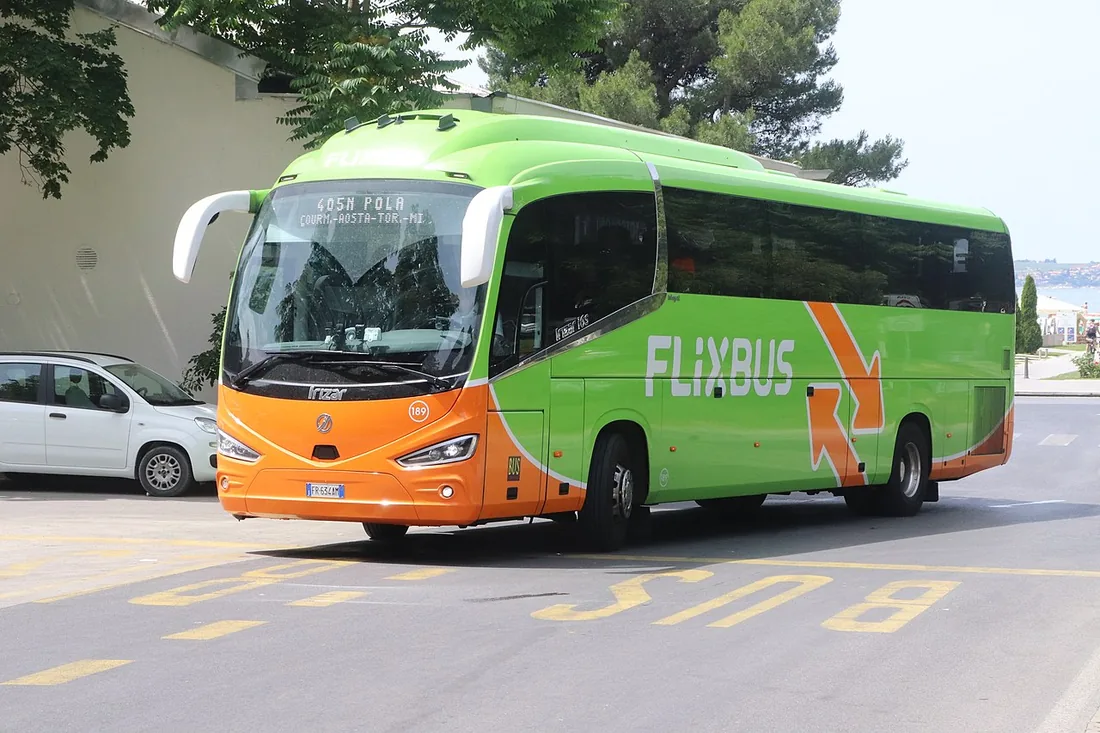
Here is the key. Irizar's modern coaches all share the same naming shape — a lower-case i for Irizar, followed by a number — and the number is a ladder of ambition. The higher the number, the more premium and long-distance the coach; the lower the number, the more urban and accessible it gets.
Walk up the range and it reads cleanly:
| Model | Segment |
|---|---|
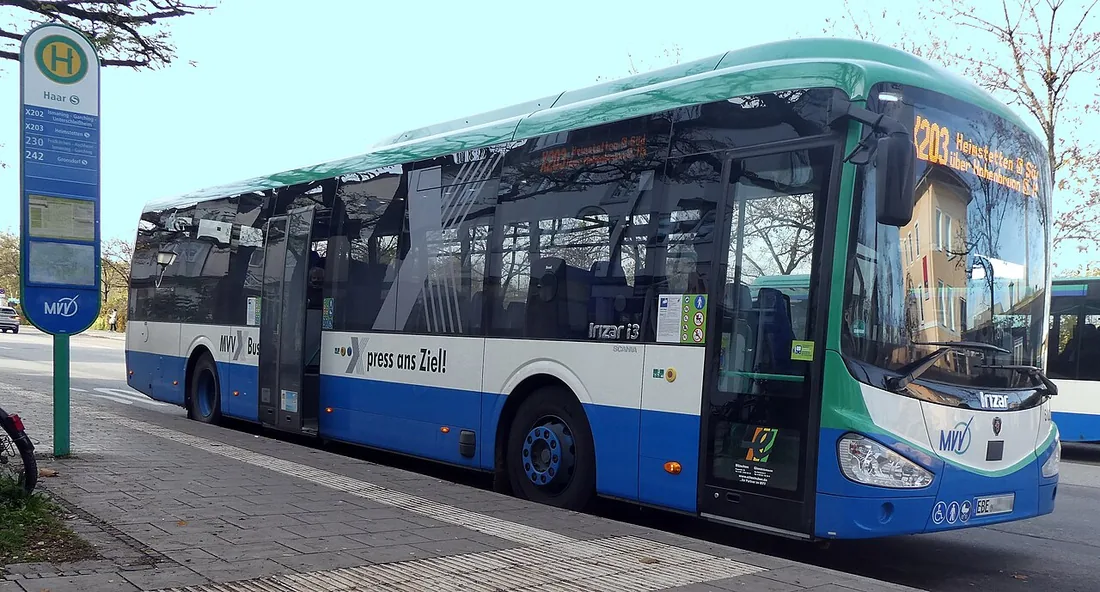
| i3 / i3le | Low-entry urban and suburban bus (the "le" means low entry), from about 11 to 15 m, built for accessibility |
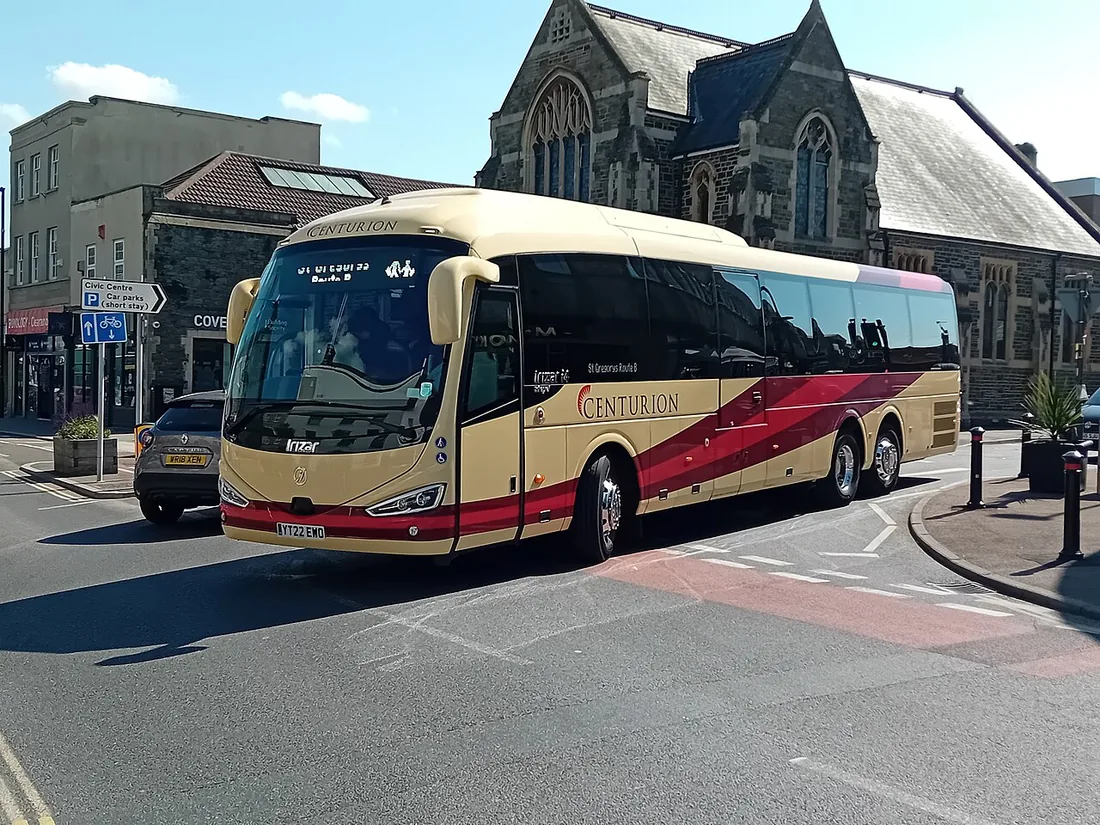
| i4 | Medium-distance interurban and commuter coach (school, metropolitan, business) |
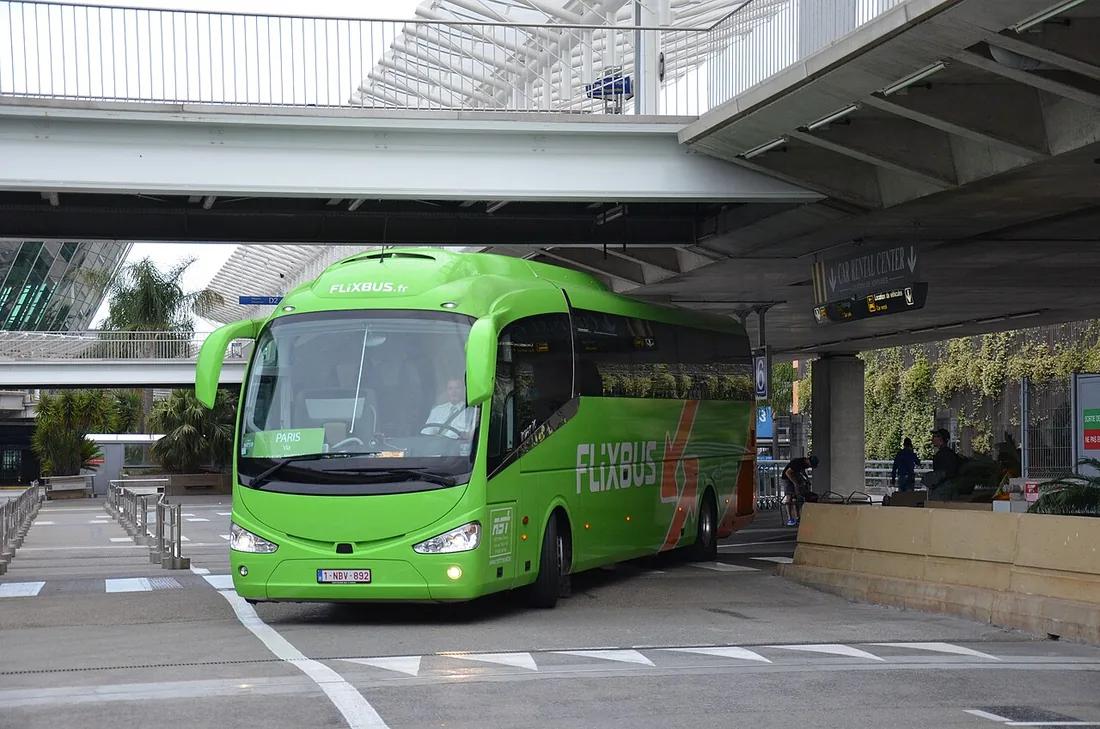
| i6 | The multi-purpose coach — regular routes and occasional touring |
| i6S | A higher-spec i6 (the "S") for medium and long-distance work |
| i8 | The flagship: a premium long-distance touring coach |
So the badge is a spec sheet. An i8 is a tall, luxurious road cruiser for the motorway; an i3 is a low-floor city machine you can walk straight onto. The i4 and i6 fill the middle, and a trailing letter fine-tunes it — S for a plusher, sportier version, le for low entry.
The bottom rung: i3
The middle: i4 and i6
The company behind the badge: 40% of Spain, and a whole industry
The badge decodes easily. The company behind it is harder to place, because Irizar is far bigger in its home market than its low profile abroad suggests. It is the market-leading builder of coach bodies in Spain, and by the trade press's count it "consistently takes around 40 percent of the market" in the interurban and luxury coach sectors.
Irizar is also relentlessly export-driven. By the end of the last century it claimed a presence in nearly fifty markets, and by 2008 sales outside Spain made up 82% of turnover. The village firm sells abroad far more than it sells at home.
It sits inside a Spanish industry that is unusual in Europe: a country that builds relatively few chassis, but an enormous number of bodies. The trade association ASCABUS was founded on 21 September 1976 by seventeen companies — Ayats, Beulas, Burillo, Camelsa, Castrosua, Ciscar, Ferqui, Icas, Icasa, Indecasa, Irizar, Noge, Obradors, Silgar, Maiso, Ugarte and Unicar — and today represents, in its own words, "100% of the Spanish bus and coach body manufacturers".
Read that founding list again and you are reading a roll-call of attrition. Several of those seventeen no longer exist. Irizar is one that not only survived but pulled away — a story we tell in full in who actually builds Spain's buses.
Body on a chassis — or a whole coach
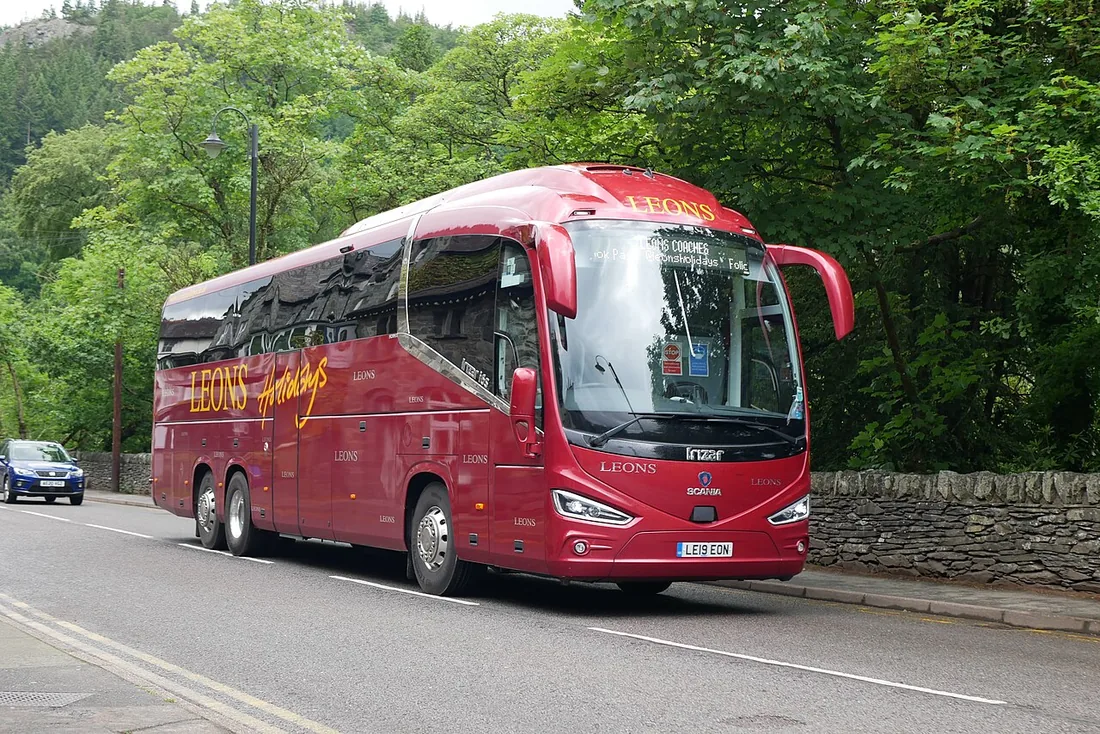
There's one more thing the badge doesn't tell you: what's underneath. Like the great Brazilian coachbuilders, Irizar can build its body onto someone else's chassis — Scania, Volvo, MAN, Mercedes-Benz, DAF or Iveco — so the same i6 can sound and drive differently depending on the mechanicals below. It works especially closely with Scania, whose chassis codes decode the engine sitting under all that Basque bodywork.
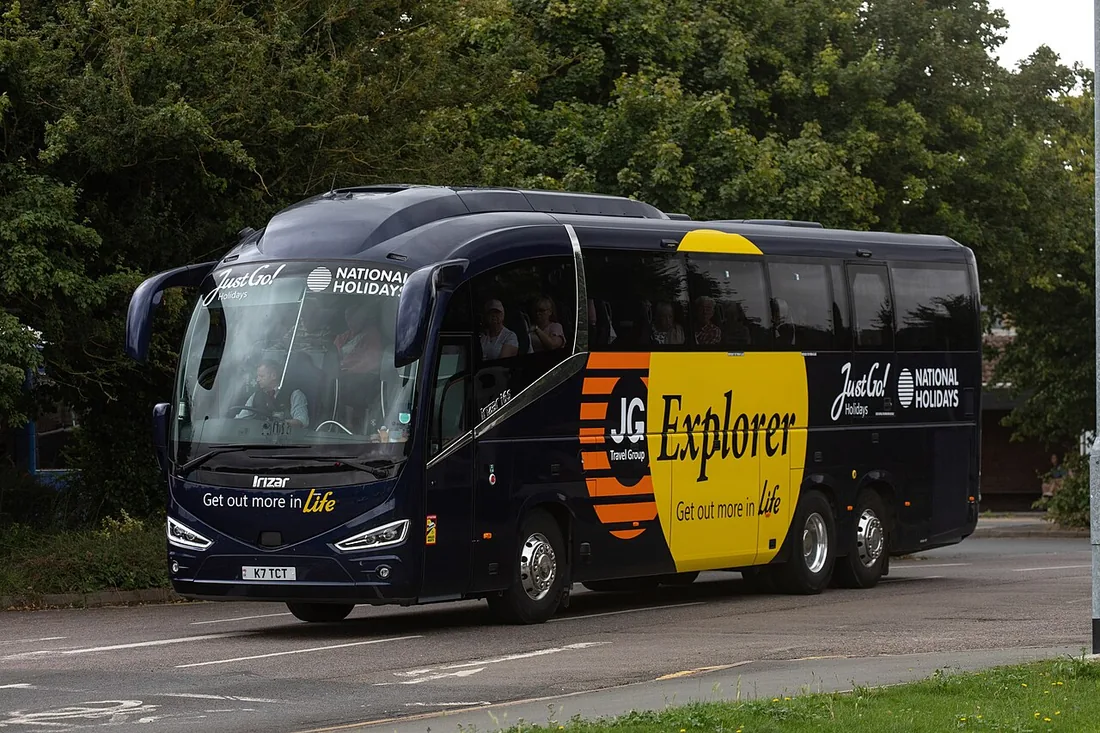
But Irizar also builds integral coaches — the complete vehicle, body and running gear together — so an i8 integral is pure Irizar from road to roof. That is why you will see "Integral" in a model name: it is telling you there is no third-party chassis underneath. If the two-maker naming convention is new to you, we unpack it properly in body vs chassis: why a bus has two makers.
Before the ladder: the PB that won Europe
The tidy i-numbering is recent. The model that made Irizar's modern reputation carried a different badge entirely — the PB, launched in 2001, which won Coach of the Year in Spain and Coach of the Year in Europe. For a body builder from a Basque village, beating the continent's integrated giants on their own turf was the arrival announcement.
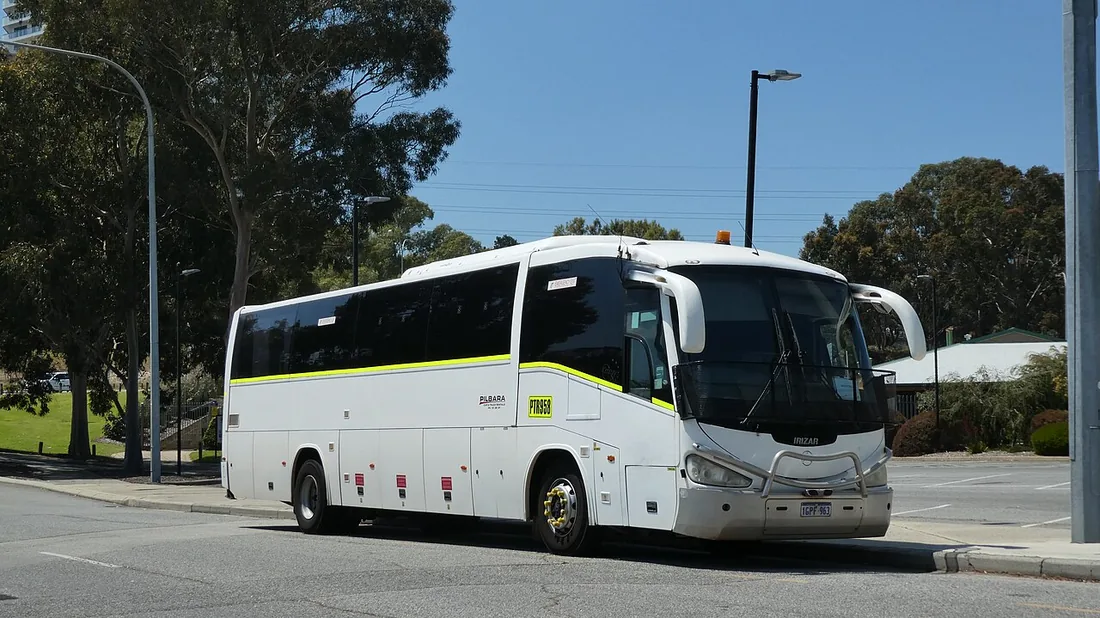
Its stablemate, the Century, is the name you are most likely to meet outside Europe — it is the Irizar body that turns up on Australian, South American and Asian chassis, long after the European range moved to numbers.
Going electric: the ie range
Irizar's newest chapter swaps the touring badge for a city one. Through Irizar e-mobility, the firm builds the ie bus and the tram-styled ie tram — full battery-electric city vehicles, a world away from the diesel motorway coaches that made its name. The "ie" simply flags the electric family.
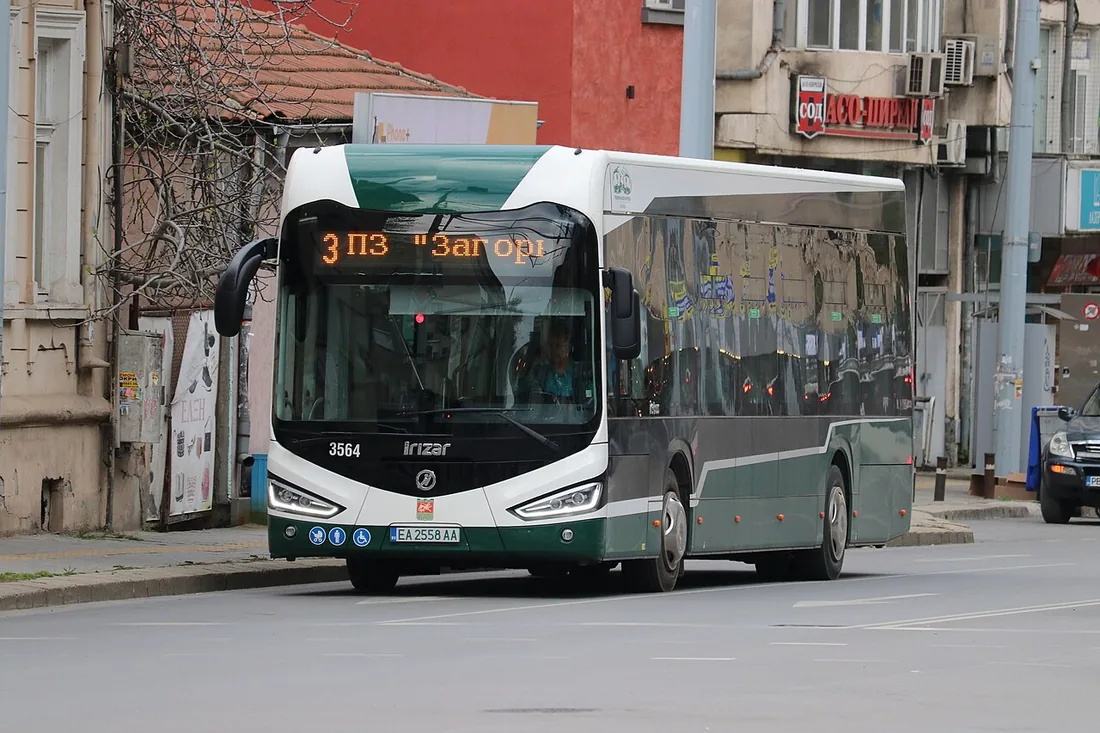
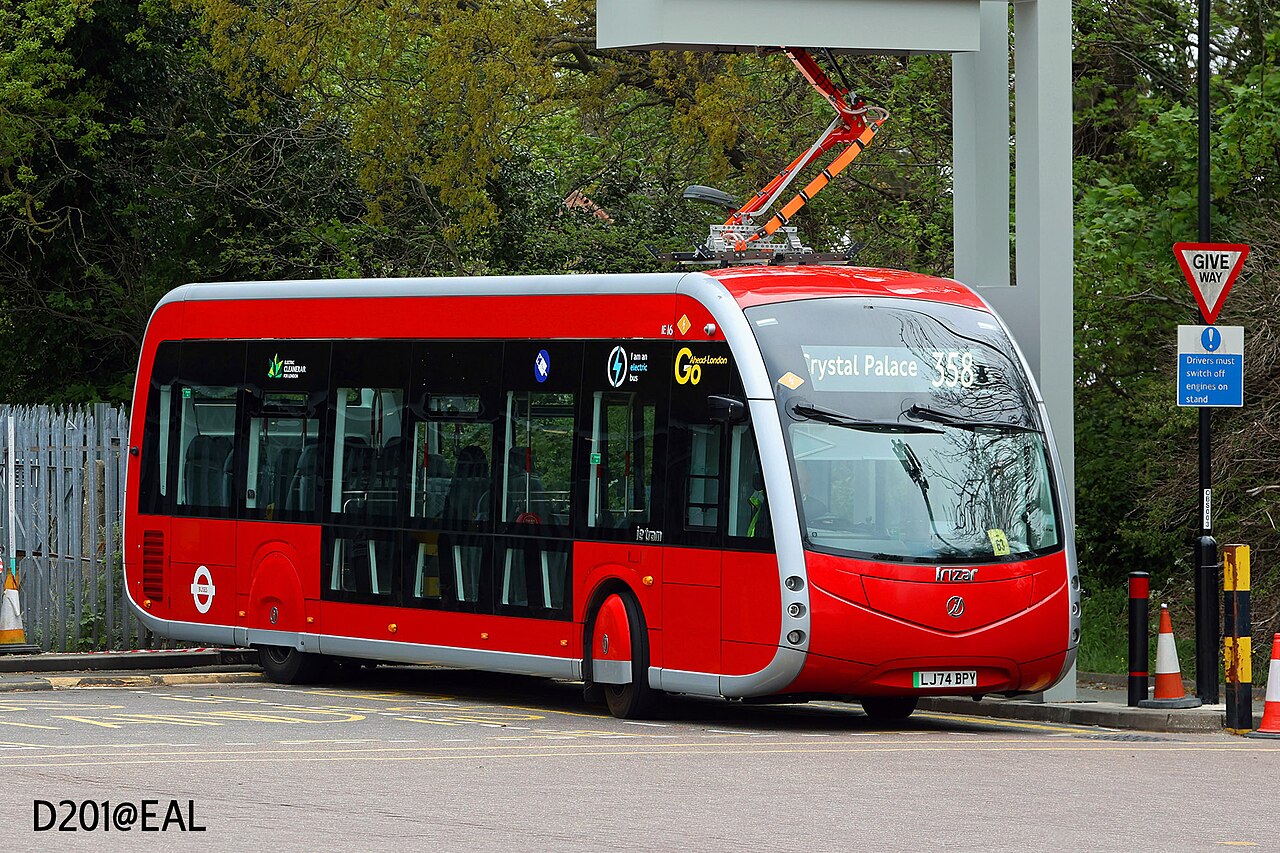
It's the same trick Van Hool and others pulled — give a bus a tram's face for the prestige of light rail at the price of a bus — and part of the wider return of the electric bus.
Reading the badge in the simulator
The number is a genuine spoiler for how the coach behaves. An i8 is the top rung: a tall, heavy, high-floor road cruiser with luggage bays underneath and a raised cabin, so it leans through bends and asks for smooth, early braking — a proper coach, built for the motorway, not the bus stop. Drop down to an i3 and everything inverts: a low floor, level boarding, an agile city machine that darts between stops.
The chassis line matters just as much, and it is the part most people skip. Two i6 coaches that look identical on the catalog thumbnail can be a Scania underneath one and a DAF under the other — different engine note, different torque delivery, different balance under braking. Read both halves of the name and you know what you are about to hear as well as what you are about to see.
Ready to try the Basque badge? Browse the Irizar bus mods and pick your rung on the ladder.
FAQ
What does the number in an Irizar coach name mean?
What is the difference between an Irizar i6 and i6S?
Does Irizar build its own chassis?
Is Irizar a big company?
Who owns Irizar?
What is the Irizar ie bus?
Sources
- Irizar — official company history — founded 1889; constituted as a cooperative in 1963 with 60 members; the PB winning Coach of the Year in Spain and in Europe on its 2001 launch.
- Irizar — official model range — the segment of each model: i8 premium long-distance flagship, i6S and i6 touring, i4 interurban, i3 low-entry.
- ASCABUS — who we are — the association founded 21 September 1976 by seventeen named coachbuilders, today representing "100% of the Spanish bus and coach body manufacturers".
- Irizar e-mobility — the battery-electric ie bus and ie tram range.
- "Irizar spans the globe over 120 years" — BUSRide — José Francisco Irizar the Ormaiztegi blacksmith and his horse-drawn carts; the family's sale to the workforce in 1959 and the Mondragón link; the May 2008 vote to leave; "consistently takes around 40 percent of the market"; presence in nearly 50 markets and 82% of 2008 turnover from outside Spain.
- Background: Irizar — Wikipedia — general company overview and model range.
Hero: Irizar i8, Vienna — Ilya Plekhanov, CC BY-SA 4.0, via Wikimedia Commons. In-body photographs are credited in their captions; all are Creative Commons via Wikimedia Commons.