Castrosua: The Galician Firm That Built Spain's First Hybrid Bus
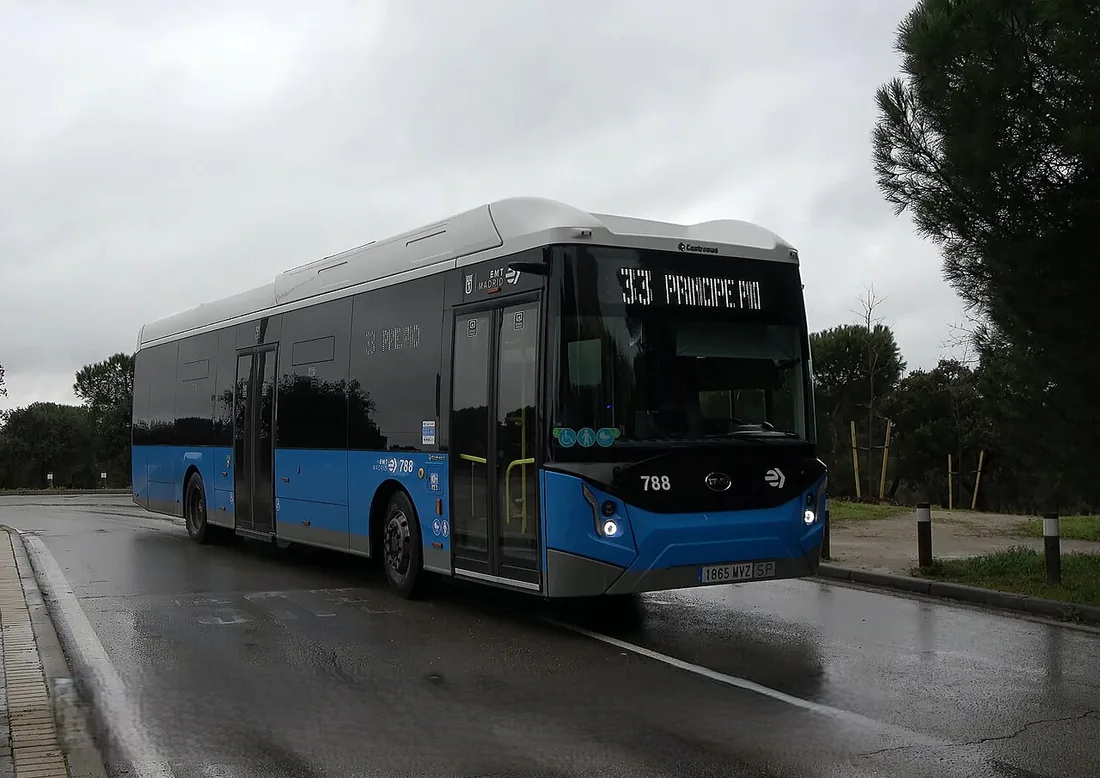
Spain's bus industry has one household name abroad, Irizar, and a long tail of firms that quietly build the buses people actually ride to work on. Castrosua is the most interesting of the tail — a Galician company that has been building bodies since 1948 and put Spain's first hybrid bus on the road in 2008.
You will not see it in a brochure for a luxury tour coach. You will see it at a bus stop in Santiago de Compostela, Madrid or, oddly, Lviv. Here is the story of the coachbuilder that keeps quietly going first.
1948: "Pepe, the coach body-builder"
The company begins with one man and a nickname. José Castro set up an independent body-building business and, in the company's own telling, became known as "Pepe, the coach body-builder". He took his first orders in 1948 — and, contrary to what you might assume from where the firm sits today, not in Santiago de Compostela but in O Carballiño, a small town inland in Ourense province.
Santiago came later, and it is where Castrosua still builds buses. It is a genuinely Galician industrial story: a region better known for fishing and pilgrimage than vehicle manufacturing, quietly producing one of Spain's more durable coachbuilders.
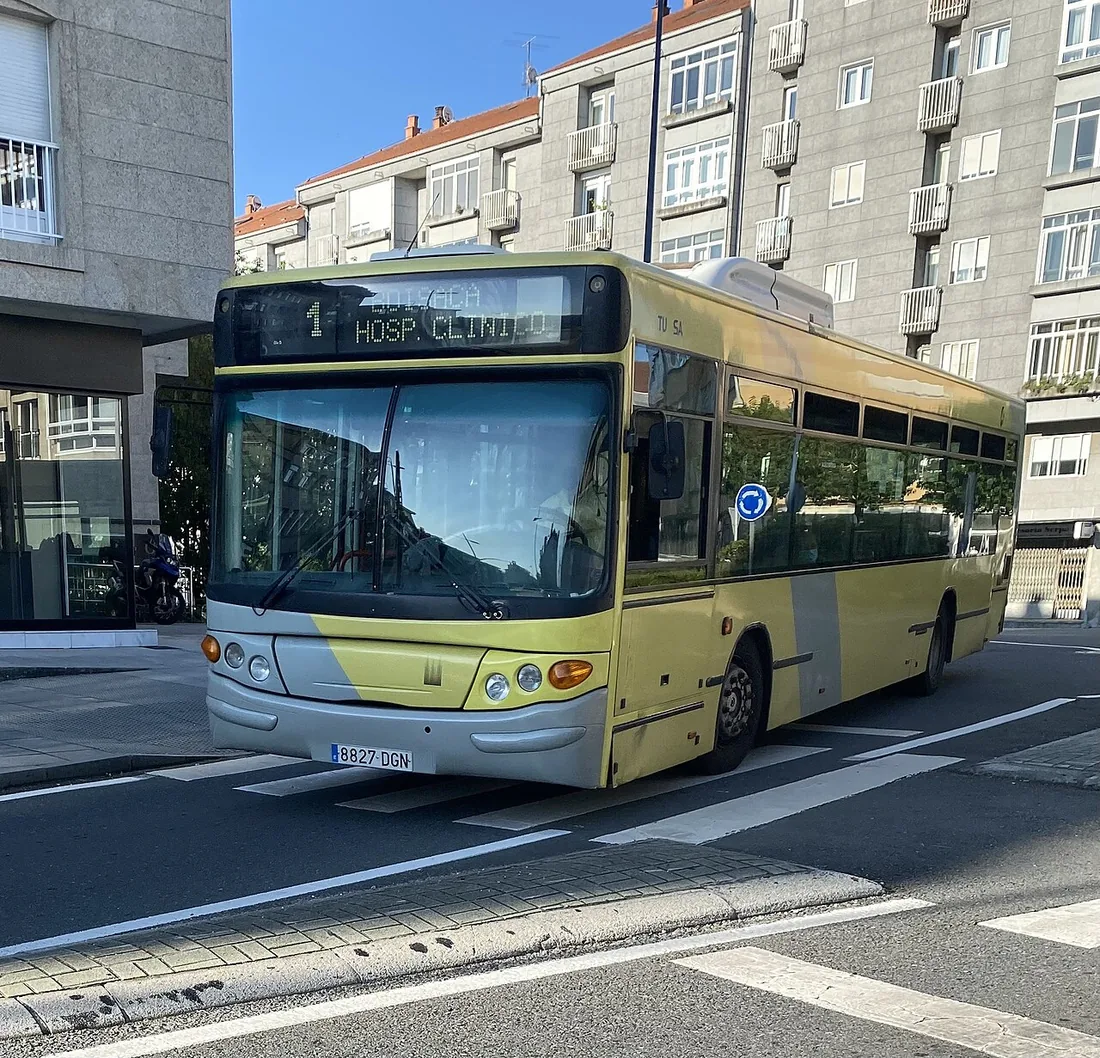
The CS40: the workhorse you have already seen
If one Castrosua product deserves the label "classic", it is the CS40 city bus. It is the model people search for by chassis pairing — a CS40 on a Scania, a CS40 on a MAN — because, like most Spanish bodywork, it was built on whatever the operator bought underneath.
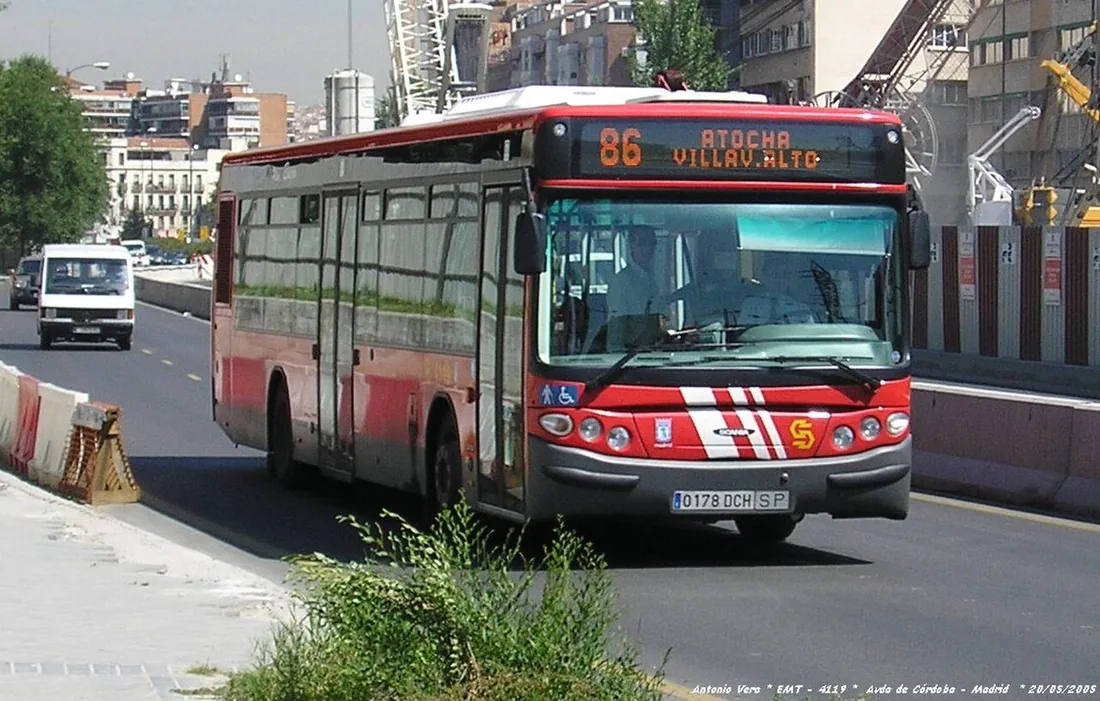
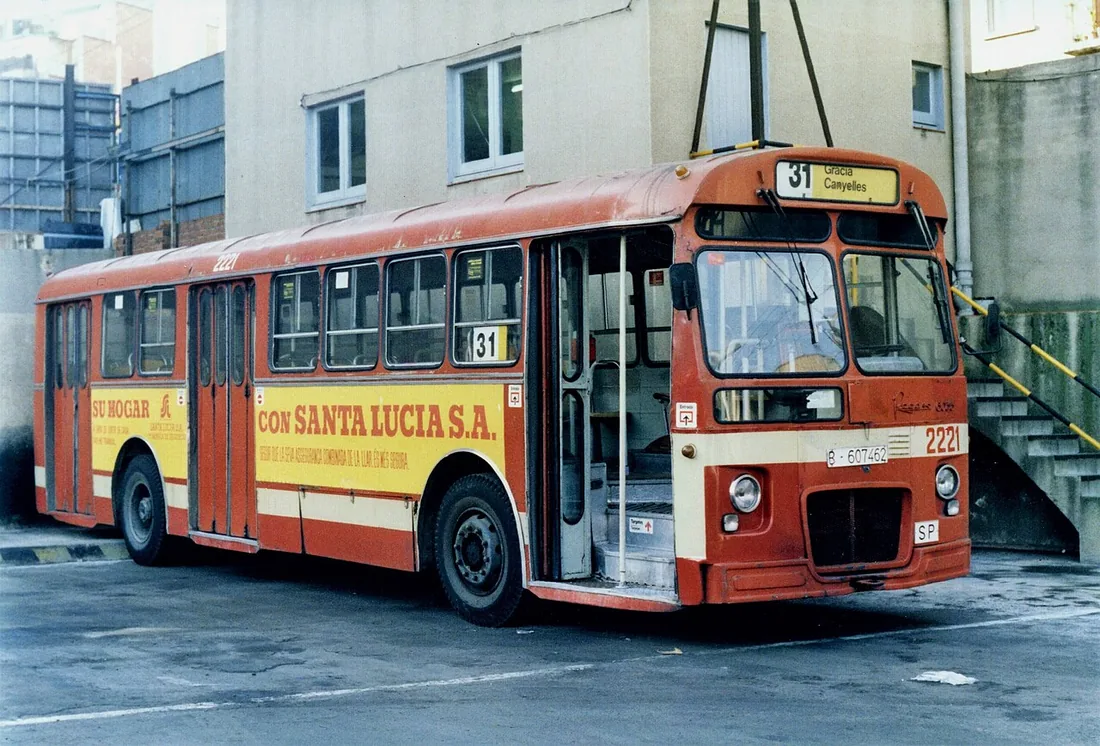
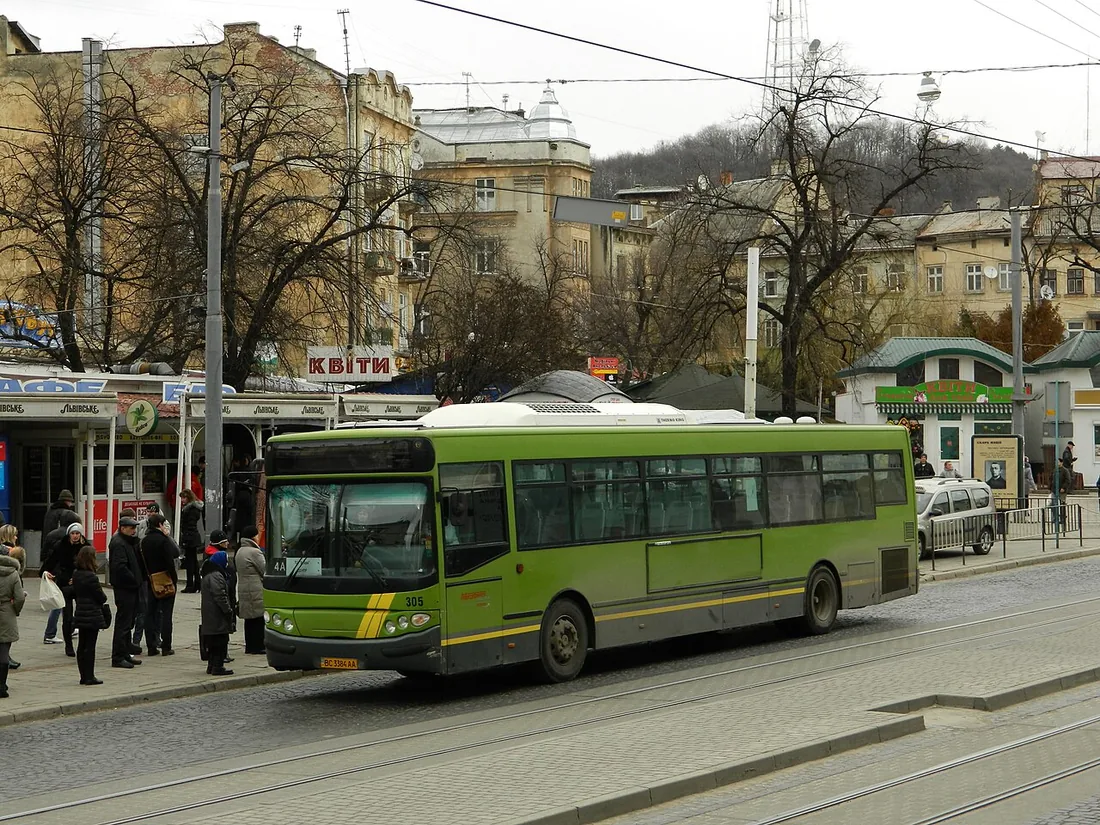
They also had long second lives. Spanish city buses were widely resold eastward as fleets modernised, and CS40s ended up a very long way from Galicia.
The 1990s: low floors and gas
The decade that shaped modern Castrosua was the 1990s, when the company — in its own words — "develops a successful low-floor platform and introduces LPG, CLG and CNG technologies".
Both halves of that sentence matter. The low-floor platform put Castrosua on the right side of the biggest change in city-bus design of the last half century — the shift we cover in the low-floor revolution. The gas work mattered because of who was buying: Madrid's EMT went on to build one of Europe's largest compressed-natural-gas bus fleets, and a Spanish bodybuilder fluent in gas installations was well placed for it.
2008: the Tempus, and a genuine first
Then comes the claim Castrosua actually makes about itself, and it is a real one. In 2008 it launched the Tempus — "the first Spanish hybrid bus".
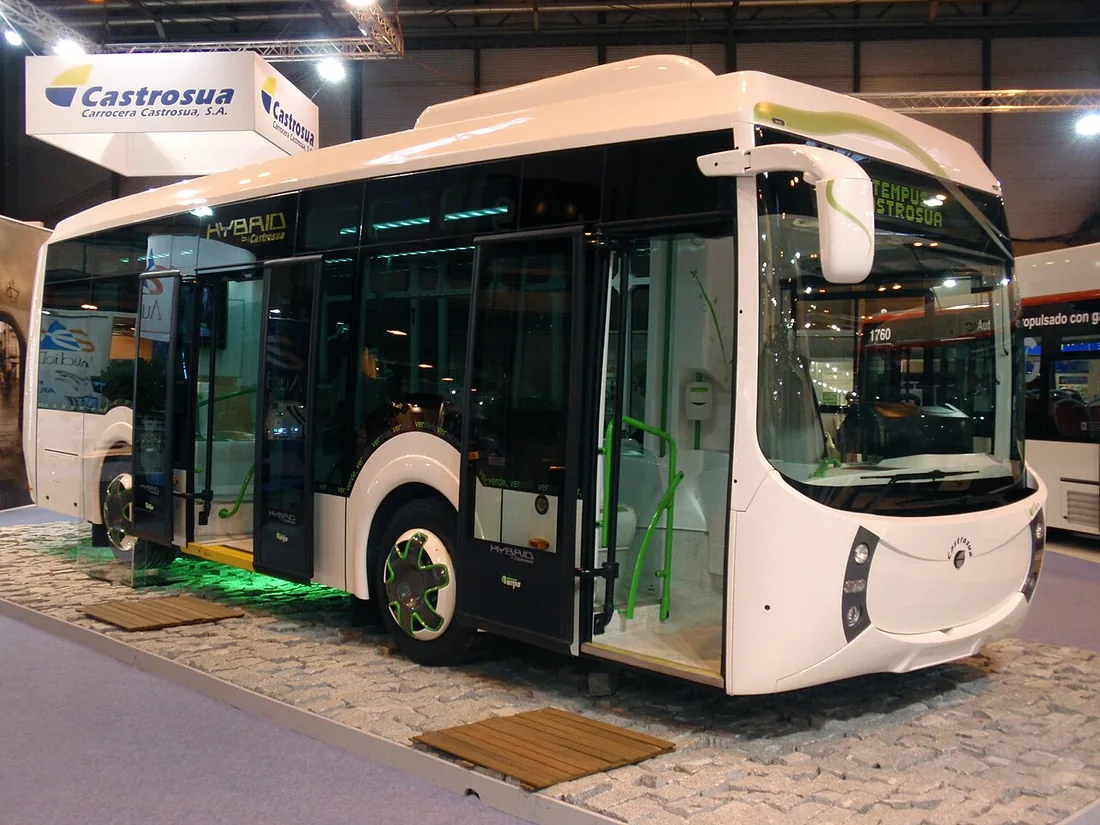
Put that in context. In 2008, hybrid buses were still a novelty across most of Europe, and the companies experimenting with them were mostly large integrated manufacturers with deep research budgets. A regional Galician bodybuilder getting there first, in its home market, is not what the industry's shape would predict.
Today: Magnus, Nelec, and building with BYD
Castrosua now sells five ranges: the Nelec, 75 CS, New City, Magnus.H and Magnus.E — the H and E suffixes marking hybrid and electric.
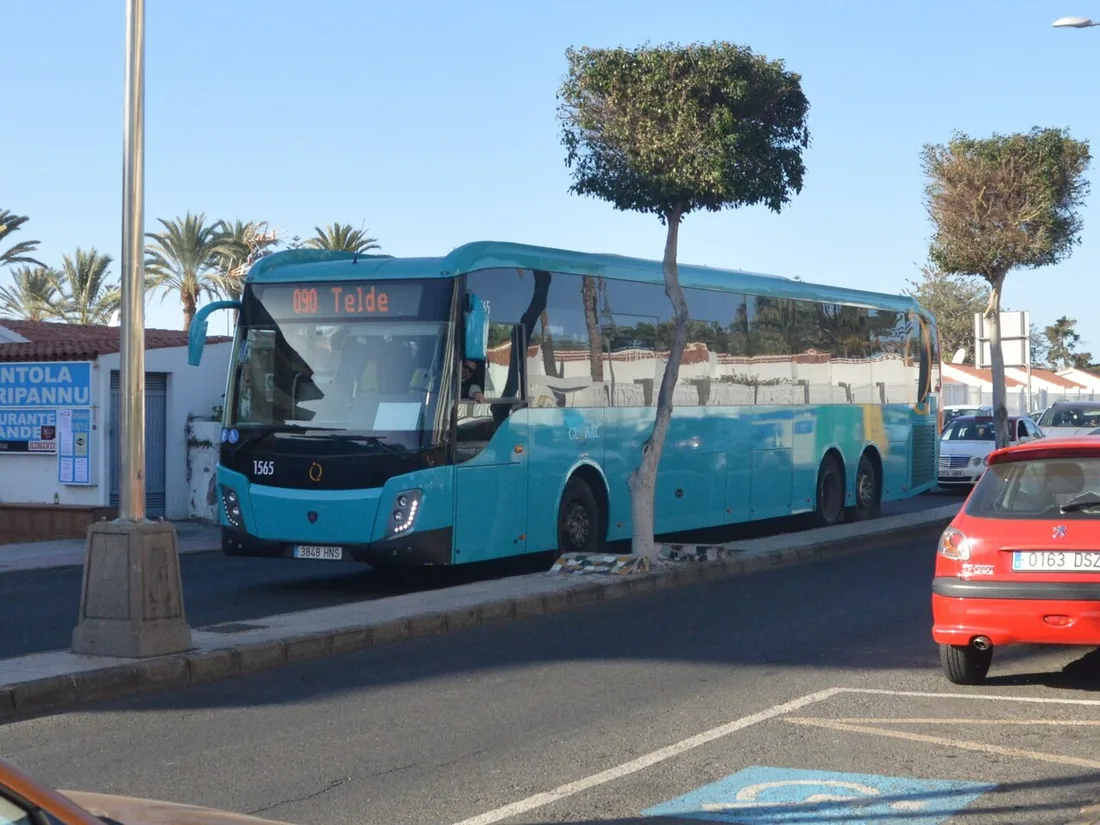
The most telling recent move is a partnership. Since 2022 Castrosua has co-manufactured an electric bus with BYD — the Chinese giant supplying the electric chassis, Castrosua the body. It is the classic Spanish arrangement pointed at a new century: someone else's running gear, Galician bodywork on top.
It is also, quietly, a reversal of direction. Twenty years ago a Spanish coachbuilder bodied Scanias and MANs from northern Europe. Now it bodies chassis from Shenzhen — the city whose all-electric fleet we cover in 140 years of the electric bus.
What a Castrosua feels like from the driver's seat
Castrosua builds city buses, and city buses are defined by the thing they do hundreds of times a shift: stop, load, go.
A low-floor CS40 or Magnus is built entirely around shortening that cycle. Step-free entry and a kneeling front axle mean the dwell time at each stop is short, and the low floor drops the centre of gravity so the bus stays flat when you pull away hard from a kerb. It is the opposite of the tall touring coach — you are not settling in for a cruise, you are running a loop against a clock.
The drivetrain then changes the character on top of that shell. A gas bus sounds different from a diesel — less clatter, a smoother note. A hybrid decouples engine noise from what your right foot is doing, so the sound no longer tracks your speed the way a diesel does. An electric Magnus.E or Nelec removes gearchanges and engine braking altogether, and you learn to lift early and ride the regenerative brake instead.
Same body, same doors, same job — three completely different soundtracks. That is the part a spec sheet never conveys.
There are no Castrosua mods in the catalog yet. For Spanish bodywork you can actually drive today, start with the Irizar bus mods, and see who actually builds Spain's buses for the wider industry.
FAQ
What is Castrosua?
What was the first Spanish hybrid bus?
Is Castrosua still in business?
What is the Castrosua CS40?
Sources
- Castrosua — about us — José Castro, "Pepe, the coach body-builder", taking his first orders in O Carballiño in 1948; the 1990s low-floor platform and LPG/CLG/CNG technologies; the Tempus as "the first Spanish hybrid bus" in 2008; the Nelec, 75 CS, New City, Magnus.H and Magnus.E ranges.
- BYD and Castrosua launch their first jointly manufactured eBus — the electric bus co-manufacturing partnership.
- Castrosua's electric coach at Busworld 2025 — Sustainable Bus — the company's recent move into electric coaches.
- Background: Carrocera Castrosua — Wikipedia, for the general company overview and model range.
Hero: EMT Madrid 788, BYD Castrosua Nelec, Casa de Campo — KingValid04, CC0, via Wikimedia Commons. In-body photographs are credited in their captions; all are Creative Commons via Wikimedia Commons.