From Wires to Batteries: 140 Years of the Electric Bus
Switch on a modern battery-electric bus and the experience feels brand new: no idle clatter, no diesel haze, just a faint whirr and a silent, instant surge away from the stop. It feels like the future arriving. It is, in fact, a homecoming. The electric bus is older than the diesel one — older than the Ford Model T — and the story of the last 140 years is really the story of electricity losing the bus, and then slowly, expensively, winning it back.
We followed the wire all the way from a converted carriage in 1882 Berlin to a Chinese megacity that runs sixteen thousand electric buses and not one diesel.
It started with a wire, in 1882
The first electric bus did not carry its own power — it reached up and grabbed it. On 29 April 1882, in the Berlin suburb of Halensee, Werner von Siemens demonstrated the Elektromote: a converted four-wheel carriage drawing current from a pair of overhead wires through a small eight-wheeled "contact car" that rolled along above it. The Germans called that contact car the Kontaktwagen; English speakers later called it the trolley — which is exactly where the words "trolley car" and "trolleybus" come from.
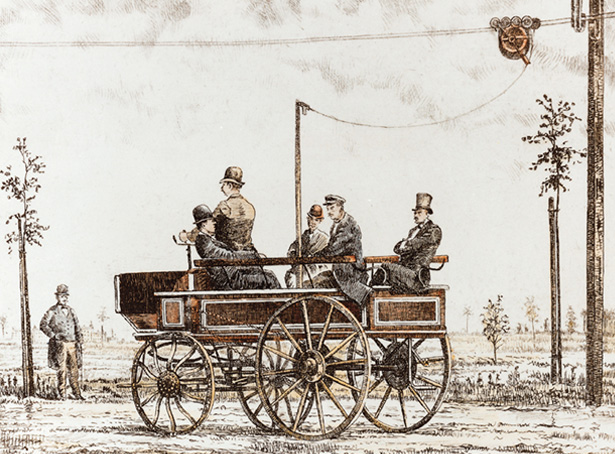
It ran for barely two months as a demonstration before the test track was dismantled. But the idea — a bus powered cleanly and quietly by electricity from a wire — was loose, and it would shape city transport for the next century.
The battery bus that ran on swaps — in 1907
Wires are not the only way to feed an electric bus. The other way — carry a battery — also arrived astonishingly early. In July 1907 the London Electrobus Company began running the first practical battery-electric buses between Victoria and Liverpool Street. They were clean, quiet and fume-free at a time when petrol buses were loathed for their noise and stink, and they solved the range problem with a trick that sounds thoroughly modern: battery swapping. Each bus could manage about 40 miles, then drove onto a ramp at the depot where its depleted batteries were exchanged for fresh ones in roughly three minutes.
It should have been the beginning. Instead the company collapsed by 1910 amid accusations of fraud, the buses were broken up or sold off, and the most promising early challenge to the combustion engine simply evaporated. The technology was sound; the business around it was not.
How diesel won the century
What followed was diesel's long reign. The rear-mounted diesel engine was cheap to fuel, went anywhere without infrastructure, and needed no overhead wires or battery depots. Through the mid-twentieth century city after city tore down its trolley wires and bought diesel buses; the flexibility was irresistible and the fuel was almost free. By the time anyone was counting the cost in soot and noise, diesel had become so completely the default that an electric bus looked like a museum piece. Electricity had effectively been evicted from the bus.
The cities that never let go
Almost — but not quite. A handful of cities looked at their trolleybuses, often climbing hills that punished diesel engines, and decided to keep the wires up. San Francisco has run electric trolleybuses since 1935 and still operates around 300 of them across its hilly grid. São Paulo keeps a fleet of roughly 200 trolleybuses running. Zurich, Seattle and dozens of others held on too — worldwide, trolleybuses still run in some 260 cities across more than 40 countries. They were never the future or the past; they just quietly kept proving that an electric bus works, decade after decade, waiting for the rest of the world to come back around.
Batteries strike back
And come back around it did — driven this time not by wires but by the lithium-ion battery. The turning point was Shenzhen. By the end of 2017 the Chinese megacity had converted its entire public bus fleet — all 16,359 vehicles — to battery-electric power, becoming the first major city on Earth to run no diesel buses at all. Around 80% of them came from BYD, the battery-and-vehicle giant headquartered in the same city. What London tried and lost in 1907, Shenzhen pulled off at the scale of a metropolis.
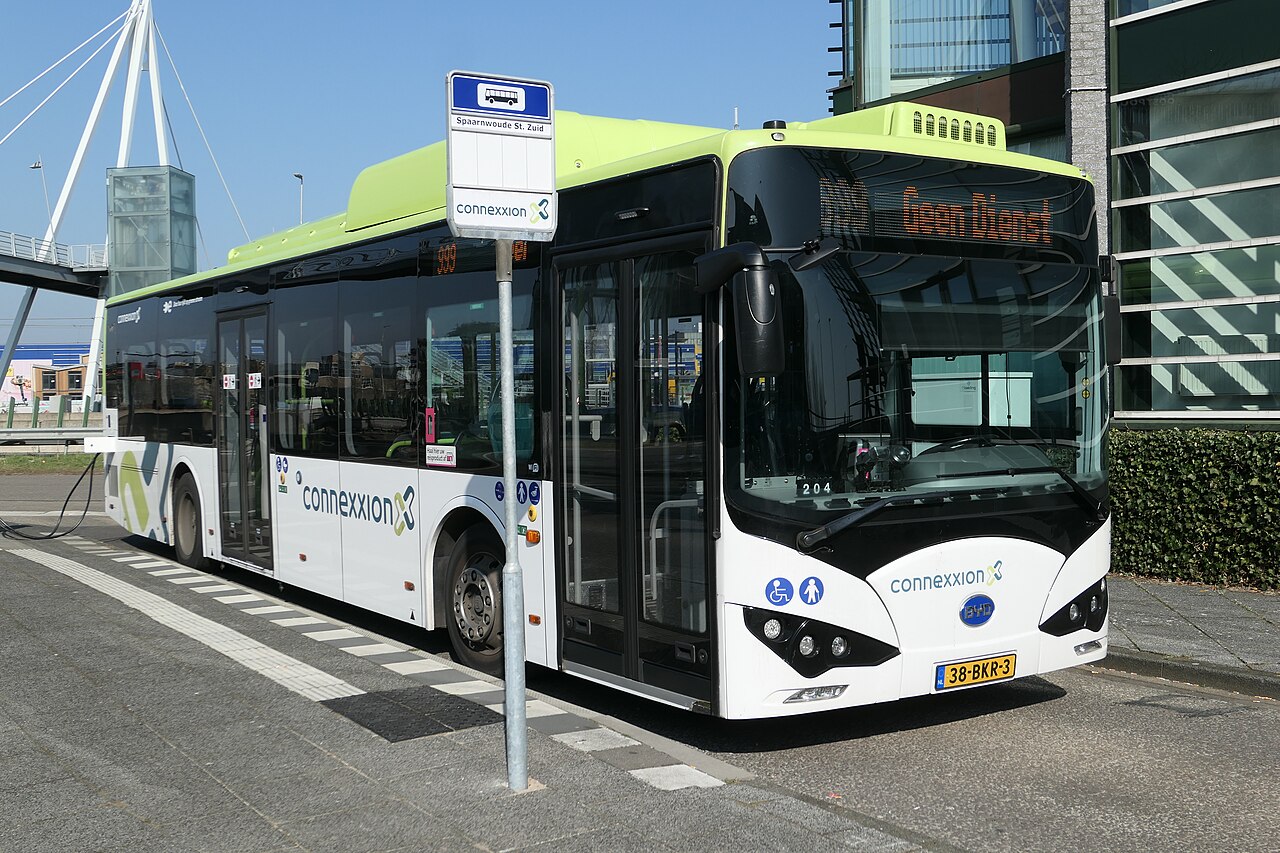
Europe followed in its own way: makers like Solaris and Yutong now build electric versions of their entire city ranges, and the battery has quietly rewritten the model names — the "electric" and "-EV" suffixes spreading across catalogues that used to be all diesel. The 140-year circle had closed: the bus was electric again, only now it carried its own power instead of reaching up for it.
What it feels like to drive
For a simulator driver, propulsion is not a cosmetic detail — it changes the whole feel of the vehicle. A diesel bus is a performance you conduct: build the revs, manage the turbo's lag, let the gearbox hunt for the right ratio, listen to the engine note climb and fall. An electric bus — trolley or battery — throws all of that away. It delivers maximum torque from a standstill, instantly and in near silence, so the launch from a stop is smooth, immediate and almost eerie. There are no gear changes to feel and no engine braking to lean on; instead you learn to ride the regenerative brake, lifting off early and letting the motor recover energy as it slows you.
Drive a trolleybus and you inherit one extra quirk the battery buses lost: you are tethered to the wire, free to steer only as far as the poles will follow, and a sharp enough swerve can "dewire" you entirely. Drive a modern battery bus and that leash is gone — but so is the wire's endless range, replaced by a charge gauge you have to respect. Two flavours of the same fundamental machine, both more than a century in the making, and both feeling — in the driver's seat — completely unlike the diesel that briefly stole their century.
Want to feel the silent surge for yourself? Browse the electric ranges from Yutong and Solaris in the catalogue — and read how Yutong rode the electric wave to become the world's biggest bus maker.
Frequently asked questions
When was the first electric bus made?
What is the difference between a trolleybus and a battery-electric bus?
Why did diesel buses replace electric ones?
Which city has the most electric buses?
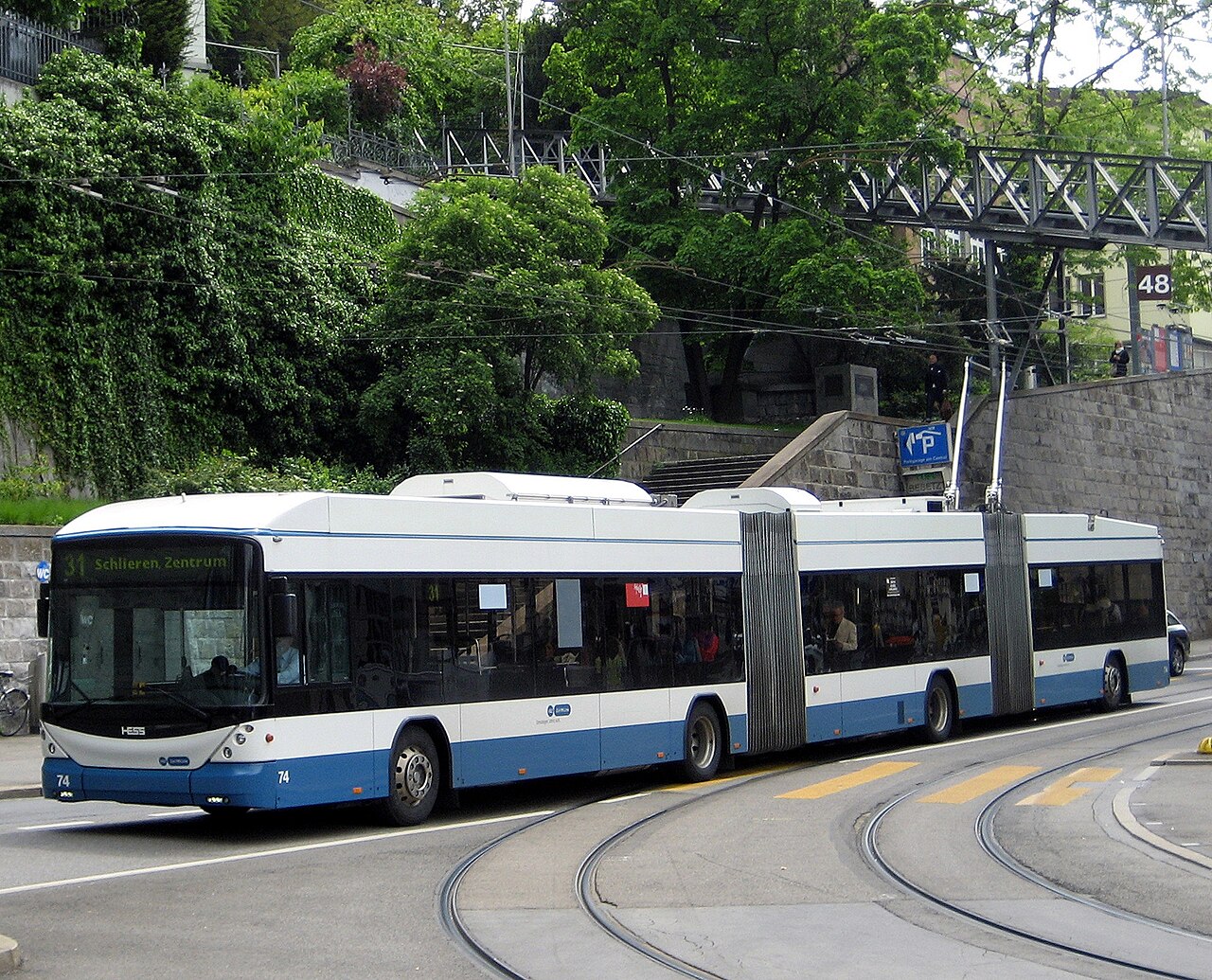
Hero image: Hess double-articulated trolleybus in Zurich by hrs51, CC BY 4.0, via Wikimedia Commons.