What Do Scania Bus Names Mean? K, N and F Chassis Explained
Stand behind a Scania city bus or coach and you'll usually find a short code on the engine cover or the spec sheet: K320, N280, F113. To most passengers it's noise. To anyone who knows the system, it's a complete summary of the machine — where its engine lives, how big that engine is, and, with a little experience, how the thing is going to sound and handle.
Scania's naming is one of the most logical in the business once you crack it, and unlike a marketing badge it actually tells you something mechanical. We drive a lot of Scania mods in Proton Bus Simulator, and reading the code before you turn the key genuinely changes how you approach the bus. Here's the whole system.
The letter is an engine map
The single most useful thing to know is that the leading letter describes where the engine is and how it's mounted. Scania has used the same logic for decades. Per the chassis designations, F is a "chassis with longitudinal engine ahead of the front axle"; K is a "chassis with longitudinal engine behind rearmost axle, centrally mounted"; L is a "chassis with longitudinal engine behind rearmost axle, inclined 60° to the left"; and N is a "chassis with transverse engine behind rearmost axle."
Strip away the jargon and it's just four places to put a diesel: out front (F), upright at the very back (K), laid over on its side at the back (L), or turned sideways across the back (N). That one letter is why two Scanias with identical horsepower can feel like completely different vehicles.
The number used to be litres — now it's horsepower
The digits after the letter trip people up because their meaning quietly changed between generations. On the classic 3- and 4-series, the number was the engine's displacement: the code table maps "11" to the DC11 and "12" to the DSC12/DC12, so an F113 or K113 is running an 11-litre engine, and a 124 means 12 litres.
On the modern K-series (from 2006), Scania switched the digits to power instead — the spec is "an approximation of the power rating in hp to the nearest ten." So a K320 is about 320 hp, a K360 about 360, a K450 about 450. Same letter logic, different number meaning: if you see three digits ending in a round number like 360 or 450, you're reading horsepower; an old 113 or 124 is litres. Knowing which era you're looking at is half the decode.
K, N and F in the metal
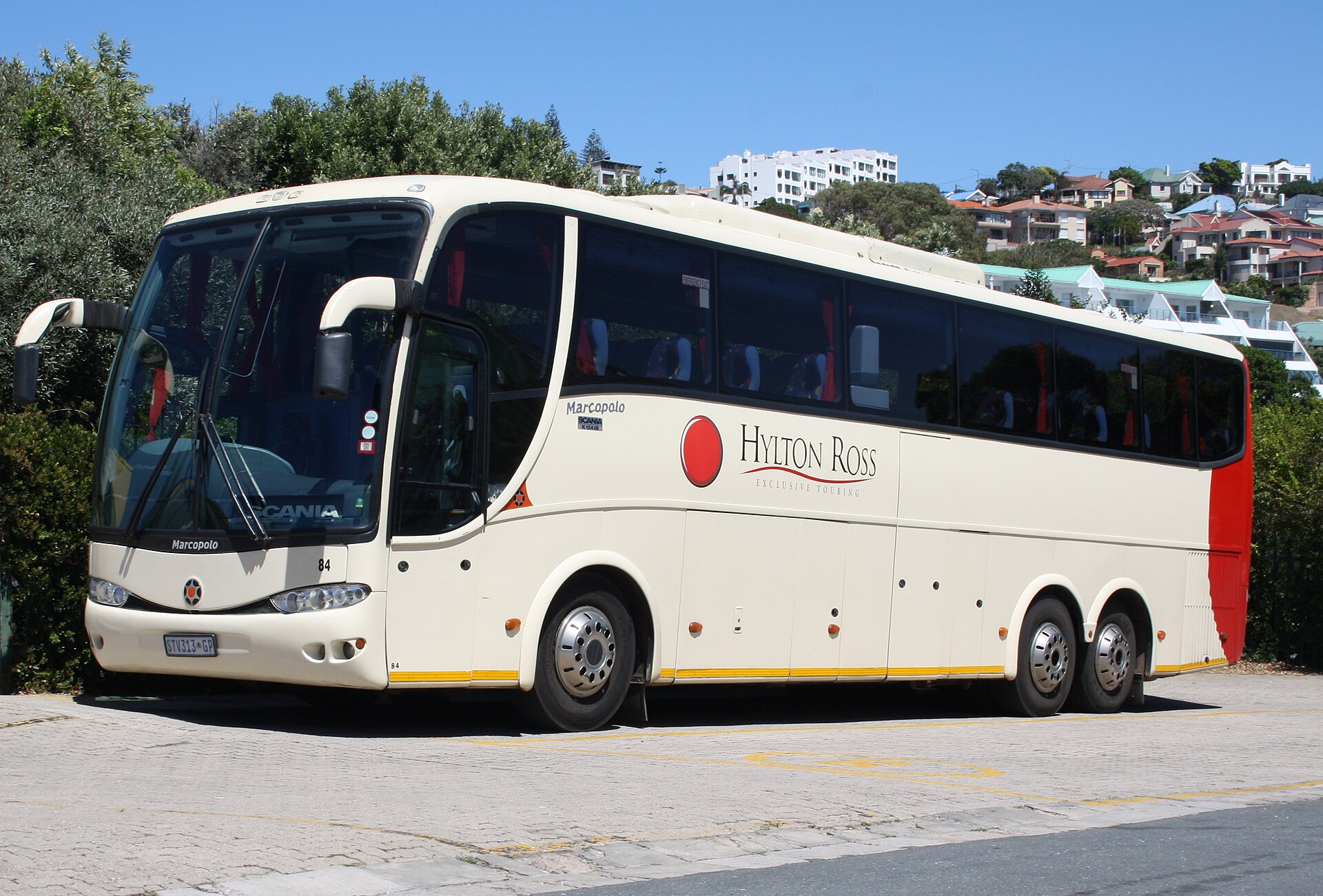
K — the coach and intercity backbone. With its engine standing upright at the very back, the K is Scania's long-distance workhorse; the application suffixes even include "E: coach, long distance, high comfort." That rearmost, upright inline-six is why a K-chassis coach has a slightly tail-heavy balance and a deep growl from behind the back row. It's the chassis under a huge share of the world's premium coaches — like the double-deck Modasa Zeus 5 on a Scania K450 or the Marcopolo Paradiso G7 on a Scania K-360/K-400.
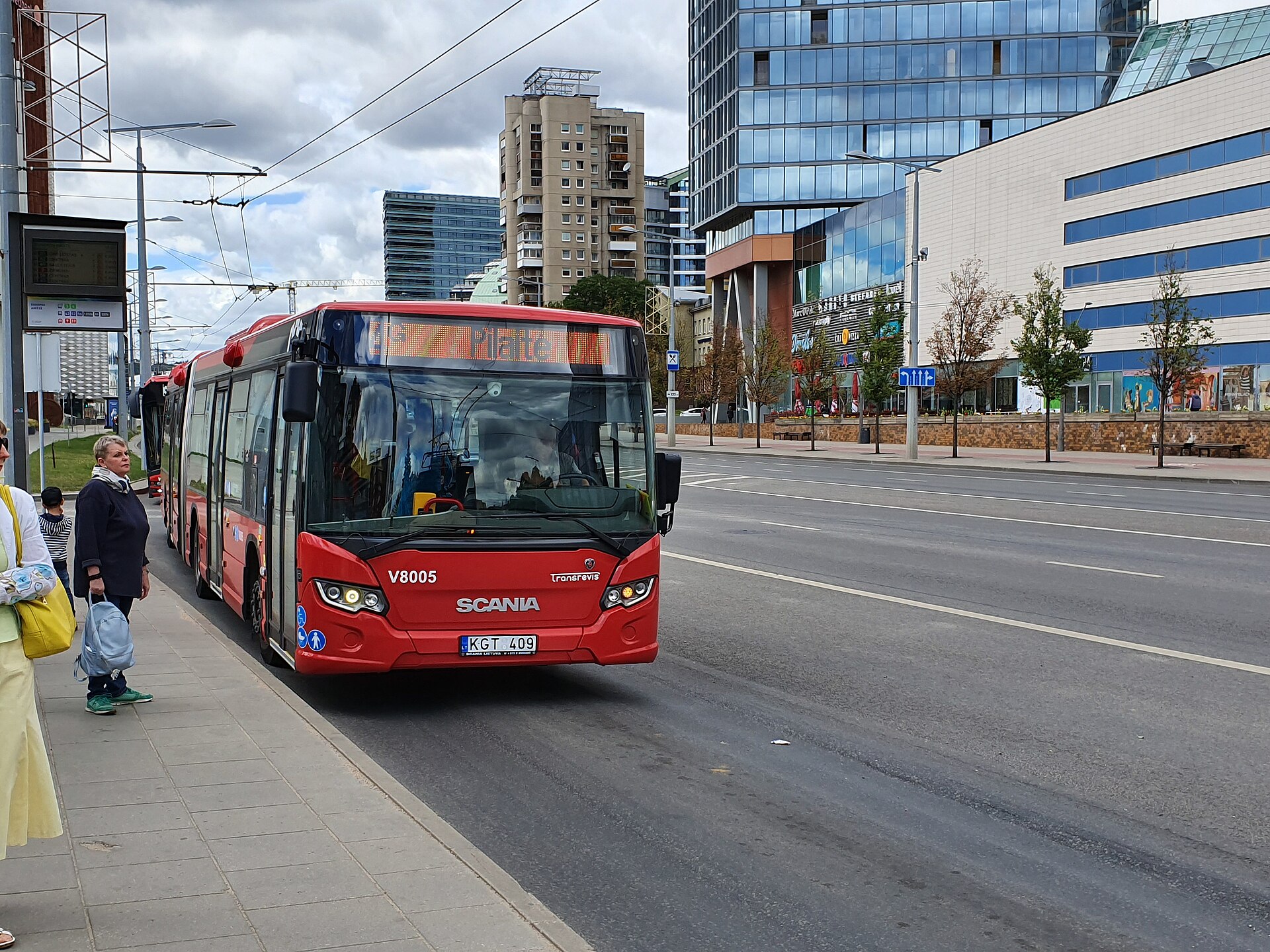
N — the low-floor city specialist. The N series is "a line of low-floor bus chassis with straight-up, transversely mounted ... engine at the rear." Turning the engine sideways and tucking it into a back corner clears a long, flat, step-free aisle — the whole point of a modern city bus. The trade is a lower centre of gravity and a planted, stable feel at the stop, which is exactly how Scania's complete city bus, the Citywide, behaves. You can feel it in the Scania Citywide LF Solo and its 18-metre articulated GN14 sibling.
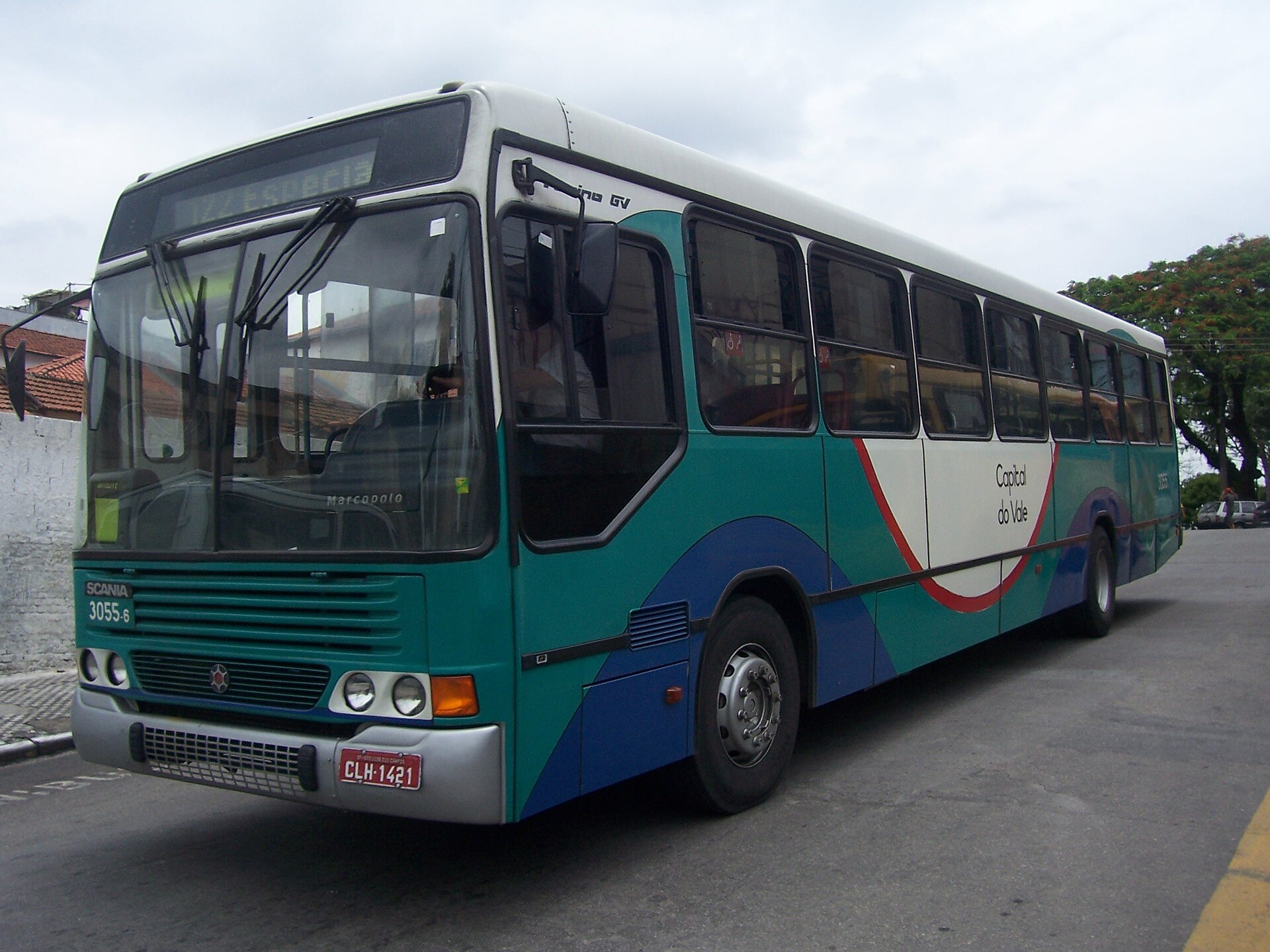
F — the front-engined classic. With the diesel mounted ahead of the front axle, the F-chassis carries its weight over the nose and puts the engine right next to the driver. It's the layout behind a generation of tough Brazilian and developing-market service buses, like the Caio Vitória on a Scania F113 — the "frontal" that ruled São Paulo's streets.
One chassis, many bodies — and the brand names on top
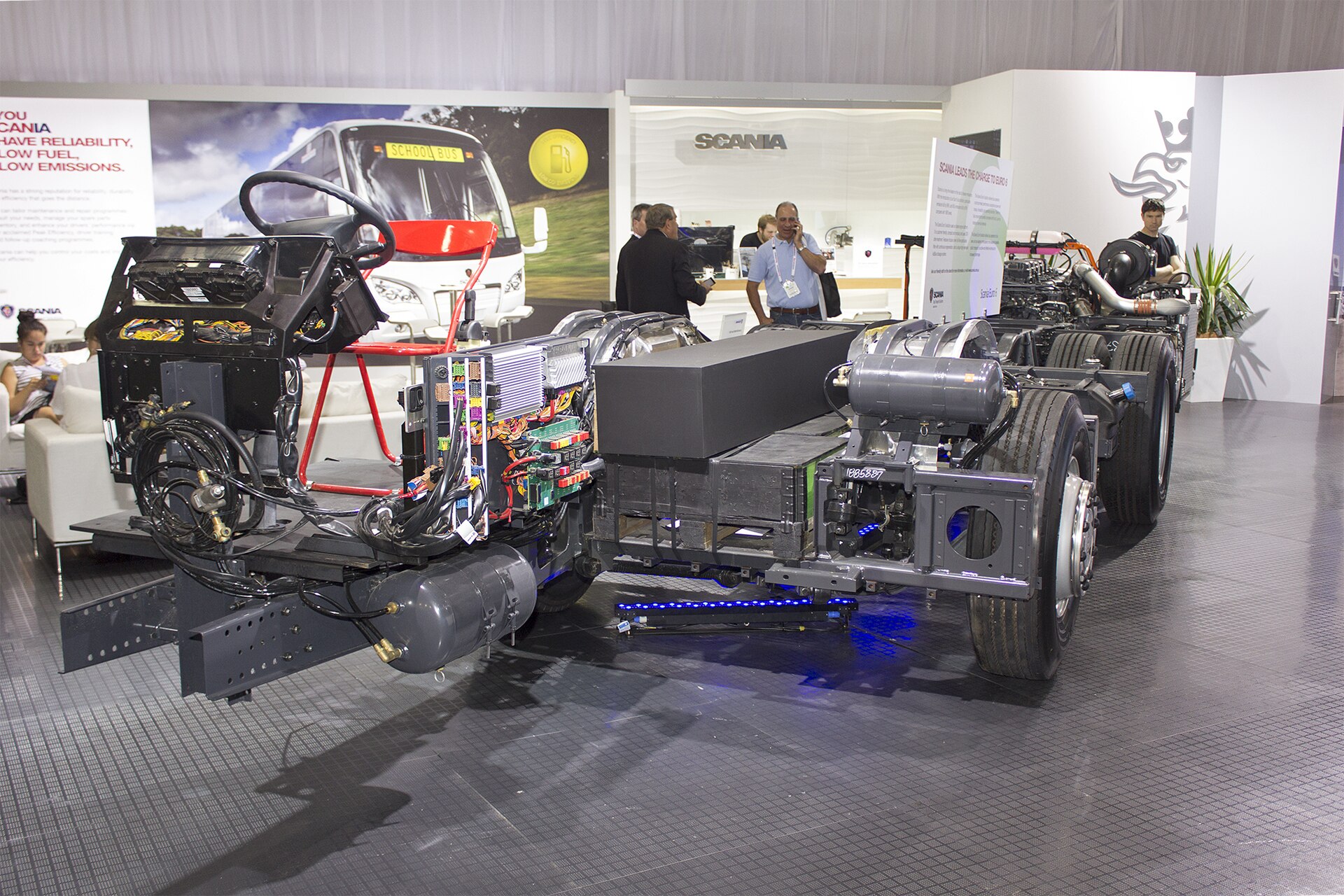
Here's the curiosity most people miss: for a huge part of its range, Scania doesn't sell you a bus at all — it sells you a chassis. As the industry splits it, "Scania supplies the chassis and powertrain while third-party bodybuilders such as Marcopolo and Irizar design and construct the superstructure." That bare K-chassis in the photo above gets shipped to a coachbuilder who bolts on whatever body the market wants. The same Scania K can roll out of Brazil as a Marcopolo Paradiso, out of Spain as an Irizar — the Irizar PB on a Scania chassis was even crowned European Coach of the Year 2004 — and out of Peru as a Modasa double-decker. One DNA, a dozen faces.
Where Scania does build the complete bus, it uses friendly range names instead of raw chassis codes: the Citywide for city work, the Interlink "optimised for suburban and regional traffic," and the Touring coach for long distance. Those names sit on top of the same K/N engineering underneath — a Citywide is the N platform made whole, an Interlink and Touring lean on the K.
Reading the badge in the simulator
Put it together and the code becomes a prediction. See a K and you brace for a rear-biased coach with the engine note coming from behind you and a bit of tail weight in fast sweepers. See an N and you expect a low, stable, flat-floored city bus that loads fast and sits planted. See an F and you know the mass — and the heat and noise — is up front by the driver, with that nose-heavy old-school feel. Read the number to know whether you're getting an 11-litre veteran or a modern 450-hp monster.
The catalog has the whole alphabet to try side by side: drive the front-engined Scania F113 Caio Vitória, the low-floor Scania Citywide, and the K-chassis Modasa Zeus K450 double-decker back to back, and the difference the letter makes is unmistakable. Browse the full lineup on the Scania mods hub. And if the articulated Citywide grabs you, we explained why those long buses bend the way they do in our guide to the articulated bus.