The Colectivo: How Buenos Aires Turned Shared Taxis Into a National Icon
Walk down any avenue in Buenos Aires and you'll see them everywhere: short, boxy, brightly-coloured buses, each line in its own livery, weaving through traffic with a confidence that borders on aggression. Argentines call them colectivos — or, in the slang of the city, bondis. They are as much a symbol of Buenos Aires as the obelisco or a plate of asado.
What almost nobody outside Argentina knows is that the colectivo wasn't designed by an engineer or ordered by a city. It was improvised, almost overnight, by a small group of taxi drivers in 1928 — and the rough idea they came up with to survive a bad year went on to reshape public transport across Latin America.
1928: the year taxi drivers invented a bus
By the late 1920s, taxi drivers in Buenos Aires were in trouble. Trams and large omnibuses were eating their business, fares were low, and a ride for a single passenger no longer paid. So a handful of drivers tried something new: instead of waiting for one fare, they would run a fixed route, pick up several passengers along the way, and charge each of them a small share. On 24 September 1928, the first of these shared taxis ran — the date Argentina still marks as the birth of the colectivo.
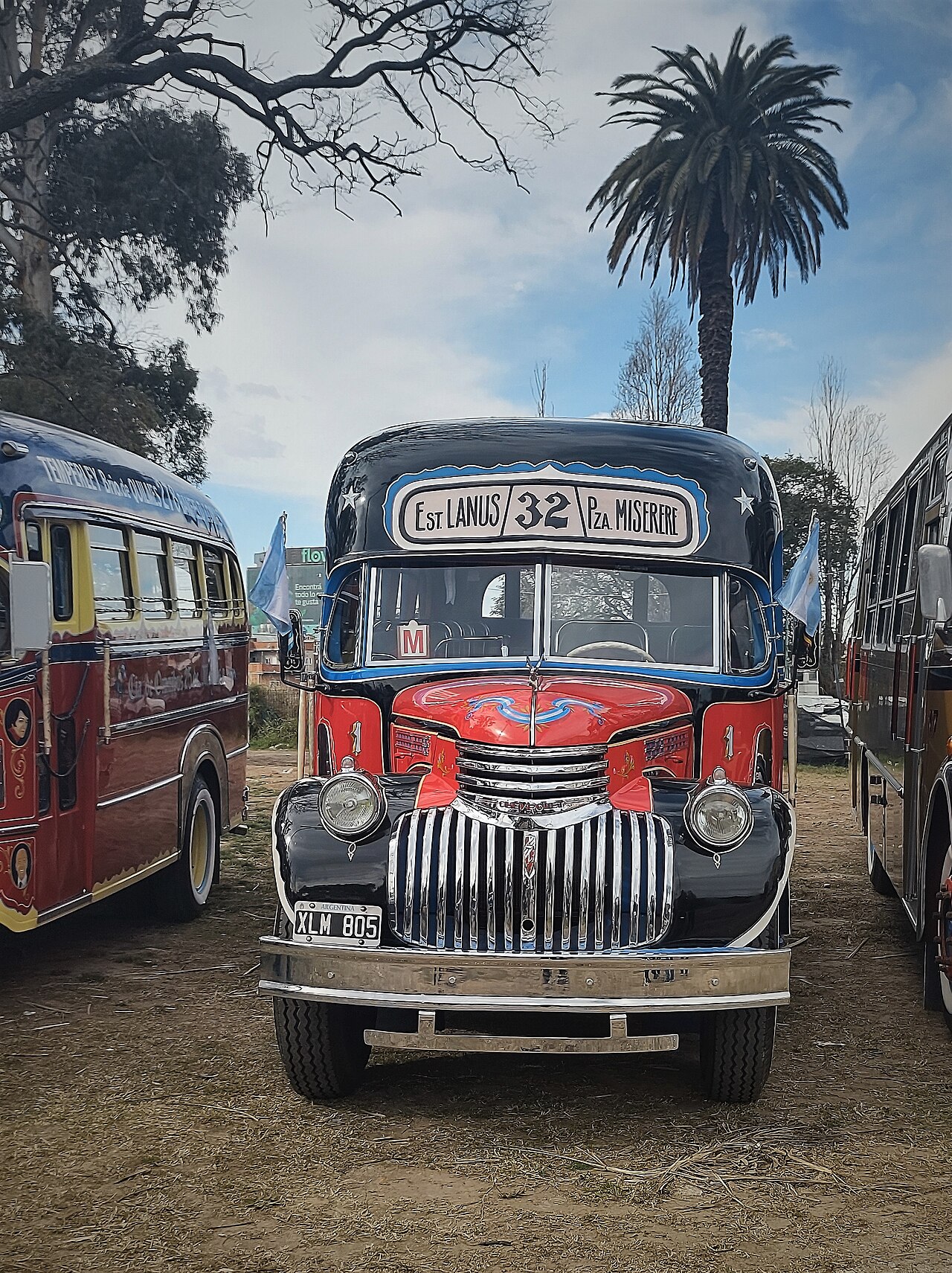
The first service rattled along Avenida Rivadavia out of the Caballito district, through the neighbourhood of Flores, in a stretched Argentine-built Chevrolet — the Chevrolet Superior "Especial Argentino." It held all of five passengers, who paid 20 centavos for the full trip or 10 if they hopped off at Flores. The name came straight from what the thing was: a vehículo de transporte colectivo, a vehicle for collective transport. Within months, other drivers copied it, and a grassroots bus network spread across the city with no one having planned it at all.
Why is it called a "bondi"?
The other name — bondi — has a wonderfully roundabout history that isn't even Argentine to begin with. It traces back to the English word bond. In São Paulo, Brazil, the tramways were run by English companies, and the tickets carried the word "bond" for the fare. Brazilian Portuguese softened it to bonde (pronounced "bondi"), which became the everyday word for the tram itself. Waves of immigration carried the word south to the Río de la Plata, where it was absorbed into Buenos Aires lunfardo slang — and when the trams faded away, porteños simply transferred the word to the colectivo. Today a bondi is a bus, and almost no one remembers it once meant a streetcar an ocean away.
From shared car to street icon
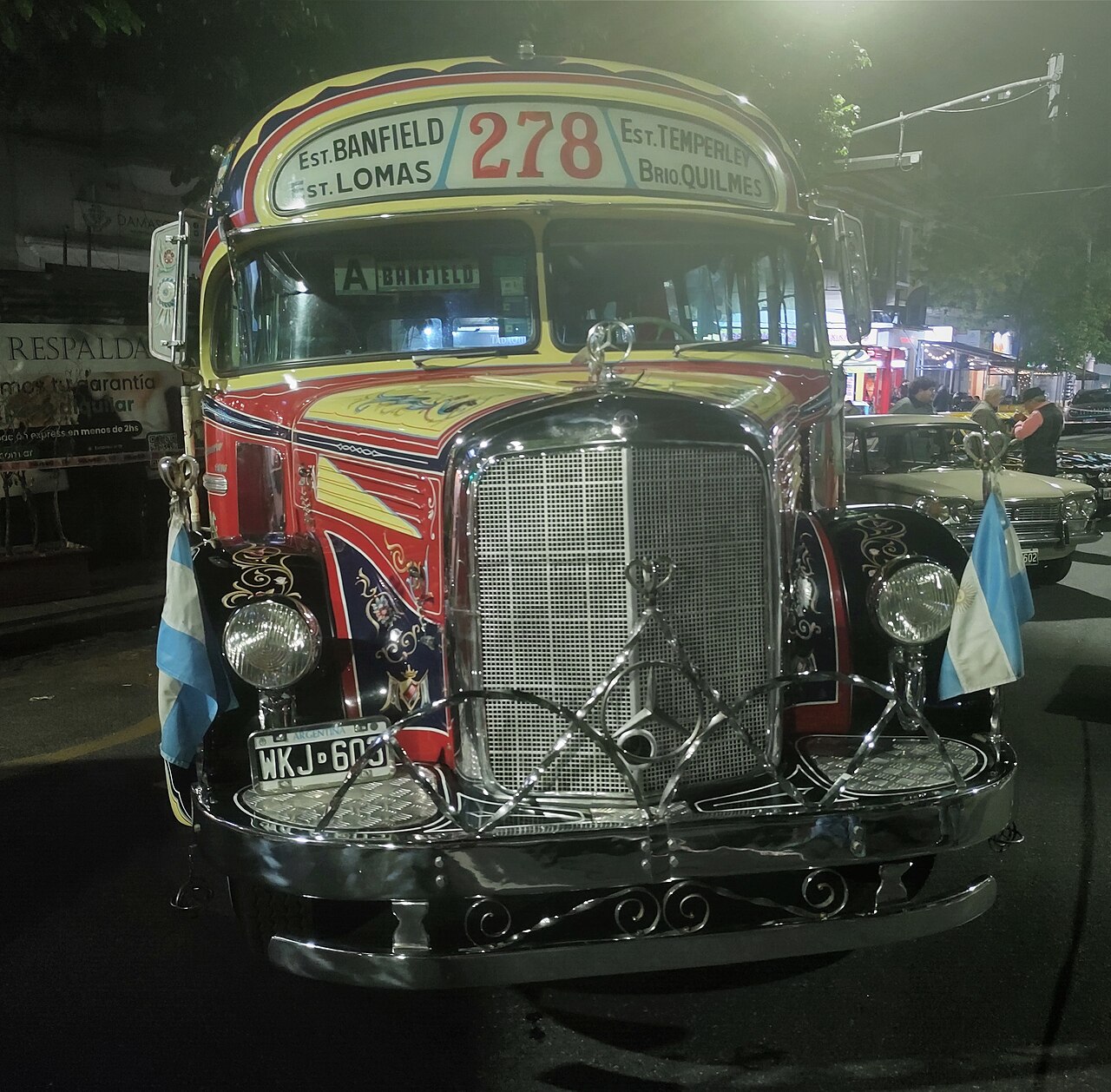
The colectivo grew up fast. Through the 1930s the bodies stretched from five seats to a dozen and more, and a whole craft industry of local carroceros (bodybuilders) sprang up to build them — first on car chassis, then, from roughly 1950 onward, on sturdier truck chassis, increasingly supplied by Mercedes-Benz Argentina. Each operator ran its own lines and painted its own buses, which is why a Buenos Aires street is a riot of colours: the colectivo was never a uniform municipal fleet, but a federation of small private companies, each with its own identity.
Rolling artworks
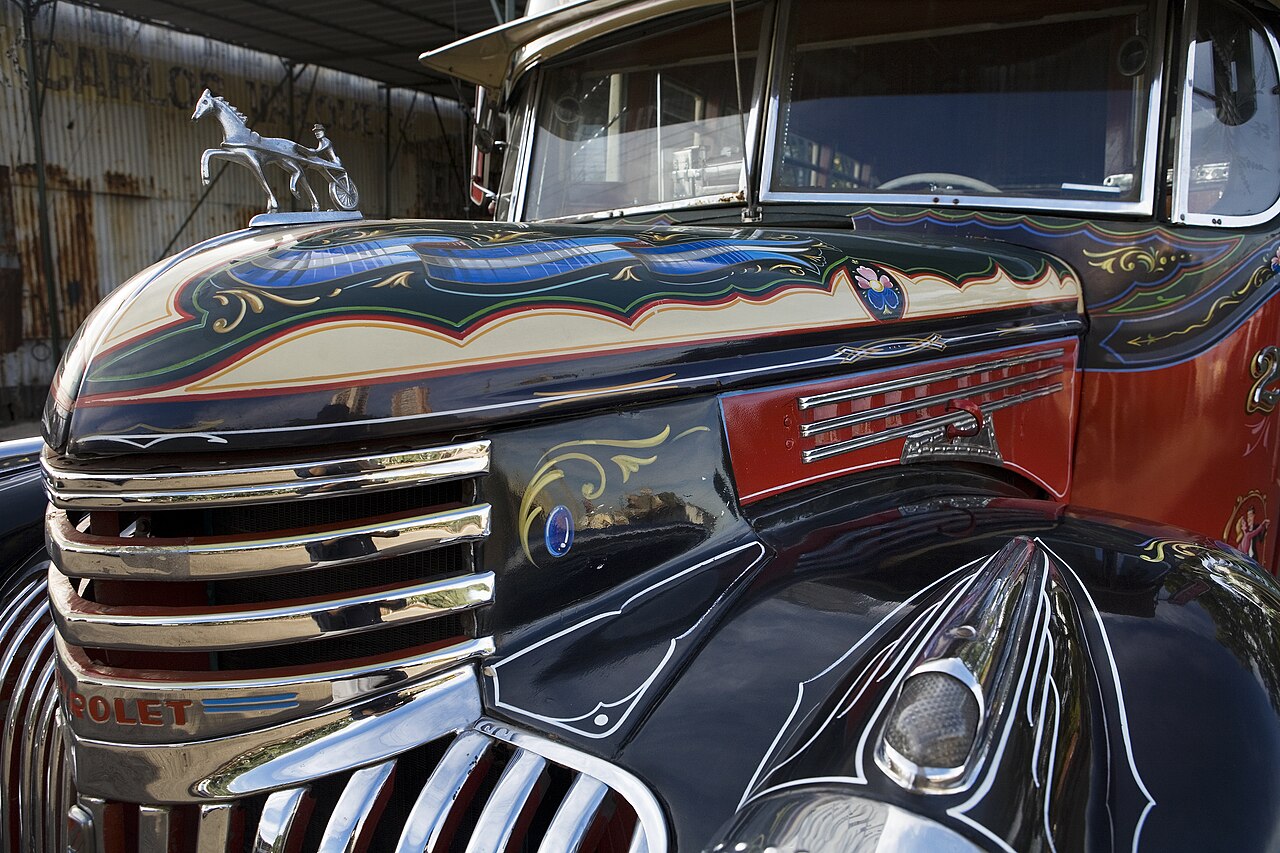
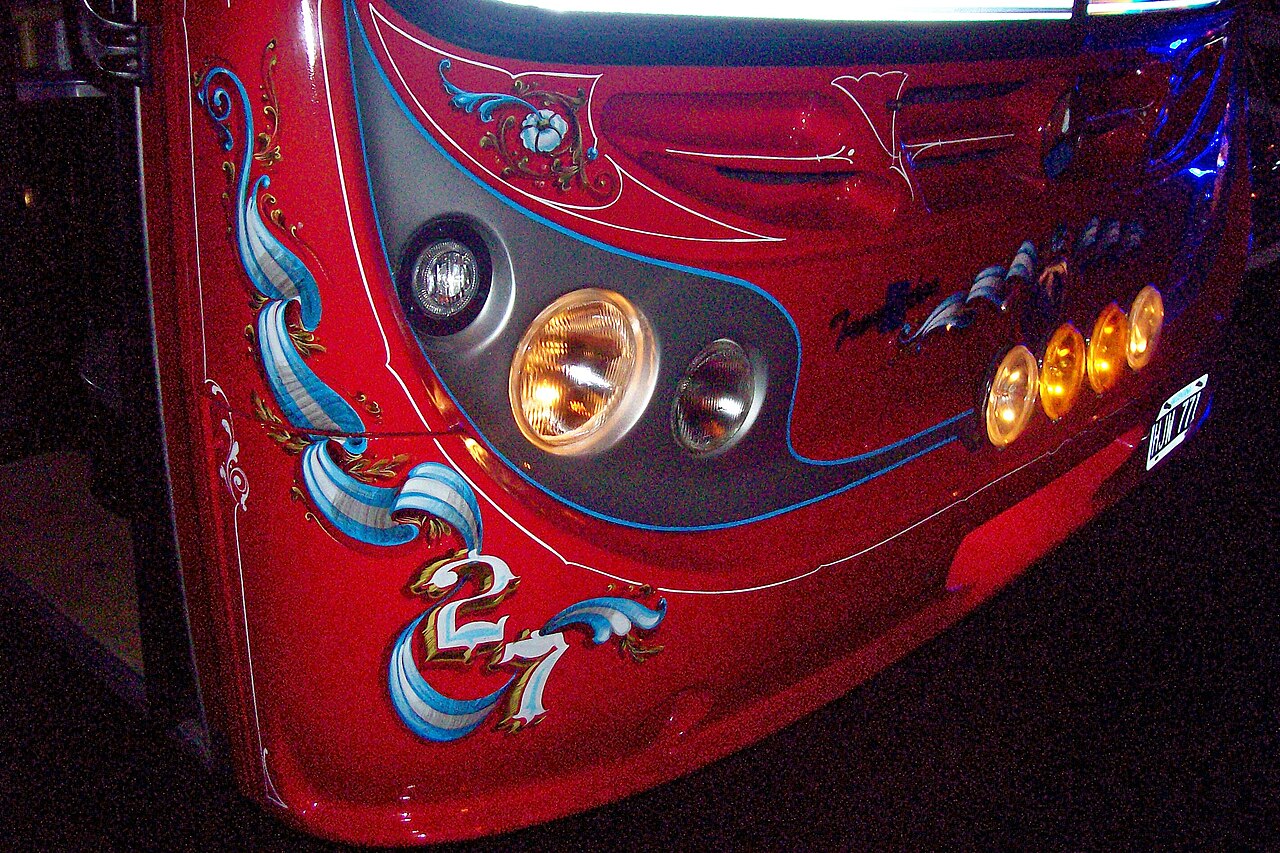
That private identity is also why the colectivo became a canvas. Drivers and owners decorated their buses with fileteado porteño — the swirling, brightly-coloured ornamental painting, full of scrolls, flowers and hand-lettered sayings, that UNESCO would later recognise as Intangible Cultural Heritage. It turned each unit into a one-off rolling artwork and gave the colectivo a personality no factory bus has ever had. (We tell that whole story in our piece on fileteado porteño.)
The rear-engine revolution — and "the death of the colectivo"
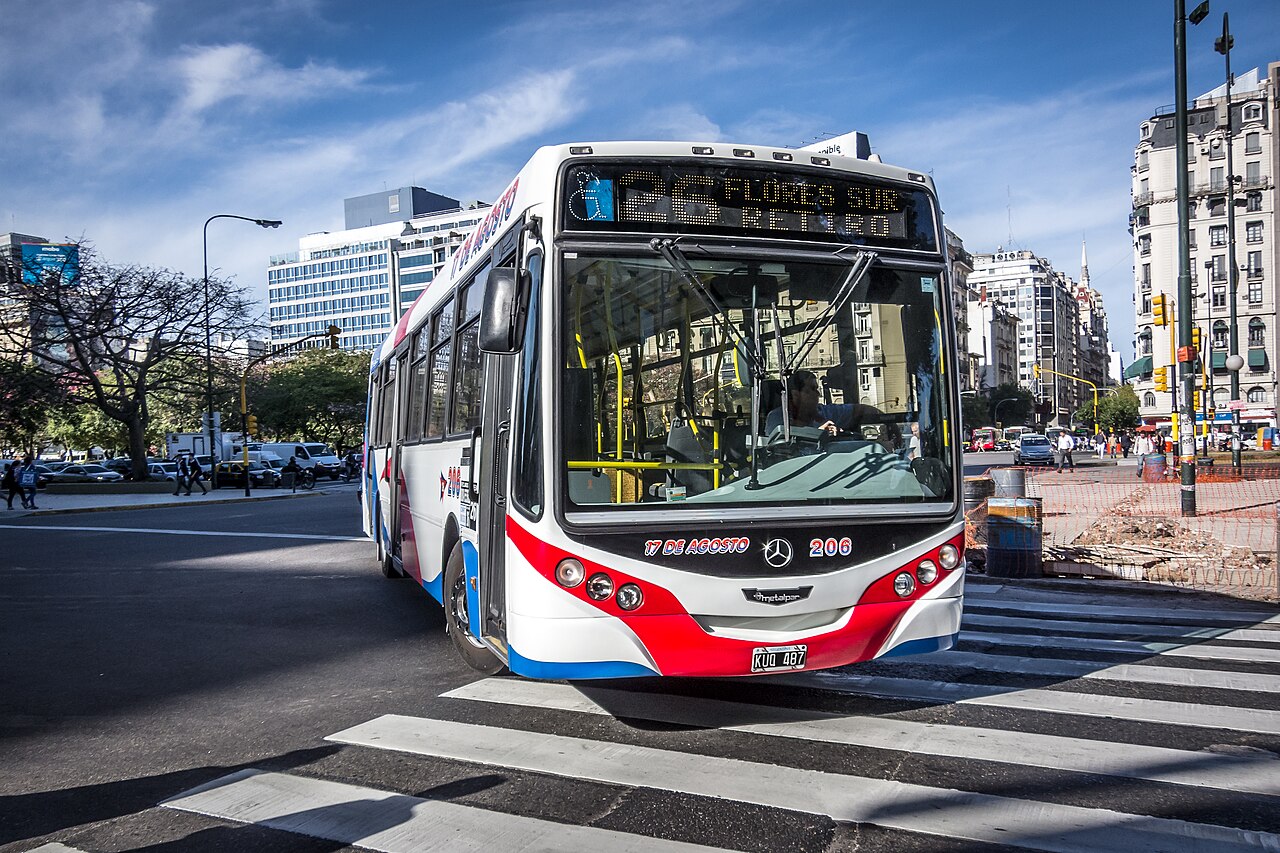
For half a century the colectivo kept its classic shape: a front engine sitting in a bonnet beside the driver. Then, in 1987, the bodybuilder El Detalle broke ranks with its rear-engine OA-101, and Mercedes-Benz answered the following year with the rear-engine OH-1314 chassis. The flat-fronted, rear-engine layout was more spacious and better suited to crowded city work — but to traditionalists it was so radical that it was remembered as "the death of the colectivo," the end of the artisanal, bonnet-nosed machine they had grown up with.
From the driver's seat — including a simulator's — that change is everything. The old trompa colectivo has its engine up front beside you: the noise and heat are at your right hand, the weight sits over the front axle, and the light tail steps out in the wet. Move to a rear-engine OH and the soundtrack drops behind you, the steering lightens, and the loaded back axle changes how the bus settles into a corner. Driving the two eras back to back is a hands-on lesson in why the industry made the switch.
The colectivo today — and in the sim
The modern colectivo is a low-floor, rear-engine machine, most often a Mercedes-Benz OH chassis dressed by an Argentine bodybuilder like Metalpar, Ugarte or La Favorita — but it still runs on the same logic those taxi drivers invented in 1928: privately operated lines, each with its own colours, blanketing the city. It remains one of the great bottom-up transport stories in the world.
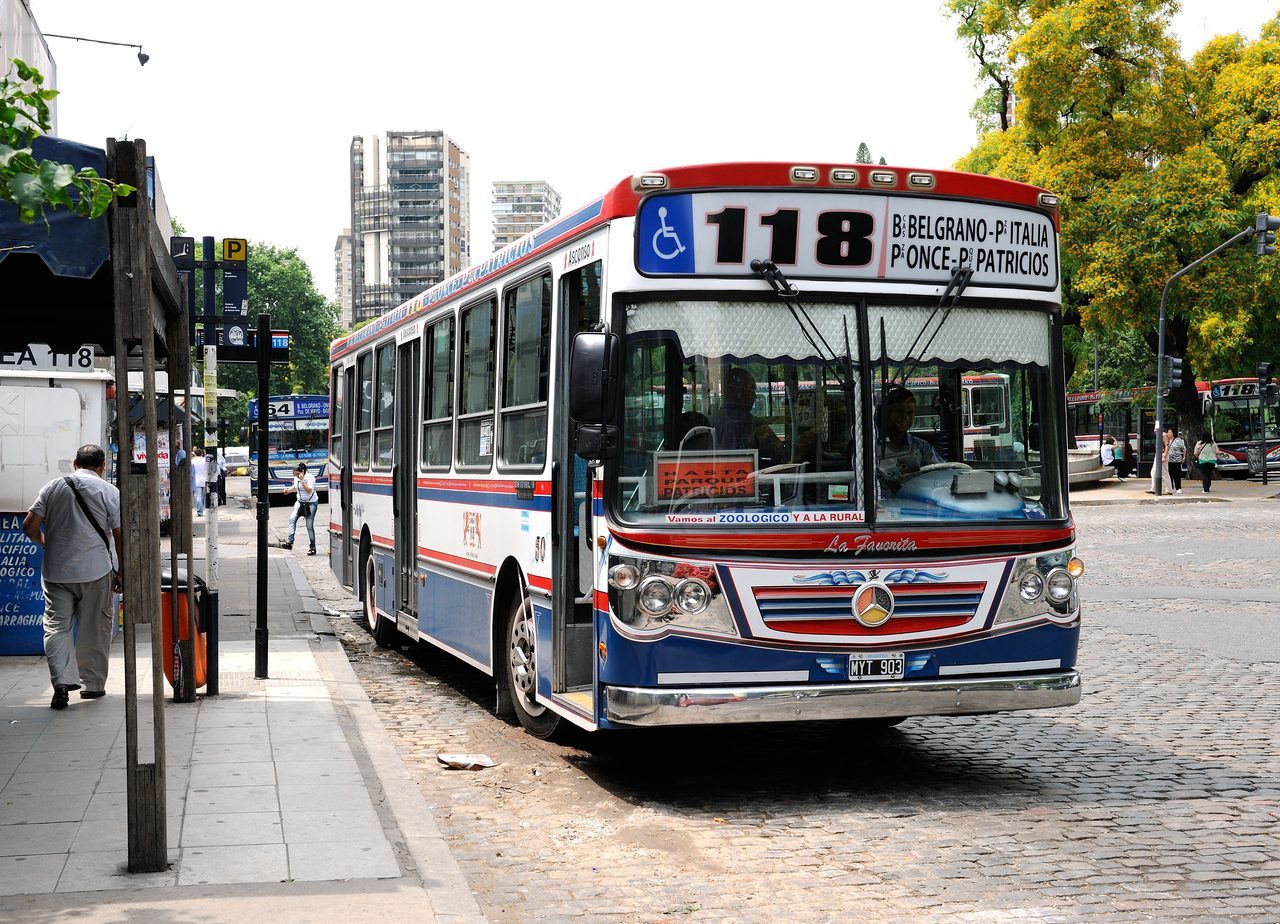
If you want to put one in your garage, the colectivo runs deep in Proton Bus Simulator. The Metalpar Iguazú II brings the articulated Argentine body to the game, and you can find more of the Mercedes-Benz chassis that underpins the whole fleet on the Mercedes-Benz mod page. Read the badge before you drive it, too — our guide to the Mercedes-Benz OH chassis explains exactly what those numbers on the back of a colectivo mean.
FAQ
What is a colectivo?
Why is the colectivo called a "bondi"?
When was the colectivo invented?
What engine and chassis do colectivos use?
Hero: a 1947 Chevrolet colectivo of the former line 149 — Photo: Jorge Royan, CC BY-SA 3.0, via Wikimedia Commons. In-body photos credited individually in their captions.