The Ikarus Story: How the Cold War Built and Broke the Eastern Bloc's Bus
Stand where the Berlin Wall once ran and picture the buses on each side. To the west, yellow German double-deckers — MAN, Mercedes — bought on an open market. To the east, an orange Hungarian articulated bus called the Ikarus 280. That difference had almost nothing to do with taste or engineering. It was politics. The bus you drove in Cold War Europe was decided, quite literally, by which side of the Iron Curtain you lived on.
Ikarus is the clearest story there is of how the politics of the socialist bloc built an industrial giant — and then, when that politics collapsed, destroyed it almost overnight. This is that story. (If you want the models and their three-digit codes, we decoded those separately in what Ikarus bus numbers mean; here the star is the history.)
A bus giant built by decree
Ikarus was Hungarian, based in Budapest — but its real customer was an entire political bloc. Under COMECON, the socialist economic union, members did not all compete to build everything; the plan carved industries up between countries, and Hungary was effectively handed the job of building the bloc's buses. That single decision made Ikarus enormous.
With a captive continental market and no Western rivals allowed in, the numbers ran wild. By the late 1970s Ikarus was turning out around 12,000 buses a year, and roughly 87% of them went to Soviet-bloc markets. Its articulated 280 was so dominant that, across the 1970s and 80s, this one Hungarian marque accounted for about two-thirds of all the articulated buses built in the entire world. Not two-thirds of the socialist world — two-thirds of the planet.
Berlin: the Cold War in one city
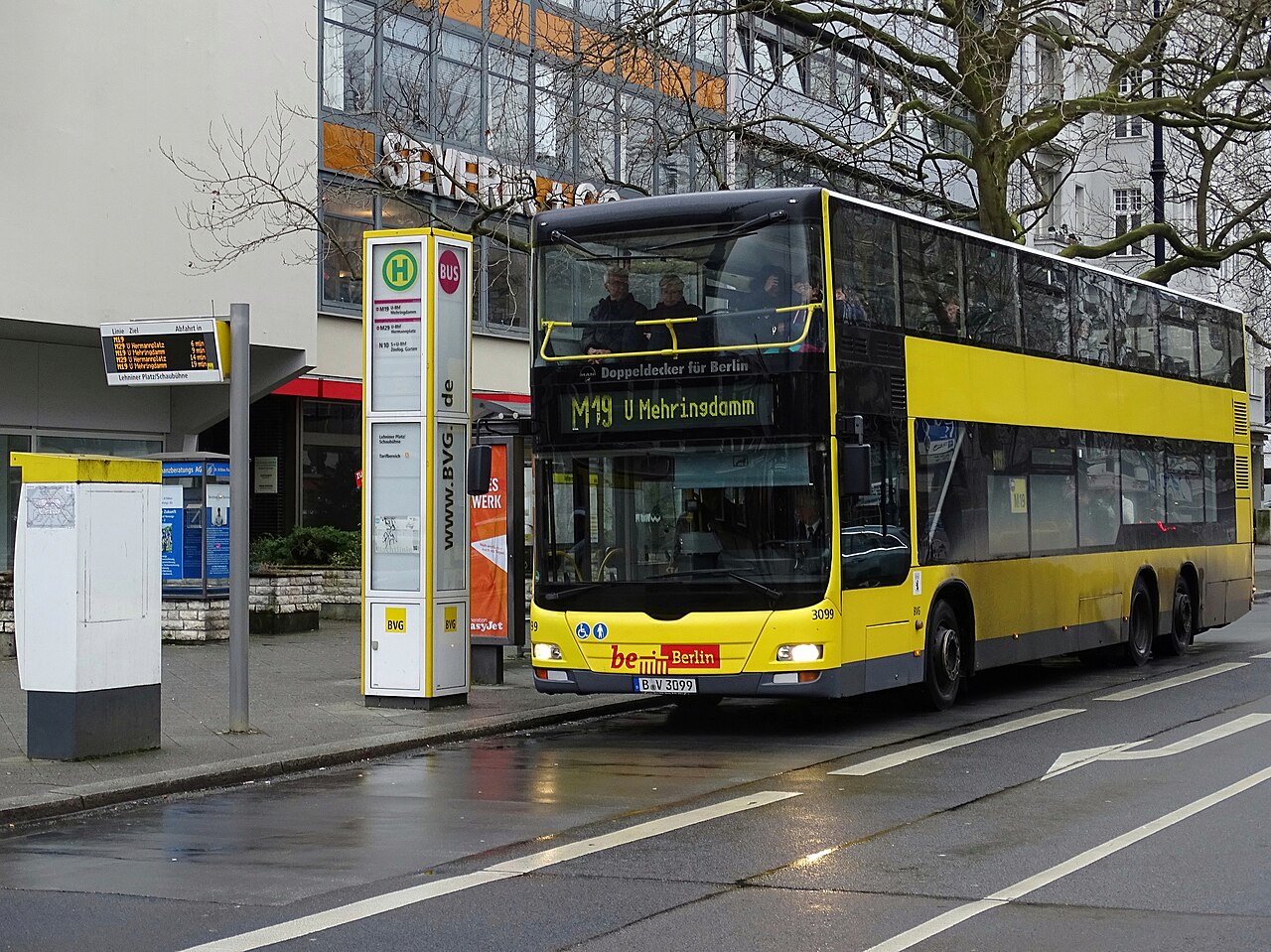
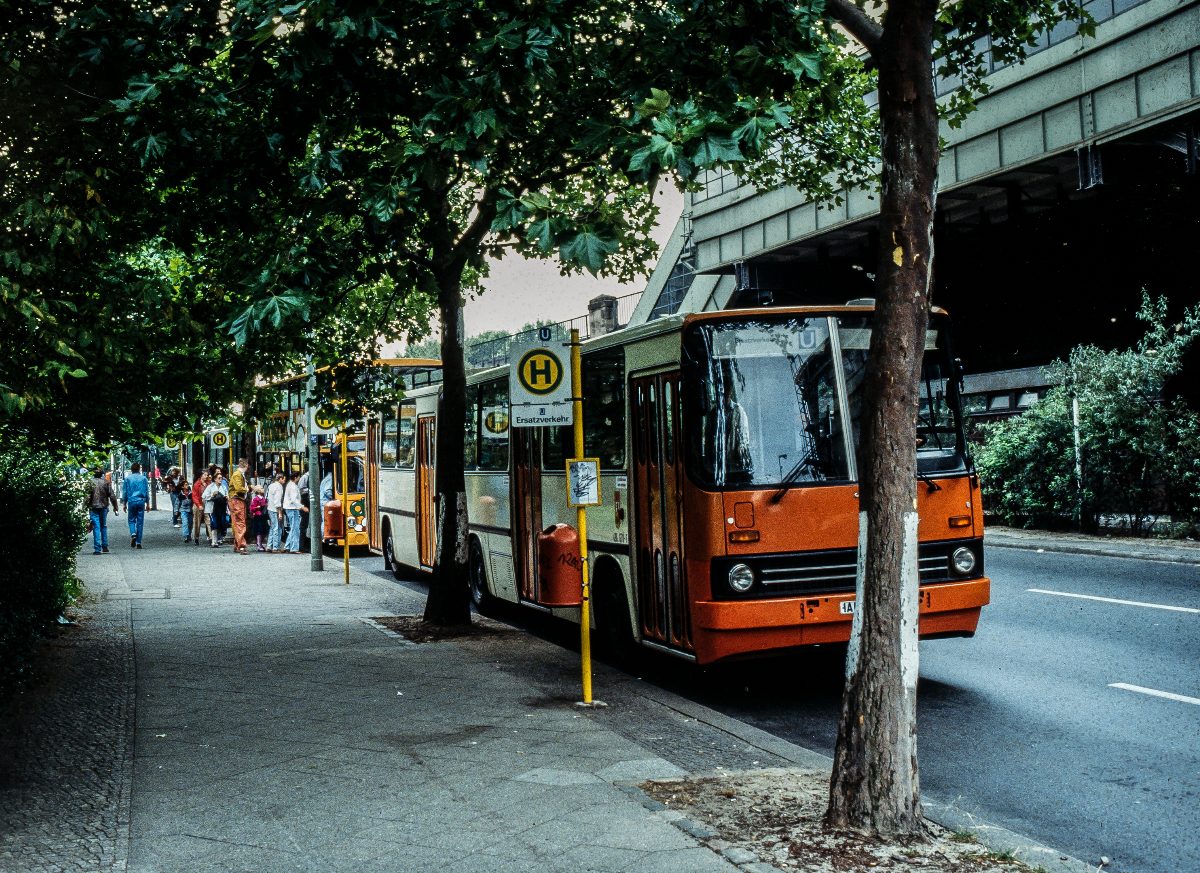
Nowhere was the politics clearer than in divided Berlin. As we told in the story of Berlin's yellow BVG fleet, the West ran its own MAN double-deckers, chosen and bought on a free market. The East, sealed inside the bloc, ran the Ikarus 280 — not because anyone judged it better, but because that is what the plan supplied. One city, one Wall, two completely different buses, drawn straight from the map of the Cold War.
The customer that couldn't say no
This is the quiet catch in the whole story. The Soviet Union and East Germany did not really choose Ikarus; inside the planned economy they were, in effect, assigned it. That guaranteed demand was a gift — it made Ikarus one of the biggest bus makers on Earth without the company ever having to win a competitive tender. But it was also a trap. Its health rested not on building the best bus, but on a political system continuing to hand it customers. Ikarus was superb at supplying a world that ordered buses by decree — and had never really learned to sell to anyone who had a choice.
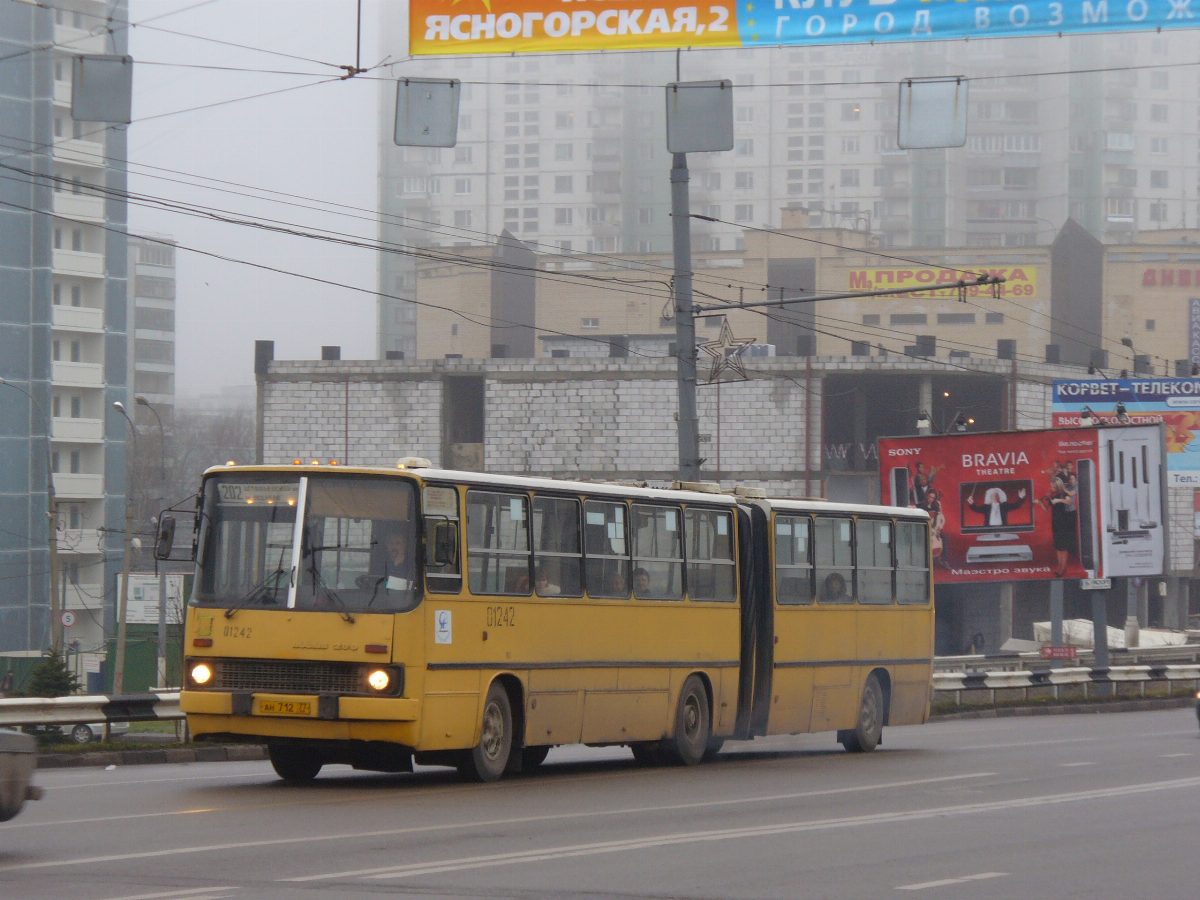
You can see the scale of that dependence in the archive photos: an orange 280 on a Moscow avenue looks identical to one in East Berlin, because they came off the same line for the same plan. The USSR was the anchor customer — and when the USSR shook, Ikarus shook with it.
One factory, every body style
The size of the Ikarus monopoly is easiest to grasp by looking at the range it built. A single Hungarian marque supplied the bloc with every kind of bus — and its designs turned up in cities the plan never officially reached.
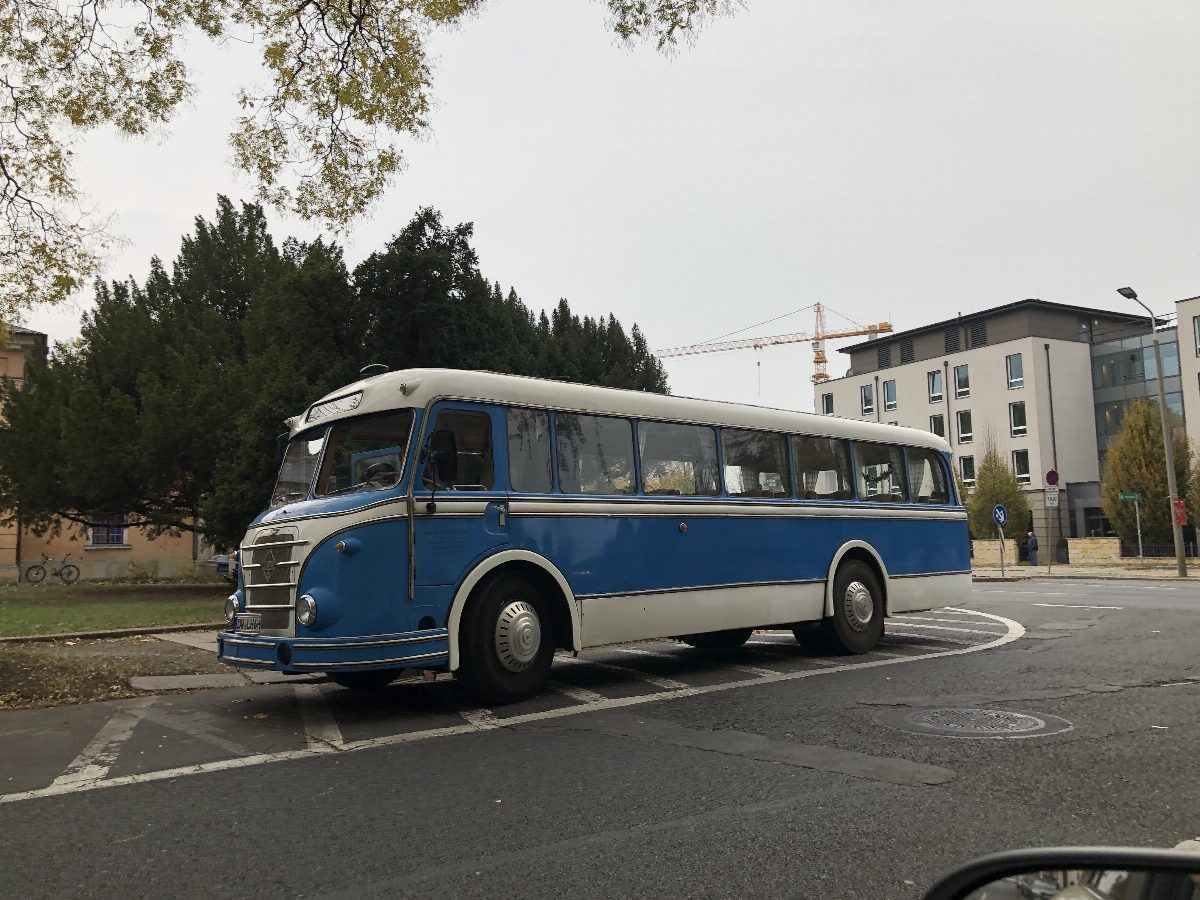
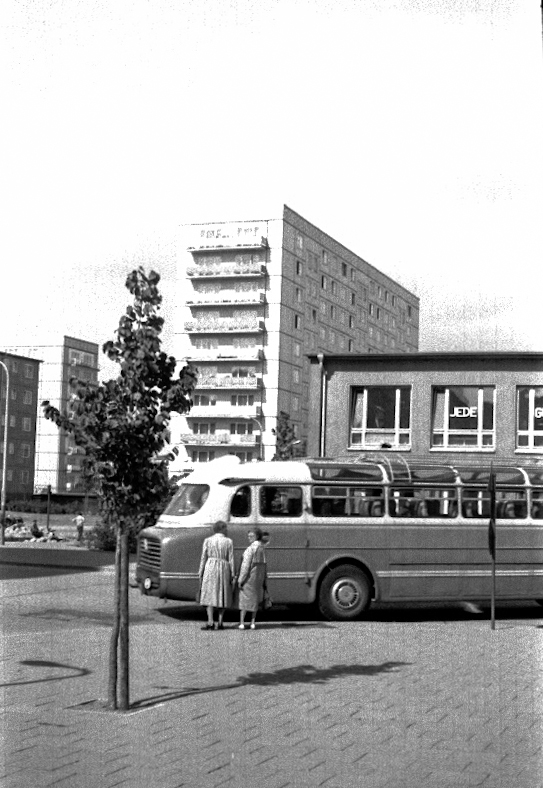
Before the boxy 200-series became the face of socialist transport, Ikarus built the streamlined 55: a rounded, rear-engined coach that was already carrying passengers across East Germany in the 1960s.
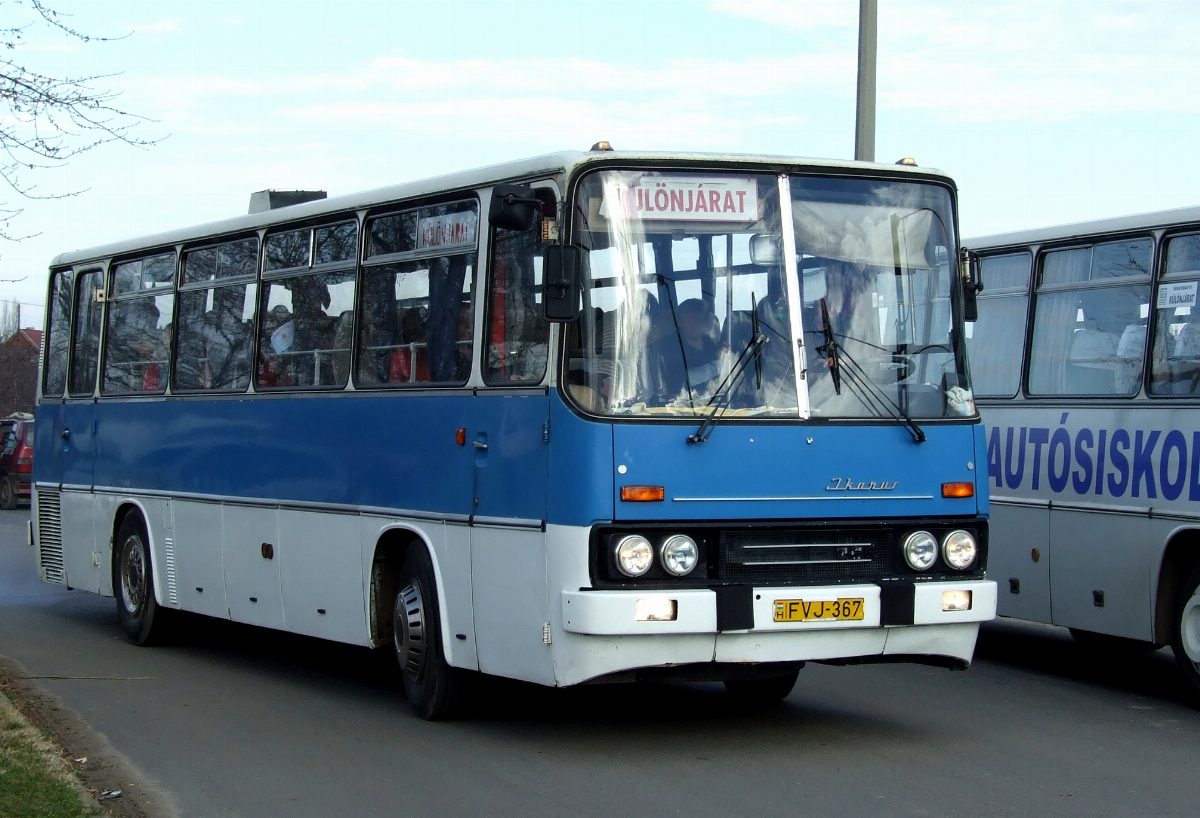
The 200-series that followed was the plan made physical: one standardized family covering every role. The 250 and 256 were long-distance coaches; the rigid 260 was the workhorse city bus; the bendy 280 was the articulated. (What each number meant, door code and all, is its own story — we broke it down in what Ikarus bus numbers mean.)
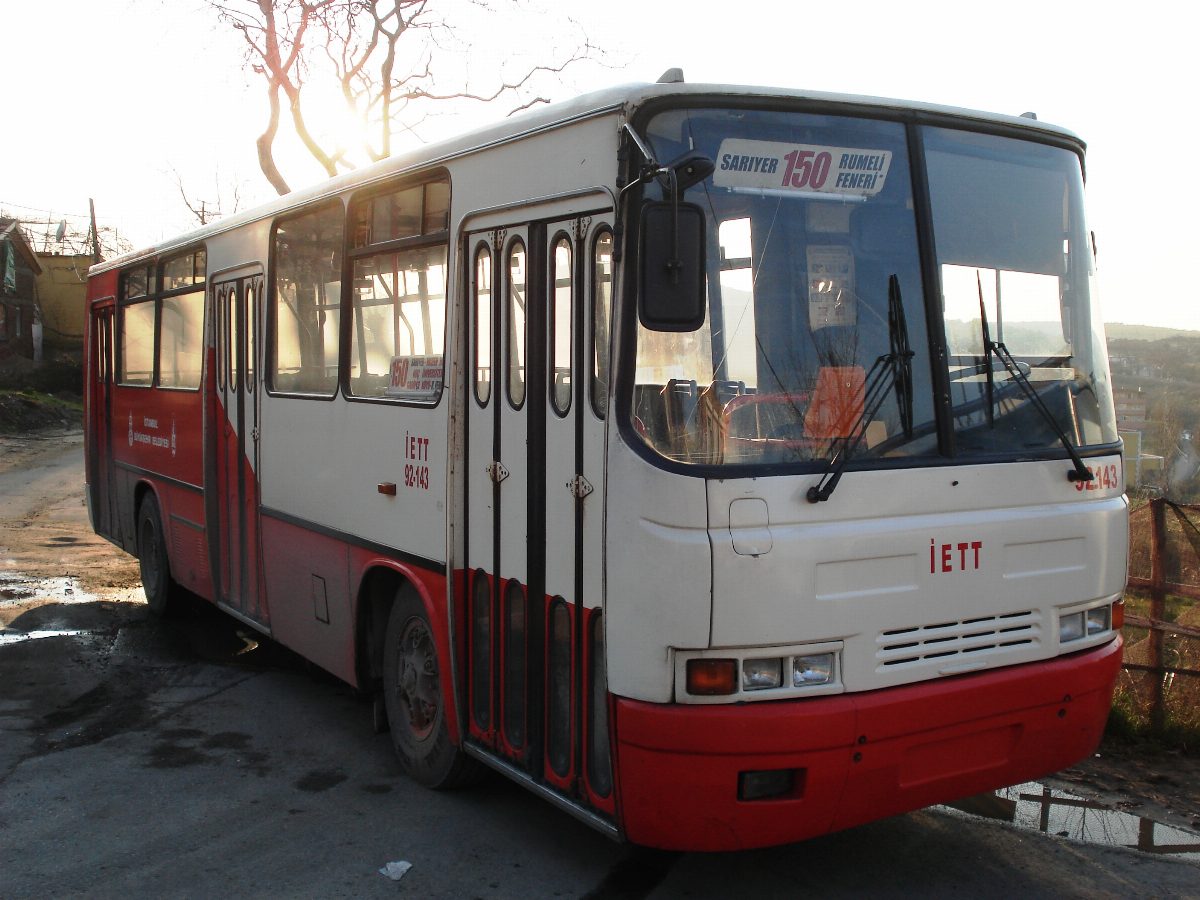
And the reach went past the Iron Curtain. Istanbul's İETT — in NATO-member Turkey, not a COMECON country — ran Ikarus 260s that stayed in service into the 1990s: proof that when a bus was cheap and rugged enough, even the other side of the Cold War would buy it.
1989–1991: when the politics reversed
Then the whole system that built Ikarus came apart in the space of about two years — and it took the company down with it. The Wall fell in 1989; COMECON dissolved; Germany reunified.
The blow landed almost instantly. Reunified Germany cancelled all of its Ikarus orders for 1990, and the newly-freed East German cities did exactly what a free market lets you do: they switched to Mercedes and MAN. Sales to Germany, once one of Ikarus's most important markets, collapsed to around 10%. In the same year the near-bankrupt Soviet Union stopped importing, leaving over a thousand finished Ikarus 200-series buses stranded in the factory yard with nowhere to go. Annual output cratered from about 11,000 buses in 1989 toward 6,000, and in 1991 Ikarus declared bankruptcy. The captive market vanished the instant the politics that created it did.
The long afterlife
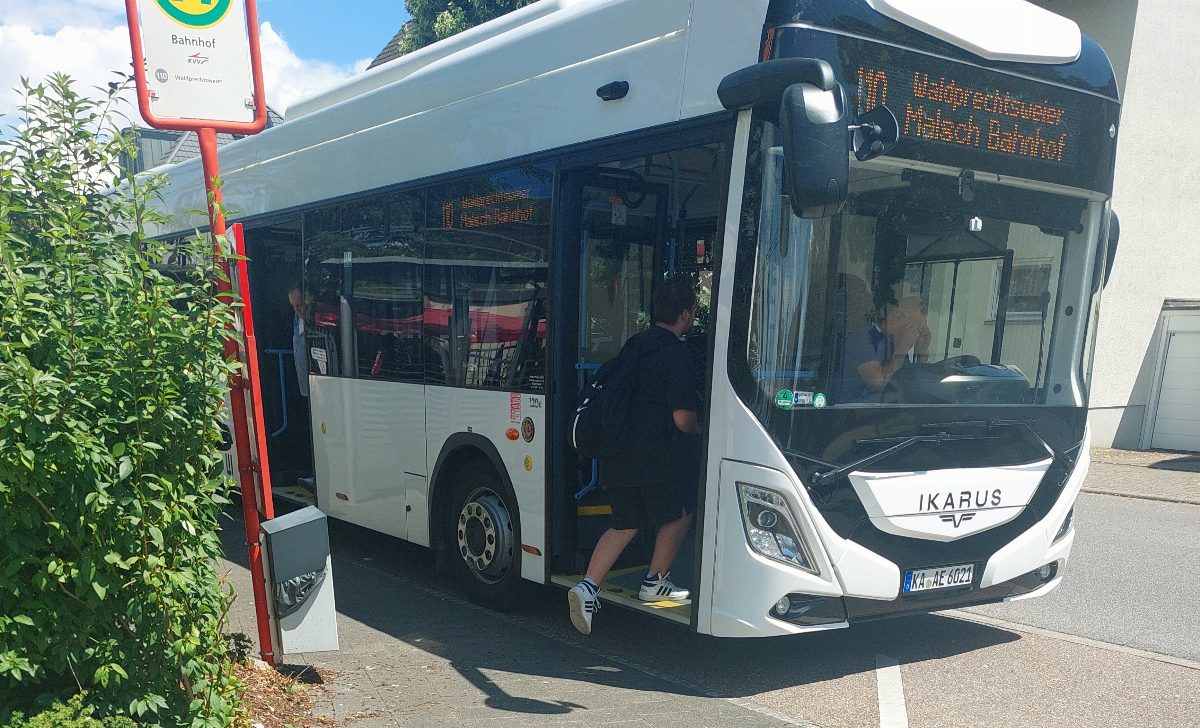
Ikarus never really recovered. It limped through the 1990s and 2000s on failed privatisations and shrinking orders. But its buses refused to die: across the former Soviet Union, cities that could not afford to replace their fleets kept the orange 280s running for years — which is why, well into the 2000s, the harmonica bus was still a fixture from Moscow to the Caucasus. More recently the badge has tried to come back as an electric bus, the Ikarus 120e — a famous old name reborn for a very different Europe.
Driving the machine the Cold War built
Here is what makes an Ikarus special to drive in a simulator: it is not just an old bus, it is a piece of political history you can steer. Take an Ikarus 280 mod onto a Russian or post-Soviet map and you are driving a machine that existed in those numbers for one reason only: a planning committee decreed it. The number on the badge tells you what the bus is; the history tells you why there were ever so many of them to decode. Browse the Ikarus mods and drive a little of the Cold War yourself.
FAQ
Why did the whole Eastern Bloc use the same Ikarus buses?
Was Ikarus really one of the biggest bus makers in the world?
Why did Ikarus collapse?
What buses did East and West Berlin use?
Sources
- Ikarus (Hungarian company) — Wikipedia — the COMECON dominance, ~87% of output to Soviet-bloc markets, ~12,000 buses a year, the 280 making up two-thirds of world articulated production, the 1990 order cancellations, the buses stranded in the yard, sales to Germany falling to ~10%, and the 1991 bankruptcy.
- A true socialist wonder: the Ikarus bus — Daily News Hungary — the socialist-era scale of Ikarus and its collapse after the fall of the bloc.
- Ikarus 280 — Wikipedia — the 16.5-metre articulated, its 1973–2002 production and its use across Eastern Europe and the USSR.
- Urban Transport Magazine — Ikarus 120e — the 30,000-plus 200-series buses delivered to East Germany, and the modern electric revival of the brand.
Hero: an Ikarus 280 in Moscow by Artem Svetlov, CC BY 4.0, via Wikimedia Commons. In-body photos are credited in their captions.