BVG Berlin: The Story of the World's Most Iconic Yellow Bus Fleet
Almost every big city runs its buses in a corporate blue or a municipal red. Berlin runs a whole fleet in bright canary yellow — and, almost alone among the world's capitals, it still fills its streets with double-deckers. Behind that unmistakable look is the BVG, the Berliner Verkehrsbetriebe, one of the largest and most characterful transport operators on the planet.
This is the story of the BVG and its buses: where the operator came from, how a divided city split it in two, and the parade of machines — from the classic yellow double-deckers to today's silent electrics — that have worn that yellow over the decades.
One operator for a whole city
The BVG was born from a merger. In 1928 Berlin folded its separate companies — the one that ran the buses, the one that ran the U-Bahn, and the one that ran the trams — into a single operator, the Berliner Verkehrsbetriebe. Nearly a century later it still does all of it: the U-Bahn, the trams, the buses and even ferries, moving millions of people a day. Its buses alone number well over a thousand, and they are the part of the BVG that wears the yellow most proudly.
A city split, an operator split
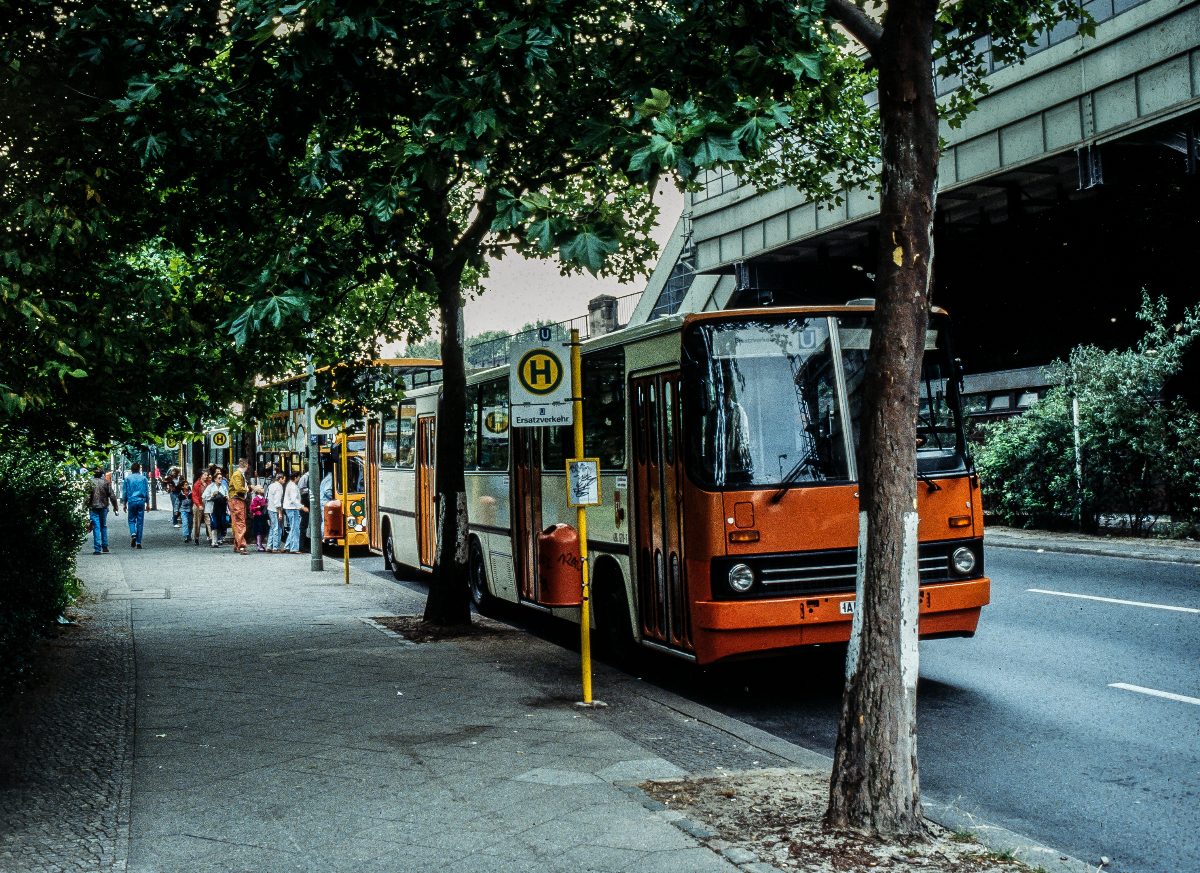
Then history cut the company in half. From 1 August 1949, as Berlin divided, the BVG's networks in West and East Berlin were run separately; the eastern side eventually became its own operator, the Kombinat (BVB). For four decades there were, in effect, two Berlin transport authorities, one on each side of the Wall — and they even ran different buses.
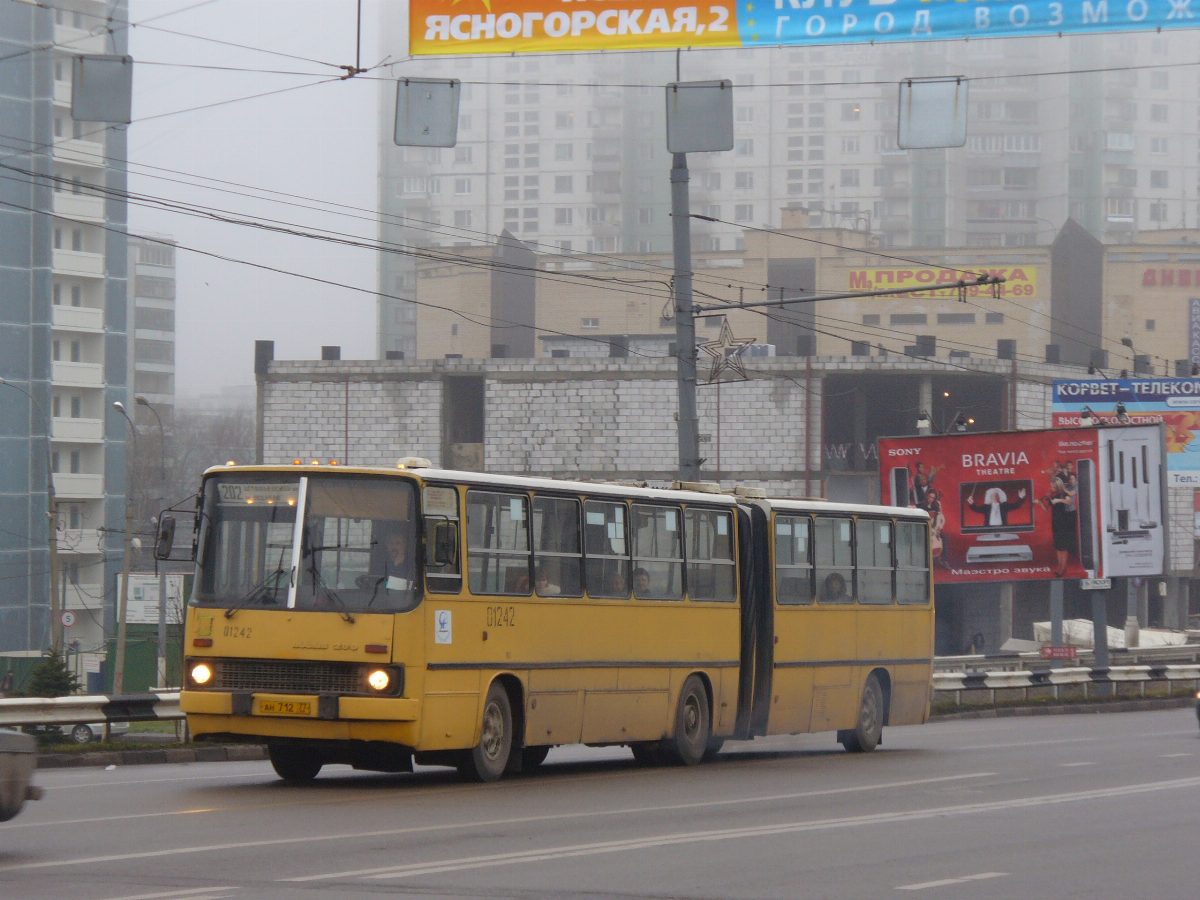
The West kept its yellow MAN double-deckers. The East filled its streets with the Ikarus 280, the Hungarian-built articulated bus that was the workhorse of the whole socialist bloc — more than 30,000 of Ikarus's 200-series went to East Germany alone. Only on 1 January 1992, after reunification, were the two halves stitched back into a single BVG — the operator Berlin knows today.
Why Berlin still stacks its buses
Berlin's signature is the double-decker. While most of continental Europe long ago switched to single-deckers and bendy buses, Berlin kept building up — and it still runs the largest double-decker fleet on mainland Europe, on the order of 200 of them. If you have ever wondered how a top-heavy two-decker behaves, we went deep on it in the story of the double-decker. Berlin is the great continental exception to the rule.
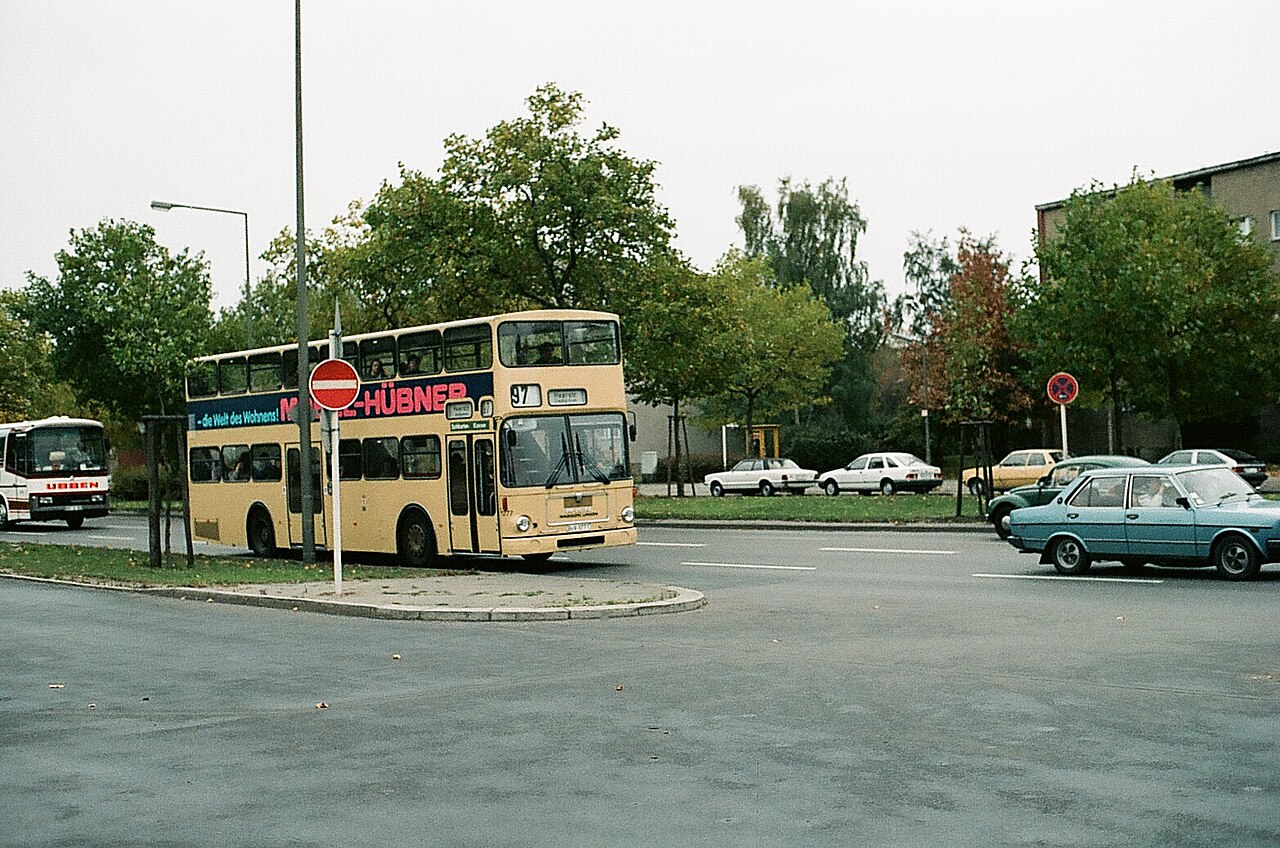
The classic: the MAN SD 200
No bus says "old Berlin" like the MAN SD 200. Built from 1973 to 1985 under West Germany's VÖV standard-bus programme, it was designed specifically as the BVG's standard double-decker, taking over from the earlier Büssing. The numbers are remarkable for a single operator: 956 SD 200s were delivered to the BVG, and they worked Berlin's streets right up until 2003 — nearly three decades of yellow two-deckers. Its successor, the SD 202, carried the shape into the 1990s.
The modern double-decker: MAN Lion's City DD
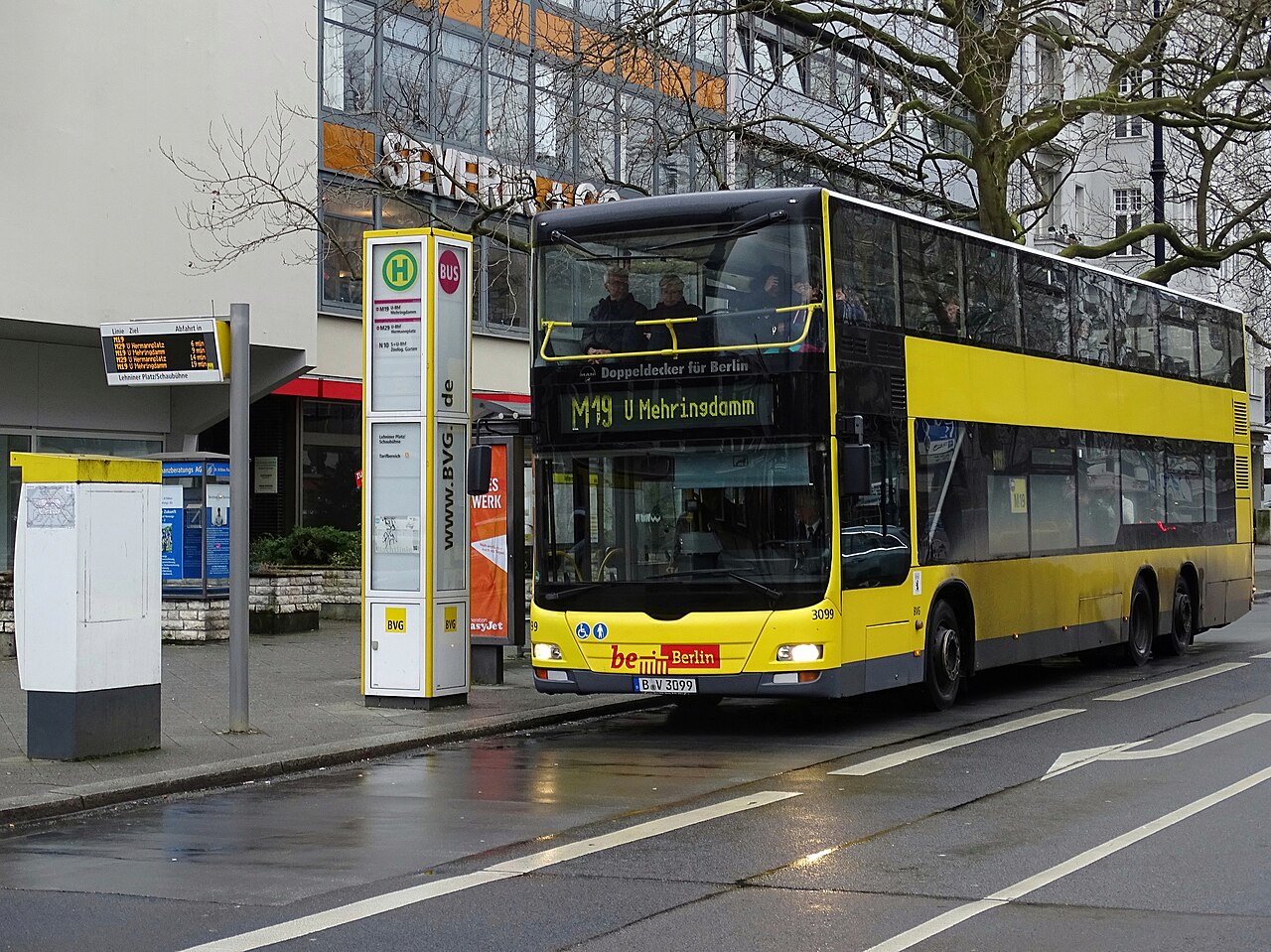
The SD 200's spiritual heir is the MAN Lion's City DD (type A39), the three-axle yellow double-decker that defined 2000s Berlin — the bus in the photo at the top, gliding down the Kurfürstendamm. The BVG bought 416 of them between 2005 and 2010. Today even these are being retired, with Berlin turning to the Alexander Dennis Enviro500 — the same three-axle British double-decker that conquered Hong Kong, and whose Enviro500 mod is in the catalog. The yellow lives on; the badge underneath keeps changing.
The everyday fleet, and the switch to electric
Away from the double-deckers, Berlin's single-deck workhorses are the familiar European pair: the MAN Lion's City and the Mercedes-Benz Citaro, in solo and 18-metre articulated form — step-free, low-floor city buses like the ones we cover in why European city buses look the same.
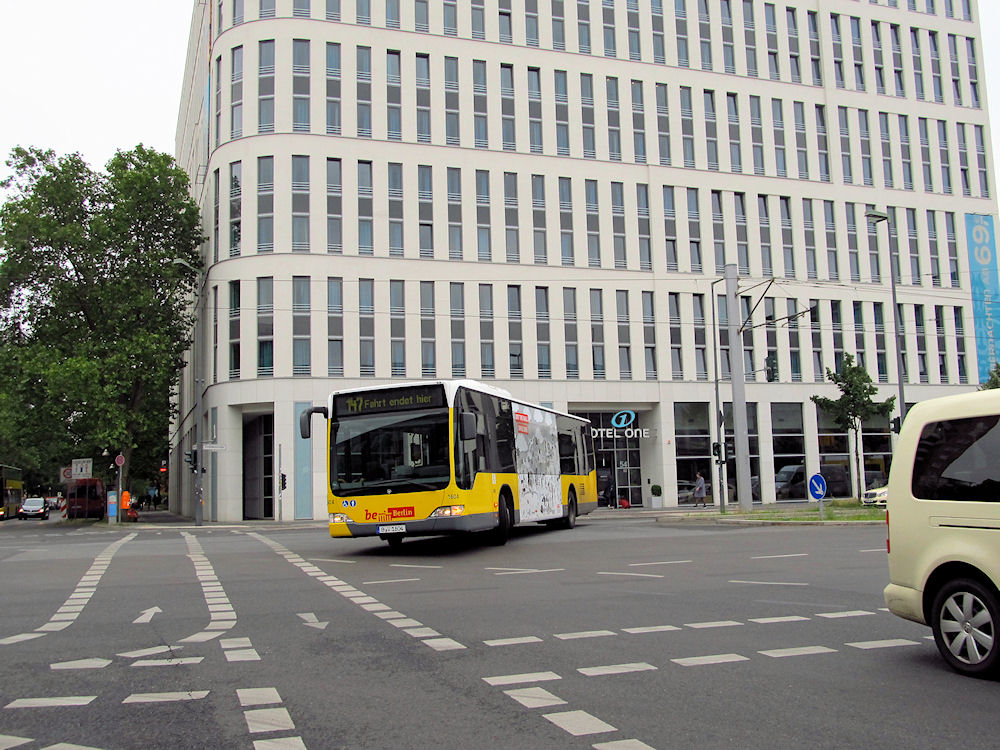
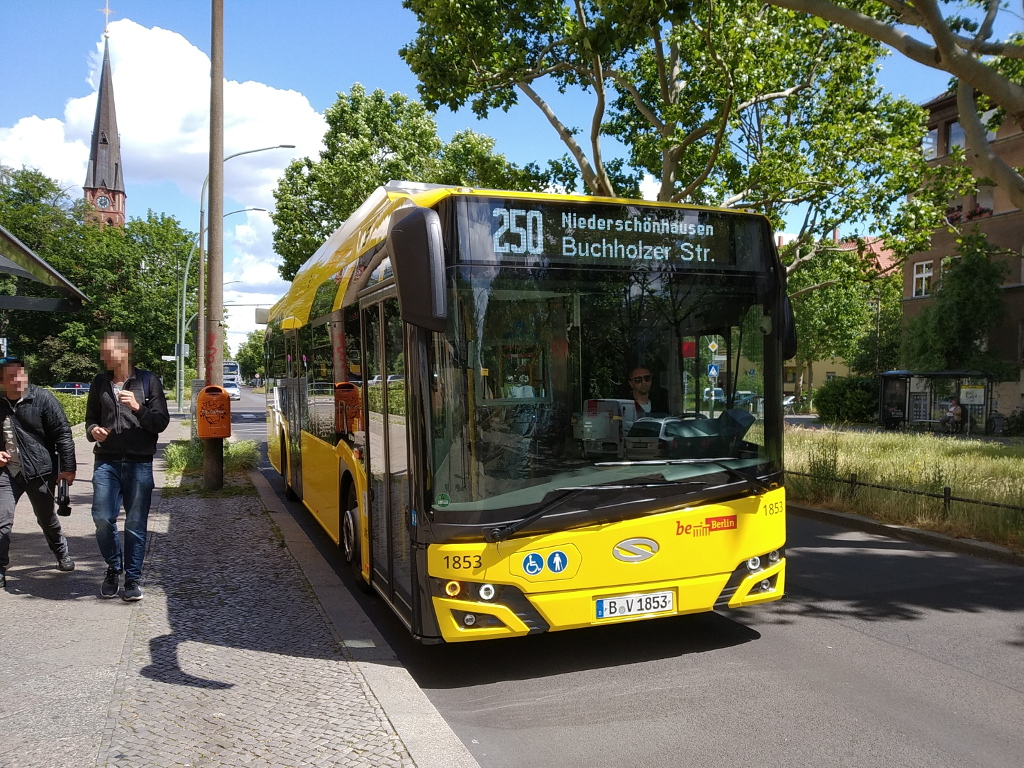
And now the fleet is going quiet. The BVG put its first Mercedes-Benz eCitaro electrics into service — the battery version of that everyday Citaro.
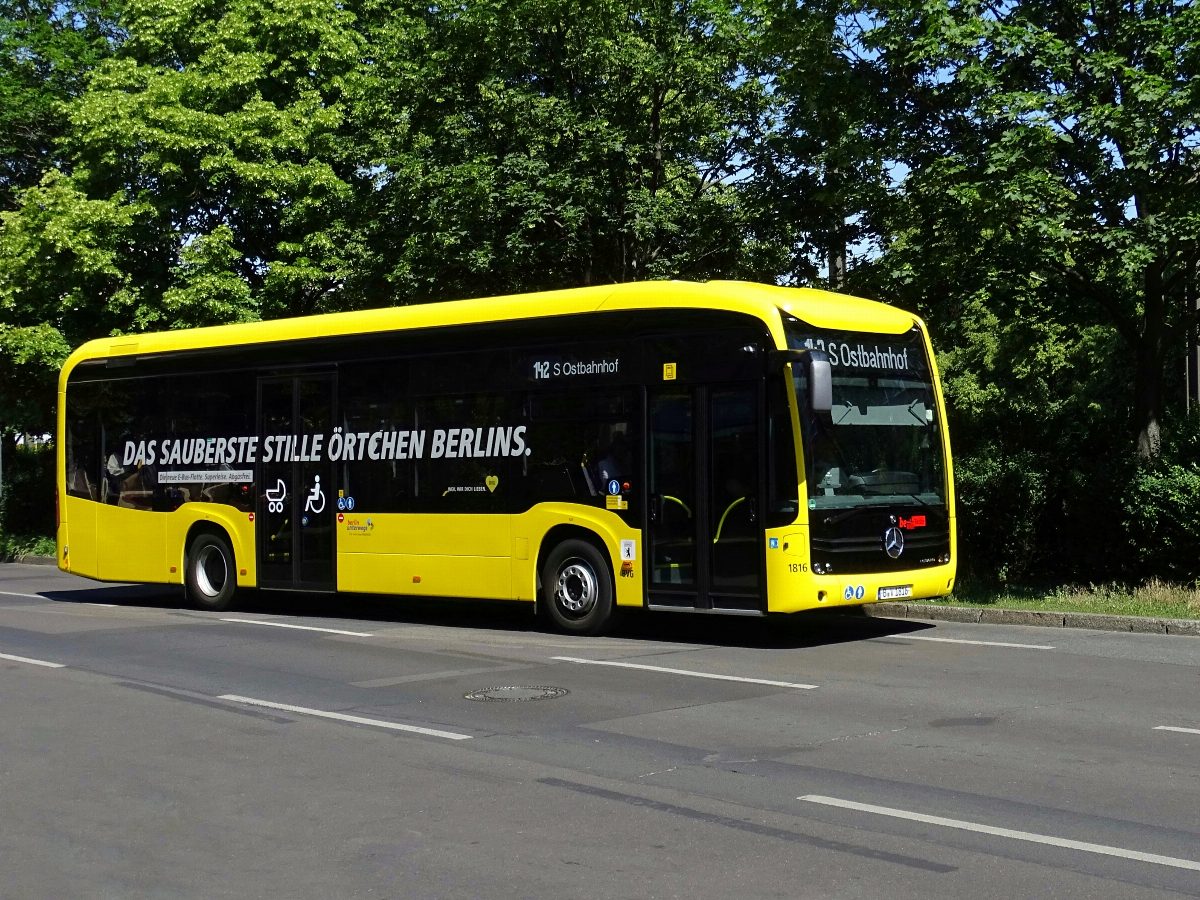
Then it went big on Solaris Urbino electrics: the 12-metre Urbino, and the 18-metre articulated version that gave Berlin its first electric bendy buses, with hundreds more on order.
Driving Berlin yellow in Proton Bus Simulator
Here is the fun part: an operator like the BVG is really a whole scenario you can build. Recreate a Berlin route and you get the full range in one livery — the high-centre-of-gravity double-decker leaning through a roundabout, the 18-metre MAN Lion's City articulated swinging its tail through a corridor, and the silent Solaris electric sliding down a boulevard. Pull the German fleet from the MAN and Germany mod hubs, paint your route in Berlin yellow, and run the BVG yourself.
FAQ
What does BVG stand for?
Why are Berlin's buses yellow?
Does Berlin still use double-decker buses?
What buses did East Berlin use?
When was the BVG founded?
Sources
- Berliner Verkehrsbetriebe — Wikipedia — the 1928 founding merger, the modes operated, the 1949 West/East split and the 1 January 1992 reunification, and the double-decker share of the fleet.
- MAN SD 200 — Wikipedia (German) — the 1973–1985 production, the VÖV standard-bus programme, the 956 units delivered to the BVG, service until 2003, and the SD 202 successor.
- Bus transport in Berlin — Wikipedia — the MAN Lion's City DD (A39) fleet (416 bought 2005–2010), the ~200 double-deckers, and the shift to the Alexander Dennis Enviro500.
- Urban Transport Magazine — Ikarus 120e — the Ikarus 280 in East Berlin service and the 30,000-plus 200-series buses delivered to East Germany.
Hero: a BVG MAN Lion's City DD on the Kurfürstendamm by Mirkone, CC BY-SA 3.0, via Wikimedia Commons. In-body photos credited in their captions.