Brazil's Other Bus Body Makers: Comil, Busscar and Caio
Say "Brazilian bus" and most people think of one name: Marcopolo. And fairly — Marcopolo builds more than half of all the bus bodies in Brazil. But the other half comes from somewhere, and that somewhere is a set of rivals with stories every bit as good as the market leader's.
Meet the other three: Comil, the young challenger; Busscar, the fallen giant; and Caio, the quiet king of the city bus. Once you can tell them apart, the whole Brazilian half of the catalog opens up.
First, a quick reminder: bodies, not buses
All three are encarroçadores — coachbuilders. They build the body and bolt it onto a chassis from someone else, usually a Mercedes-Benz, Volvo, Scania or Volkswagen. The badge on the side and the badge on the engine are two different companies. We unpacked exactly how that split works in our guide to Marcopolo bus names; here, we are looking at who builds the bodies.
Comil: the young challenger from Erechim
Comil is the newcomer, and it moved fast. It was founded in 1985 in Erechim, in the far south of Brazil, by the Corradi and Mascarello families after they bought an older body maker called Incasel. In a market ruled by decades-old giants, Comil built itself into the number-three coachbuilder in barely a generation.
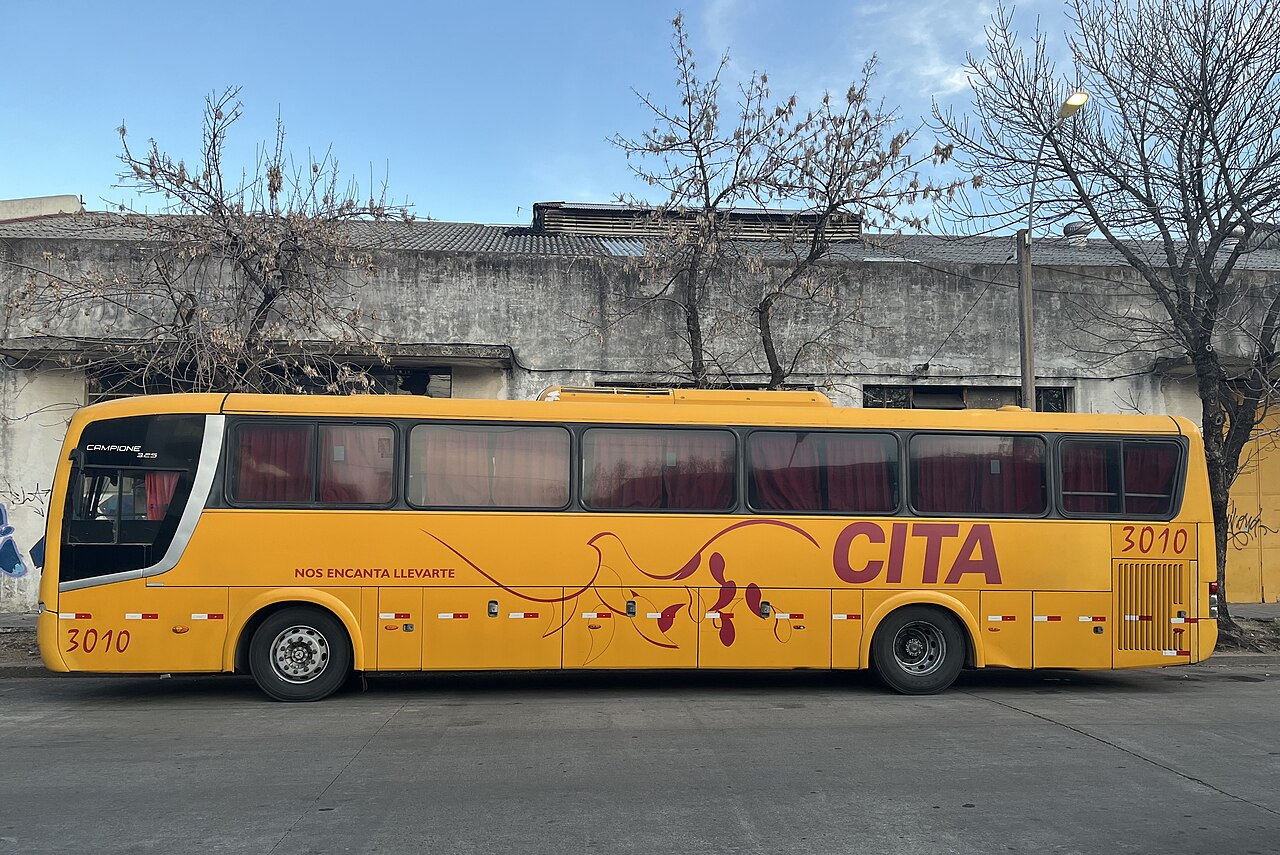
Its range reads like a tour of the market. The Campione is the flagship road coach, sold in a ladder of roof heights for different classes of intercity travel. The Versatile handles regional and intercity work below it, while the Svelto and the articulated Doppio cover the city. One maker, the full spread — bought with a name most riders had never heard of thirty years ago.
Busscar: the fallen giant of Joinville
Busscar has the most dramatic story of the three. Its roots go back to 17 September 1946 in Joinville, where two brothers of Swedish descent started a workshop that grew into one of Brazil's proudest coachbuilders. Busscar's coaches — the Jum Buss, the Vissta Buss, the El Buss — became fixtures on South American highways, and it exported bodies around the world.
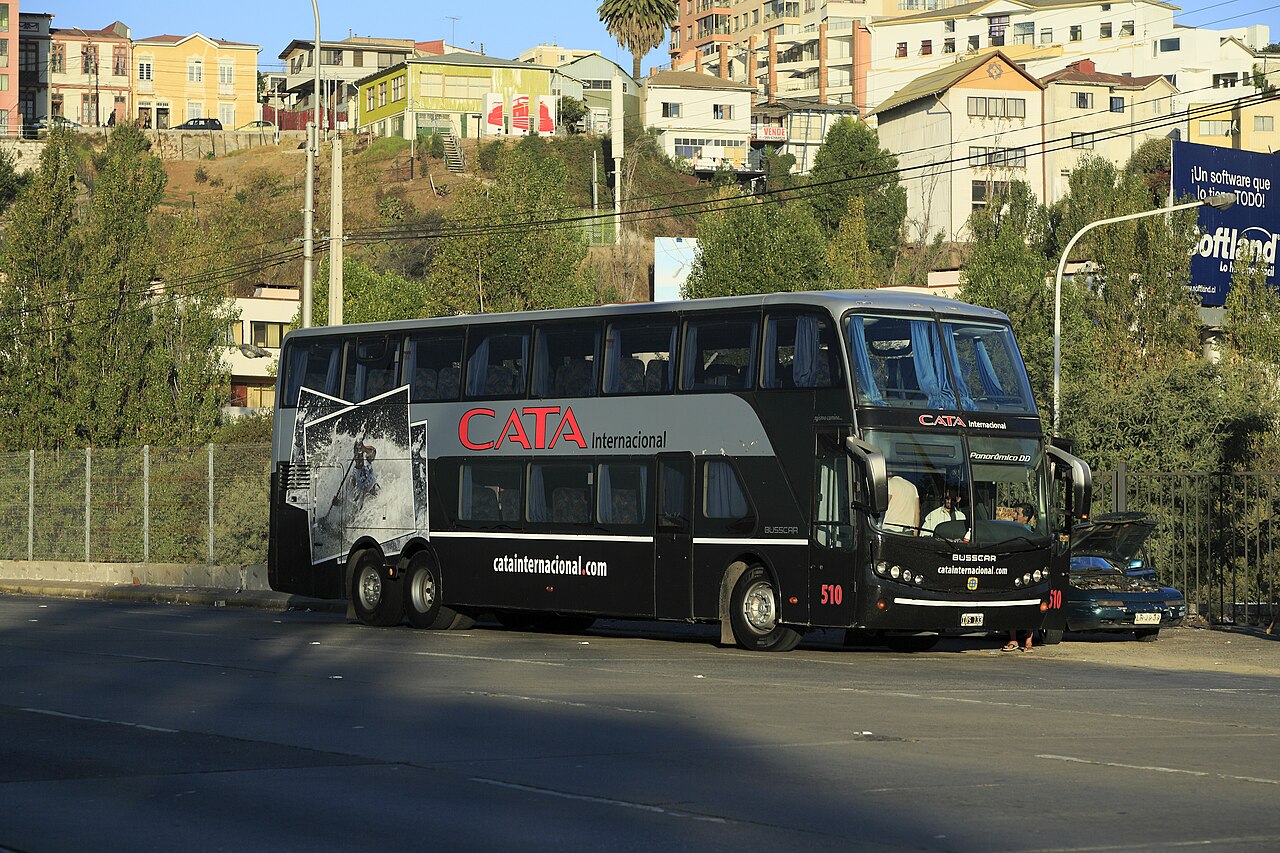
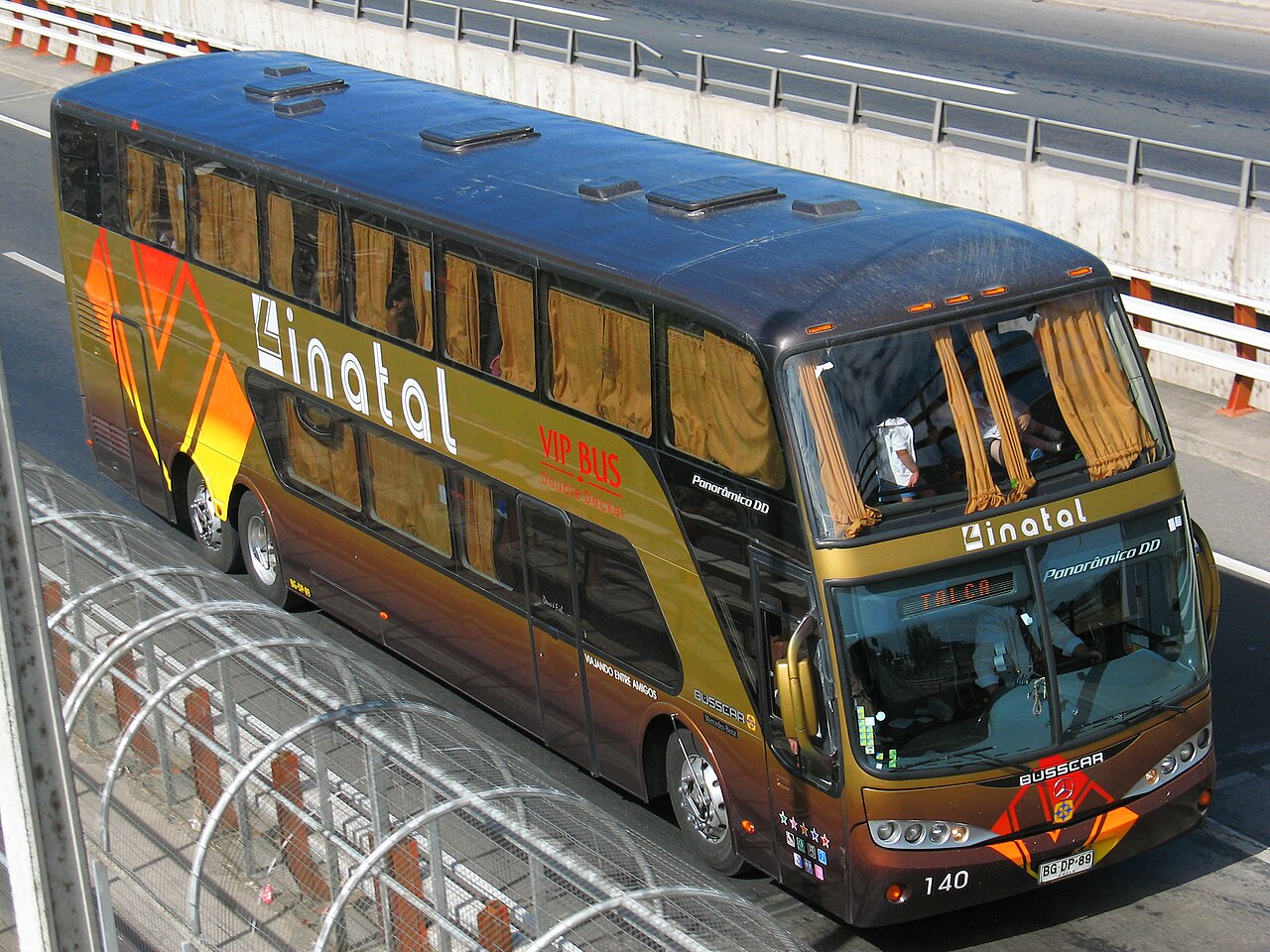
Its showpiece was the Panorâmico DD, the towering double-decker at the top of this page — a two-storey road palace that rivalled anything Marcopolo built. But the 2008 financial crisis hit hard, and on 27 September 2012 a Santa Catarina court declared Busscar bankrupt. The story did not quite end there: the factories were revived in 2017 under a new company, keeping the old plant alive. A giant fell, but the machines kept turning.
Caio: the urban king of São Paulo
If Busscar owned the highway, Caio owns the city. The Companhia Americana Industrial de Ônibus was founded by the Italian immigrant José Massa in 1945–46 in São Paulo, and its very first product was a simple open-sided body called the Jardineira. It grew into Brazil's great city-bus specialist, moving to a huge plant in Botucatu in 1982.
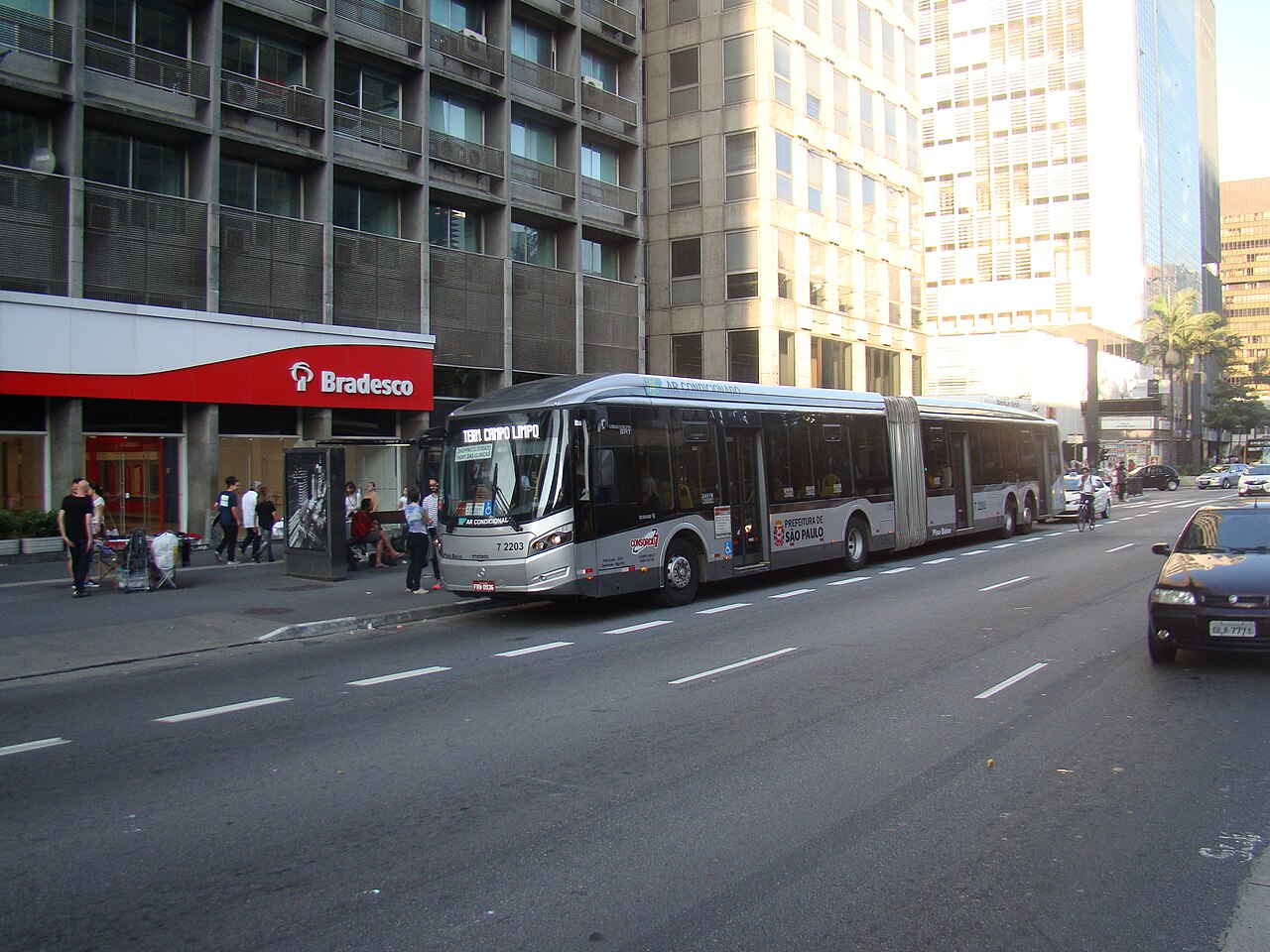
Caio went bankrupt in December 2000, but the Induscar group took over its assets and has owned the Caio brand outright since 2009 — and under that ownership the maker has built something like 180,000 bodies. Its Millennium city bus, and especially the multi-door Millennium BRT that entered service around 2013, put Caio at the heart of Brazil's Bus Rapid Transit boom. The Apache VIP rounds out its urban range.
Three bodies, three personalities in the sim
Here is why this matters once you are behind the wheel. Because the body is separate from the chassis, the same Mercedes or Scania underneath drives differently depending on whose body sits on top — the shape, the doors and the weight distribution all change.
A Busscar Panorâmico DD stacks two decks high, lifting the centre of gravity so the coach leans into bends and rewards smooth, early braking — the classic double-decker handling. A Caio Millennium BRT is the opposite: low, long and bristling with doors, built to swallow a queue and pull away again fast. A Comil Campione sits between them, a single-deck highway cruiser tuned for the long haul. Learn the body maker and you can predict the drive before you pull away — then go feel the difference across the Brazilian bus mods.
FAQ
Is Marcopolo the only Brazilian bus maker?
What happened to Busscar?
What is a Caio Millennium?
Do these companies build the engine and chassis?
Sources
- Busscar — Wikipedia — the 1946 Joinville origins, the coachbuilder model, the Jum Buss / Vissta Buss / El Buss / Panorâmico DD, the 27 September 2012 bankruptcy and the 2017 revival.
- CAIO Induscar — Wikipédia — Caio's founding by José Massa (1945–46), the Botucatu plant, the 2000 bankruptcy and Induscar ownership, and the Millennium / Apache ranges.
- Comil Carrocerias e Ônibus — Wikipédia — Comil's 1985 founding in Erechim by the Corradi and Mascarello families, and the Campione, Versatile, Svelto and Doppio models.
- Comil — company history (official) — corroborates the founding and model history.
Hero & figures via Wikimedia Commons: hero (Busscar Panorâmico DD) — order_242, CC BY-SA 2.0; Busscar double-decker — Falk2, CC BY-SA 4.0; Comil Campione — Marinna, CC BY-SA 4.0; Caio Millennium BRT — Guilherme B Alves, CC BY-SA 4.0.