The Marcopolo Paradiso Story: South America's Road King (G6, G7, G8)
Drive a long-distance bus anywhere in South America and there's a good chance you're sitting inside something built in one Brazilian city: Caxias do Sul. The body around you — the windows, the seats, the sweep of the roofline — probably came from Marcopolo, and if it's a premium coach, it's almost certainly a Paradiso. This is the story of how a small workshop became a global coachbuilding giant, told through the bus that made its name.
From a Caxias workshop to the world
Marcopolo was founded on 6 August 1949 in Caxias do Sul, in Brazil's far south, as Nicola & Cia — eight partners, fifteen employees, every body built by hand. It introduced a bus model called Marcopolo in 1968 and liked the name so much it adopted it for the whole company in 1971.
The growth from there is staggering. Today Marcopolo is the largest bus-body manufacturer in Latin America and the third-largest in the world. More than half of all bus bodies in Brazil are theirs, its coaches have been exported to around 100 countries, and it runs production plants in Brazil, Argentina, China, Mexico, Colombia, Australia and South Africa — plus a technology partnership with Tata in India. Not bad for a handmade workshop.
A body, not a bus
Here's the key thing to understand about Marcopolo, and about the Paradiso specifically: Marcopolo is a coachbuilder (an encarroçadora), not a chassis maker. It builds the body and fits it onto a running chassis bought from someone else. The Paradiso is offered on Mercedes-Benz, Volvo, Scania and Volkswagen chassis — so two identical-looking Paradiso coaches can be completely different machines underneath. Hold that thought; it matters enormously once you're driving one. If you want to decode the rest of the Marcopolo range, our guide to Marcopolo bus names covers Viaggio, Torino and the rest.
The generations: G6, G7, G8
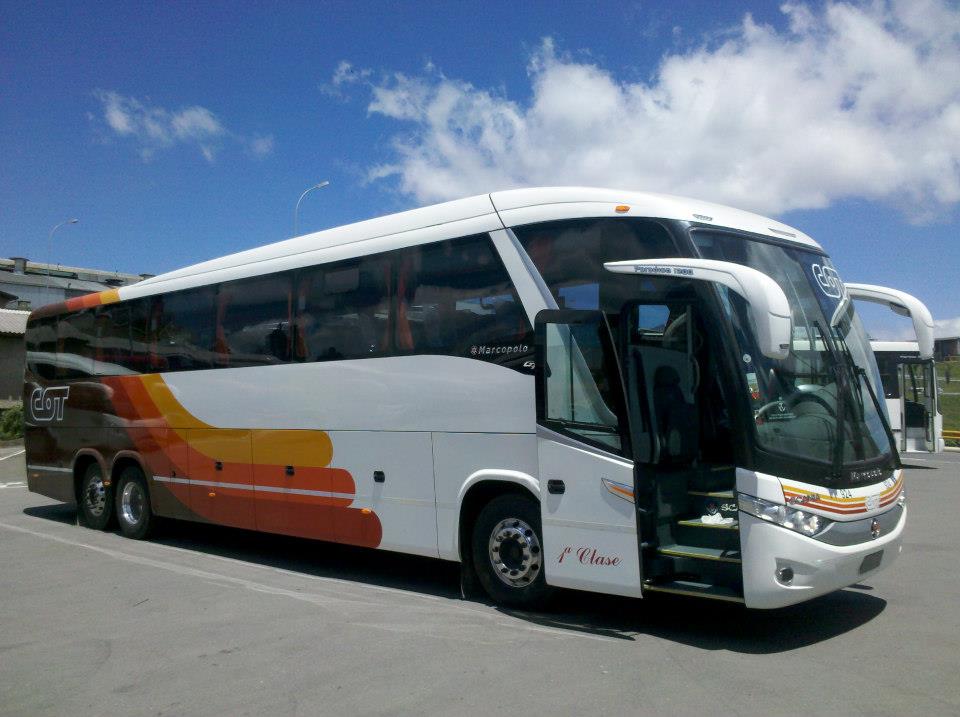
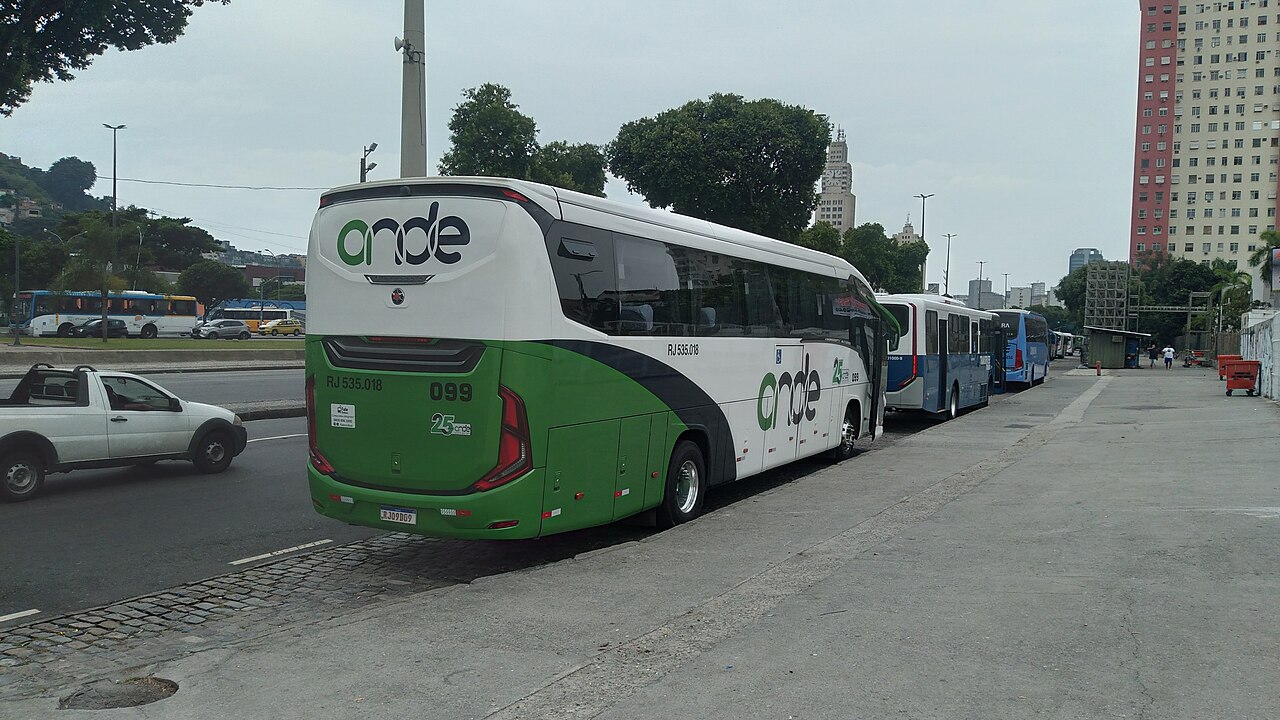
The Paradiso is best understood as a line of generations, each labelled with a "G". The Generation 6 (G6) carried the line through the late 1990s and 2000s — the G6 1050 was in production from 1998 all the way to 2011. Generation 7 (G7) then defined the Paradiso through the 2010s and became its most widespread form, the shape most people picture when they think "Brazilian highway coach."
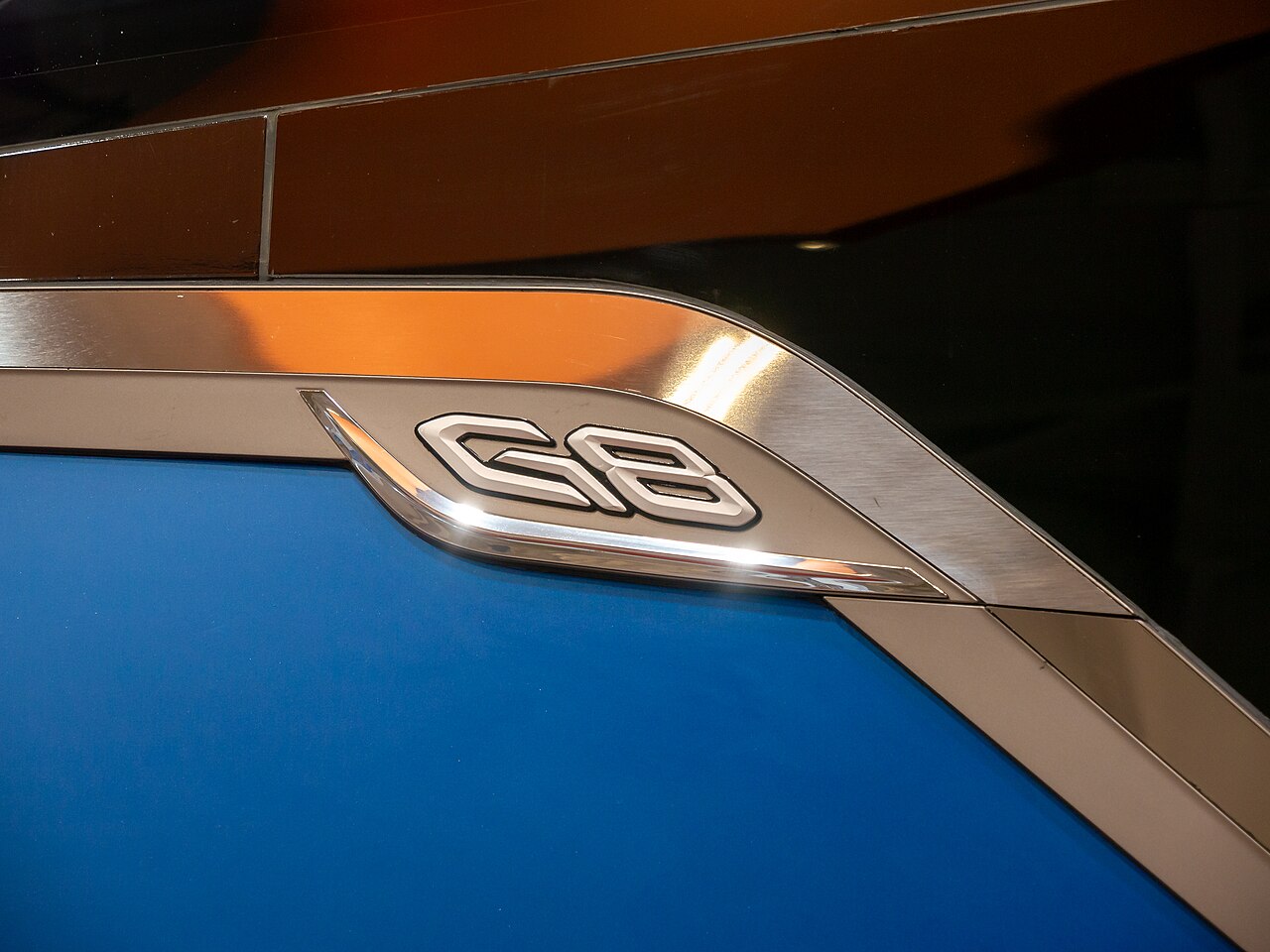
The current era began on 20 July 2021, when Marcopolo unveiled Generation 8 (G8) — launching the Paradiso 1050, 1200, 1350 and the flagship 1800 DD all at once. Sharper, safer and more aerodynamic, the G8 is the face of the Paradiso today.
The 1800 DD — the double-decker flagship
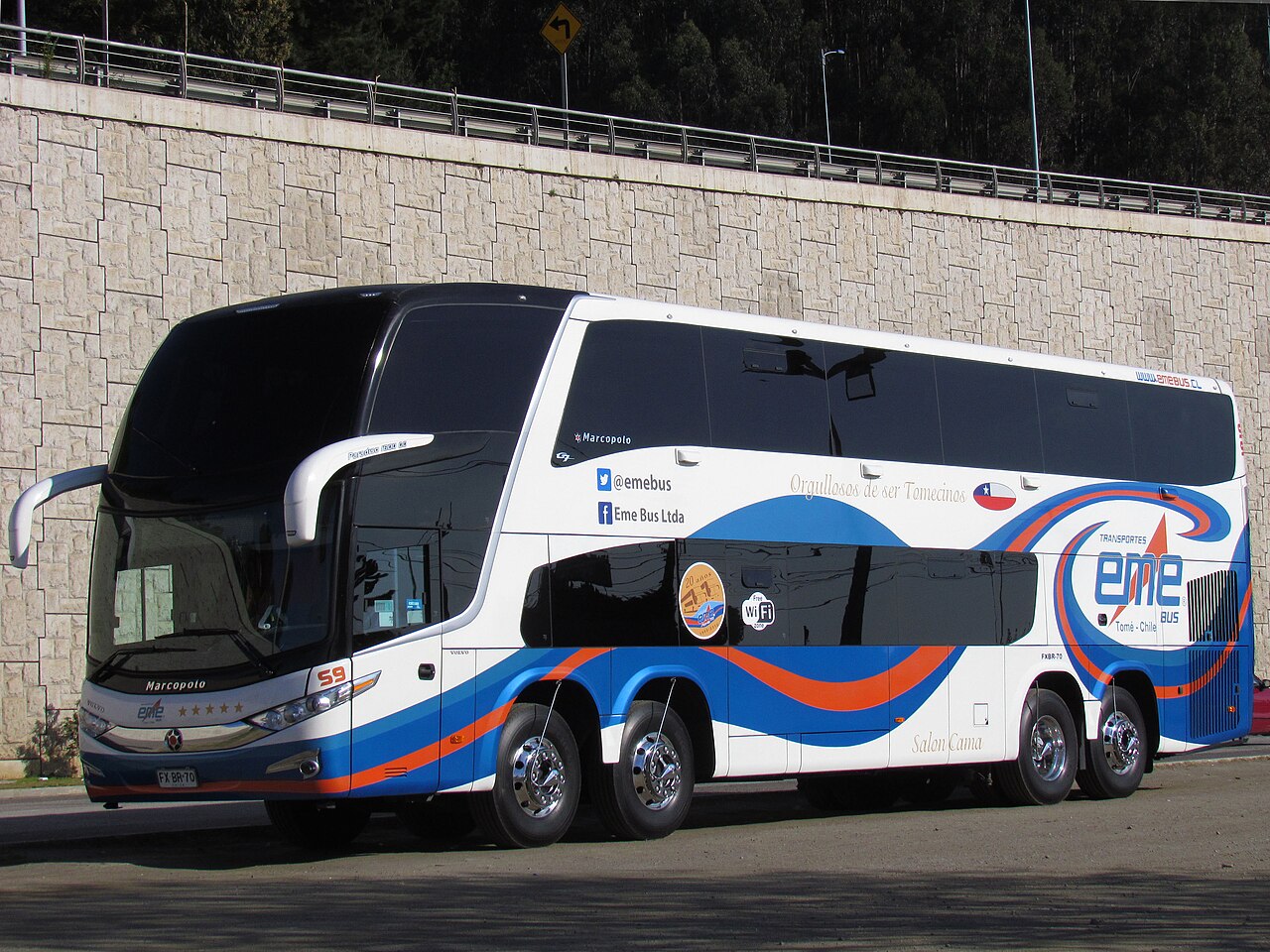
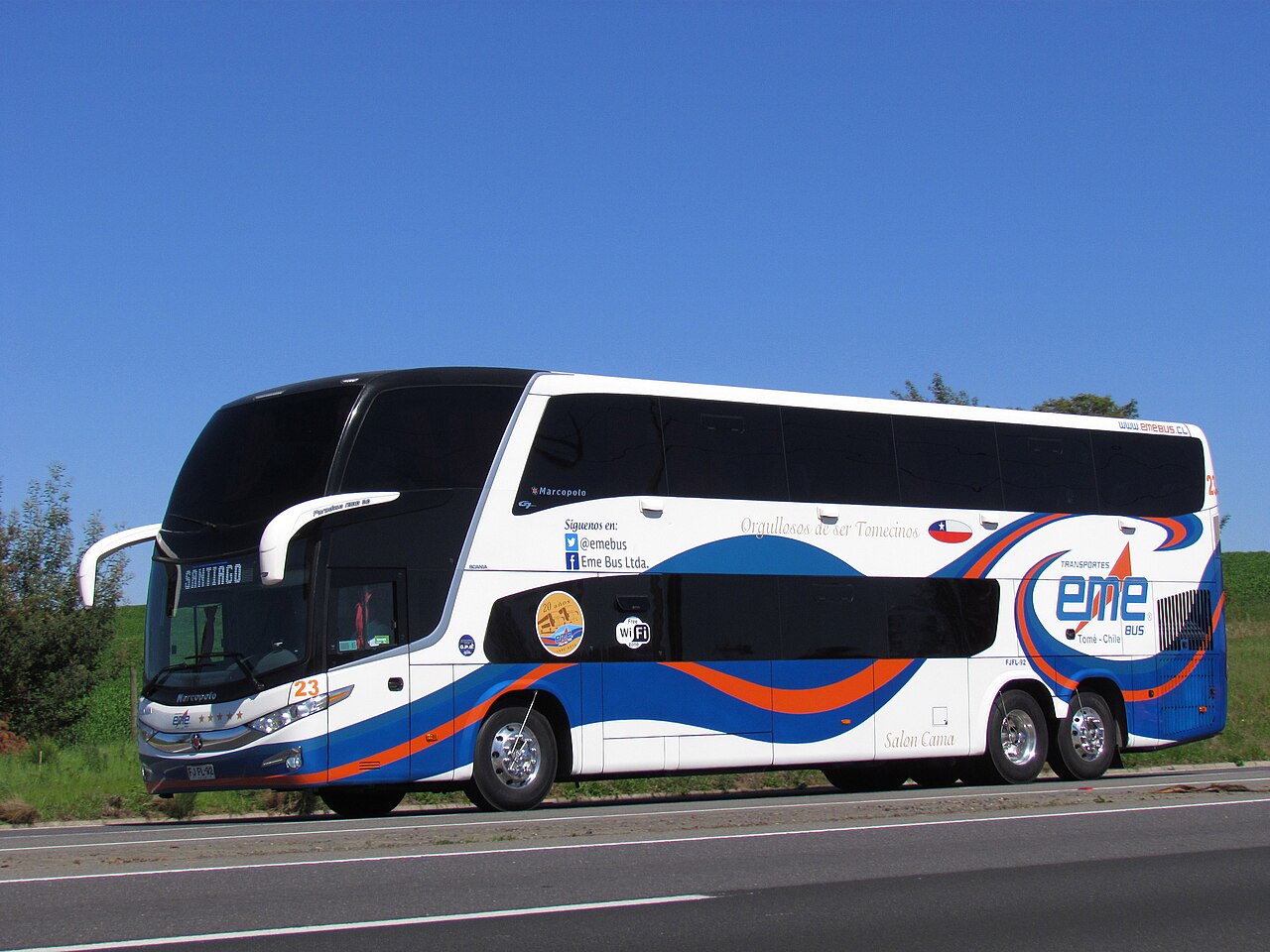
At the top of the range sits the Paradiso 1800 DD, the full double-decker. It's the king of the long-distance fleets — two full passenger levels for the overnight runs that cross a continent. And it's the perfect illustration of the coachbuilder model in action: here is the very same 1800 DD body on two different chassis — one on a Volvo, one on a Scania.
Why the chassis matters in a sim
This is where the Paradiso gets genuinely interesting to drive. Because the body is a constant and the chassis is the variable, the same Paradiso behaves differently depending on what's bolted underneath. A Paradiso on a Volvo chassis sounds and brakes differently from one on a Scania — different engine note, different power delivery, different feel through the gears. Learn to recognise the chassis badge and you can predict the drive before you pull away.
And then there's the double-decker factor. Stack the body two storeys high in the 1800 DD and you raise the centre of gravity dramatically — the coach leans more in corners and asks you to plan your braking earlier, the way only a fully-laden two-deck machine can. It's a 15-tonne-plus body that rewards smoothness over aggression. Want to feel the road king for yourself? Browse the Marcopolo mods and pick your chassis.
FAQ
What is the Marcopolo Paradiso?
When was the Paradiso G8 launched?
Does Marcopolo build the engine and chassis?
What is the Paradiso 1800 DD?
Hero & illustrations via Wikimedia Commons: hero (Paradiso 1800 DD G8) — MB-one, CC BY-SA 4.0. Full per-image credits in each caption above.