From Routemaster to Enviro400: The Story of the Double-Decker Bus
Most of the world moves people one deck at a time. Britain looked at a crowded street, ran out of room to make the bus any longer, and decided to build up instead. The double-decker — two full passenger decks stacked on a single chassis — is one of the most recognisable shapes in transport, and the line from the open-platform Routemaster to today's Alexander Dennis Enviro400 is really one long answer to a single question: how do you carry more people without taking up more road?
It's also a story you can feel through a steering wheel. A bus that tall behaves in ways a normal one never does, and we'll get to exactly why it leans, sways and demands respect once you're driving one in Proton Bus Simulator. First, the history.
Why Britain stacked its buses
The logic is pure geometry. Road space is fixed and street corners are unforgiving, so a city can only make a bus so long before it can't turn or fit at the kerb. Stacking a second deck on top roughly doubles the seating on the very same footprint — no extra length, no extra lane, no extra driver. In dense, historic cities with narrow streets, that was the difference between a workable service and gridlock, and it's why the double-decker became the British default while much of the world stuck with single-deckers or chose to bend them in the middle instead.
The Routemaster: a national icon on wheels
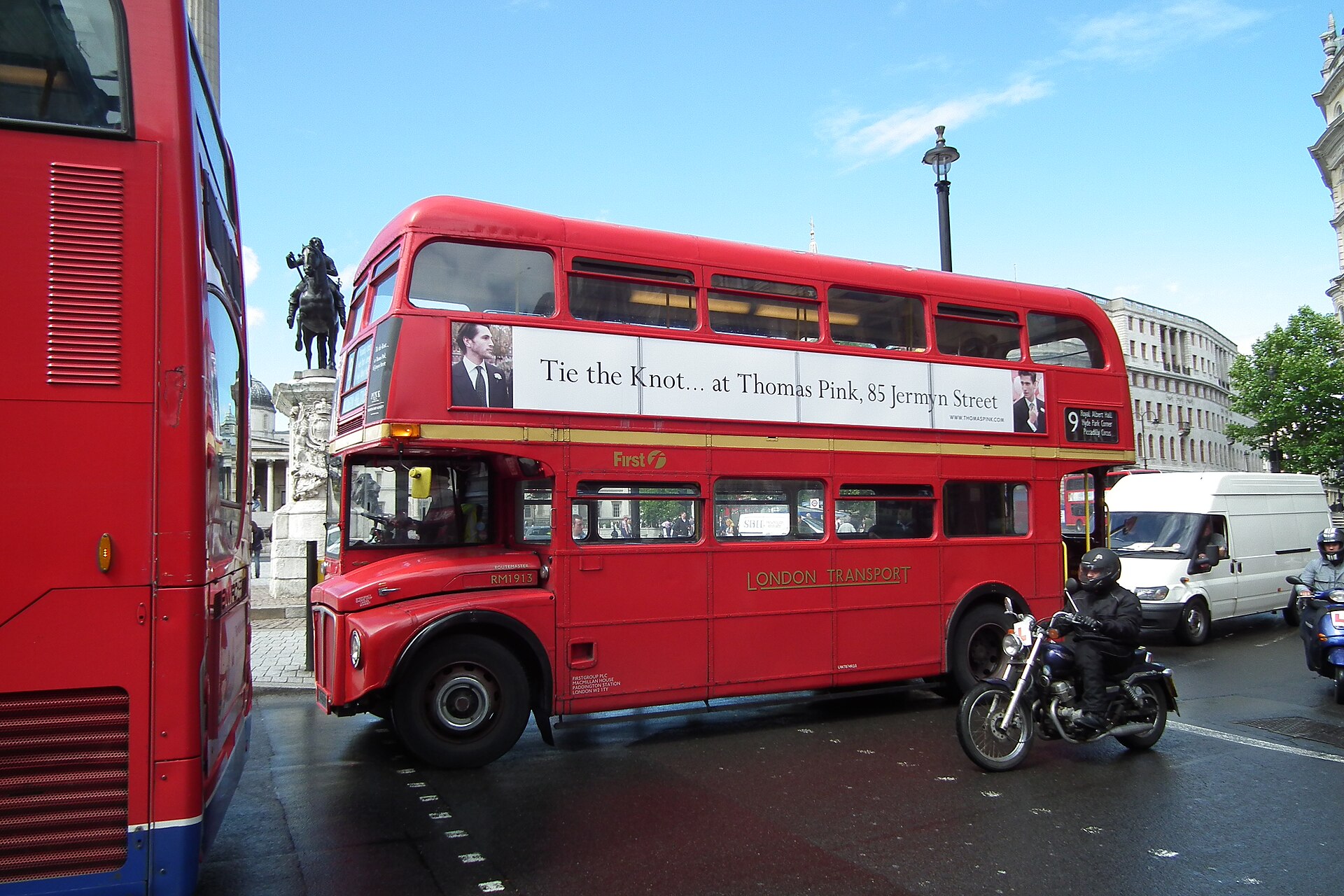
No bus carries more cultural weight than the AEC Routemaster. It was "designed by London Transport and built by the Associated Equipment Company (AEC) and Park Royal Vehicles" — an in-house masterpiece. "The first prototype was completed in September 1954," the "first Routemasters entered service with London Transport in February 1956," and "the last one was delivered in 1968." In total, "2,876 Routemasters were built, of which 1,230 are still in existence as of September 2024" — an astonishing survival rate for a working vehicle.
Its signature was the layout: "a half-cab, front-mounted engine and open rear platform." That open platform, worked by a conductor, was the soul of the thing — it "allowed boarding and alighting in places other than official stops; and the presence of a conductor allowed minimal boarding time." You could hop on between stops; the conductor took your fare on the move. It was slower-to-build and labour-heavy, but gloriously quick to use.
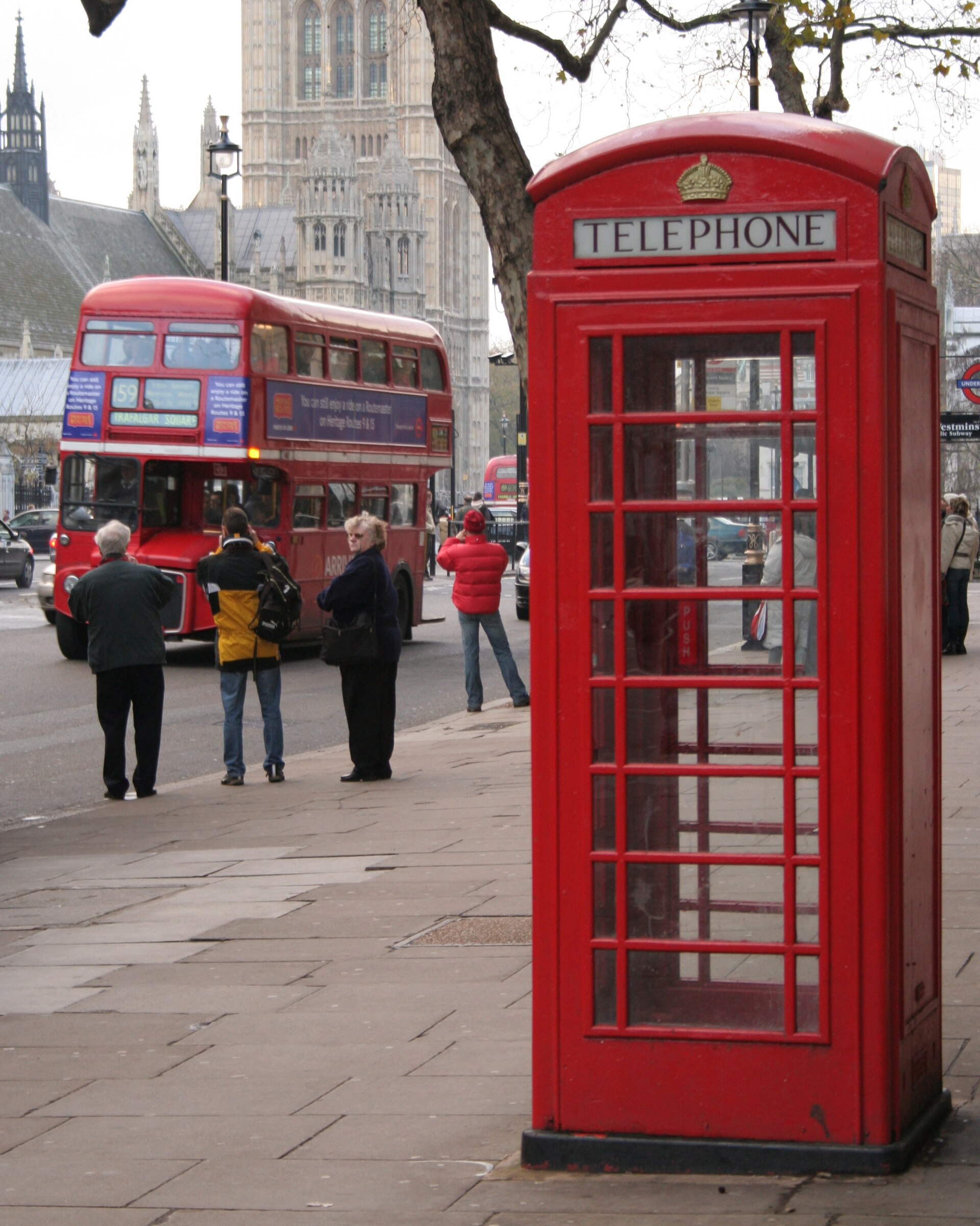
The Routemaster was so well engineered that it "outlasted several of its replacement types in London," soldiering on until "the last were withdrawn from regular service in December 2005." Even then it refused to die: "two TfL heritage routes were subsequently operated by Routemasters in central London until 2019," and "in 2006, the Routemaster was voted one of Britain's top 10 design icons" — keeping company with Concorde and the Mini.
The modern standard: Alexander Dennis Enviro400
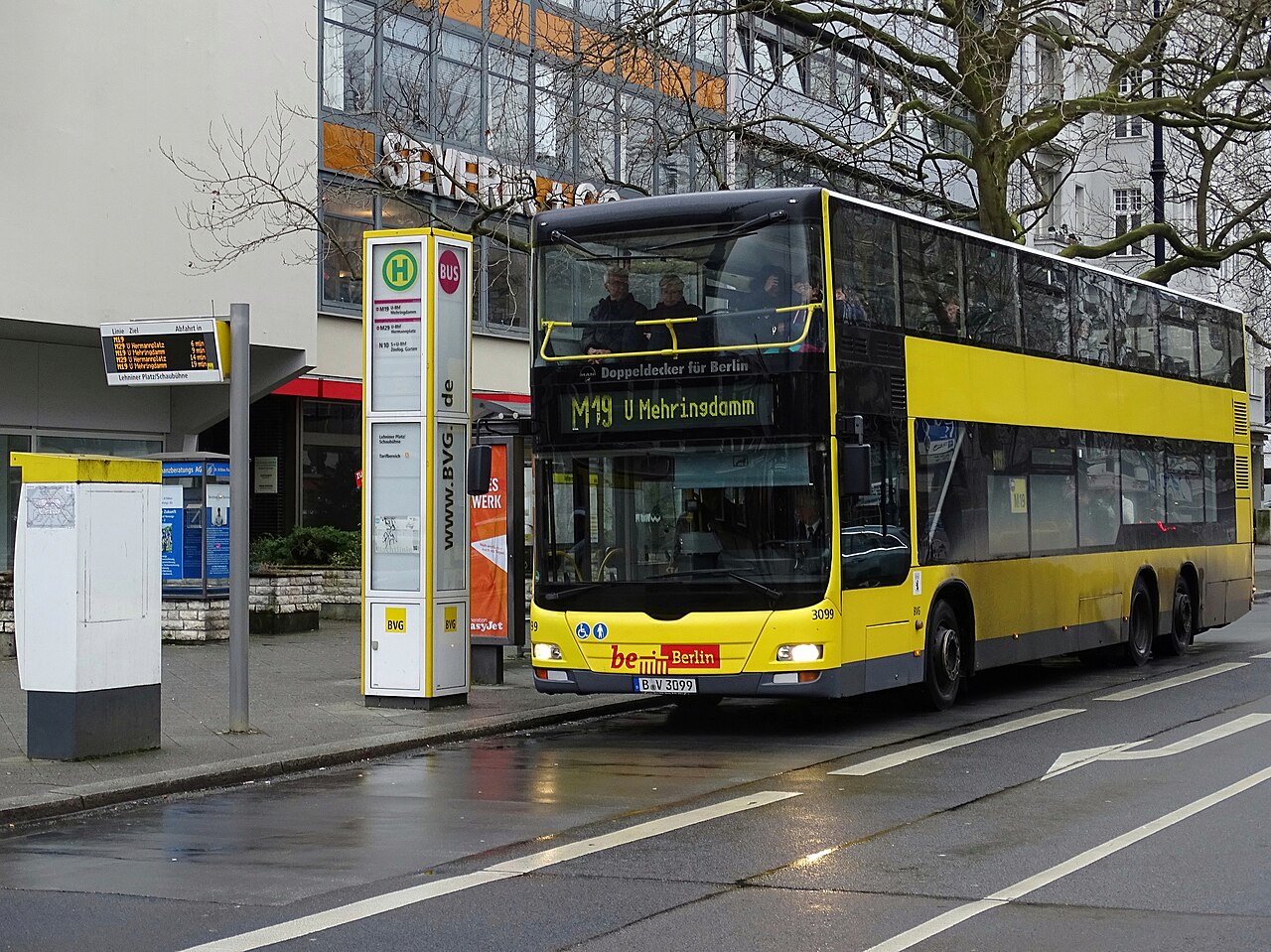
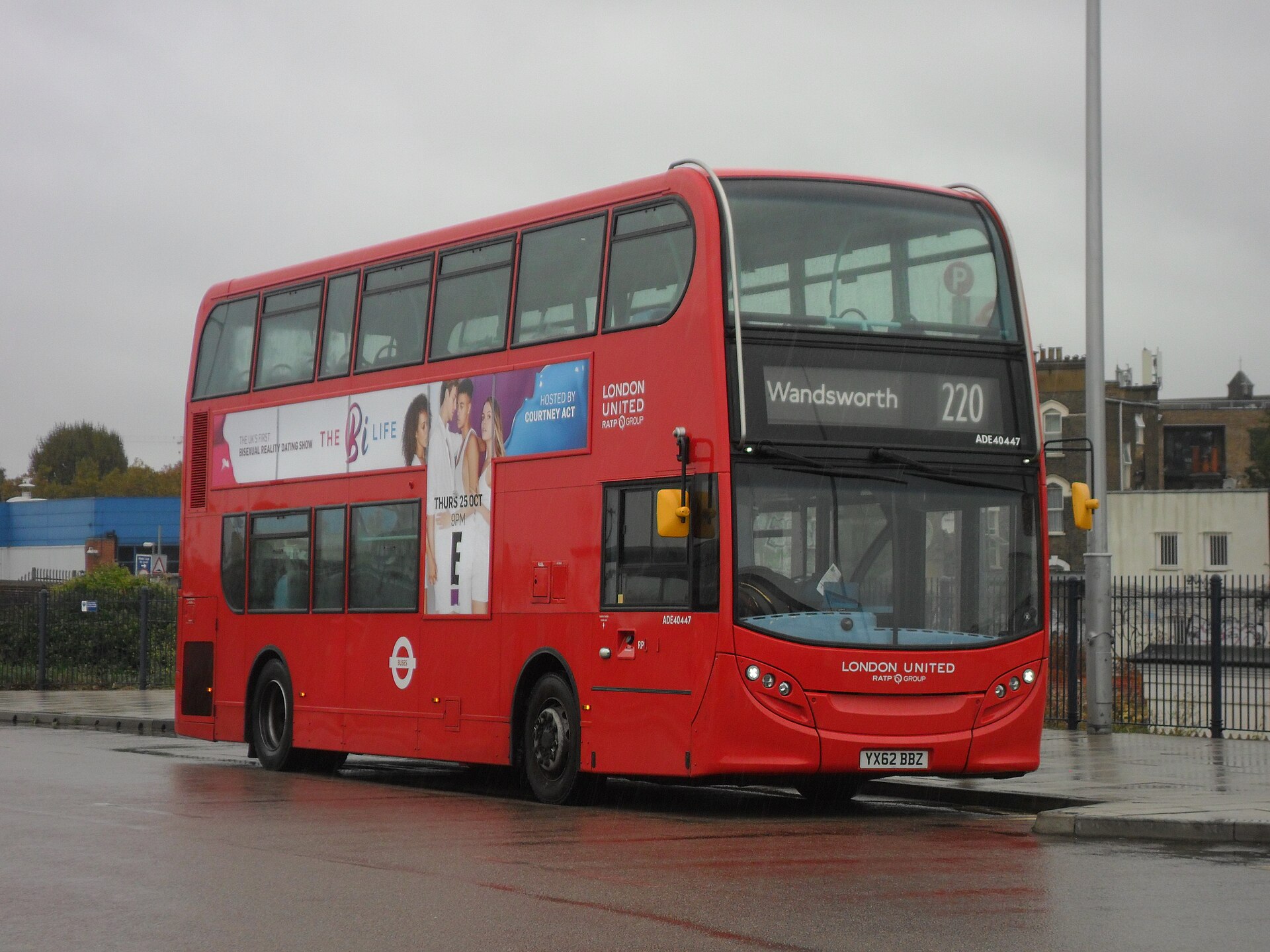
The Routemaster's spiritual successor is the Alexander Dennis Enviro400, "a twin-axle, low-floor double-decker bus ... introduced in 2005" that "replaced the Alexander ALX400." Where the Routemaster had a high floor and a hop-on platform, the Enviro400 is step-free and wheelchair-accessible, with doors that actually close — the modern rules the old icon could never have met. A facelifted MMC (Major Model Change) version has been built since 2014, and the range now includes the battery-electric Enviro400EV. Its maker, Alexander Dennis of Larbert, Scotland, is "the largest bus and coach manufacturer in Scotland" and the firm whose green-painted double-deckers fill British streets today.
A very British idea goes global
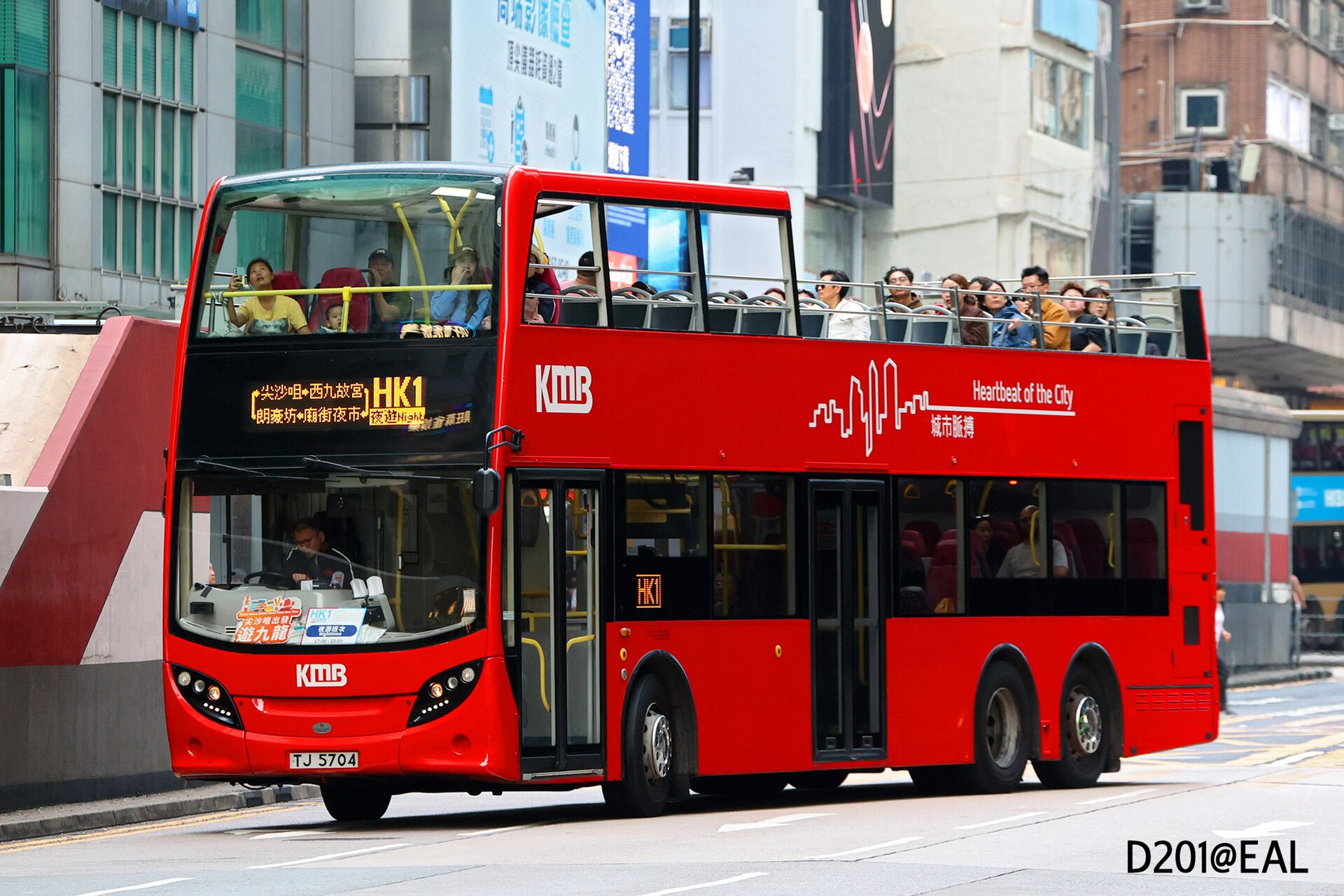
The double-decker never stayed home. Stretch it onto three axles and you get the Alexander Dennis Enviro500, "a three-axle double-decker bus" that "was unveiled in 2002" and went straight to the place that loves big buses most: Hong Kong. Kowloon Motor Bus took its first one in November 2002 and put it into service in January 2003, and today operates one of the largest double-decker fleets on the planet. The right-hand-drive, three-axle Enviro500 in KMB red is now the most recognisable face of the model — exactly the bus in our AD Enviro500 MMC (KMB spec) mod.
The format even climbs into the coach world: a touring double-decker like the Modasa Zeus 5 on a Scania K450 stacks a second deck for long-distance comfort rather than city capacity — proof the idea travels across continents and roles alike.
Living with a high centre of gravity
Put two decks of passengers up high and physics sends you a bill: the bus's centre of gravity rises, and a tall, narrow, top-heavy vehicle wants to lean. Regulators take this seriously. In the United Kingdom and under the relevant UN standard, a double-decker must survive a tilt test — it is "tilted to either side at an angle of 28 degrees from the horizontal without overturning," and its stability there is governed chiefly by "the height of the center of gravity." Testers even load the upper deck with sandbags to mimic a full top deck of passengers with an empty floor below — the worst case for tipping. Famous photographs from 1933 show London engineers cocking double-deckers over on a ramp to prove exactly this.
What it feels like in the simulator
That high centre of gravity is the whole driving experience. Take a double-decker into a roundabout and you feel the body roll lean out over the tyres in a way a single-decker simply doesn't — commit too hard and the top deck is fighting you. A strong crosswind turns that tall flat side into a sail and nudges the bus across its lane. Brake hard with a loaded upper deck and the weight pitches forward and up high, so smoothness matters more than ever. Driving a double-decker well is constant height management: slower into bends, gentler on the brakes, always aware of the storey of passengers swaying above your head.
You can put all of this to the test right now: take the three-axle Alexander Dennis Enviro500 (KMB) through tight streets and feel the lean, then browse the rest of the British double-decker stable on the Alexander Dennis mods hub. If you'd rather a long bus that bends than one that stacks, we covered why articulated buses bend; and since that touring Zeus rides a Scania K-chassis, our guide to Scania bus names explains what the "K450" badge is telling you.