Why Do Buses Bend? The Surprising History of the Articulated Bus
Watch an 18-metre bus thread a tight roundabout and something looks almost impossible: the front half commits to the turn, the rear half hangs back for a beat, and then the whole machine pivots around a fat rubber concertina in its middle. The articulated bus — the "bendy bus" — is one of public transport's cleverest compromises, and once you understand why it bends, you start to read every one you see (and every one you drive in the simulator) completely differently.
The short answer is simple economics of space. The long answer runs from a 1937 prototype in Milan to the 25-metre triple-section giants that swallow whole crowds on Brazilian bus corridors today. We've spent a lot of hours behind the wheel of these things in Proton Bus Simulator, and the history explains exactly why they feel the way they do.
Why buses learned to bend
Every country caps how long a single rigid vehicle can be, for the obvious reason that a very long stiff box can't get around a corner. But cities kept needing to move more people per driver, per stop, per traffic-light cycle. The articulated bus is the answer to that squeeze: split the body into two rigid sections joined by a pivot, and you can run a longer vehicle that still tracks around bends. As the encyclopedic definition puts it, this arrangement "allows a longer legal length than rigid-bodied buses, and hence a higher passenger capacity," while still letting the bus manoeuvre on its normal route.
The numbers make the trade obvious. A standard articulated bus is "typically 18 m (59 ft) long" and carries somewhere around 94 to 120 passengers — roughly half again to double what a rigid 12-metre bus manages, all on one driver's wage. That capacity-per-driver maths is why the bendy bus never went away.
The joint is the whole trick
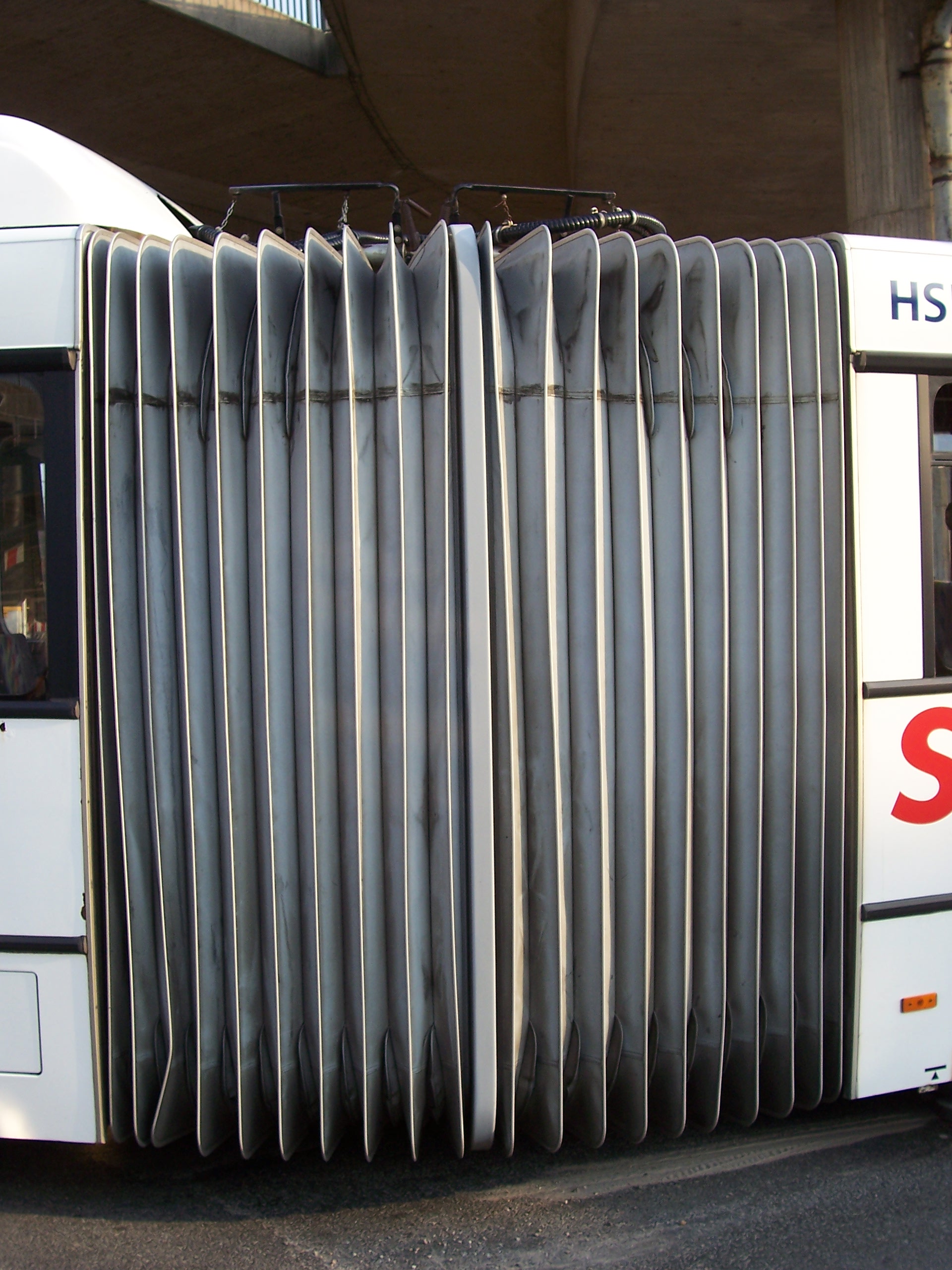
The magic lives in the middle. A turntable-style pivot lets the two halves rotate relative to each other, and a flexible bellows — the ribbed accordion you walk through — seals the gap so passengers can move between sections while weather and road grime stay out. It's a deceptively serious piece of engineering: the German specialist HÜBNER notes it "has been producing folding bellows for articulated buses since 1952," built from "specially coated fabrics" stretched over "a stable aluminum frame." That concertina has to flex through every turn, crest and dip for a decade of service without tearing or leaking.
A short history of the bend
The idea is older than you might guess. The first example of an articulated bus "appeared in Milan, Italy, in 1937," and the following year the United States got its own oddity — the 1938 Twin Coach Super-Twin, a Baltimore behemoth that, strangely, only bent in one direction. These were experiments at the edge of what 1930s engineering could seal and steer.
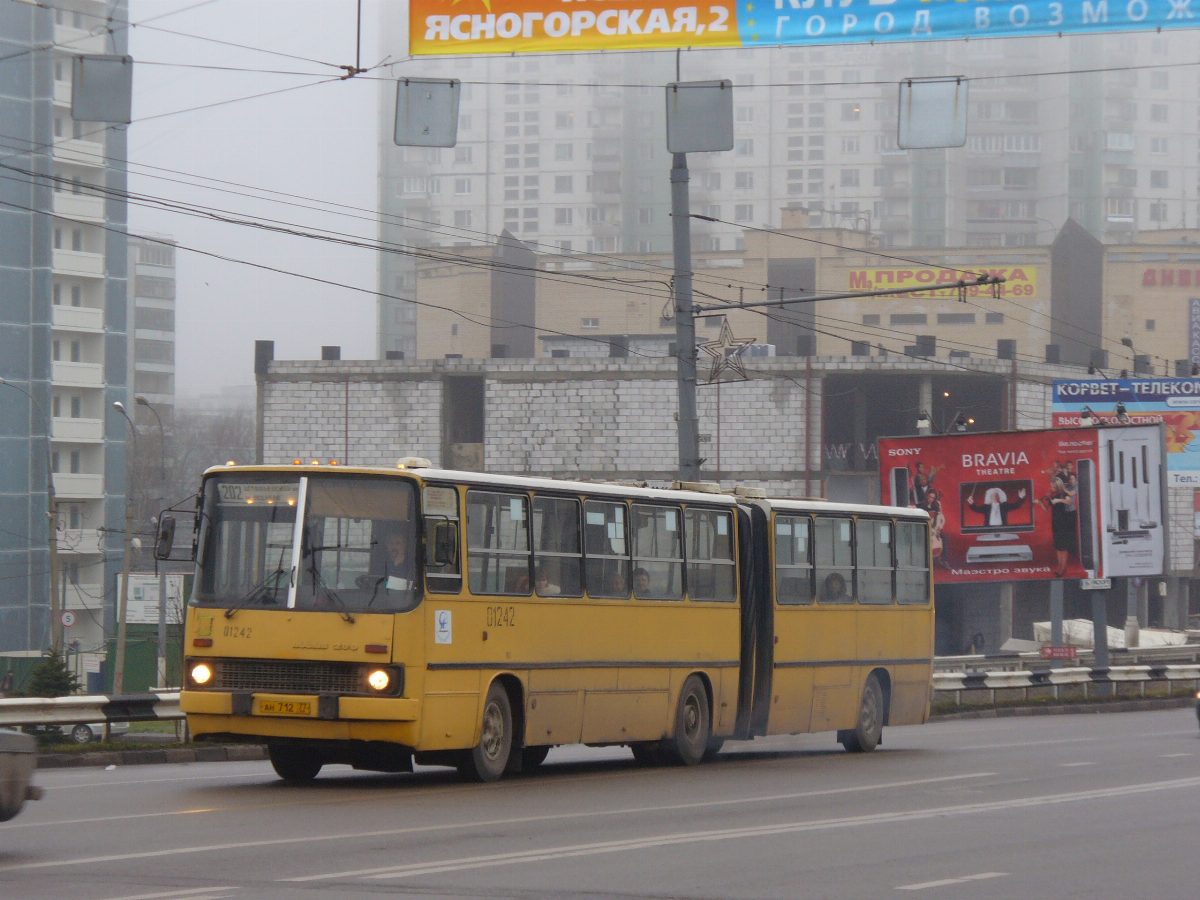
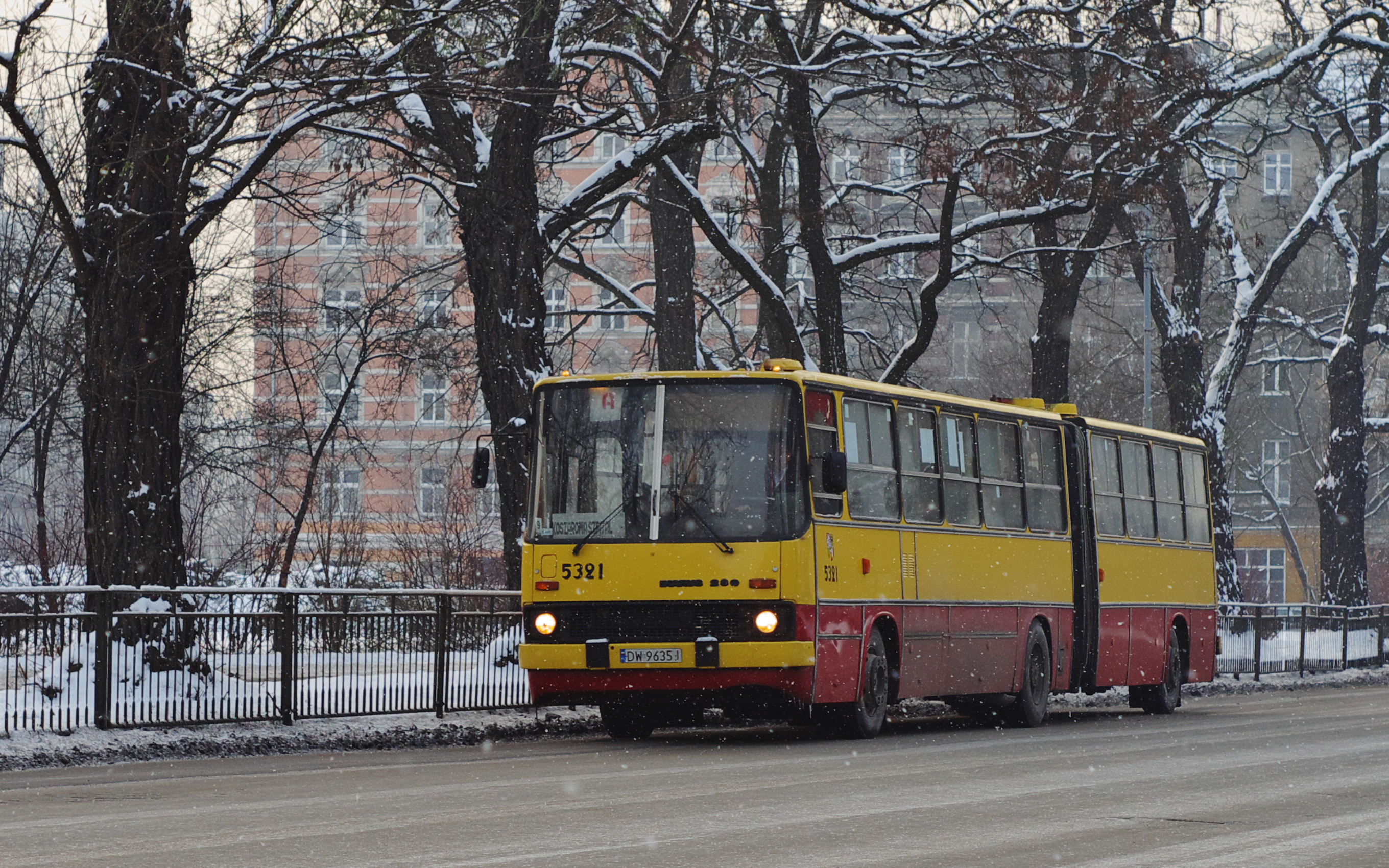
The body type truly came of age in the post-war decades, and nowhere more emphatically than behind the Iron Curtain. Hungary's Ikarus 280 — prototypes "shown in 1961," serial production from 1966 — became the definitive articulated workhorse of the socialist world, churned out in vast numbers and exported across two continents. If you want the deeper story of how the Hungarians numbered their fleet, we wrote it up in our guide to decoding Ikarus bus numbers.
Pusher vs puller: the choice that decides how it drives
Here is the detail almost nobody outside the industry knows — and the one that matters most once you're behind the wheel. There are two fundamentally different ways to power a bendy bus, and they handle nothing alike.
A puller drives the middle axle, with the engine mounted under the floor between the front and middle axles. The driven wheels sit ahead of the joint and effectively tow the rear section like a trailer. Because the thrust comes from the front, "the thrust from the driving wheels does not cause the vehicle to jackknife" — it's inherently stable, which is why pullers do well on narrow, potholed or snowy streets.
A pusher is the opposite: a rear-mounted engine drives the rearmost axle, shoving the whole bus from behind the joint. That's efficient and quiet up front, but it's also exactly the geometry that wants to fold — push a hinged object from the back and the tail tries to overtake the front. So, as the engineering literature spells out, on a pusher "the longitudinal stability of the vehicle is maintained by active hydraulics mounted under the turntable," and "the pusher bus needs a damping system in the joint to reduce the risk of jack-knifing and fishtailing."
This isn't theoretical. Anti-jackknife patents describe how, "when the conventional articulated bus is driven on a slippery road, a jackknife condition or even an accident occurs," and how a controlled hydraulic turntable "increases a damping force ... and adjusts a joint angle ... so as to stabilize the trailer frame." The joint, in other words, isn't just a hinge — on a modern pusher it's an actively managed safety system.
A puller tows its tail and stays straight. A pusher shoves its tail and fights to fold. Same silhouette, opposite instincts.
When one joint isn't enough: bi-articulated buses and the BRT revolution
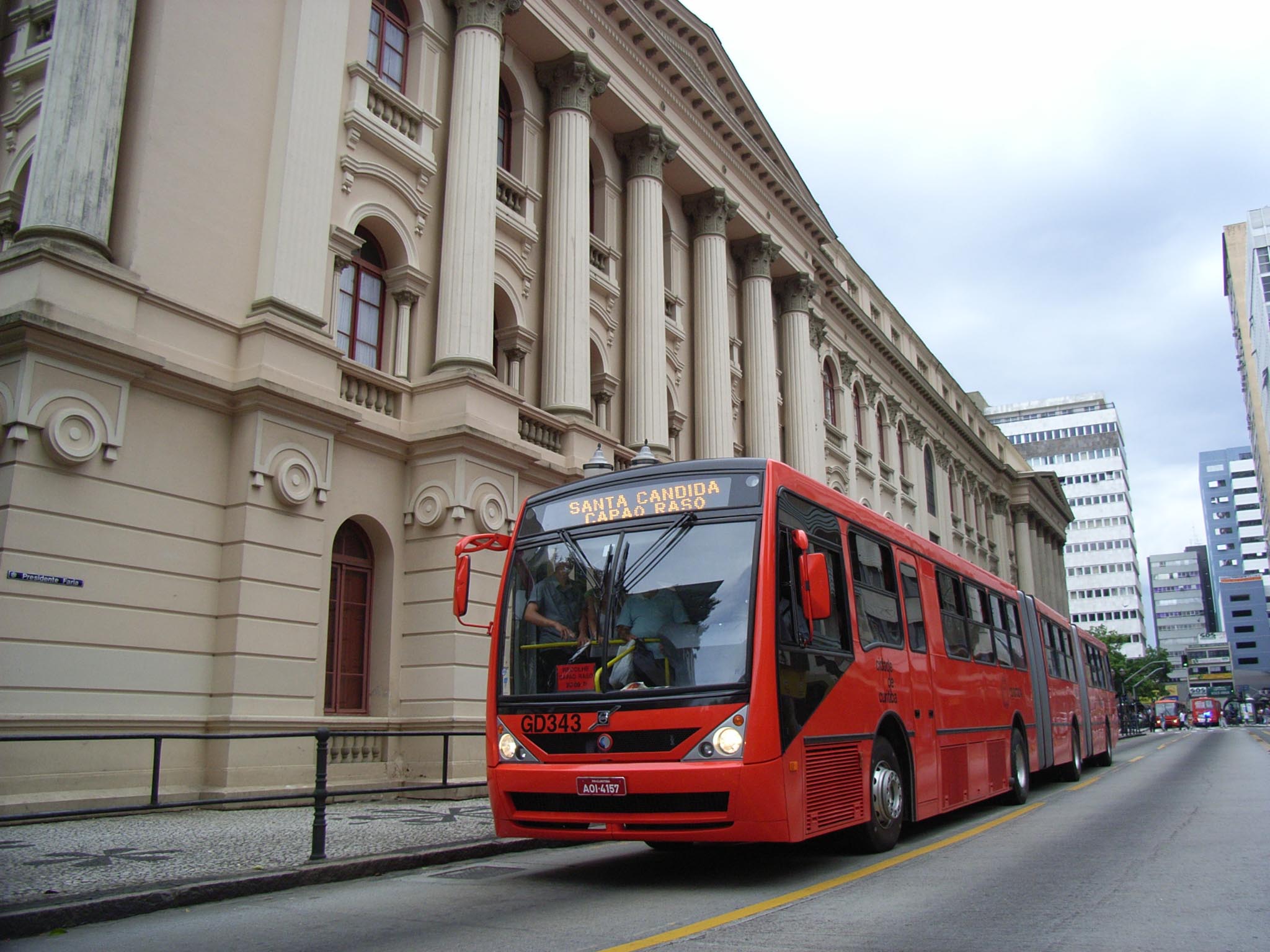
If two sections move more people, why not three? The bi-articulated bus adds a second joint and a third rigid section, stretching the concept toward the limits of the road. A common contradiction worth clearing up: Curitiba is often called the birthplace of the bi-articulated bus, but it wasn't first — "in 1960, the Chengdu Bus Factory presented the first bi-articulated bus in China based on the chassis of the Ikarus 60." What Curitiba did was something arguably bigger: it turned the format into a global blueprint.
Curitiba's story starts in 1974, when the Brazilian city — under a plan led by architect and mayor Jaime Lerner — opened its first dedicated bus lanes, "marking the beginning of the BRT concept." Bus Rapid Transit gives buses their own right-of-way, level boarding from raised tube-shaped stations, and off-board fare payment, so a bus loads and unloads almost like a metro train. Onto those corridors Curitiba rolled bi-articulated giants: "use of bi-articulated buses began in 1992, with vehicles manufactured by Volvo (chassis) and Marcopolo/Ciferal (body), able to carry up to 270 passengers." On the busiest routes those buses stretch "to 25 meters." The system became a template copied from Bogotá to Istanbul.
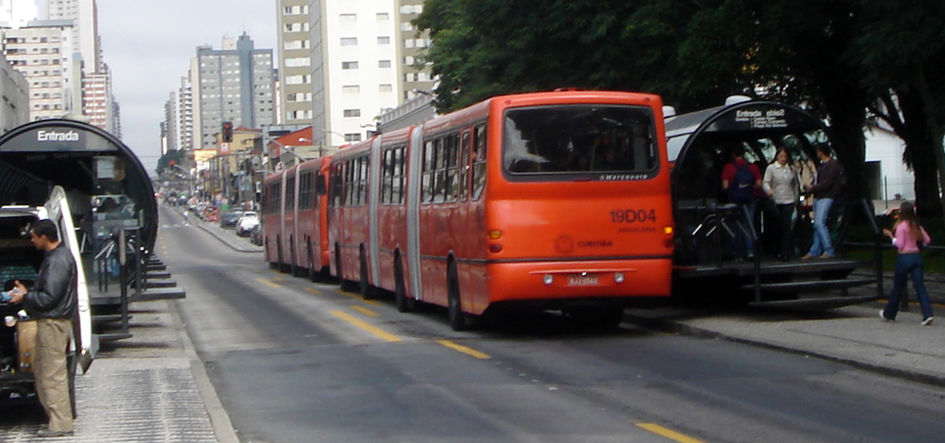
How far can it go? Belgium's Van Hool builds "a 25-metre (82 ft) bi-articulated bus with a capacity of about 180 passengers," and the experimental AutoTram Extra Grand in Dresden reaches "30.73 metres (100 ft 10 in)" with room for 256 — a road vehicle longer than some commuter trains.
What all of this feels like in the simulator
Everything above turns into seat-of-the-pants behaviour the moment you take an articulated mod onto a tight route. The joint makes the rear section sweep wide on the outside of a corner, so you learn to swing the nose deeper into a turn than instinct says and let the tail follow through — clip the apex too early and the back end mounts the kerb. On a pusher in particular you feel the rear lag, load up, then snap back into line as the bus straightens; it's the simulated cousin of that real-world fold the hydraulic dampers exist to tame. Threading 18 metres through a roundabout demands a kind of anticipation a rigid bus never asks for, and a 25-metre bi-articulated turns every terminal into a puzzle.
If you want to feel the difference for yourself, the catalog has the full ladder of length. Start with the 18-metre Mercedes-Benz Citaro O530G articulated mod, the bus that defined the modern European bendy. Step up to the four-axle, rear-steering MAN Lion's City GXL A43, a 20.5-metre BRT monster that physically cannot turn without its steered rear axle. Then take on the boss level: the Busscar Urbanuss Pluss, a 25-metre Volvo bi-articulated straight off Curitiba's corridors. You can also browse the wider stables of Mercedes-Benz, MAN and Volvo bus mods for more articulated machinery.