What Ikarus Bus Numbers Mean: Decoding the 200 Series
Open the Proton Bus Simulator garage, scroll to the Hungarian section, and you hit a wall of three-digit codes: 250, 256, 260, 263, 280. To most players they read like part numbers. To us — the people who port these buses and have to get every panel, door and joint right — they read like a spec sheet. An Ikarus 200-series number isn't a name. It's a description of the bus, written in three digits.
Ikarus never stamped a decoder ring on the dashboard, so nobody hands you the key. But line the whole family up next to each other and the logic is impossible to miss. Once you've seen it, you can glance at a number you've never met — say, an Ikarus 266 — and already know roughly how long it is, how many doors it has, and what job it was built to do.
The three digits, decoded
Ikarus was Hungary's state bus maker, headquartered at the Mátyásföld plant in Budapest. The 200 series was its big standardization bet: a single modular, semi-integral body family with the engine tucked under the floor, designed in the late 1960s to become the default bus of the whole COMECON trade bloc. Modularity was the entire point — and a modular range needs a systematic way to name its variants. That is what the numbers are.
Read them left to right:
- First digit — 2. The generation. Every bus in this family starts with a 2; it simply means "200 series."
- Second digit — the body. This is the one that matters. It encodes size and configuration: how long the bus is, and whether it's a rigid solo, an articulated, or a coach. This is the digit you learn to read first.
- Third digit — the role. Within a body class it shifts the bus between jobs — more doors for dense city work, fewer doors and more seats for suburban and intercity runs.
- After the dot — the exact build. A decimal suffix (250.67, 280.70E) pins down the specific sub-variant: engine, gearbox, door count, and the market it was built for.
So the body type — the thing you actually see — lives in that second digit. Let's walk the range by body type.
2-5-x — the intercity coaches
A second digit of 5 means coach: a high-floor, long-distance machine with the underfloor engine at the back, two doors, luggage bays, and seats built for hours rather than minutes.
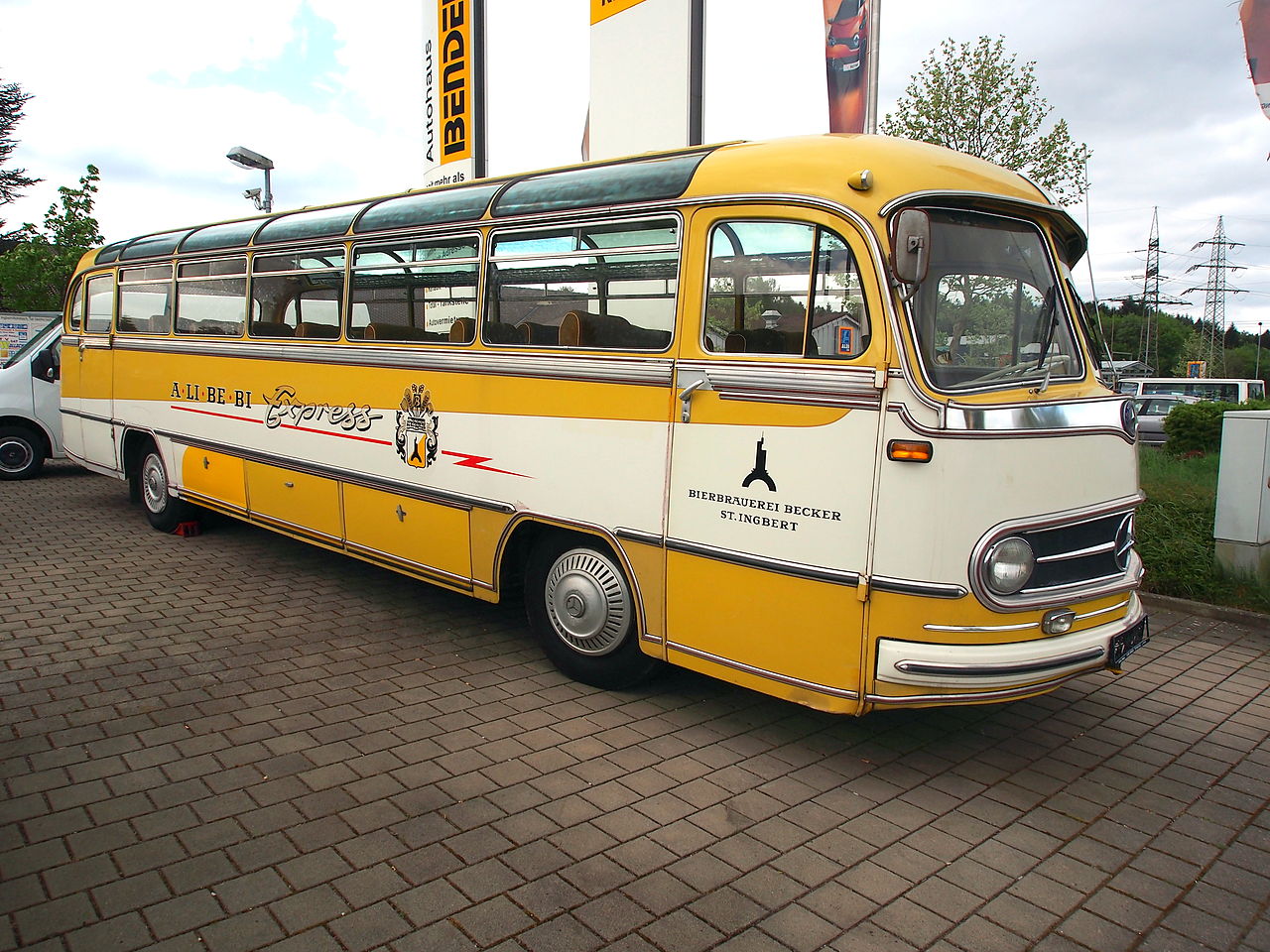
The flagship is the Ikarus 250 — a 12-metre (12,000 mm) intercity coach produced from 1968 to 1989. It carried the Eastern Bloc between cities for two decades and was exported to the Soviet Union by the tens of thousands. Its shorter sibling, the Ikarus 256, runs about 11 metres (10,990 mm) and was built from 1977 as the export-friendly interurban version — same coach DNA, tighter footprint.
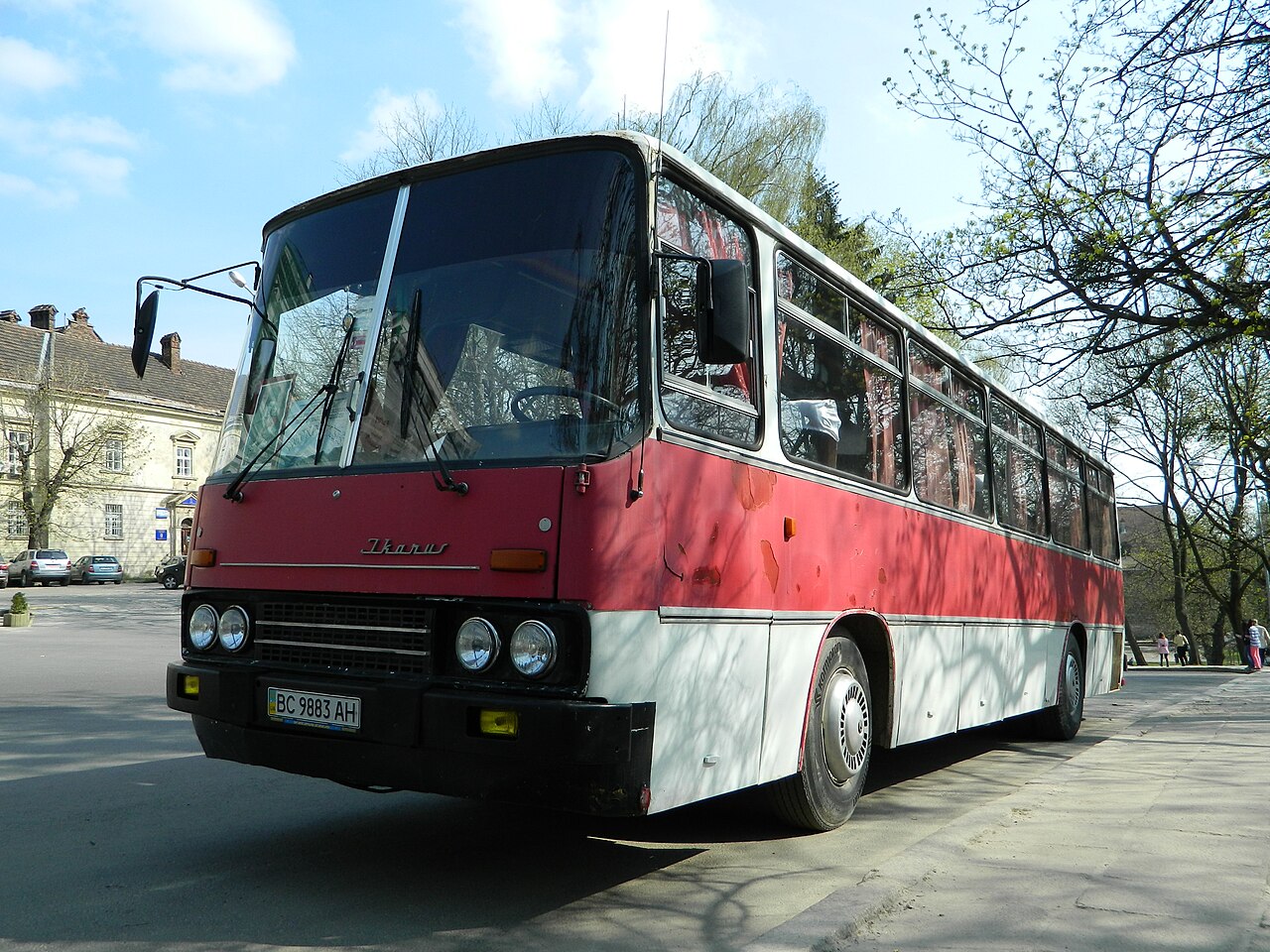
To feel the difference in-sim, the Ikarus 250.67 in our catalogue is a late 250 with the Rába-MAN diesel and a six-speed manual — and that .67 on the end is the suffix system at work, which we'll get to.
2-6-x — the city and suburban solo bus
Swap the 5 for a 6 and the job changes entirely. The 2-6-x buses are the rigid (single-section) city and suburban workhorses — roughly 11–12 metres, more doors, standing room, built for stop-and-go.
The Ikarus 260 is the definitive one: a high-floor, three-door city bus about 11 metres long, produced from 1971 all the way to 2002 — which made it the longest-running, highest-volume model the factory ever built. It is the Ikarus most of the world pictures when it pictures an Ikarus.
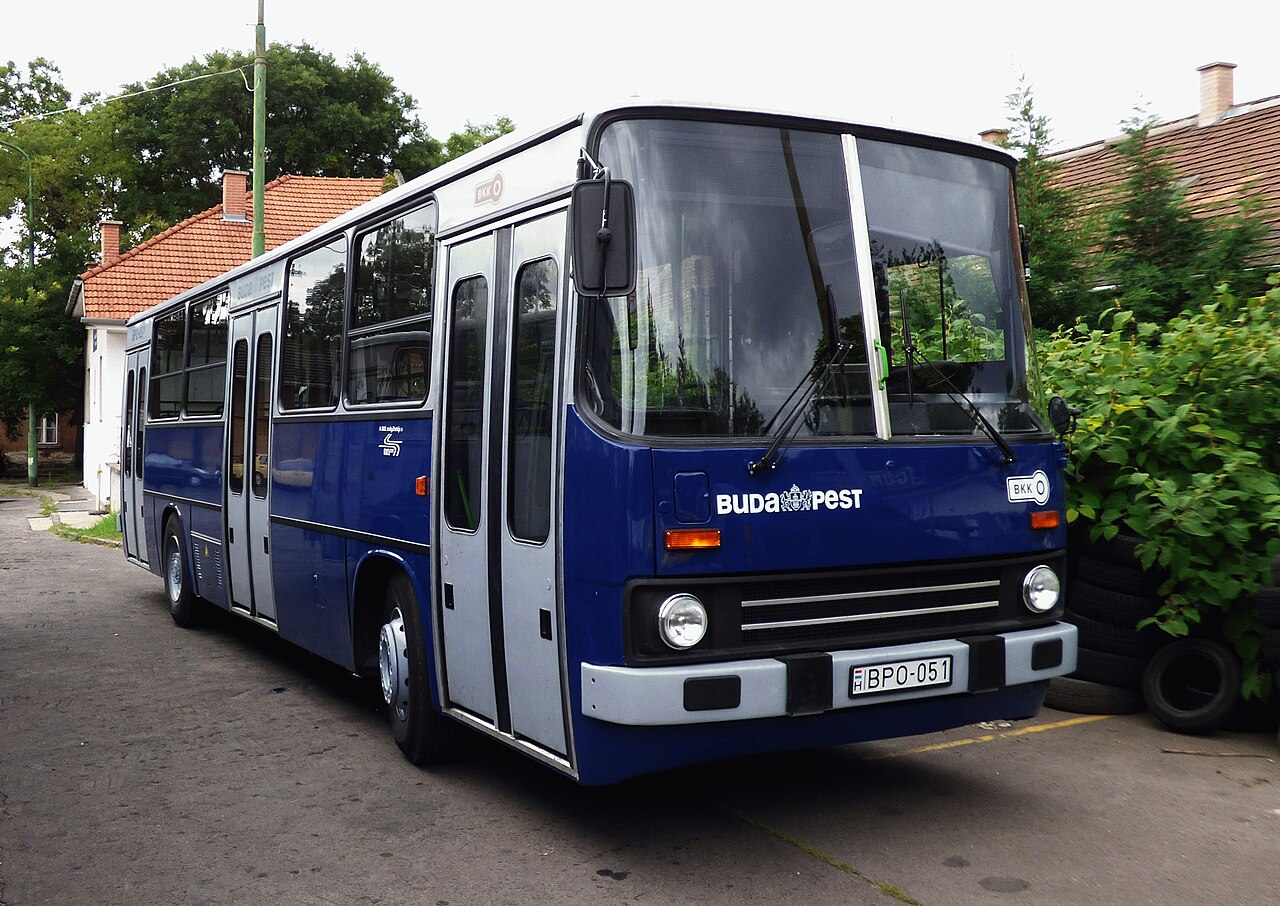
Now watch the third digit do its work. The Ikarus 263 keeps the same 6-series body but leans toward suburban duty: a longer (about 12 m) version with fewer doors and more seats, for routes with bigger gaps between stops. The 266 pushes further into commuter territory — and its door code spells that out, which we'll decode below. Our Ikarus 263 mod is exactly that fewer-doors, manual-gearbox suburban take on the 260 formula.
2-8-x — the articulated harmonica
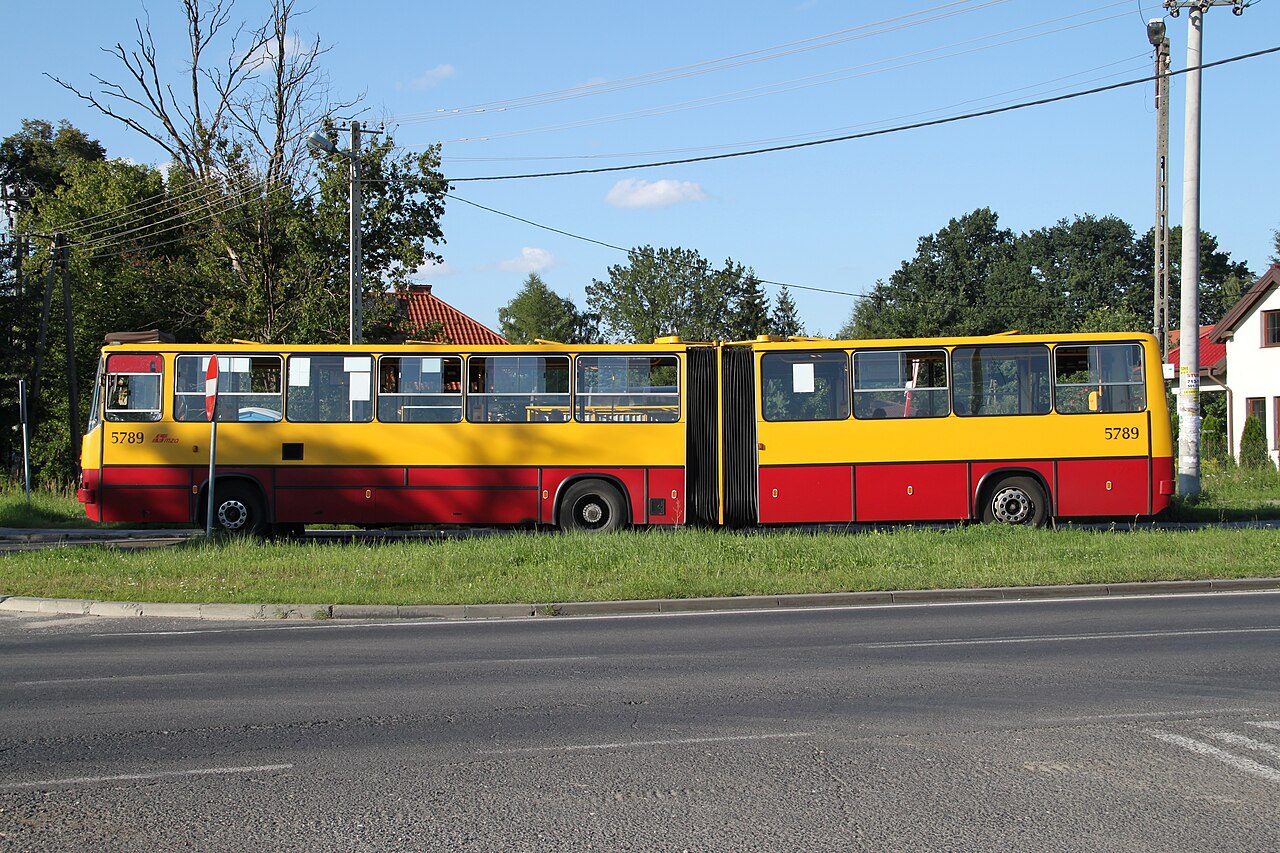
An 8 in the second slot means articulated: two rigid sections joined by a turntable and a rubber bellows — the "accordion" or "harmonica" bus. This is where the 200 series became famous.
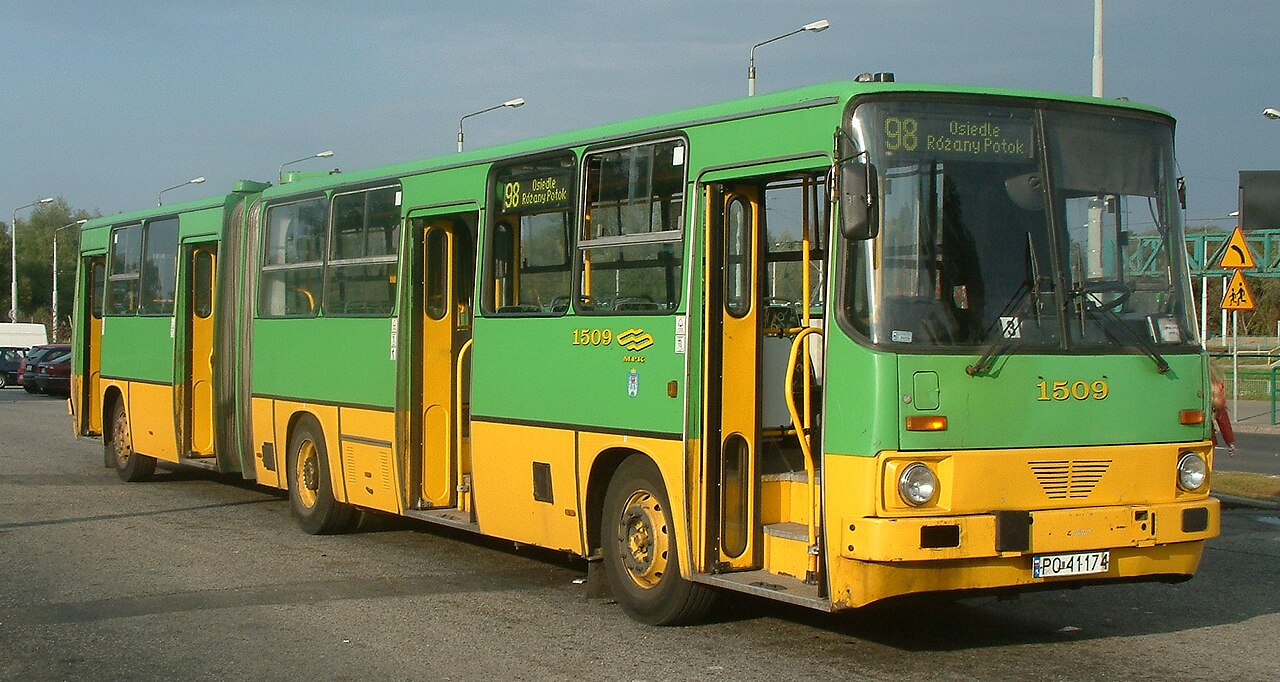
The Ikarus 280 is the icon: 16.5 metres (16,500 mm) of bus folded around a central pivot, built from the early 1970s into the 2000s and shipped across half the planet. It replaced the older articulated Ikarus 180, and depending on the variant it carried anywhere from two to four doors — that's the bus at the top of this article. There were longer derivatives still, such as the 18-metre 283, but the 280 is the one you'll meet everywhere.
The ends of the range: midis and the double-bendy
The logic holds at both extremes. Drop the second digit low and you get the small stuff: the Ikarus 211 is a high-floor midibus — in its case an unusual hybrid built on the East German IFA W50 truck chassis, the kind of oddball that's catnip for a fleet otherwise full of Western buses. You can park one in your garage via our Ikarus 211 mod.
Push the second digit up to 9 and you reach the experiments. The Ikarus 293 was a bi-articulated prototype — two joints, three sections — completed in 1988 as the longest Hungarian bus ever built. Exactly one was made: it was too long to handle cleanly, drivers on the Pécs test runs complained about its sluggishness, and it was eventually sold to a buyer in Tehran in 1992. The number told the truth — a 9 for "beyond articulated" — even when the engineering didn't quite cooperate.
After the dot: reading the suffix
The three digits give you the bus. The decimal suffix gives you the exact bus. It's where Ikarus encoded the details the base number is too coarse to carry: engine and gearbox choice, door count, climate and market spec. A 280.10 left the line with two doors; a 280.08 with four. The 250.67, 280.70E and 412.10C you see in catalogues are all the same idea — a base model plus a specific recipe.
Where the pattern stops: the 400 series
This decoder is a 200-series thing. When Ikarus finally went low-floor in the mid-1990s, it started a fresh family with a new leading number: the Ikarus 412, the company's first full low-floor city bus, from 1995. The old habit carried over in spirit — the 412.10C still wears its suffix — but the 4 marks a different generation with different rules. The leading digit tells you which rulebook you're reading. Our Ikarus 412.10C mod is the low-floor chapter of the same Hungarian story.
Why this matters when you're driving one
None of this is trivia for us. When we port an Ikarus, the number is the brief: a 250 has to get the coach stance and two doors right; a 260 needs three doors and a city floor; a 280 has to bend properly at the joint. Get the digit wrong and you've got the wrong bus.
For you it's a shortcut. Next time you're browsing the Ikarus mods — or any Hungarian bus on the site — you can read the badge before you read the description. Three digits, a dot, and you already know what you're about to drive.
FAQ
Is a bigger Ikarus number a bigger or newer bus?
What's the real difference between a 260 and a 280?
What does the number after the dot mean, like 280.10?
Hero image: Ikarus 280.26 in Poznań by Radomil, CC BY-SA 3.0, via Wikimedia Commons. All photographs are Creative Commons licensed; attribution appears in each caption.