What Is a Sleeper Bus? Leito, Berths and the Overnight Coach
A sleeper bus is simple to describe and surprisingly hard to build: it is a long-distance coach where the seat is meant to become a bed. Instead of dropping you at a station to find a hotel, it carries you through the night while you lie back — or lie flat — and wake up in the next city.
That one idea sits on a whole ladder of comfort, and different parts of the world climbed it in very different ways. Brazil reclines the seat further and further until it is almost a bed. India fits actual bunks. China built the most extreme sleeper of all — and then banned it. Here is how the overnight coach works, country by country, and what it feels like to drive one full of sleeping passengers.
What a sleeper bus really is: the comfort ladder
Every sleeper bus is an answer to the same question: how flat can you make a passenger without wasting the space? A normal coach seat reclines a little. A sleeper pushes that as far as it goes — either by tilting the seat almost horizontal, or by giving up on the seat entirely and fitting a bunk.
The clearest place to read the ladder is South America, where the classes are named and standardised. As you pay more, the seat leans back further and the row gets wider. This is the same high-floor touring coach we covered in coach vs city bus — just with the recline turned up to its limit.
| Class (Brazil) | What the seat does | Approx. recline |
|---|---|---|
| Convencional | Basic reclining seat | ~35° |
| Executivo | Deeper seat, more legroom | ~40° |
| Semi-leito (semi-sleeper) | Wide seat, extra recline and footrest | ~45° |
| Leito (sleeper) | Near-flat, roomy 2+1 layout | up to ~160° |
| Leito-cama (full sleeper) | Fully flat, bed-like, with blanket and pillow | close to 180° |
These angles are approximate and vary by operator, but the direction is what matters: convencional to executivo to semi-leito to leito, each rung a little closer to horizontal. The top rung, leito-cama, is essentially a bed with a seatbelt — the kind of overnight comfort that a builder like Marcopolo makes its name on.
India's answer: real berths, not just reclining seats
India took a different road. Rather than reclining a seat almost flat, its sleeper buses fit actual berths — bunks you climb into, usually stacked in a lower and an upper row, with a curtain you can pull across. A semi-sleeper, by contrast, is the reclining-seat version, a step below a true berth.
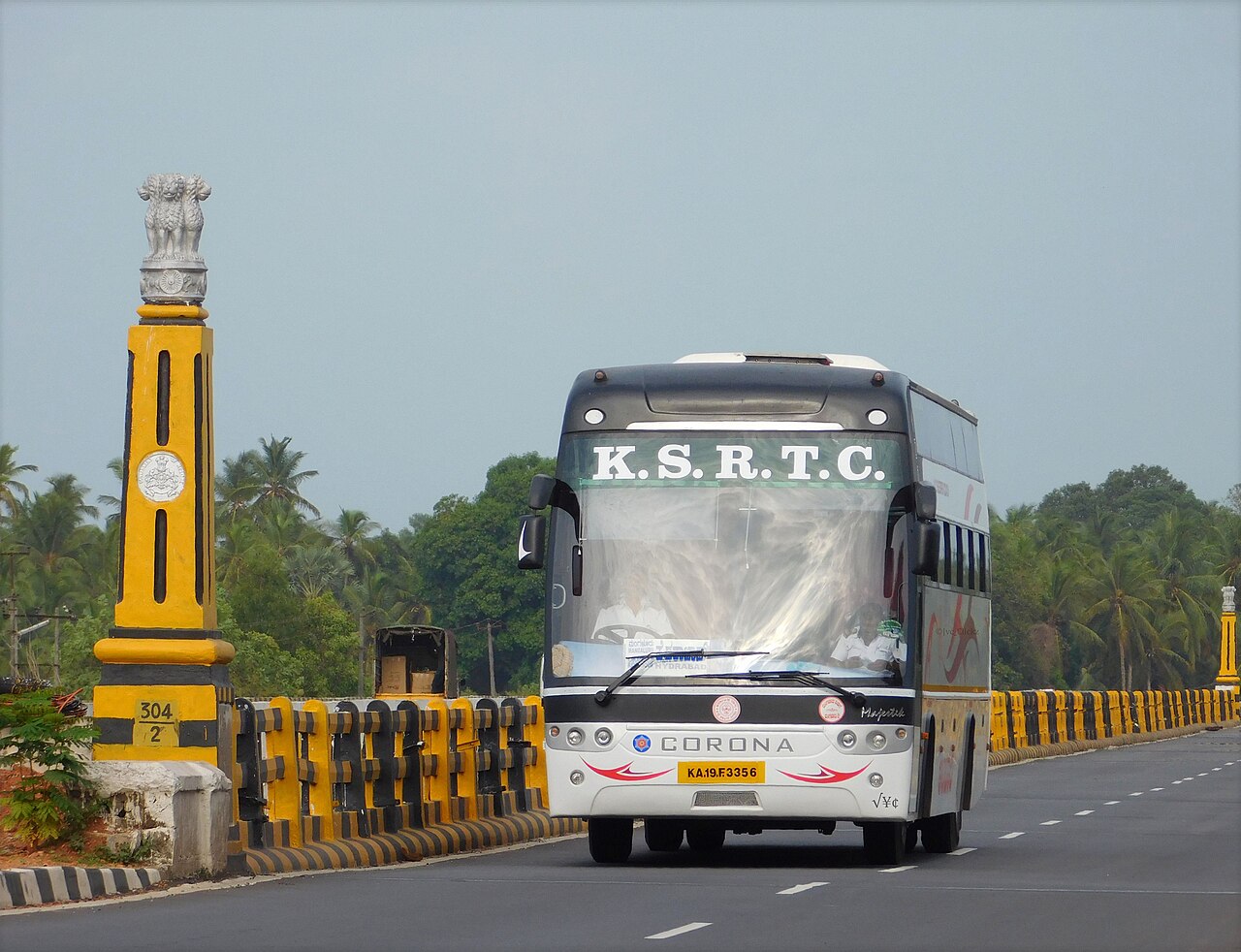
The layout is standardised. Berths are typically arranged 2+1 across the bus — a double bunk on one side, a single on the other — and India's AIS-119 rules govern how they are built and counted. These overnight services are run by both state road-transport corporations and a large private industry, with premium air-conditioned coaches (often on Volvo chassis) at the top of the market. The bus in our hero shot — a Karnataka KSRTC AC Sleeper — is exactly this kind of machine, working the long Mangalore–Hyderabad run.
Why China banned the sleeper bus
China pushed the sleeper further than anyone — and then stopped. On 1 March 2012, the government halted the manufacture of sleeper buses, and they were banned from new registration from that year. Over the following years the existing fleet — tens of thousands of vehicles — was steadily retired from the roads.
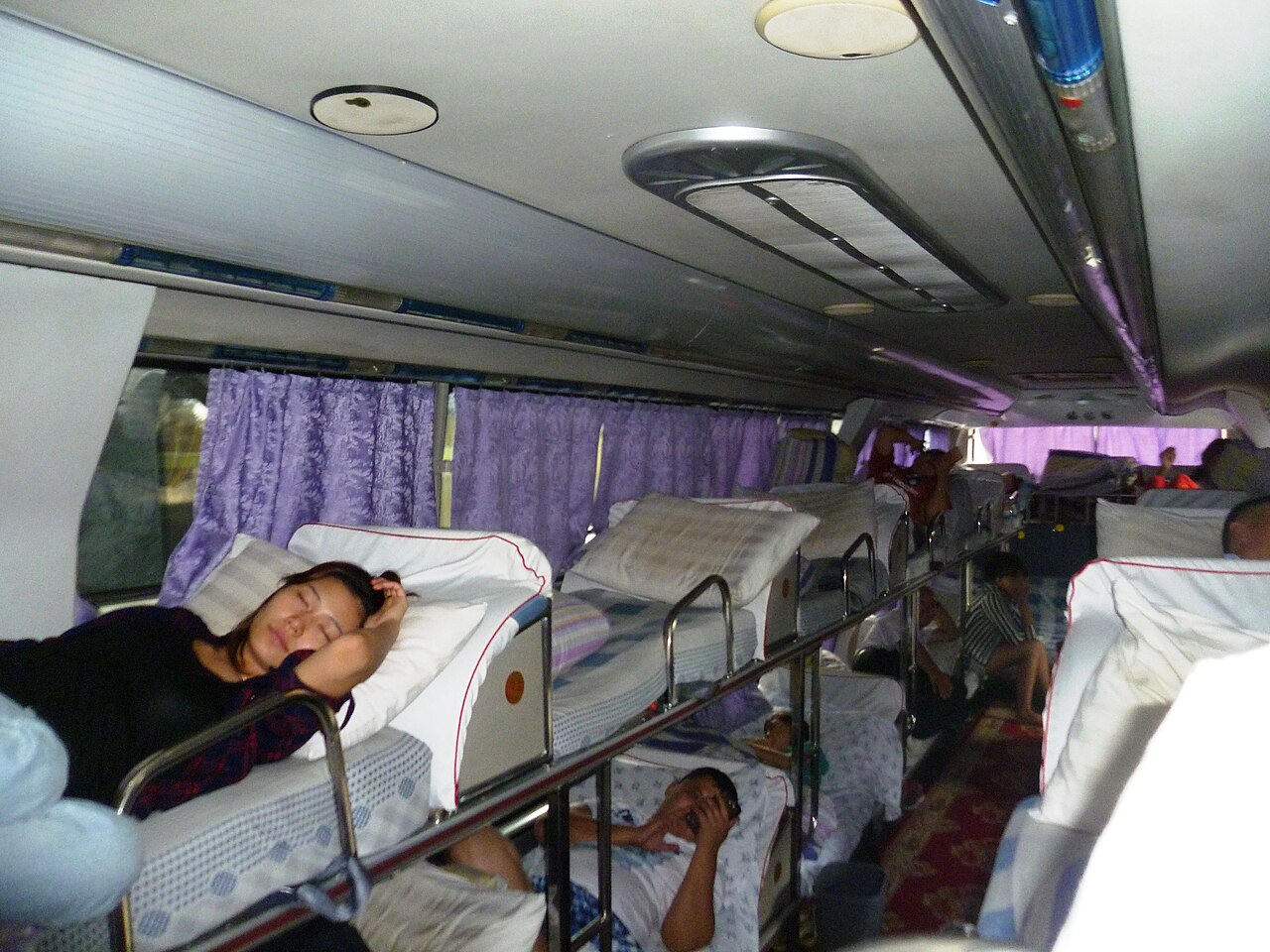
The reason was safety, and it was blunt. Officials warned that sleeper buses "are more likely to roll over when speeding or braking hard than conventional buses, because their center of gravity is higher" — all that bunk structure sits high and heavy. Worse, they were fire traps: cramped aisles, flammable bedding, and windows that could not be opened made escape desperately hard. The trigger was a run of disasters, including a 2011 fire that killed 41 people in Henan and a 2012 crash that killed 36 when a sleeper bus hit a tanker of flammable methanol and caught fire.
The double-deck sleeper: the format at its maximum
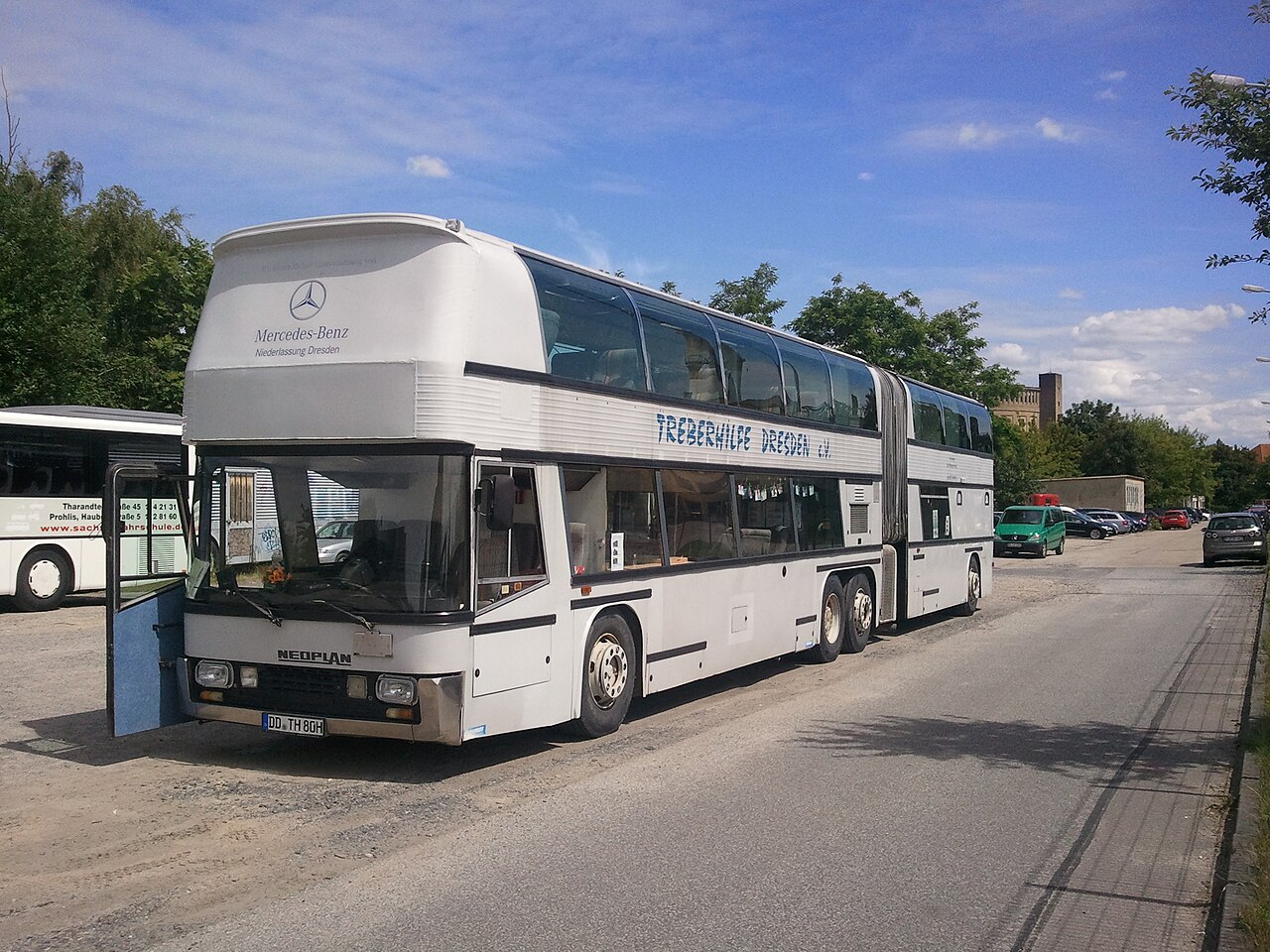
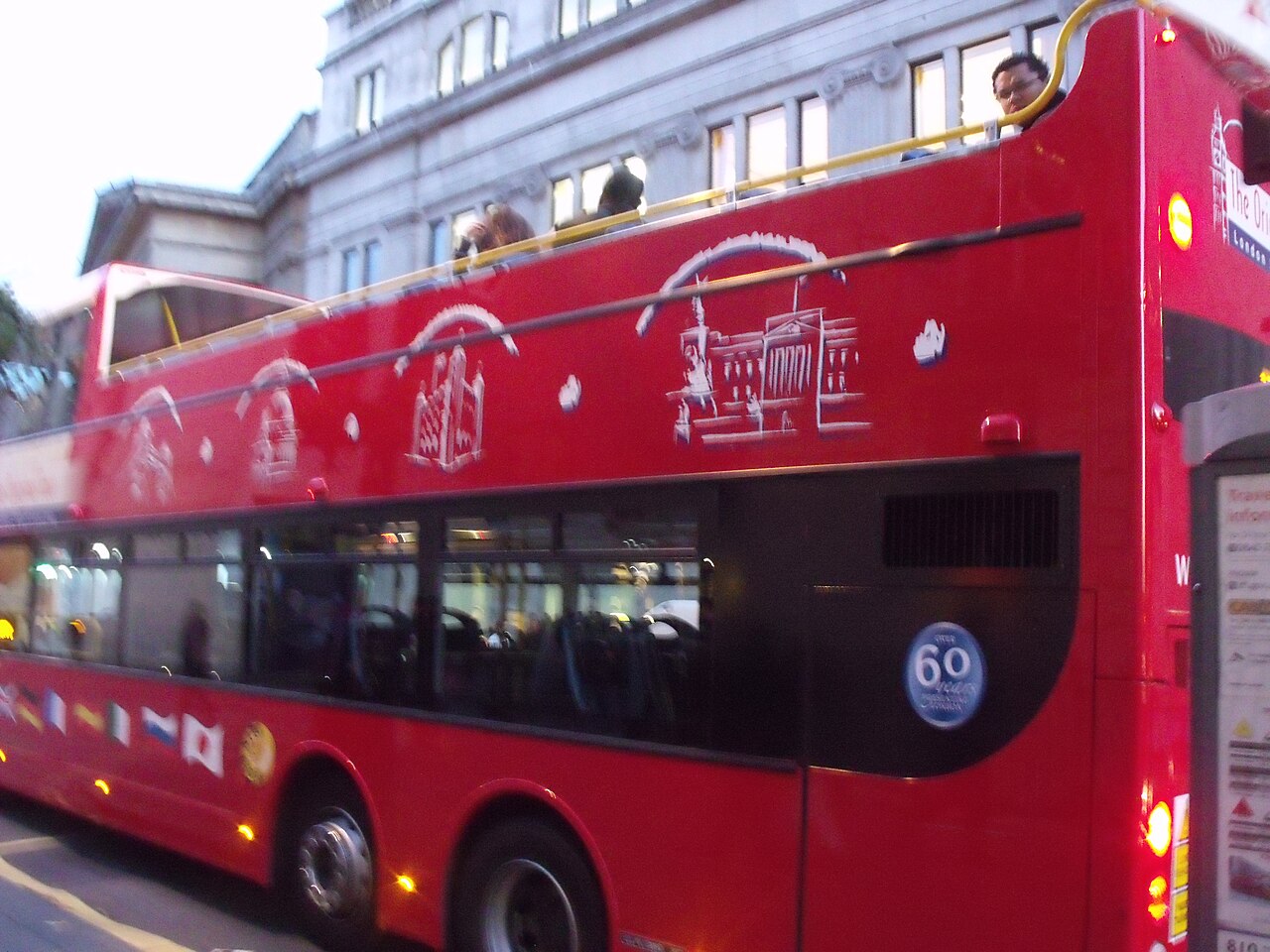
Stretch the sleeper upward and you get its most extreme form: the double-deck sleeper, with berths or near-flat seats stacked over two floors. It is the same "build up, not out" logic behind the city double-decker, aimed at squeezing the most beds onto one chassis.
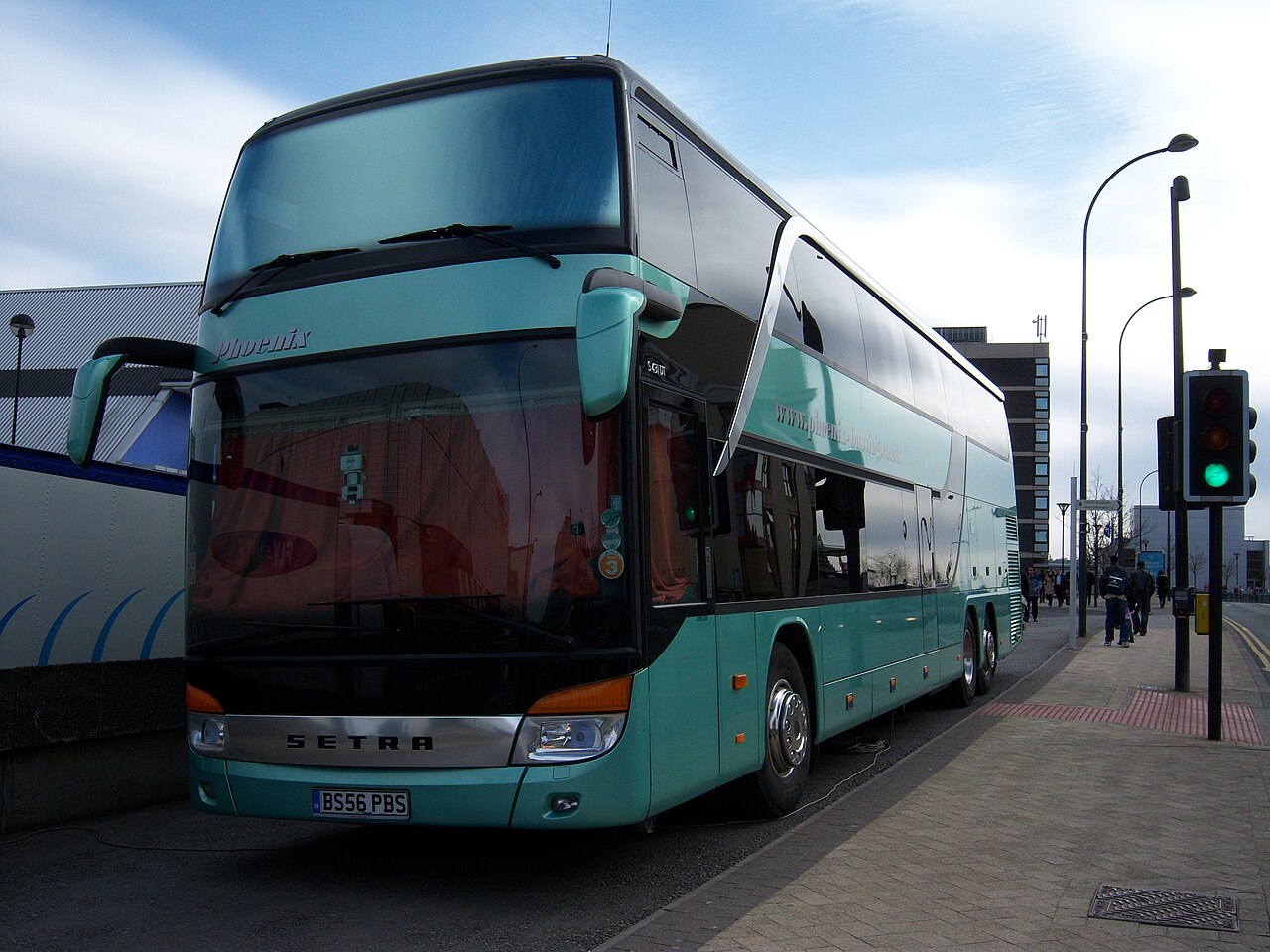
You meet this shape in two very different worlds. In the West it is the entertainer's tour bus — a double-deck coach like the Setra S431DT rebuilt with bunks so a band or crew can sleep between shows. In India and other long-haul markets it is a mainstream product: double-decker sleepers running overnight intercity routes. It also carries the same warning China acted on — two storeys of beds means a very high centre of gravity, so it needs a careful hand.
What a sleeper bus feels like to drive
This is where a sleeper changes the game in a simulator, because your cargo is different: your passengers are asleep. In a city bus, a hard brake earns an annoyed look. In a sleeper, it throws people around in their bunks. Smoothness stops being good style and becomes the whole job.
So you drive it like you are carrying water to the brim. Every input goes in slowly — ease onto the brakes far ahead of the bend, feed the wheel in gently, roll off the power rather than lifting sharply. And the machine fights you on it: a leito or a double-deck sleeper carries its weight high, so on a twisting night mountain road it leans and wallows in a way a low city bus never does. Driving one well is a long exercise in restraint — holding a steady, gentle line for hours so the beds behind you barely move.
Drive the overnight machine in Proton Bus Simulator
The overnight coach is one of the most characterful things you can drive in the sim, precisely because it demands the opposite of arcade reflexes. South America's leito tradition lives in the catalogue: browse the Marcopolo coach mods for the sleeper-class bodies, or take the two-storey route with the Modasa Zeus 5 double-decker coach and feel that high centre of gravity for yourself on a long night run.
FAQ
What is the difference between a sleeper and a semi-sleeper bus?
What does "leito" mean on a Brazilian bus?
Why are sleeper buses banned in some countries?
Are there double-decker sleeper buses?
Sources
- China Daily — "Sleeper buses on way out" (2012) — the 1 March 2012 manufacturing halt, the higher-centre-of-gravity and fire-escape hazards, the fatal 2011 Henan and 2012 crashes, and the phase-out of the existing fleet.
- Background: Sleeper bus — Wikipedia — the definition of a sleeper bus, its use for intercity travel in India by state and private operators, and China's 2012 registration ban.
- Busbud — bus seat classes in South America — the convencional, executivo, semi-leito and leito ladder and how far each seat reclines.
- eTravelSmart — types of buses in India — sleeper berths versus semi-sleeper reclining seats, the 2+1 berth layout, and AC/Volvo premium services.
Hero image: KSRTC Corona AC Sleeper by Jvc Clickz, CC BY-SA 4.0, via Wikimedia Commons. Full per-image credits appear in each caption above.