What Is That Airport Bus That Drives You to the Plane? (The Cobus Story)
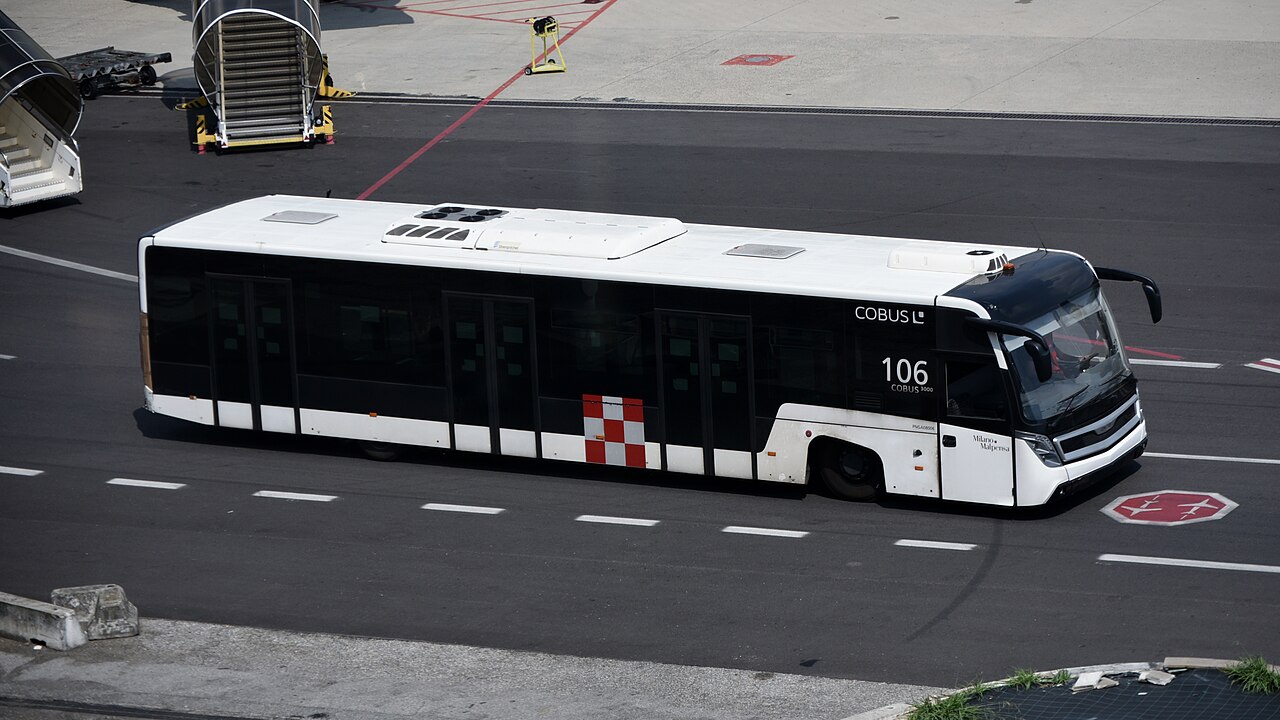
You have almost certainly ridden one, and almost certainly never learned its name. When your plane parks away from the terminal, a wide, low, boxy bus pulls up at the gate, swallows a whole flight's worth of standing passengers, and trundles you across the tarmac to the aircraft steps. It is one of the most-ridden buses on Earth — and one of the most anonymous.
It has a proper name — the apron bus — and a dominant maker, Cobus. Here is what that strange wide bus actually is, why it looks nothing like a normal bus, and who builds it.
What it is, and why airports need it
The bus that drives you to the plane is an apron bus (also called an airside transfer bus). Its job is simple and specific: when an aircraft parks at a remote stand without a jet bridge, the apron bus carries passengers between the terminal gate and the aircraft steps, out on the "apron" — the part of the airfield where planes park. No jet bridge, no long walk across live taxiways: you ride.
Why not just use a normal bus?
This is the real question, and the answer is why the apron bus looks so odd. A city bus is built to move people through streets; an apron bus is built to move a planeload across a few hundred metres of tarmac as fast as possible, and that leads to a completely different machine:
- Extra-wide. An apron bus is around 3 metres wide — wider than any road bus is allowed to be — because it never touches a public road. All that width is standing room.
- Doors on both sides. Unlike a road bus, it has full-width doors on both flanks, so it can load from the terminal on one side and unload at the aircraft on the other without turning around — the same throughput logic behind why city buses have so many doors, taken to its limit.
- Standing room, low speed. Almost the entire floor is standing space to pack in a full flight, and it crawls at walking pace around parked jets. Comfort and speed simply are not the point.
A normal bus can't do any of that. The apron bus is a purpose-built airside machine — which is exactly why it feels nothing like the coach you took to the airport.
One company rules the tarmac: Cobus
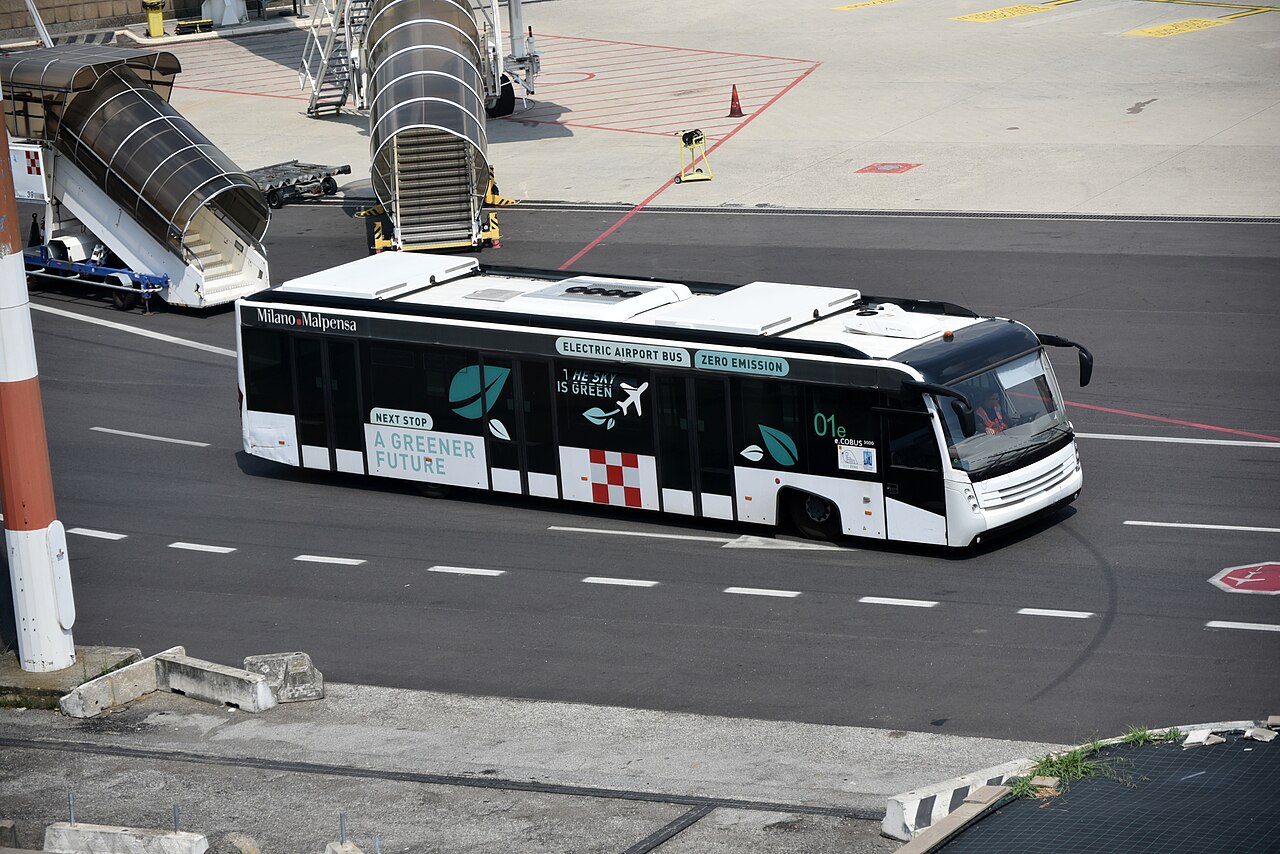
Look at the apron buses at almost any major airport and you will see the same badge: Cobus. "COBUS Industries is a brand of apron buses for airside transfer at airports," based in Wiesbaden, Germany, and it has been the world market leader since 1990. Here is the twist for bus fans: the buses themselves are manufactured by Salvador Caetano, the Portuguese coachbuilder — so the anonymous airport bus is, underneath, a Portuguese product sold under a German brand.
The range is sized by capacity. The flagship Cobus 3000 carries up to around 110 passengers; the narrower Cobus 2700 suits congested airports like London Heathrow; and the smaller Cobus 2500 takes roughly 67. Whatever the size, the recipe — wide body, doors both sides, standing room, walking pace — is the same.
The apron bus goes electric
An airport apron is the perfect place to go electric: short, repetitive, low-speed loops, always returning to base to charge. So Cobus now builds the battery-electric e.Cobus, and has even shown a hydrogen fuel-cell version — quietly making one of aviation's most-ridden vehicles one of its cleanest, part of the wider shift to electric buses.
What it feels like to drive
Driving an apron bus would be the strangest bus job in the world: the opposite of everything a coach or city bus teaches. There is no route, no traffic and no speed — just a walking-pace crawl across an open expanse of tarmac, threading between parked aircraft, fuel trucks and ground crew where a mistake is measured against a jet's wingtip.
What you would manage instead is sheer width and bulk: a 3-metre-wide room on wheels, packed with standing passengers, doors down both sides, easing to a precise stop exactly at the aircraft steps. It is pure low-speed spatial awareness — no cornering physics, no motorway cruise, just the delicate business of placing an enormous, slow, wide box in exactly the right spot, over and over, all day.
FAQ
What is the airport bus that takes you to the plane called?
Why don't airports use normal buses for this?
Who makes the Cobus airport bus?
How many passengers fit in a Cobus 3000?
Sources
- Cobus Industries — Wikipedia — Cobus as a brand of apron buses manufactured by Salvador Caetano, based in Wiesbaden, market leader since 1990, and the Cobus 3000/2700/2500 models and electric versions.
- Background: Airport bus — Wikipedia — the airside transfer / apron bus that carries passengers between terminal and aircraft at remote stands.
- Cobus Industries apron buses — Aviation Pros — the apron-bus design (width, both-side doors, high standing capacity) for airside passenger transfer.
Hero image: a Cobus 3000 apron bus at Milan Malpensa Airport by Bahnfrend, CC BY-SA 4.0, via Wikimedia Commons. Full per-image credits appear in each caption above.