Why Sightseeing Buses Have No Roof: The Open-Top Tour Bus Story
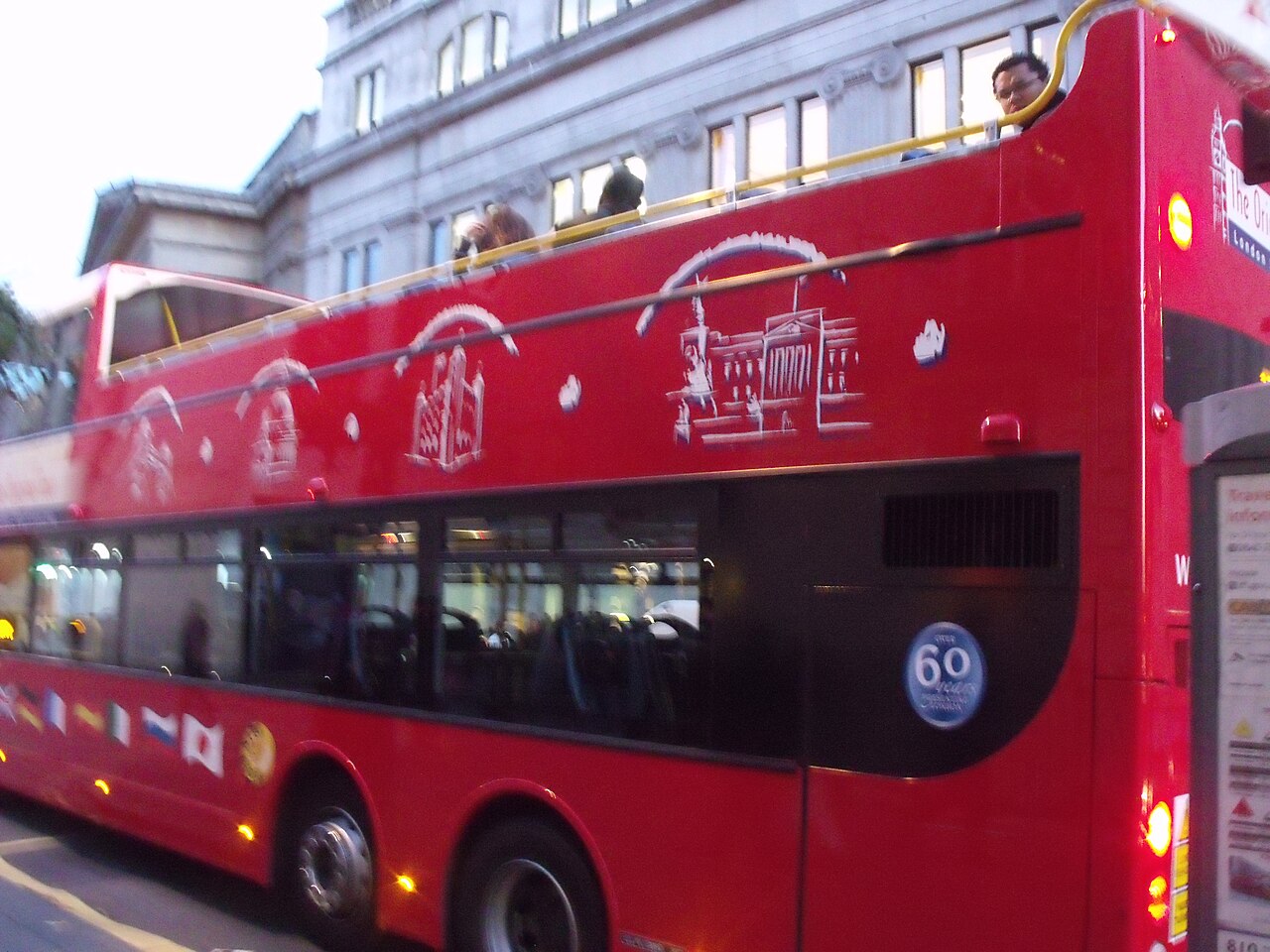
Almost every tourist city on Earth has the same bus: a bright open-top double-decker, top deck full of visitors with cameras, crawling past the landmarks. It feels purpose-built for holidays. But here is the twist — the open top was not invented for tourism at all. It is a leftover from the days when every bus had no roof.
This is the story of how the bus lost its roof, got one back, and then kept a roofless version alive as one of the most recognisable shapes in world tourism — and what that open top does to the bus when you actually drive it.
Every early bus was open-top
Go back far enough and the roofless double-decker was just… the bus. As the plain definition puts it, an open-top bus is one "built or modified to operate without a roof," and "early buses were constructed without roofs." The upper deck of a horse bus or an early motor bus was simply open to the sky, with a staircase at the back and no shelter at all. A roof was a later luxury, added once operators decided passengers upstairs deserved protection from the weather.
So the enclosed double-decker we covered in the double-decker story is actually the newer idea. The open top is the original — it just stopped being the norm once roofs became standard.
Why the open top survived — as tourism
Once roofs took over for everyday service, the roofless bus found a second life doing the one job a roof gets in the way of: looking around. "In more recent times they have only been built for tourist and sightseeing services," and open-top buses are "now primarily used as tour buses for sightseeing in cities and seaside towns."
The logic is obvious the moment you sit up top. Take the roof off a double-decker and the upper deck becomes the best seat in the city: an elevated, open-air viewing platform with unobstructed sightlines to every building, a clear shot straight up at the tall stuff, and the breeze and sound of the street. A closed window can never match it. The very thing that made the open top impractical for a rainy commute — no roof — is exactly what makes it perfect for a holiday.
The hop-on, hop-off machine
The open top also carries a whole business model on its shoulders. Most tourist double-deckers run a hop-on, hop-off service: you buy one ticket, and a fleet loops a fixed route past the sights all day, letting you get off at any stop, explore, and catch the next bus along. The red-liveried City Sightseeing is the best-known name, running this format in cities on nearly every continent.
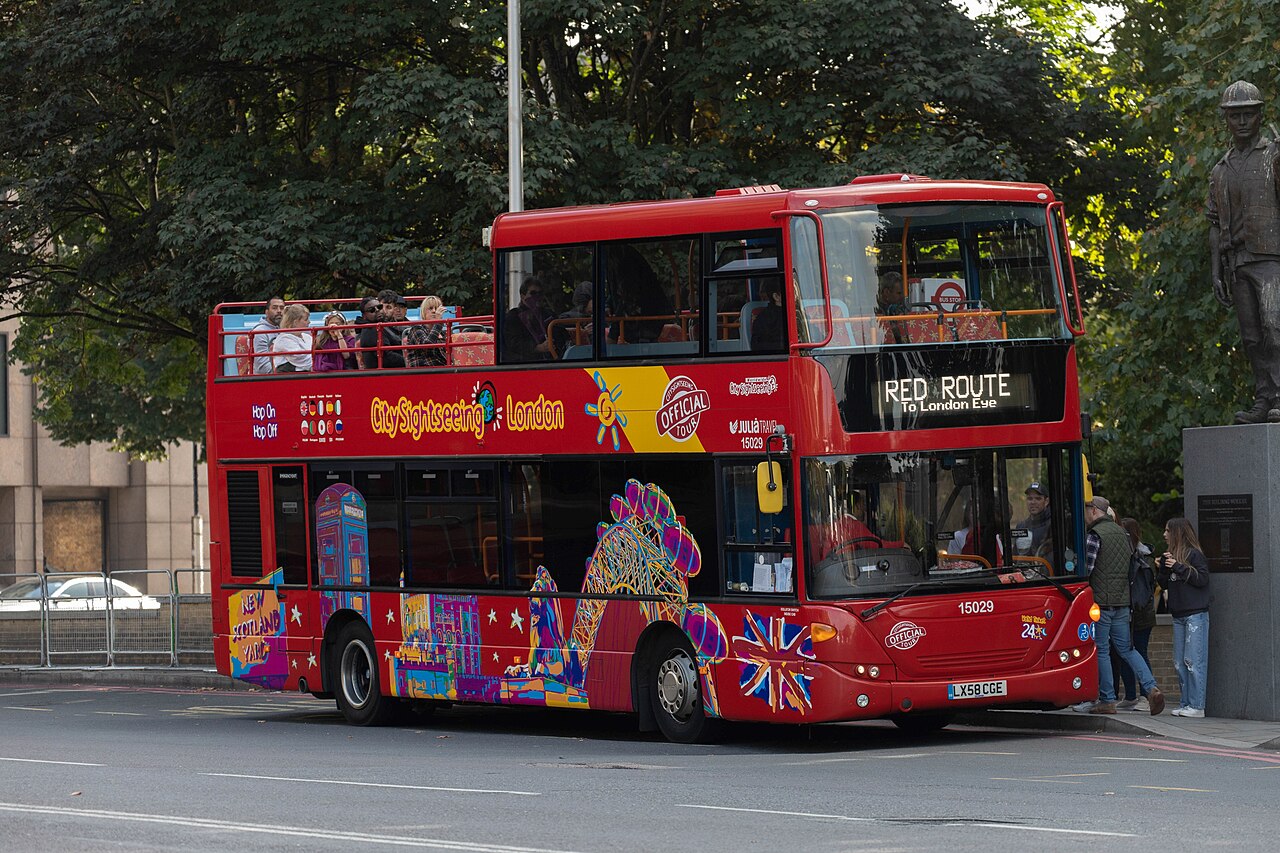
Many of these buses start life as ordinary enclosed double-deckers — often retired city buses like the Alexander Dennis deckers — and have their roofs cut off for a second career in tourism. Others are built open-top from the factory. Either way, the appeal is the same: turn the whole upper deck into an open-air grandstand.
What it feels like to drive
An open-top tour bus is a very particular thing to pilot, and the missing roof changes it in two ways. First, physics: a double-decker already carries its weight high (the reason it leans in corners), and stripping the roof off does nothing to lower that — you are still managing a tall, top-heavy machine, now with a deck full of standing, leaning, camera-waving passengers up top.
Second, pace. This is not the composed motorway cruise of a coach. A sightseeing bus crawls: slow enough to read the buildings, threading a fixed loop through the busiest, most pedestrian-choked streets in the city, stopping every few hundred metres to load and unload. Driving one well is patience and precision at low speed — placing a long, tall, roofless bus gently through the tourist crush, height and width always in mind, while everyone upstairs enjoys the view you are working hard to give them.
Drive the double-decker in Proton Bus Simulator
The open-top tour bus is a double-decker with its roof removed, so the machine underneath is one the catalogue knows well. Browse the Alexander Dennis double-deckers — the exact kind of bus that gets converted for sightseeing — and feel the tall, top-heavy handling that every open-top tourist bus is built on.
FAQ
Why are sightseeing buses open top?
Were all buses originally open top?
What is a hop-on, hop-off bus?
What happens on an open-top bus when it rains?
Sources
- Open top bus — Wikipedia — the definition of an open-top bus, that early buses were built without roofs, and that open-tops are now primarily tourist and sightseeing vehicles.
- Background: Double-decker bus — Wikipedia — the double-decker format the open-top tourist bus is built on, and its sightseeing use.
- Background: City Sightseeing — Wikipedia — the global hop-on, hop-off open-top sightseeing operator and its worldwide network.
Hero image: a red open-top bus of The Original London Sightseeing Tour on Pall Mall East by Elliott Brown, CC BY 2.0, via Wikimedia Commons. Full per-image credits appear in each caption above.