What Do Solaris Urbino Numbers Mean? 12, 18, 24 and the Dachshund
Most bus model names make you work for the meaning. Mercedes hides a chassis code, Setra counts seat rows, MAN buries a generation in two letters. Then there is Solaris, which looked at the whole problem and decided to just tell you the truth: the number on an Urbino is the length of the bus in metres. An Urbino 12 is twelve metres long. An Urbino 18 is eighteen. That is the entire system — and yet there is a surprising amount of story packed behind that honesty, including the little green dog riding on the front of every single one.
We went through Solaris's own company history and the model record to lay out how the range works and where it came from.
The number is the length. That's it.
Solaris builds its Urbino city buses in lengths from roughly nine to twenty-four metres, and the model name simply states the figure:
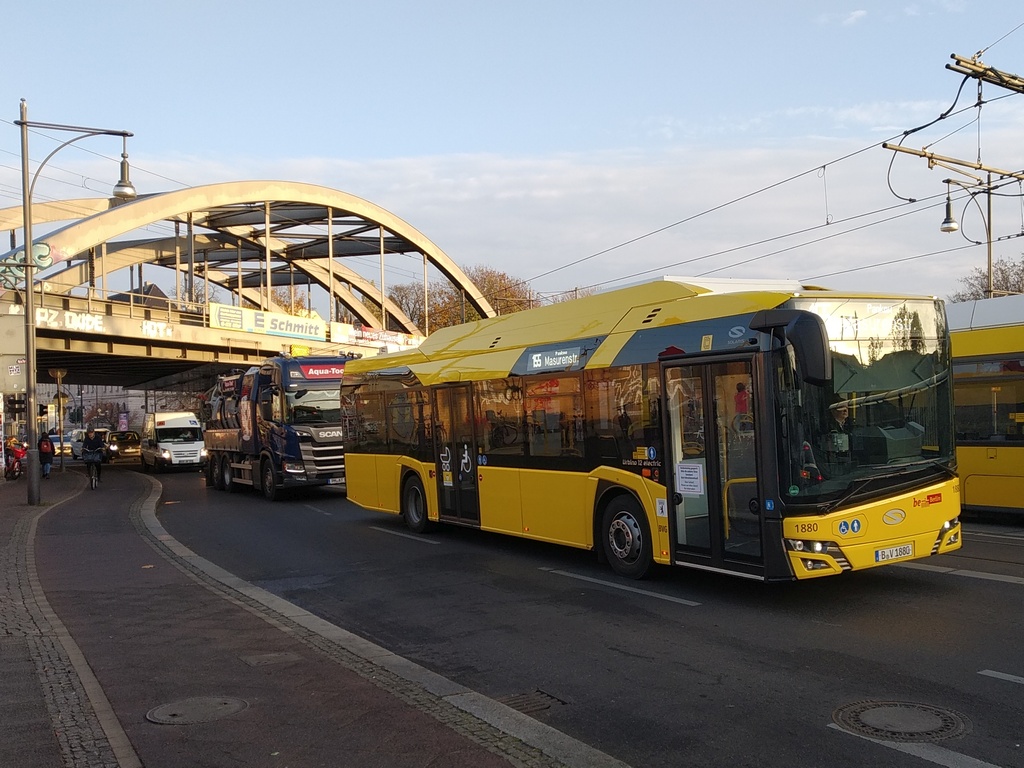
- Urbino 12 — the twelve-metre standard solo bus, the backbone of most city fleets.
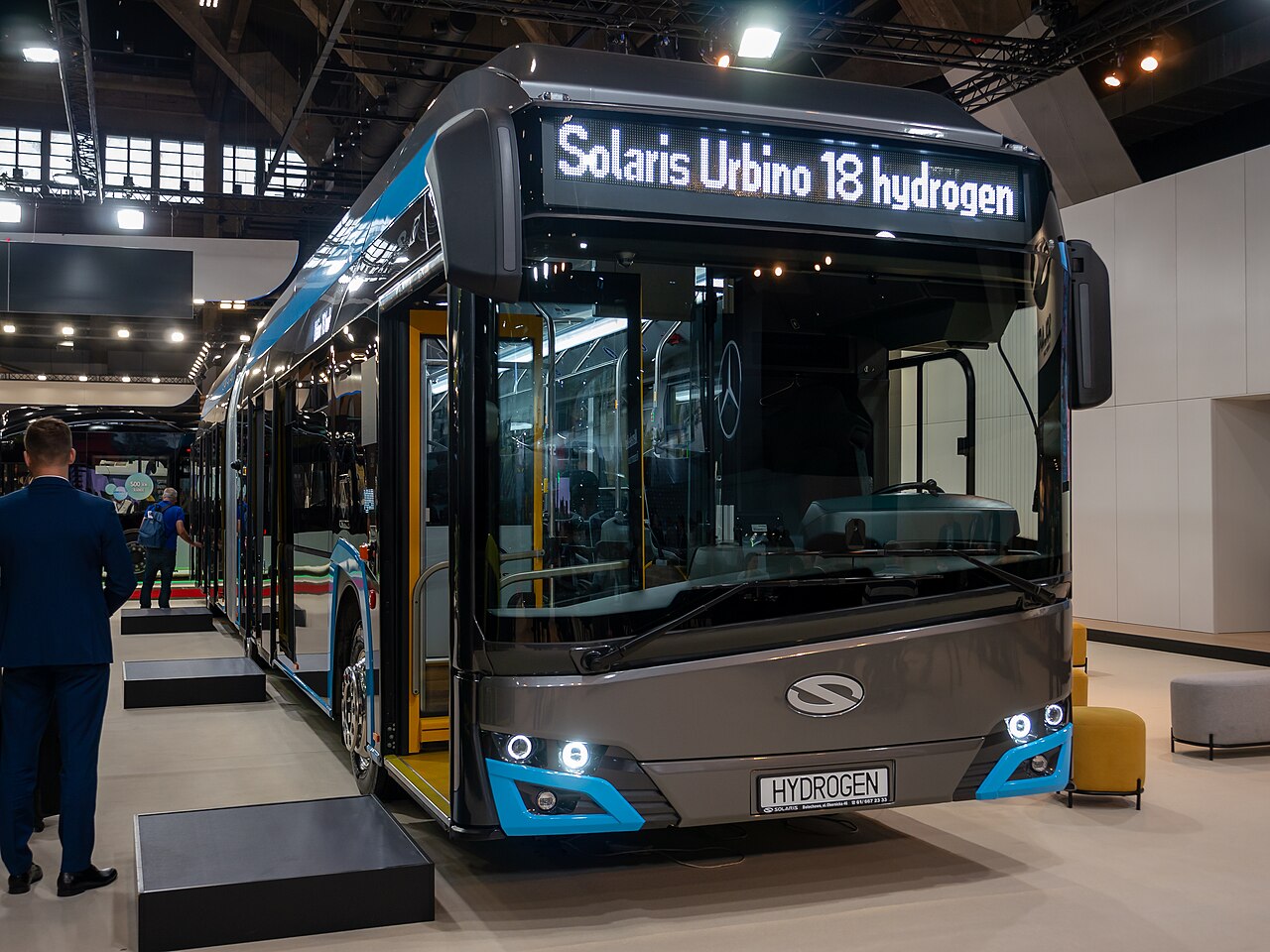
- Urbino 18 — the eighteen-metre articulated ("bendy") bus, two rigid sections joined by a turntable.
- Urbino 24 — the twenty-four-metre double-articulated giant, with two joints and three sections.
There are in-betweens — the Urbino 9, the 10.5, the 15 — and every one follows the same rule. No decoding, no chassis suffix to memorise: read the number, know the length, and from the length you can infer almost everything else about how the bus is used and how it drives.
Where other makers encode the length, Solaris just prints it. Urbino 18 = eighteen metres. Done.
From a Polish Neoplan to a European leader
Solaris is younger than most of the badges it competes with. The company began as Neoplan Polska, and on 22 March 1996 its first low-floor city bus rolled out of the factory in Bolechowo, near Poznań — built under the Neoplan licence, by a workforce of just 36 people who managed 56 vehicles in that first year. The bus that carried the Solaris Urbino name in its own right premiered in 1999, and in September 2001 the firm formally became Solaris Bus & Coach.
From that modest start it became one of Europe's defining city-bus makers — and, more than that, the continent's electric pacesetter. Solaris says that since 2012 it has delivered the highest number of electric and hydrogen buses in Europe: one in every seven zero-emission buses on European streets is a Solaris. That is the context for why you see so many Urbino models in their battery-electric "electric" form today.
The green dachshund, explained
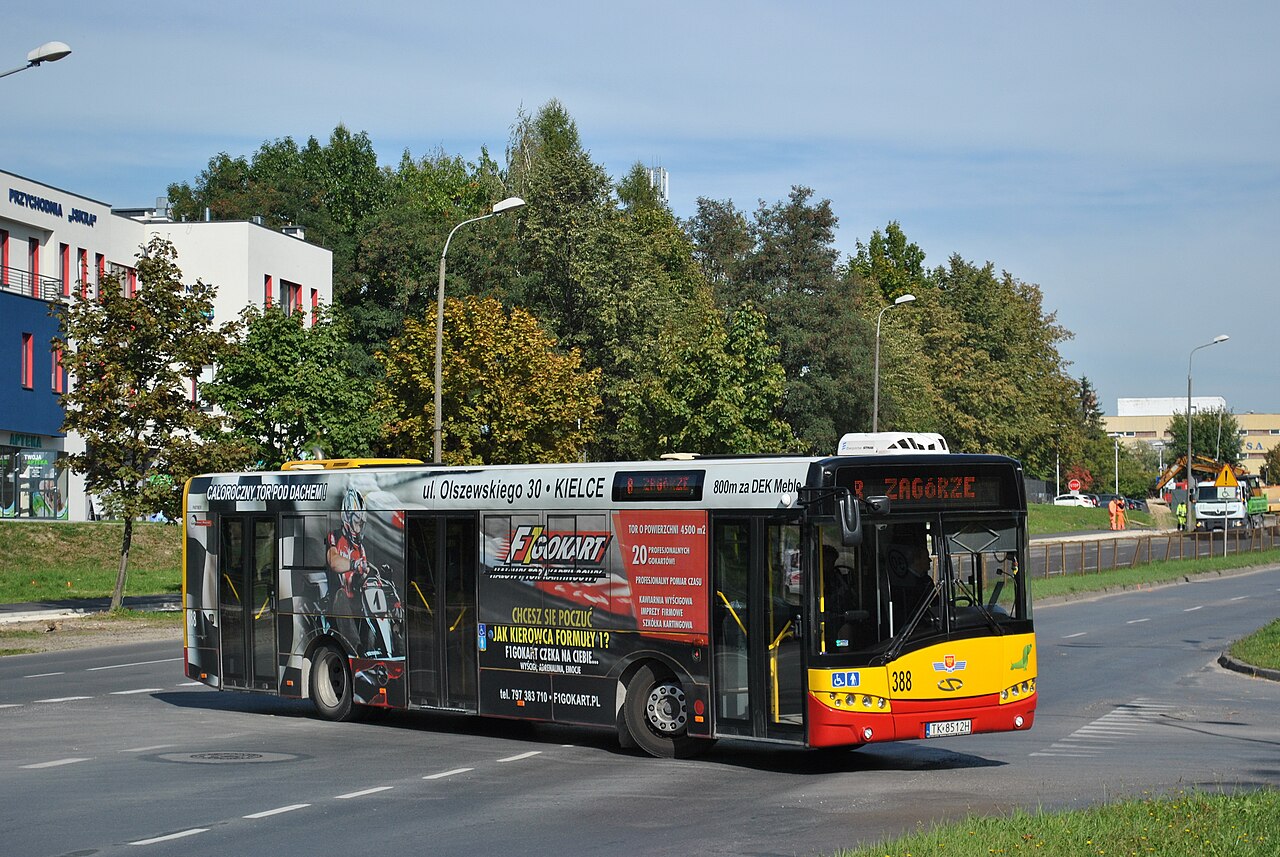
Now the part everyone notices and nobody can explain: the small green dachshund — a jamnik in Polish — perched on the front of every Solaris. It is not a sponsor, not a region's coat of arms, and not a joke. It is the company mascot, and it was chosen on purpose.
The little sausage dog was created by Solange Olszewska, co-founder and long-time head of the company. A dachshund is long and low to the ground — exactly the silhouette of a low-floor bus — so the mascot is a visual pun on the Urbino's defining feature: easy, step-free, close-to-the-kerb access. The colour green stands for the company's environmental focus, the same focus that later made it Europe's electric-bus leader. The dog even helped tell Polish-built buses apart from Neoplan models made elsewhere.
And the brand name itself? "Solaris" was chosen to sound positive in every language and to point at the future — sunshine, optimism — and it begins with the same letter as Solange, the woman who drew the dog.
What the length tells you behind the wheel
Because the number is the length, an Urbino badge is also a difficulty rating in a simulator. The longer the bus, the more of it there is behind you to manage.
An Urbino 12 is the easy, planted baseline: one rigid box, low floor, a tight enough turning circle to thread normal city streets without much drama. Step up to an Urbino 18 and the articulation joint changes everything. As you swing through a tight corner the rear section pivots around the turntable and tracks wide — the back of the bus swings out toward the kerb you are turning away from, and you learn to take the corner later and broader so the tail doesn't clip anything. Push all the way to an Urbino 24 and you are managing two joints at once across twenty-four metres; low-speed manoeuvres start to feel less like driving a bus and more like steering a train that has escaped its rails.
In every case the low floor keeps the centre of gravity down, so these buses feel stable and flickable at speed rather than tippy — the challenge is length and the swinging rear, not body roll. Read the number, and you already know which of those three machines you are about to climb into.
Want to feel the difference between a solo and a bendy for yourself? Browse every Solaris bus mod in the catalogue — start in an Urbino 12 to get the low-floor feel, then graduate to an Urbino 18 and learn to respect the swing.
Frequently asked questions
What does the number in a Solaris Urbino name mean?
Why is there a green dachshund on every Solaris bus?
Is Solaris a German company?
Why are so many Solaris buses electric?
Hero image: Solaris Urbino 12 electric by Pedant01, CC BY-SA 4.0, via Wikimedia Commons.