What Do Setra Bus Names Mean? S 515, ComfortClass and TopClass Explained
Walk through any European coach station and you will see the same three-letter prefix again and again: a clean white badge that simply reads S, followed by three digits. S 515. S 531. S 415. To most passengers it is meaningless decoration. To anyone who has spent time around buses — or behind the wheel of one in a simulator — those numbers are a tidy little language, and once you learn it you can read a Setra's size, class and even its likely road manners from across the car park.
We pulled the badges apart against Setra's own model history and the manufacturer's technical literature. Here is what every part of a Setra name actually tells you.
The name itself is the first clue
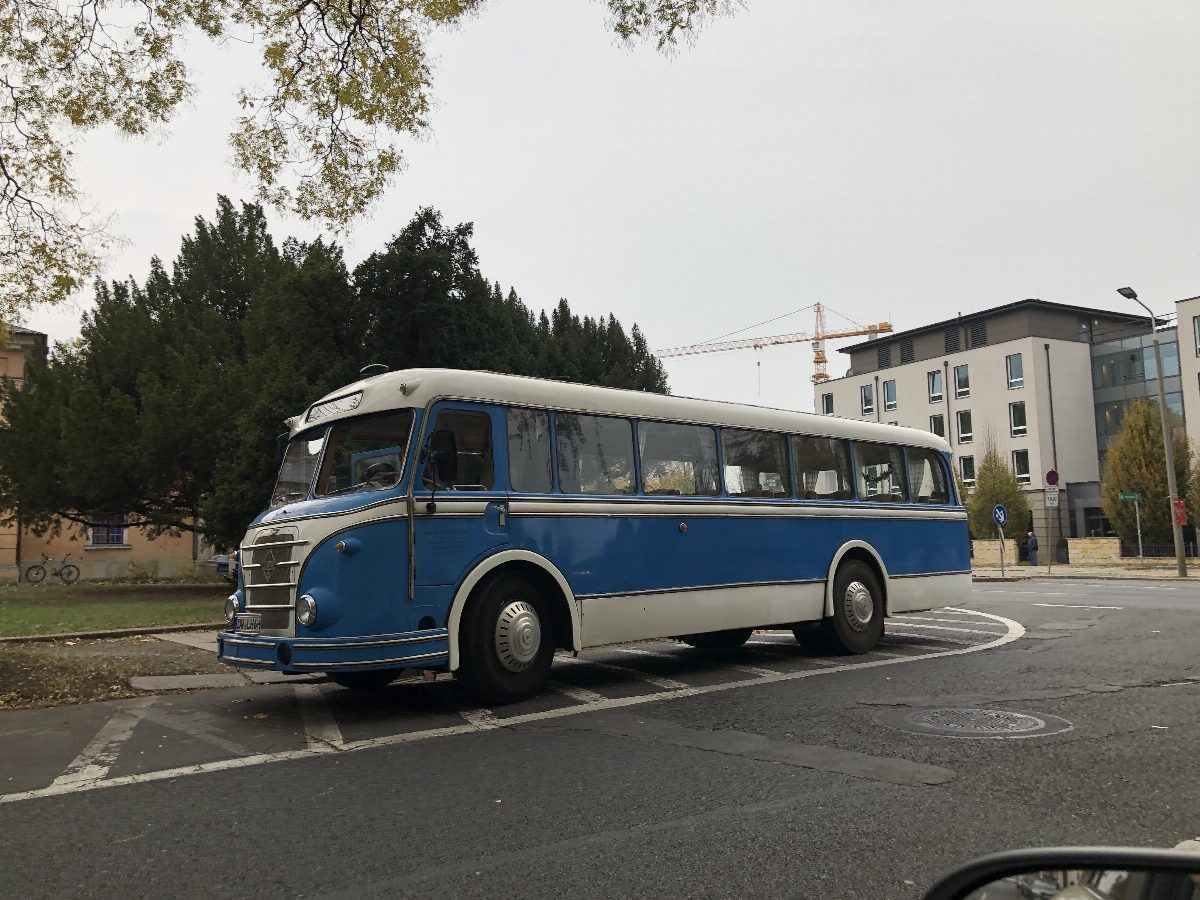
Start with the word on the back. "Setra" is not a founder's surname or a place — it is a contraction of the German selbsttragend, meaning self-supporting. When Kässbohrer unveiled the very first Setra, the S 8, in 1951, it was the first series-production bus to carry a fully self-supporting (monocoque) body, with the rear-mounted engine driving straight to the rear axle. No separate ladder chassis — the body was the structure.
That single engineering idea was radical enough in 1951 that the company named the entire brand after it. So the "S" you see on every Setra is not "Setra" the brand by coincidence — it is literally pointing back to selbsttragend, the self-supporting body that started it all.
How to read the three digits
After the S comes a number. On every modern Setra it is three digits, and it splits cleanly into two halves.
- The first digit is the generation (series). A 3 means the 300-series (launched 1991), a 4 means the 400-series (2001), and a 5 means the current 500-series (2012). It is a decade marker more than a model name.
- The last two digits are the maximum number of seat rows. This is the part most people never guess. An S 515 is laid out for up to fifteen rows of seats; an S 417 for seventeen.
The convention is old and remarkably consistent. The original S 8 had eight seat rows. An S 215 (200-series) and an S 415 (400-series) and an S 515 (500-series) are all "15-row" buses a generation apart. Once you know this, a model number stops being a code and becomes a spec sheet: the first digit tells you when, the last two tell you how big.
First digit = which generation. Last two digits = how many rows of seats. That is the whole trick.
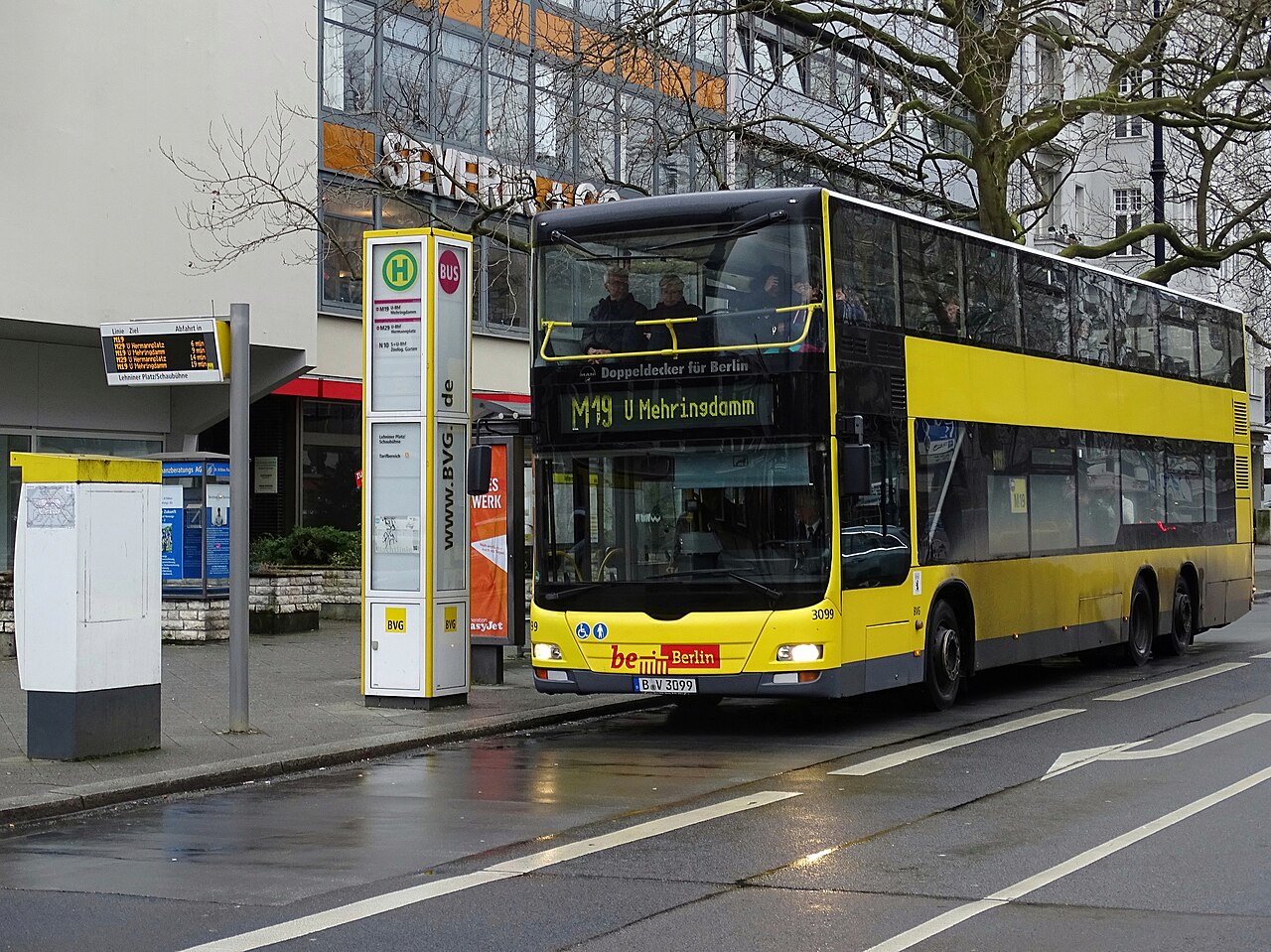
The fun edge case is the flagship double-decker, the S 531 DT. Thirty-one rows? On a single deck that would be a bus the length of a train. It works because the DT stacks its rows across two floors — the seat-row count is the giveaway that you are looking at a double-decker before you even register the second row of windows.
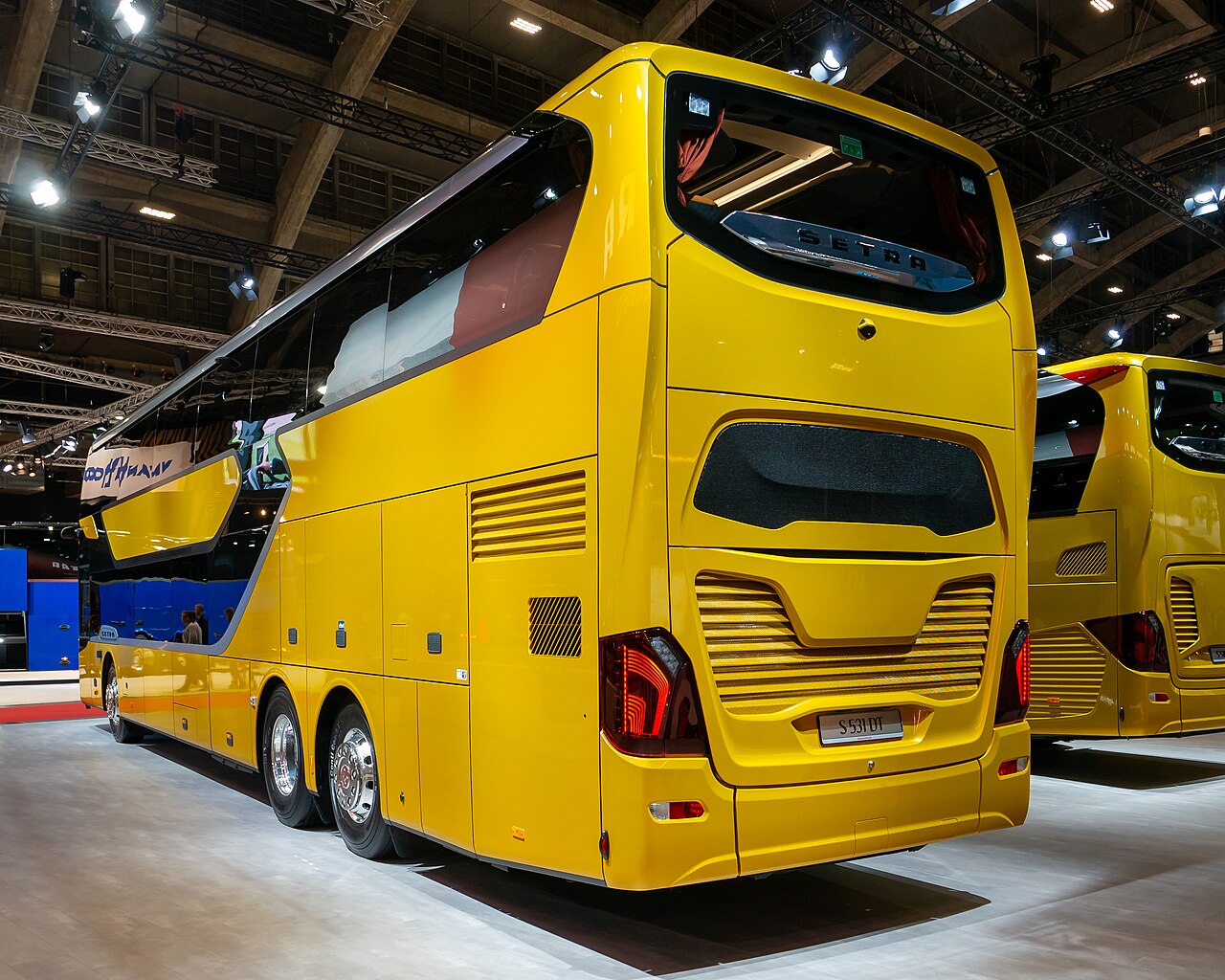
TopClass, ComfortClass, MultiClass — the three families
Alongside the number, Setra sorts its range into three named classes. They arrived with the 300-series at the start of the 1990s — the ComfortClass 300 led in 1991, the TopClass 300 followed in 1993, and the MultiClass 300 intercity range premiered in 1994 — and the same three-way split still organises the catalogue today.
- TopClass — the luxury touring flagship. High-deck and double-deck coaches built for long-distance travel at the top of the range, including that S 531 DT.
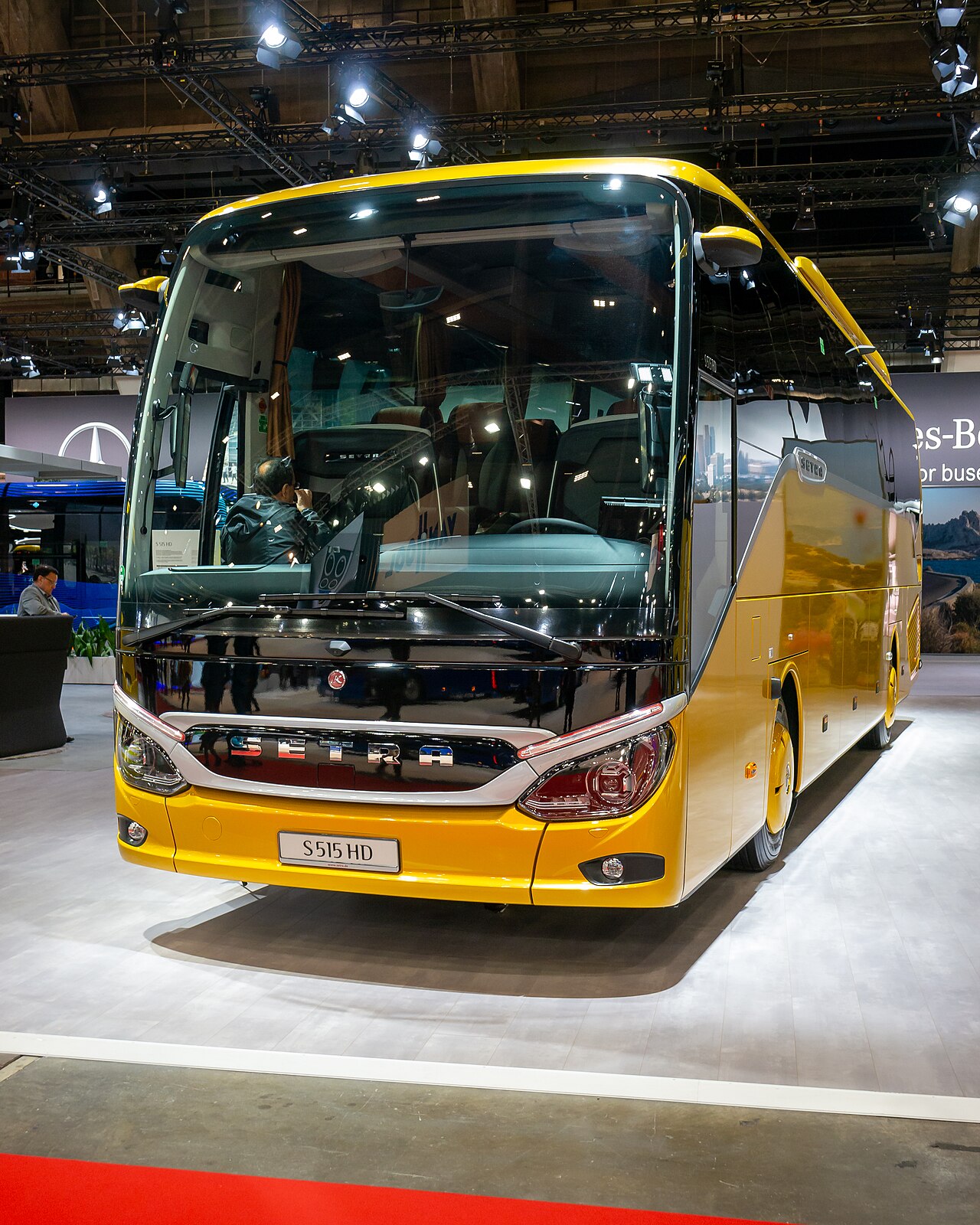
- ComfortClass — the cost-effective, comfortable touring coach. The workhorse of the long-distance fleet; the S 515 HD lives here. If you picture a "Setra coach," this is usually it.
- MultiClass — the multifunctional one. Regional, intercity and urban service buses — the "multi" refers to how many jobs the family is built to cover, from school runs to low-floor city routes.
The letters after the number
The suffix is the body-and-floor code, and it is mostly plain German abbreviation once you know the words:
- HD — Hochdecker, a high-deck coach (raised floor, luggage bay underneath).
- HDH — Hochdecker High, an even taller high-decker for premium touring.
- DT — Doppelstock-Touristikbus, the double-deck touring coach.
- NF — Niederflur, a low-floor bus for step-free boarding.
- LE — Low Entry, low-floor at the doors but stepped up toward the rear.
- UL — Überland, an interurban/regional bus.
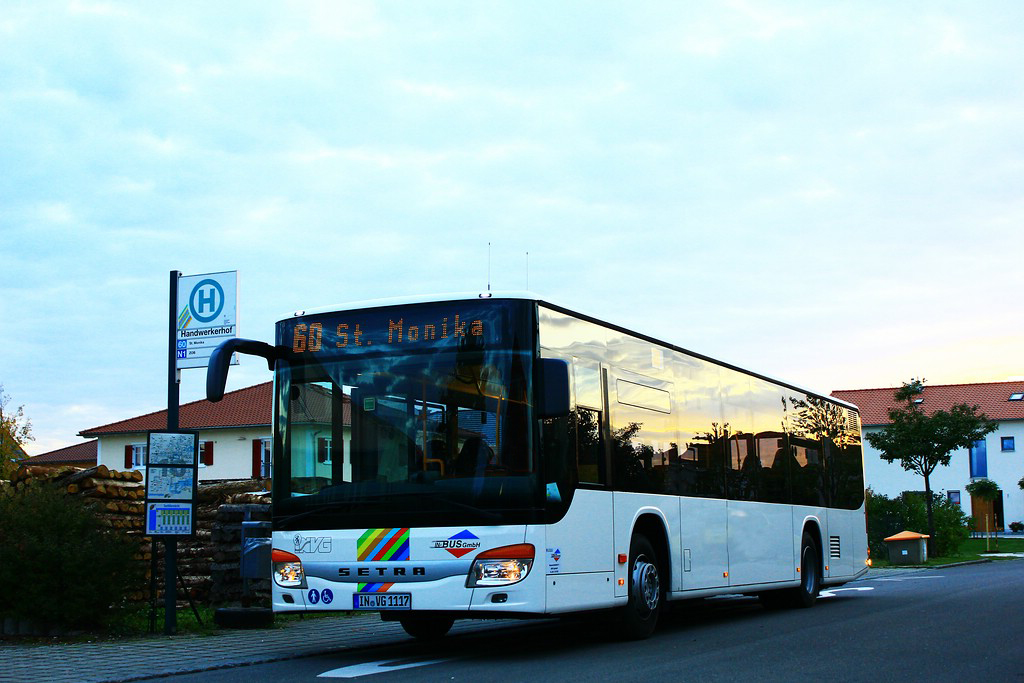
String it together and a name like S 415 NF reads end to end: a 400-series (S 4xx), 15-row, low-floor bus from the MultiClass — exactly the kind of regional runabout in the photo above.
Why Setra keeps its own name under Mercedes
Here is the part that confuses newcomers. Setra belongs to Daimler, the same group behind Mercedes-Benz buses, and the two share plenty of engineering. So why does Setra still run its own S-numbering instead of folding into the Mercedes O-series naming?
Because the brand is the engineering story. Setra's identity has been the self-supporting body since 1951 — it is the oldest continuous bus brand name of its kind, and the numbering scheme that counts seat rows is part of that seven-decade continuity. Daimler positions Setra as the premium, design-led marque and Mercedes-Benz as the volume one; keeping the distinct S-badge and its own logic is the whole point, not an oversight. A Setra owner is buying into that lineage, three-pointed star on the grille notwithstanding.
What the badge tells you behind the wheel
This is where the decoder stops being trivia. In a simulator, reading the class and suffix before you pull away tells you how the bus is going to behave.
A TopClass S 531 DT carries a lot of its mass — and a full upper deck of passengers — high above the road. You feel that the moment you turn: the body leans into corners, weight transfers further under braking, and a motorway off-ramp that a low bus takes flat will have the double-decker rolling onto its outside springs. You brake earlier, you turn in gentler, and you respect the centre of gravity the "31" quietly warned you about.
Drop to a ComfortClass S 515 HD and the high-deck floor still sits you up over a deep luggage bay, but with a single deck the balance is calmer — a long-legged cruiser that settles on the open road. Step down again to a MultiClass S 415 NF and the low floor drops the centre of gravity to the kerb: it feels planted and flickable at city speed, loads passengers fast through step-free doors, and never asks for the cautious, anticipatory driving the double-decker demands. Same brand, three completely different machines — and the badge told you which one you were getting before the engine even fired.
Want to put the theory into practice? Browse every Setra bus mod in the catalogue — the ComfortClass coaches are the natural place to start, but the TopClass double-deckers are where the handling lessons above really come alive.
Frequently asked questions
What does "Setra" actually stand for?
What do the numbers in a Setra model name mean?
What is the difference between TopClass, ComfortClass and MultiClass?
Why does Setra have a Mercedes star but its own name?
Hero image: Setra S 515 HD by MB-one, CC BY-SA 4.0, via Wikimedia Commons.