What Do Russian Bus Numbers Mean? LiAZ, NefAZ and PAZ Codes Decoded
Russian bus mods come with names that look like a bank PIN: LiAZ-5292, NefAZ-5299, PAZ-3205, LiAZ-6213. To a Western eye they are just noise. They are not.
Those digits follow a Soviet-era rulebook that is still in use today, and once you know the trick you can read a Russian bus before you even climb aboard. Two of the digits do almost all the work — and in Proton Bus Simulator, they quietly tell you how the bus will drive.
The hidden rule: two digits carry the meaning
Ignore the last two digits for a moment. Those are just the factory's own model number. The first two digits are the real code:
- The first digit is the size class — how long the bus is.
- The second digit is the vehicle type, and for a bus that digit is always 2.
The scheme comes from a Soviet industry standard applied across the whole auto industry from the 1970s, so it covers trucks and cars too — a bus just happens to be type "2". For the size class, the first digit maps to a length band:
| First digit | Bus length | Example |
|---|---|---|
| 2 | Under 5 m | tiny minibus |
| 3 | 6 – 7.5 m | PAZ-3205 |
| 4 | 8 – 9.5 m | midibus |
| 5 | 10.5 – 12 m | LiAZ-5292, NefAZ-5299 |
| 6 | 16 m and up | LiAZ-6213 (articulated) |
So a code like 5292 reads as 5 (a big 12-metre bus) + 2 (it is a bus) + 92 (the plant's model number). Do that to all four names and the fog clears. Let's walk up the size classes.
Digit 3: the small class (PAZ-3205)
Start small. The PAZ-3205 opens with a 3, so the rulebook promises 6 to 7.5 metres — a short bus. It checks out: the 3205 is about seven metres of tough, front-engined workhorse, the little bus that runs Russia's towns and villages.

The number even predicts the drive. A "3" bus is small and light, the engine sits up front beside you, and you feel every joint in the road — the opposite of a cushy low-floor giant. It is a perfect example of a bus built deliberately small, which we cover in our guide to the minibus and the midibus.
Digit 5: the big class (LiAZ-5292 and NefAZ-5299)
Now the workhorses of the big city. Both LiAZ-5292 and NefAZ-5299 open with a 5 — the 10.5 to 12 metre "large" class, the full-size city bus. Same first digit, same job, two different factories.
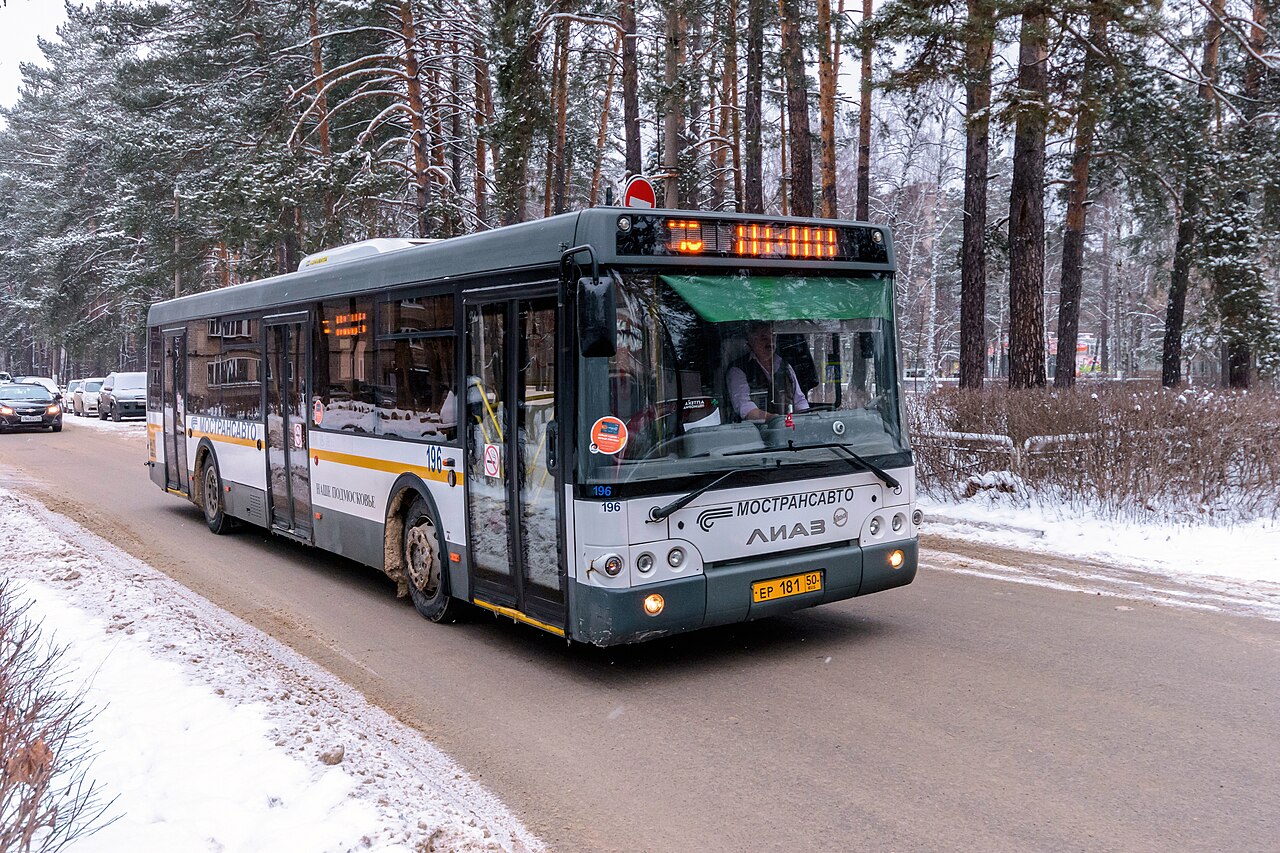
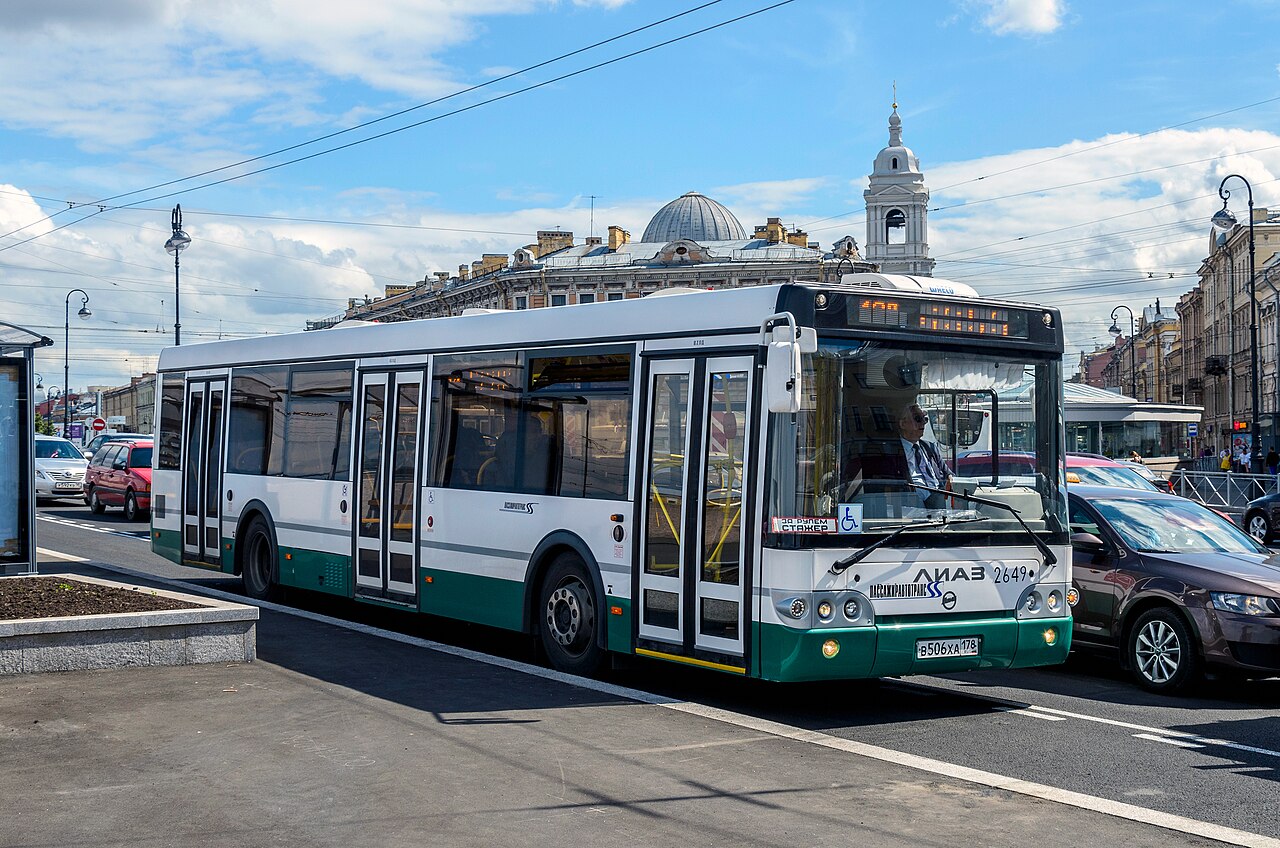
The LiAZ-5292 is a low-floor city bus about 12.4 metres long, built by the Likinsky Bus Plant in Likino-Dulyovo (part of the GAZ Group). It was first delivered in 2002, and Moscow ordered its first big batches in 2005. Read the code: 5 (12-metre bus) + 2 (bus) + 92.
The NefAZ-5299 is the same size class from a different plant — the Neftekamsk Automobile Plant, the bus arm of truck-maker KamAZ. It is a large city bus built on a special KamAZ bus chassis (the KamAZ-5297), with serial production running since 2001. Note the twist: KamAZ is famous for trucks, but this is a bus, so the second digit is still a 2.
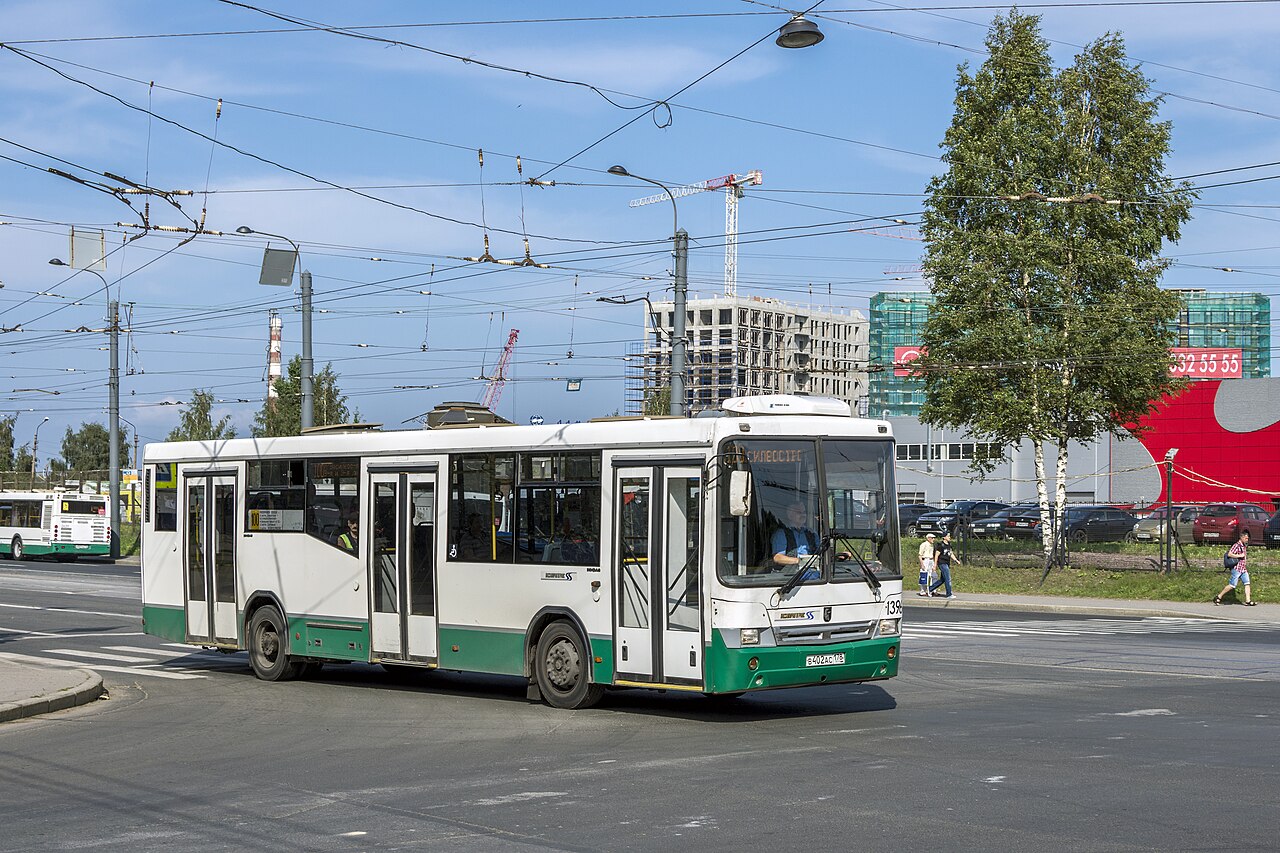
In the sim both feel like proper city buses: a level, step-free low floor for fast boarding, a heavy rear diesel, and the long, planted stance of a 12-metre machine. Put the little PAZ next to one and the size digit stops being trivia — it is the difference between a nimble seven-metre hop and a full-length bus you plan your stops around.
Digit 6: the articulated giant (LiAZ-6213)
The top of the ladder is the 6: 16 metres and up, the extra-large, bendy class. The LiAZ-6213 is an articulated low-floor city bus about 18 metres long, in mass production since 2008. The code says it plainly — 6 (16 m+) + 2 (bus) + 13.
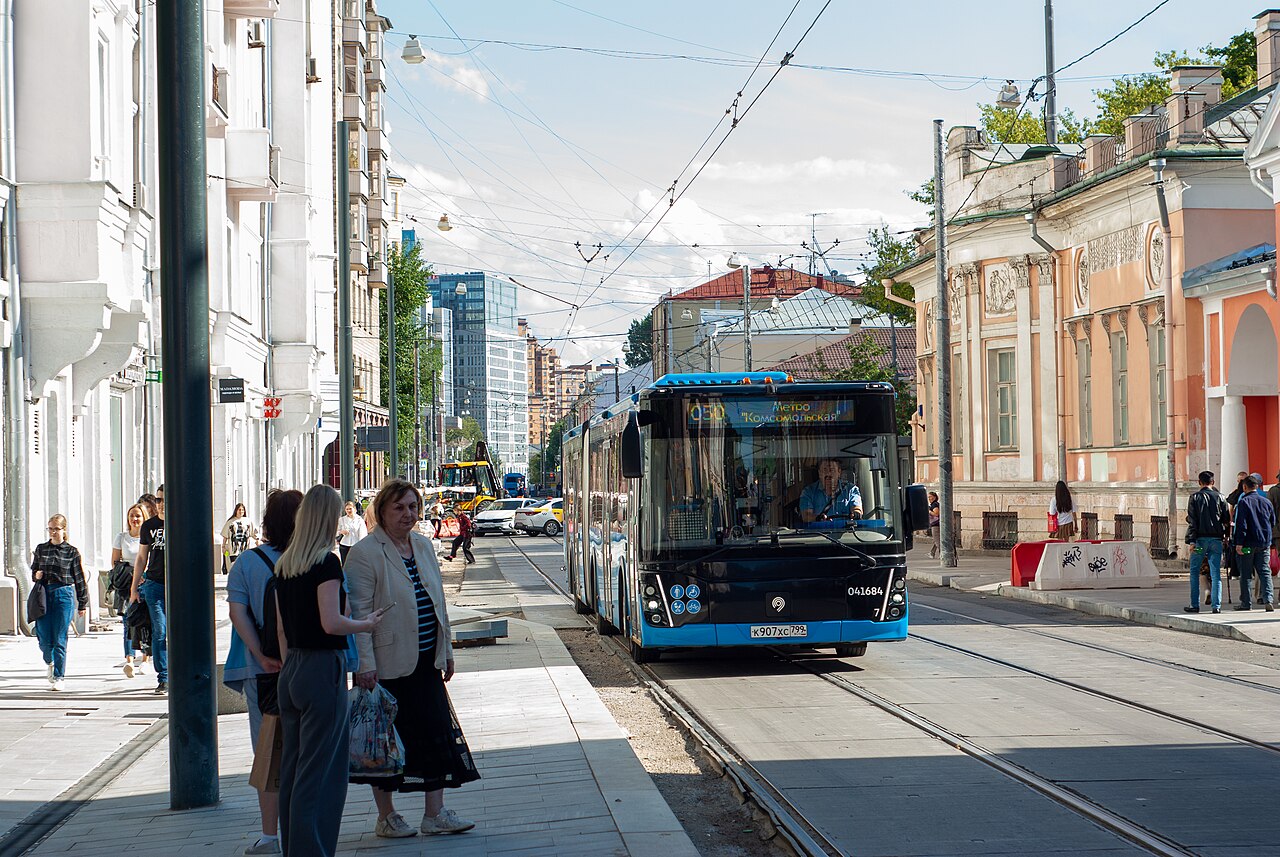
That first digit is a genuine spoiler in the simulator. A "6" bus bends, so the rear section chases the front through a tight turn and swings wide if you cut the corner — you have to plan a longer line and let the joint settle. If you want the full story of why buses fold in half, we told it in why buses bend.
Reading the badge in the simulator
Put it together and the first digit of any Russian bus number is a preview of the drive. A 3 is a small, hard-riding front-engined hopper. A 5 is a full-size 12-metre low-floor city bus. A 6 is an 18-metre articulated giant that needs room to bend. The middle 2 just confirms you are looking at a bus at all.
Learn those two digits and the whole Russian fleet stops looking like a wall of random numbers. Ready to test the theory? Browse the Russian bus mods and read a few badges before you drive them.
FAQ
What does the first digit of a Russian bus number mean?
Why do so many Russian buses have a 2 as the second digit?
What does LiAZ-5292 mean?
Is NefAZ part of KamAZ?
What is the LiAZ-6213?
Sources
- Automobile model numbering system in the USSR and Russia — Wikipedia — the first digit as size/length class and the second digit "2" for buses.
- LiAZ-5292 — Wikipedia — low-floor city bus, ~12.41 m, built by LiAZ in Likino-Dulyovo (GAZ Group), first delivered 2002, first Moscow orders 2005.
- List of NefAZ buses — Wikipedia — the NefAZ-5299 large city bus built on the KamAZ-5297 chassis, serial production from 2001.
- LiAZ-6213 — Wikipedia — articulated low-floor city bus, 18,040 mm, mass production from 2008.
- PAZ-3205 — Wikipedia — small front-engined bus, the classic short-class PAZ.
Hero & figures via Wikimedia Commons: hero and LiAZ-5292 & NefAZ-5299 photos — Alex 'Florstein' Fedorov, CC BY-SA 4.0; LiAZ-6213 — Artyom Svetlov, CC BY-SA 4.0; PAZ-3205 — Serko, public domain.