The Mercedes-Benz O302: The Bus That Carried Every Team at the 1974 World Cup
In the summer of 1974, sixteen football teams arrived in West Germany to play for the World Cup — and every single one of them stepped off the plane and onto the same bus. Not literally the same vehicle, but the same model: a Mercedes-Benz O302, painted in its nation's colours, waiting on the tarmac. It is one of the most charming footnotes in both football and bus history, and it quietly invented something we now take for granted — the idea that a national team travels in its own branded coach.
The bus was the O302, a boxy, Bauhaus-clean monobloco that Mercedes had been building since the mid-1960s. Half a century later, the West German team's example still draws a crowd at the Mercedes-Benz Museum in Stuttgart. Here is why this particular coach earned its place, and what it would feel like to actually drive one.
One tournament, sixteen identical buses
The 1974 FIFA World Cup ran from 13 June to 7 July across West Germany and West Berlin. As Daimler tells it, "sixteen nations took part, and each of them had an O 302 at their disposal for all journeys, complete with their country's name and colours." That detail is the whole story in one sentence: not a mixed fleet of whatever local operators could spare, but one standardised coach, sixteen times over, each dressed for a different nation.
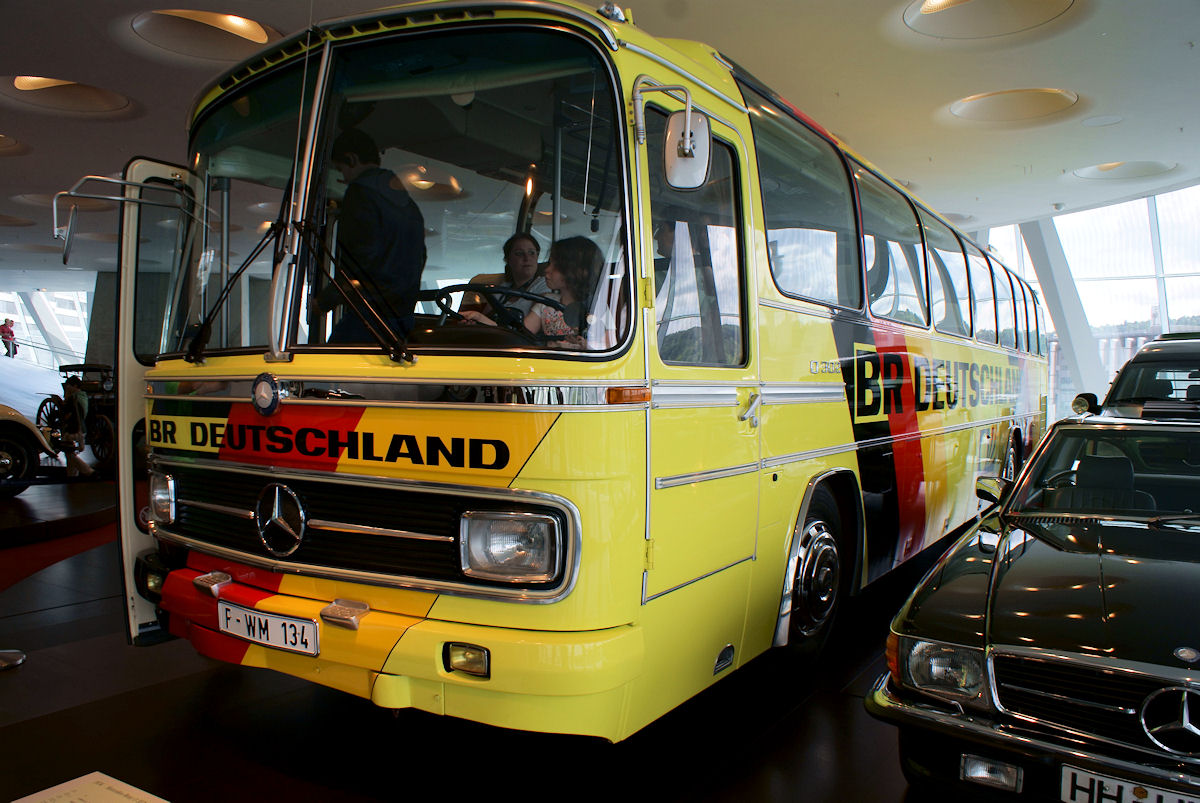
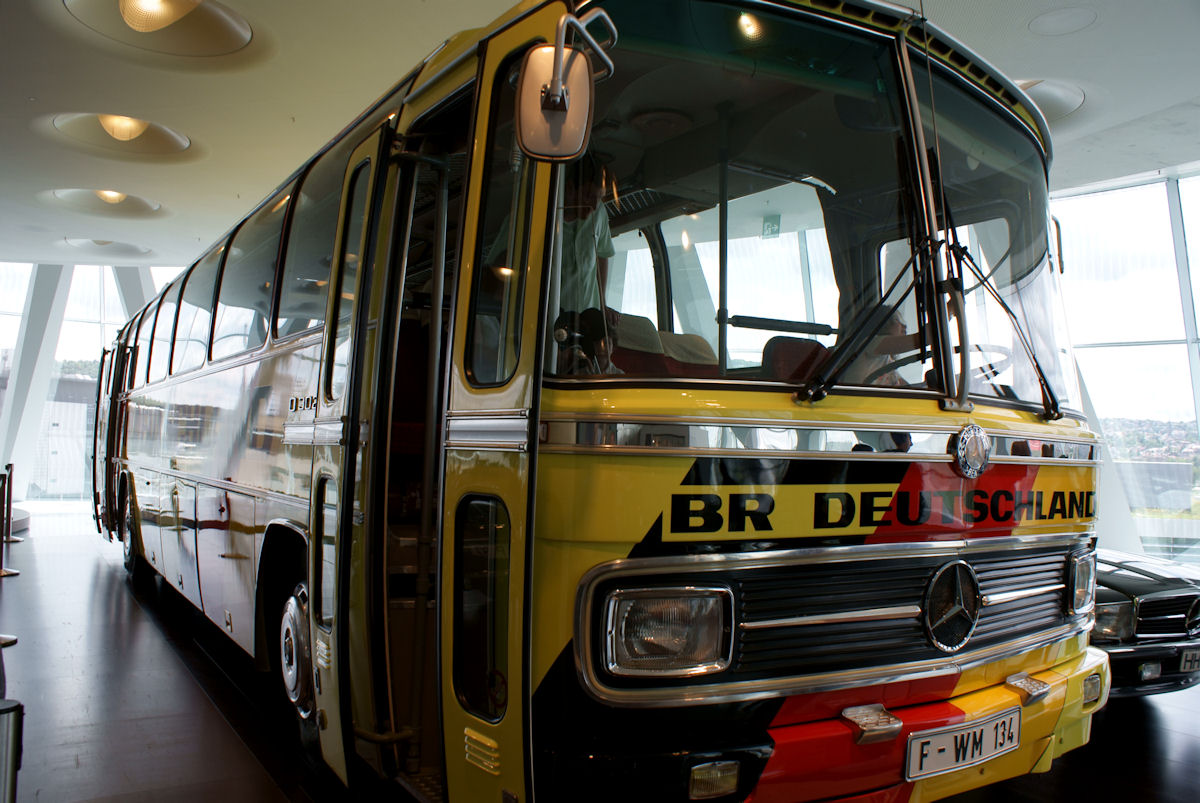
The host nation's bus is the one that survived in the public imagination. It wears a bright yellow body with a diagonal black-red-gold slash — the German flag — and the words "BR Deutschland" (Bundesrepublik Deutschland) in heavy block letters down each flank. The number plate reads F-WM 134, the "WM" standing for Weltmeisterschaft, the German word for World Cup.
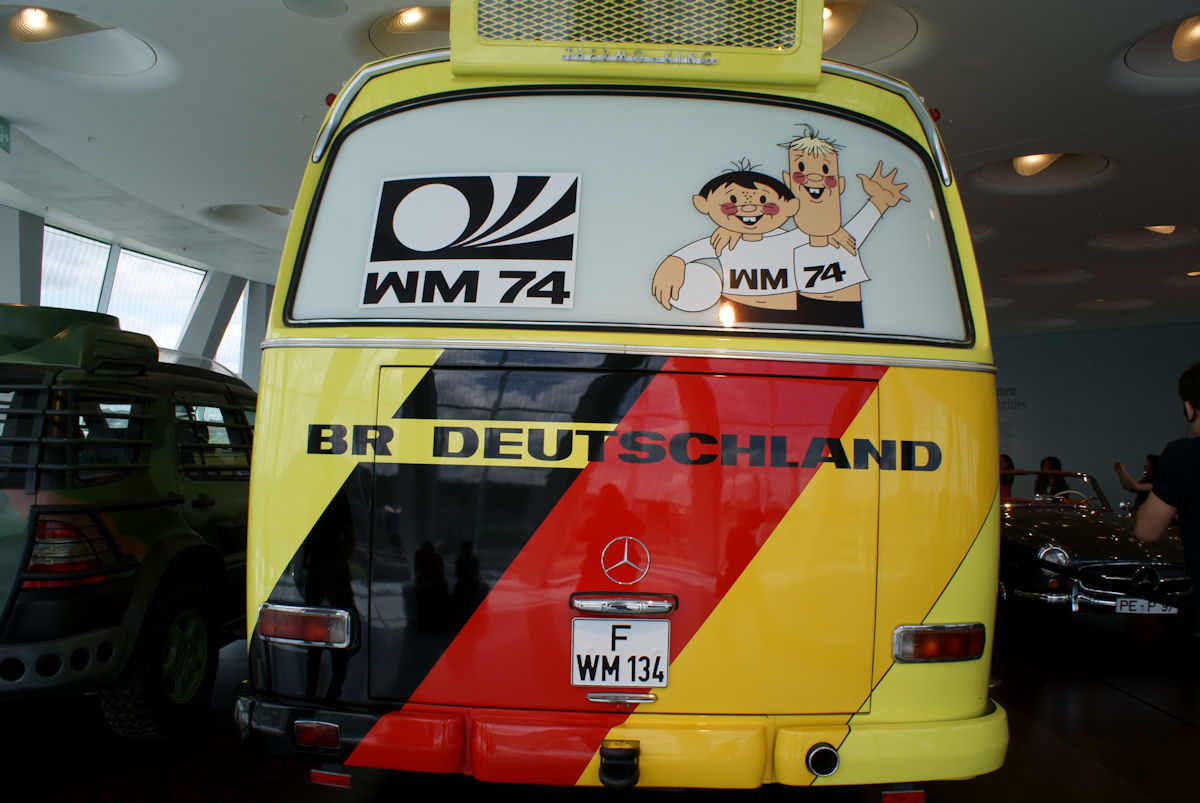
Look at the back of the bus and the period detail gets even better. Alongside the "BR Deutschland" wordmark sit the official 1974 World Cup logo and the tournament's two cartoon mascots, Tip and Tap — the cheerful boys in "WM 74" shirts who were plastered across everything that summer. And perched on the roofline above the rear window is a boxy unit that turns out to be the bus's secret weapon.
The bus itself: a 1960s workhorse in a tuxedo
Strip away the football livery and the O302 was a serious piece of engineering for its day. Mercedes-Benz built it from spring 1965 right through to 1974 — so by the time the World Cup came around, the model was a mature, well-proven design at the very end of its production run. It belongs to the "O" family (the O stands for Omnibus), the same naming logic we unpack in our guide to what Mercedes-Benz bus names mean and the broader history of Mercedes-Benz buses.
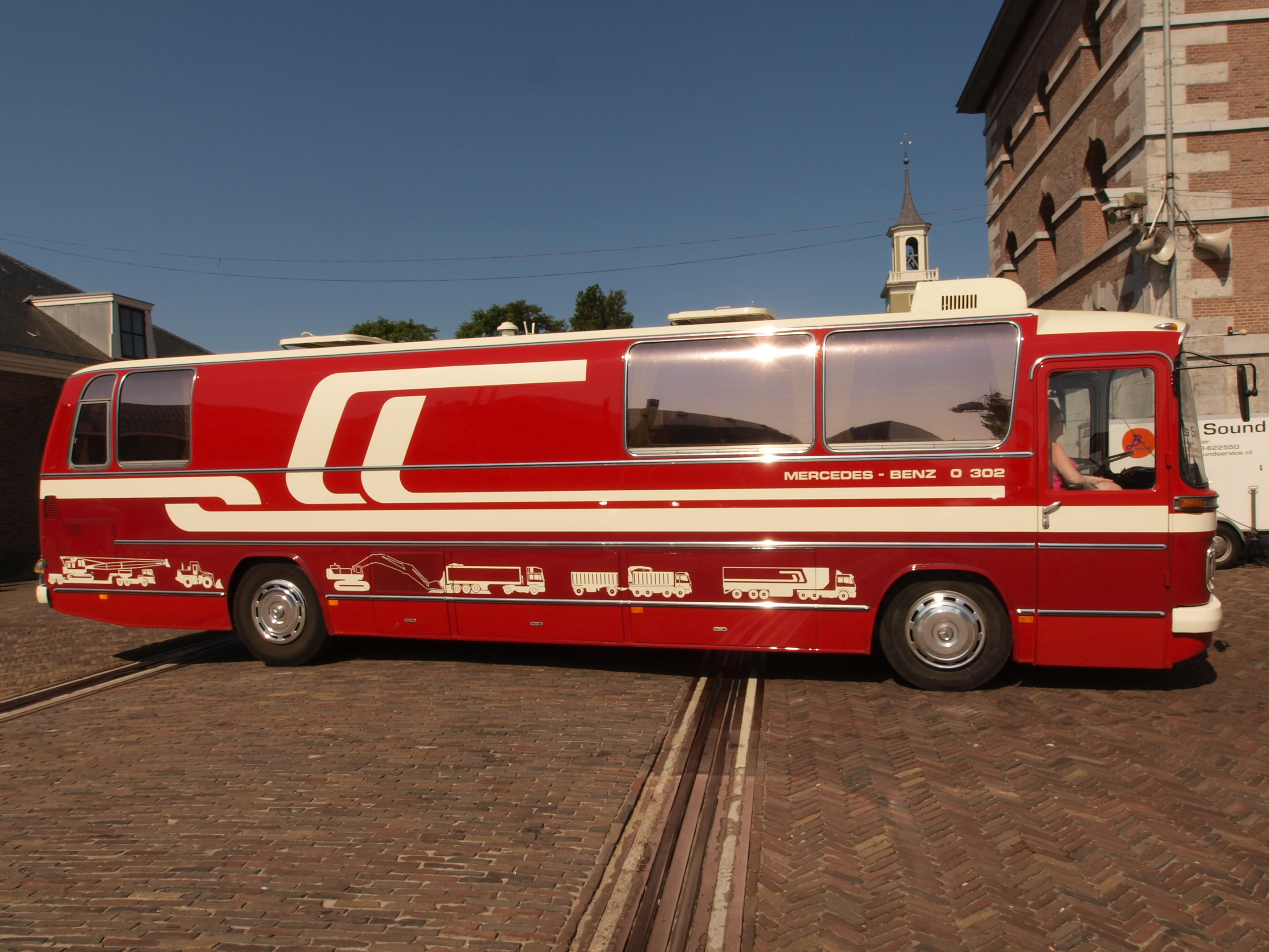
Power came from a choice of four six-cylinder in-line, naturally aspirated diesel engines. According to Daimler, outputs ranged "from 93 kW to 176 kW (126 hp to 240 hp)" — so the strongest O302 made roughly 240 horsepower. There is no turbocharger here, no electronic management, no automated gearbox; this is the analog era, where the engine pulls in a long, even, unhurried way and the driver does the rest.
Luxury, 1974-style: AC on the roof and a beer tap on board
What made these tournament buses special wasn't the chassis — it was the equipment list, which read like science fiction to most bus passengers of the time. Air conditioning, Daimler notes, was "available for the first time as special equipment," and on the World Cup buses "the 'Thermo King' system was located at the back on the roof." That is the very box you can see on the rear of the German bus.
From there the spec sheet only gets more delightfully of-its-era. Daimler records that the "individual equipment also includes ashtrays at every seat, an on-board toilet and even a tap for fresh beer." Every player had their own assigned seat, and the driver got a suspended seat to soak up the bumps of the autobahn. An ashtray on every seatback and draught beer on tap — it was, unmistakably, the 1970s.
The champions' bus, preserved
The tournament ended with the host lifting the trophy: "Germany celebrated winning the World Cup for the second time, the first being in 1954." Franz Beckenbauer's side beat the Netherlands 2–1 in the Munich final — and the yellow O302 that had ferried them around suddenly belonged to history.
Today that bus, in full "BR Deutschland" livery, is one of the most photographed exhibits in the Mercedes-Benz Museum in Stuttgart. It sits among gullwings and racing cars, and yet visitors stop for the cheerful yellow coach, because almost everyone has a memory attached to a bus like it. It is the rare museum piece that is both a football relic and a transport one.
Beyond the World Cup: a genuinely global bus
It would be a mistake to think of the O302 as just a four-week celebrity. The model was a workhorse sold and built around the world, far outliving its moment of fame. In Iran, for example, the O302 was assembled locally and worked the streets for decades — you can still find them in service colours long after Europe retired theirs.
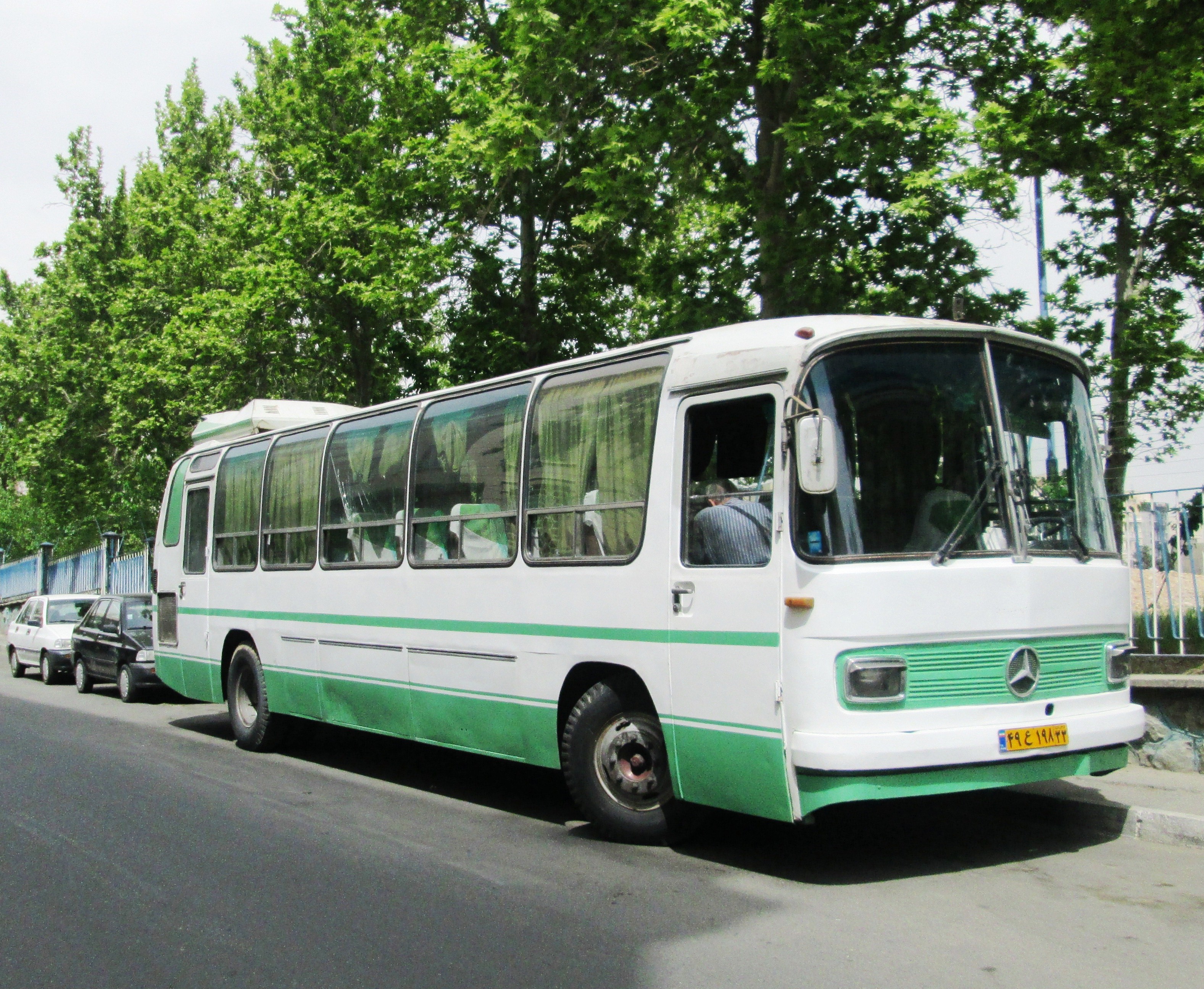
That global reach is exactly what makes the O302 such a satisfying classic to recreate — it is a bus that genuinely meant something on multiple continents, in football colours and in plain service white alike.
What it feels like to drive
Here is where a 1970s coach gets interesting behind a virtual wheel. The O302 is everything a modern low-floor electric city bus is not. There is no instant, silent torque — instead you get a deep, cadenced note from that naturally aspirated straight-six mounted at the rear, building slowly through a manual gearbox. There is no light, over-assisted steering — at a standstill, wrestling this long monobloco into a tight parking bay takes real effort in your arms, the way it did in 1974.
And there is no short, sharp stop. A loaded touring coach of this size carries its weight high and long, so braking is a thing you plan for, not something you stab at the last moment. Driving the O302 well is about reading the road early, rolling the speed off smoothly, and letting that big diesel settle the bus into a corner — pure analog craft. It is the opposite experience to a modern hybrid, and that is precisely the appeal.
If you want to feel that for yourself, the classic-Mercedes corner of the catalogue is the place to start: browse every Mercedes-Benz bus mod and look for the older monobloco coaches, the ones with the engine note that 1974 would recognise.
FAQ
What bus did teams use at the 1974 World Cup?
How powerful was the Mercedes-Benz O302?
Did the 1974 World Cup buses really have a beer tap?
Can I still see the bus today?
Hero & West Germany team-bus photographs: Valder137, CC BY 2.0, via Wikimedia Commons. Production O302: Alf van Beem, CC0. Iran-built O302: Hashtablakoo2000, CC BY-SA 3.0, via Wikimedia Commons.