Mercedes-Benz Buses: The Chassis That Built the Modern Bus
We spend most of our time inside the Proton Bus Simulator engine, and the deeper you get into modeling a bus the more you realize you are not modeling a vehicle — you are modeling a chassis, and then draping a body over it. Where the engine sits, how the floor carries load, where the axles fall: those decisions are made by a chassis engineer years before any modder opens a 3D editor. Almost every one of those decisions, for buses, traces back to one company making one stubborn bet in the early 1950s.
This is the first entry in what we want to be a running history series here. No marketing fluff, no "top 10 buses" listicle. Just the engineering lineage, checked against primary sources, of the manufacturer that shows up more than any other in our catalog: Mercedes-Benz.
The bet: kill the truck frame (1954)
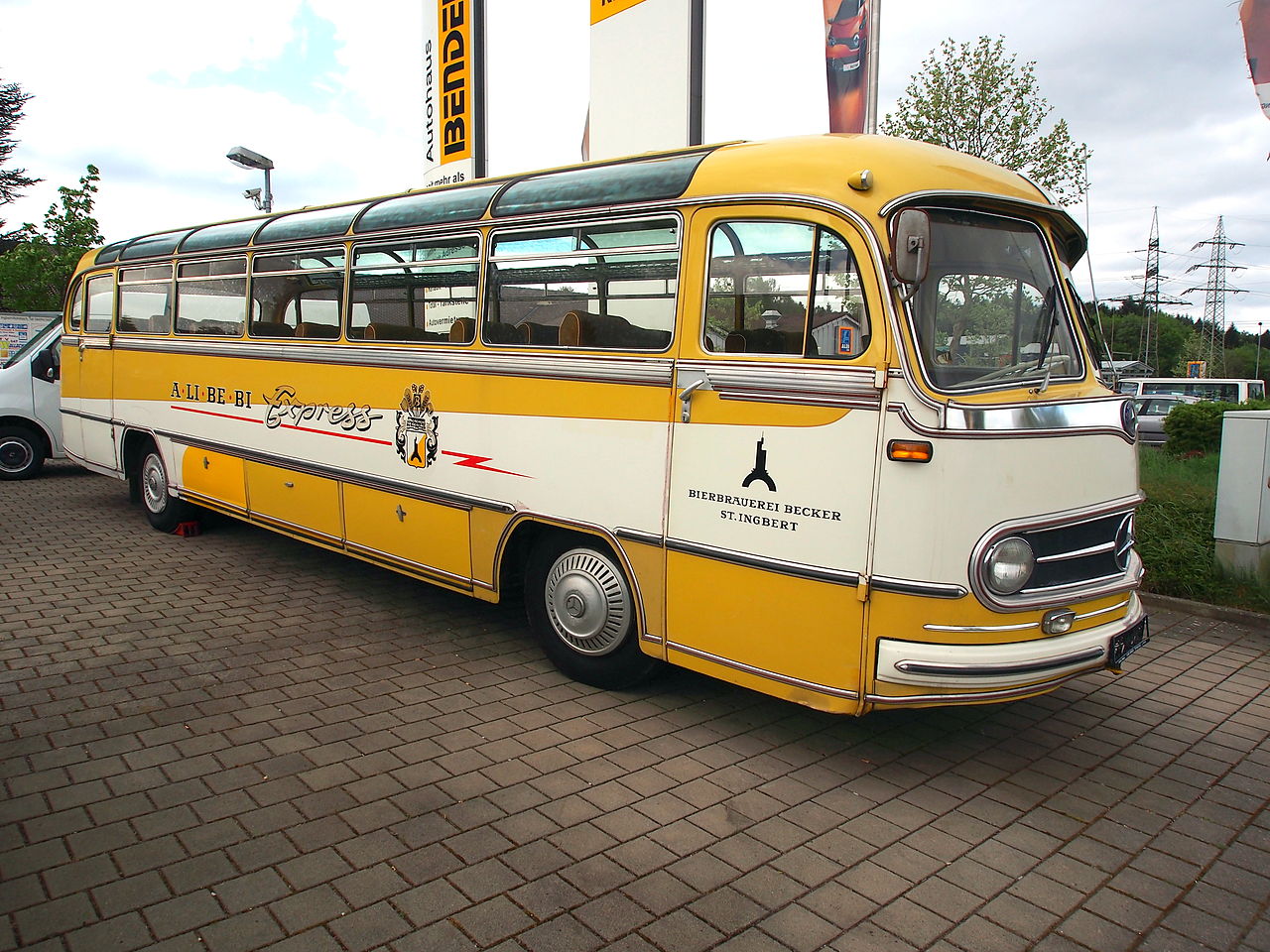
Before the 1950s, a bus was a truck that had been talked into carrying people. You took a ladder frame — two steel rails with crossmembers, the same backbone a lorry used — bolted a body on top, and called it a bus. It was heavy, it flexed, and the floor sat high because the frame rails ate the space.
On 6 December 1954, the first Mercedes-Benz O 321 H rolled off the line at the Mannheim plant, and it threw that approach out.
The O 321 H used what Daimler called a semi-integral design. Instead of a ladder frame, the structure was a welded floor assembly with a torsionally stiff centre carrier running down the spine of the vehicle — a load-bearing body where the floor was the frame. That one change did three things at once that any structural engineer will immediately respect:
- Weight dropped. No redundant frame rails under a separate body.
- Rigidity went up. A closed, welded structure resists twist far better than a body bolted to flexing rails.
- The floor came down. With no frame rails in the way, the cabin packaged better.
The centre carrier even doubled as a heating and ventilation duct — the kind of detail you only get when the chassis and body are designed as one object instead of two suppliers' problems.
The numbers, from the source
We want to be precise here because this is exactly where casual bus history goes wrong. According to Daimler's own records:
- Engine: OM 321, a 5.1-litre inline-six diesel, rated at 110 hp (81 kW).
- Top speed: 95 km/h.
- The original H was roughly 9.2 m long; the stretched O 321 HL, 1,325 mm longer, arrived in mid-1957.
- Built at Mannheim from October 1954 to December 1964: 18,083 units, counting complete buses, bare chassis, and CKD (completely-knocked-down) kits.
- It was an export monster — around 50% of production left Germany, shipping to 63 countries.
That last figure is the bridge to the rest of this story. A bus designed to be shipped as a kit and assembled abroad is a bus that travels well. And one place it traveled was Brazil.
Crossing the Atlantic: how the O 321 became a dynasty
Mercedes-Benz do Brasil was established in 1953 — the first Mercedes-Benz manufacturing operation anywhere outside Germany. For the first few years it built trucks, and local bodybuilders did what everyone did before 1954: bodied buses on truck chassis. Then in 1958, local production of the O 321 H integral bus began, serving Brazil and exporting across South America.
This is where the family tree branches, and where the chassis codes that Proton Bus players will recognize start appearing. The Brazilian operation didn't just assemble the German design — it grew its own range on top of it:
- 1963–64 — a front-engine bus chassis based on the LP 321 truck.
- 1966 — the O 326, the first integral coach designed specifically for the Brazilian market, with a turbocharged OM 326 making up to 200 hp.
- 1969 — the O 352 integral, plus the LPO 1113 and LPO 1520 front-engine chassis.
- 1971 — the O 362 integral coach, a larger-luggage successor to the O 321.
OH and OF: the codes you actually know
In 1970, Mercedes-Benz do Brasil unveiled two chassis whose naming convention outlived almost everything else in this article: the rear-engine OH 1313 and the front-engine OF 1313.
If you've ever wondered what those letters mean, they're German and they're literal:
- OH = Omnibus Heckmotor — bus, rear engine.
- OF = Omnibus Frontmotor — bus, front engine.
That single distinction — where the engine lives — is the most important spec on any bus chassis, and Mercedes baked it straight into the part number. Rear-engine (OH) frees the front for a low entrance and puts the noise and weight at the back, which is why it dominates city and intercity work. Front-engine (OF) is simpler, cheaper, and tougher, which is why it never died on rural and rough-road routes. Decades later, the OH and OF families are still in production for the South American market, sold as bare chassis to the bodybuilders who actually define what a Brazilian bus looks like.
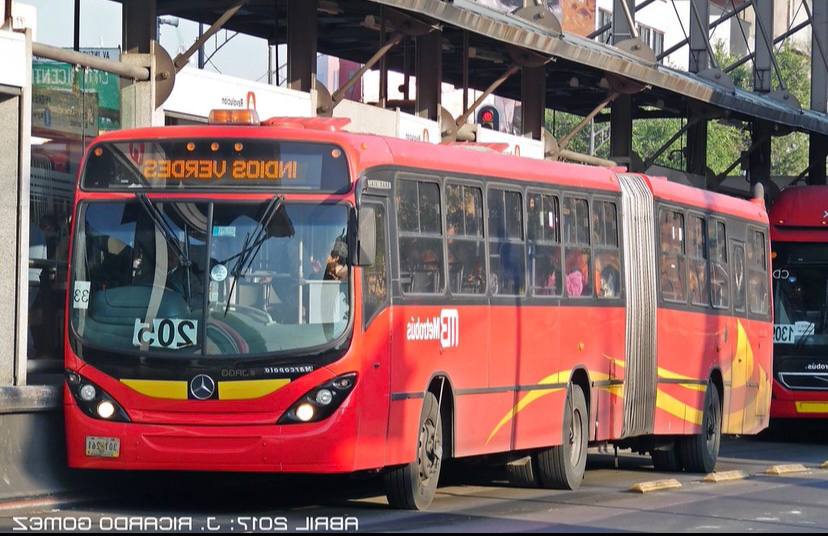
And that's the other half of the model: by the mid-1990s, Mercedes-Benz do Brasil largely stopped building complete integral buses and committed to chassis-only production. Mercedes builds the running gear; companies like Marcopolo, Caio, and Busscar build the body. When you see a gorgeous Brazilian coach, you're usually looking at a coachbuilder's body on a Mercedes spine — the exact chassis-plus-body split the O 321 invented back in 1954, just unbundled into two companies.
The O 321 didn't just sell well. It encoded a philosophy — chassis as the load-bearing truth, body as the expression — that the entire South American bus industry still runs on.
Meanwhile, in Germany: standardizing the city bus
While Brazil was spinning the O 321 into the OH/OF dynasty, the German line went a different direction: standardization. West Germany's transit authorities (the VöV) wrote a common spec so that cities could buy interchangeable buses, and Mercedes built to it.
- The O 305 was the VöV "SL I" standard-service city bus — the workhorse full-size design of the 1970s and into the 1980s.
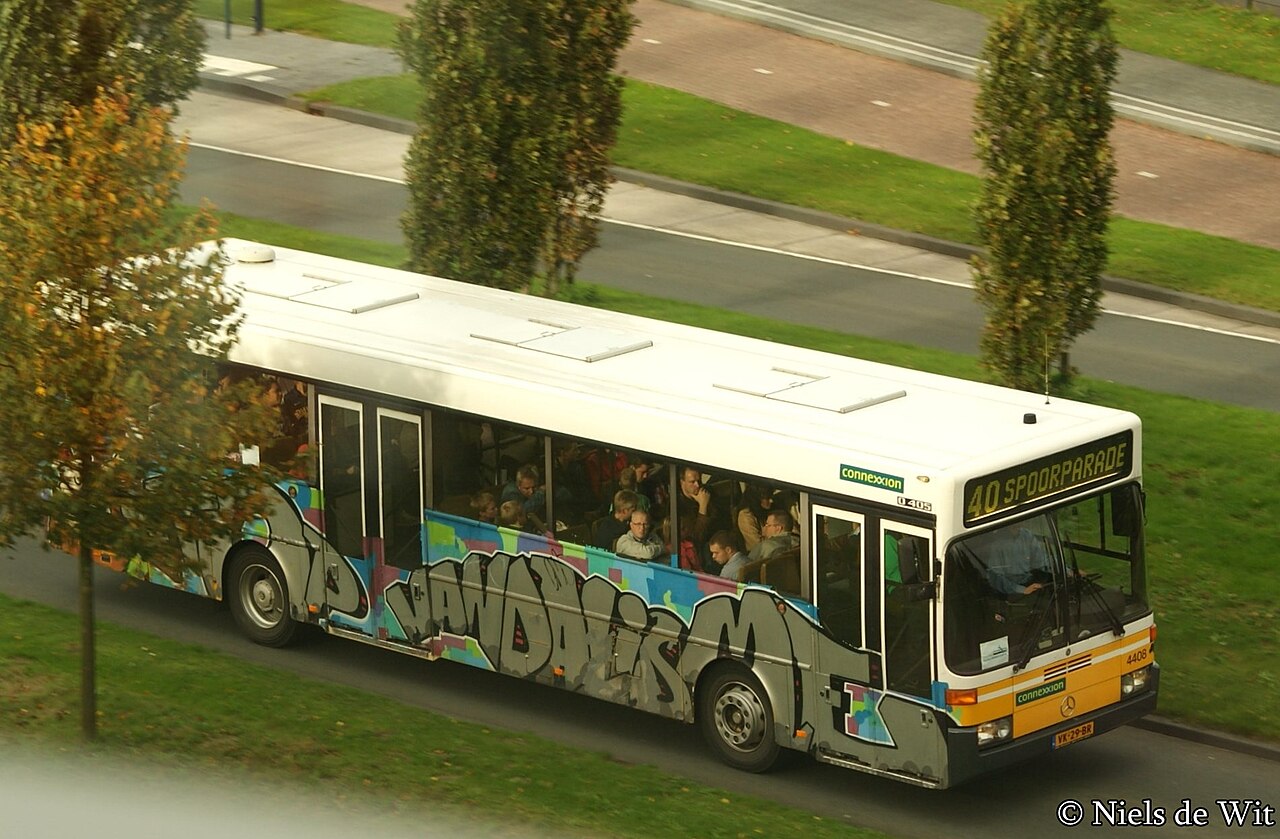
- The O 405, produced from 1983 (introduced 1984) to 2001, was the SL II generation. It spawned a whole grid: the articulated O 405 G (1985), the interurban O 407 (1985), and — the one that mattered most — the O 405 N in 1989, Mercedes' first full low-floor city bus, with no steps at all to the rear axle. For passengers with strollers, wheelchairs, or just bad knees, the low-floor bus is one of the genuinely humane engineering advances of the century, and the O 405 N is where Mercedes committed to it.
Citaro: the best-selling city bus on Earth
In 1997, at the UITP Congress in Stuttgart, Mercedes replaced the O 405 line with the Citaro (chassis code O 530). It's the design that, more than any other, is the modern European city bus in most people's mental image.
- Debuted 1997; the first generation ran to 2006.
- The Citaro C2 (second generation) arrived in 2011.
- In 2012 it became the first city bus to meet the Euro VI emissions standard.
- It scales across a whole length range — the short Citaro K (~10.6 m), the standard (~12.1 m), and the articulated G (~18.1 m) — built in Mannheim, Ligny-en-Barrois (France), and elsewhere.
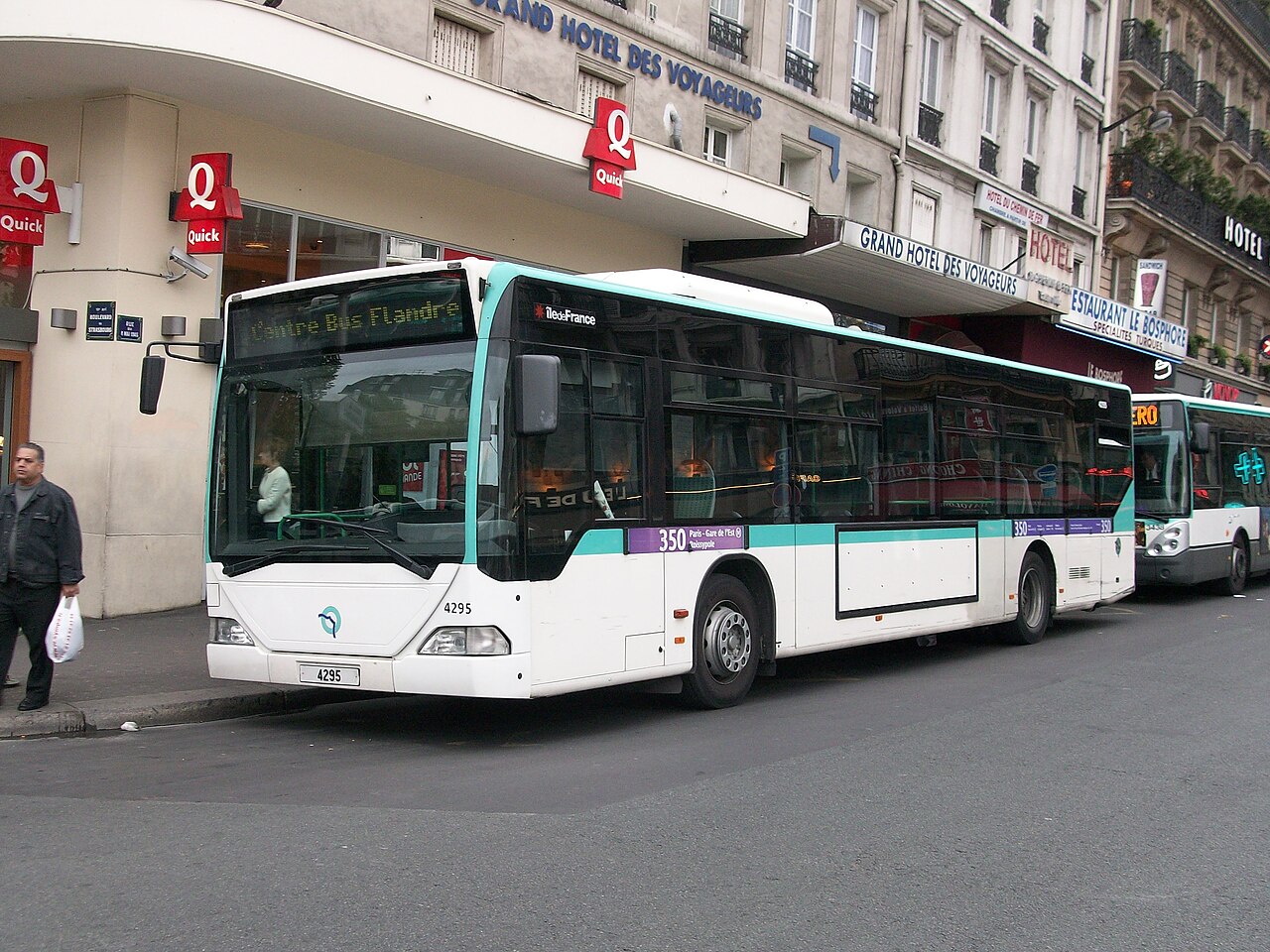
The Citaro is the European mirror of what the OH/OF families are in South America: a platform so long-lived and so adaptable that it became the default.
Where the line goes now: electric, on both continents
The chassis story doesn't stop at diesel, and this is the part I find most interesting as someone who has to simulate powertrains.
In Europe, Mercedes launched the eCitaro — a battery-electric version of the same platform — in 2018, folding zero-emission running into the world's most common city-bus body rather than starting over.
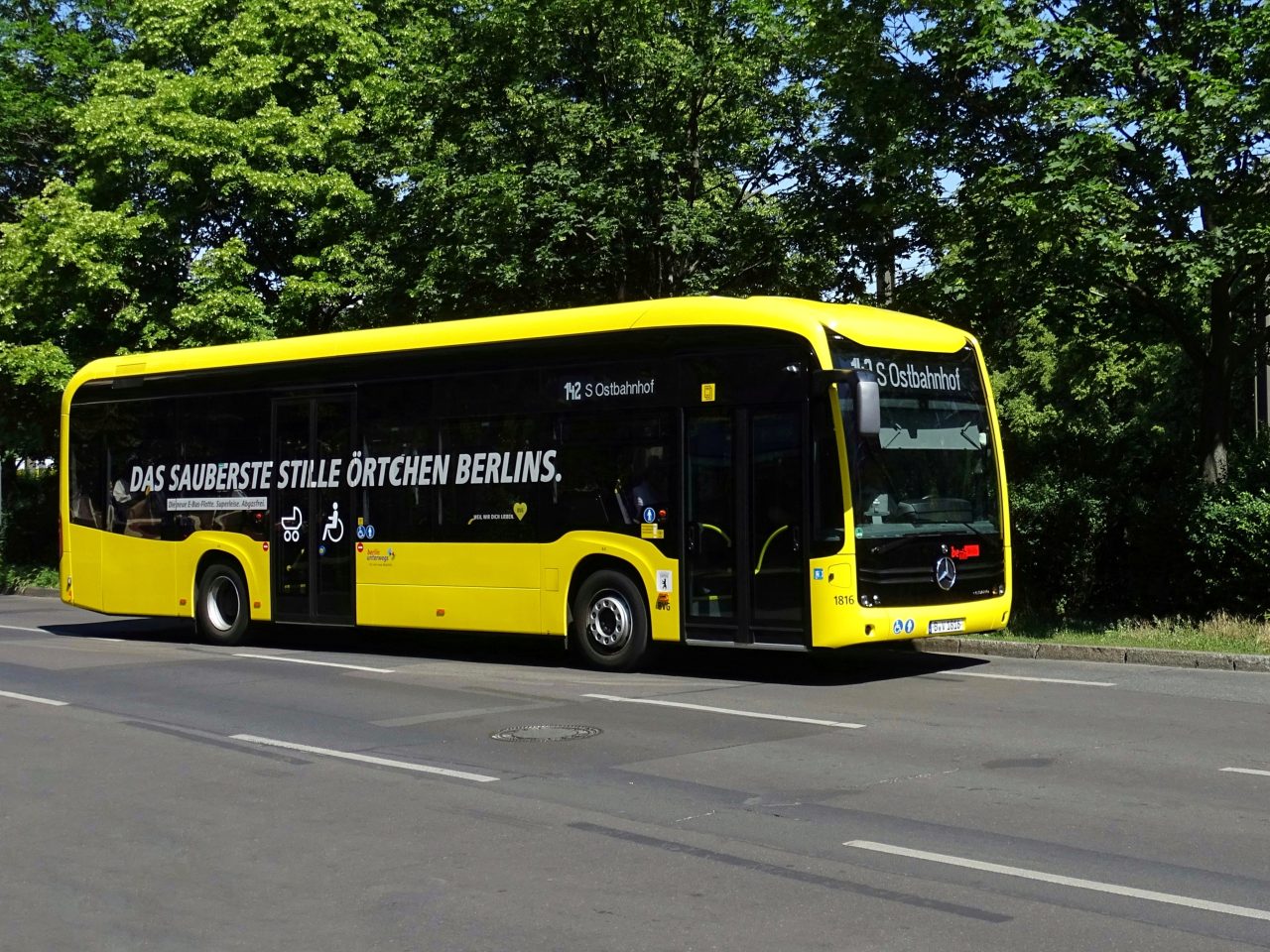
In Brazil, the answer is the eO500U, an electric evolution of the O 500 urban chassis, presented in August 2021 with production following from 2022. And the engineering choices are a clean inversion of everything the O 321 stood for. The O 321 put one diesel six at the back driving one axle. The eO500U uses wheel-hub motors — the drive sits in the wheels — supports a body up to 13.2 m carrying around 86 passengers, with roughly 250 km of range. When the motor moves into the hub, the entire concept of "where the engine sits" — the OH/OF distinction Mercedes spent 50 years building part numbers around — quietly dissolves.
That's the thing about chassis history: every generation solves the previous generation's defining constraint so thoroughly that the constraint stops mattering. The truck frame defined the bus until 1954. Engine position defined it until the hub motor. Whatever defines it next is probably being welded together in a plant right now.
Why this matters for the mods
When you download a Mercedes-Benz mod from our catalog, you're almost never downloading "a Mercedes." You're downloading a coachbuilder's body — a Marcopolo, a Caio — sitting on one of these chassis lineages, with the engine where the chassis code says it is. Knowing whether something is an OH or an OF tells you where to expect the engine bay, how the rear should sound, and how the floor should sit before you even load the model. That's the lens we read every bus through, and now you have it too.
Browse what's in the garage: the full Mercedes-Benz collection is the best place to see how many bodies ride on this one company's spine.
— The Proton Bus Mods Research Team