Why Japanese City Buses Are Twins: The Isuzu Erga and Hino Blue Ribbon
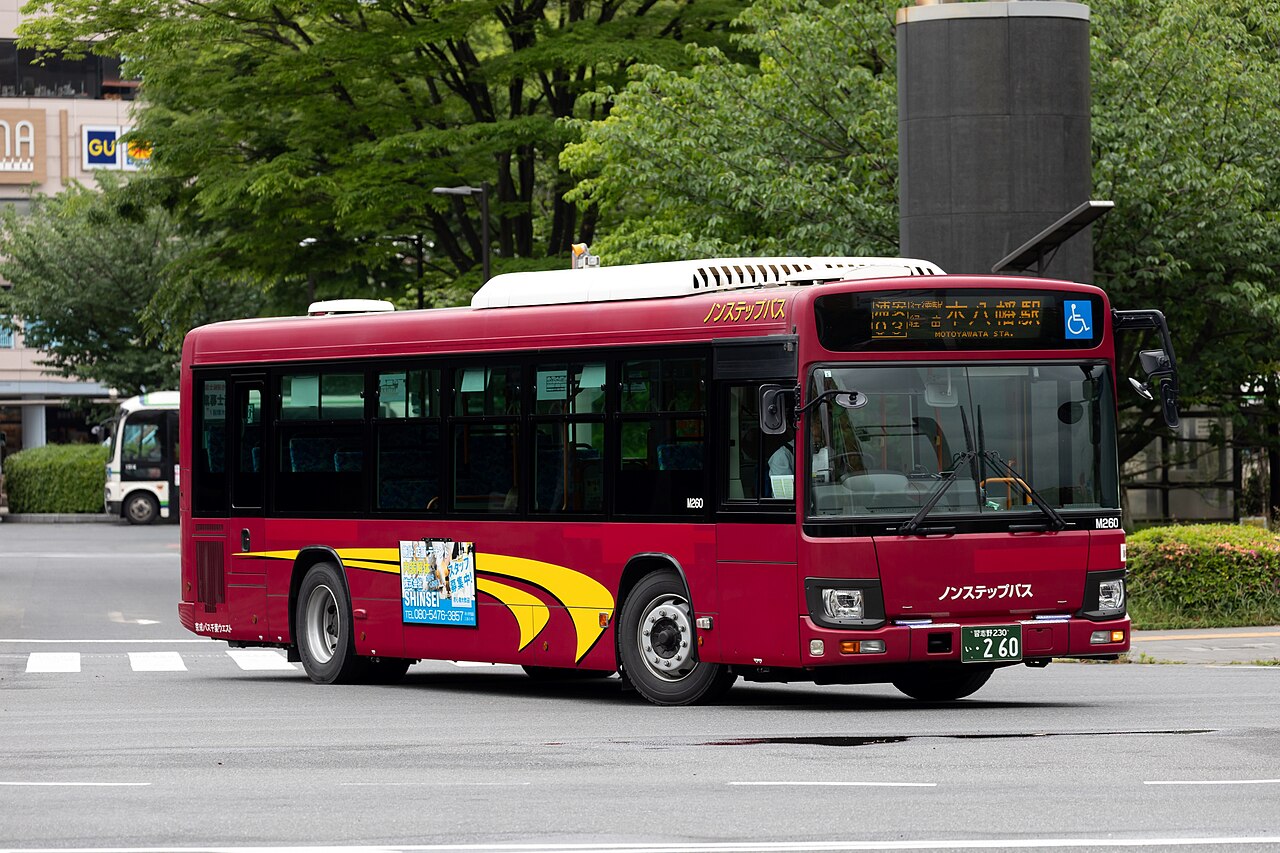
Park a Japanese city bus next to another and you might swear you are seeing double. The Isuzu Erga and the Hino Blue Ribbon have the same rounded roof, the same windscreen, the same doors in the same places. That is not a coincidence, and it is not copying. They are, quite literally, the same bus.
Two of Japan's biggest bus makers — fierce rivals for a century — build one identical city bus and sell it under two different names. Here is the strange, sensible story of how that happened, and what it means when you drive the twins in Proton Bus Simulator.
One bus, two badges
The Isuzu Erga is Isuzu's big single-decker city bus, in production since 2000. The Hino Blue Ribbon is Hino's big single-decker city bus. And the modern Blue Ribbon is a rebadged Isuzu Erga — the two are built on one shared design, differing mostly in the logo on the front.
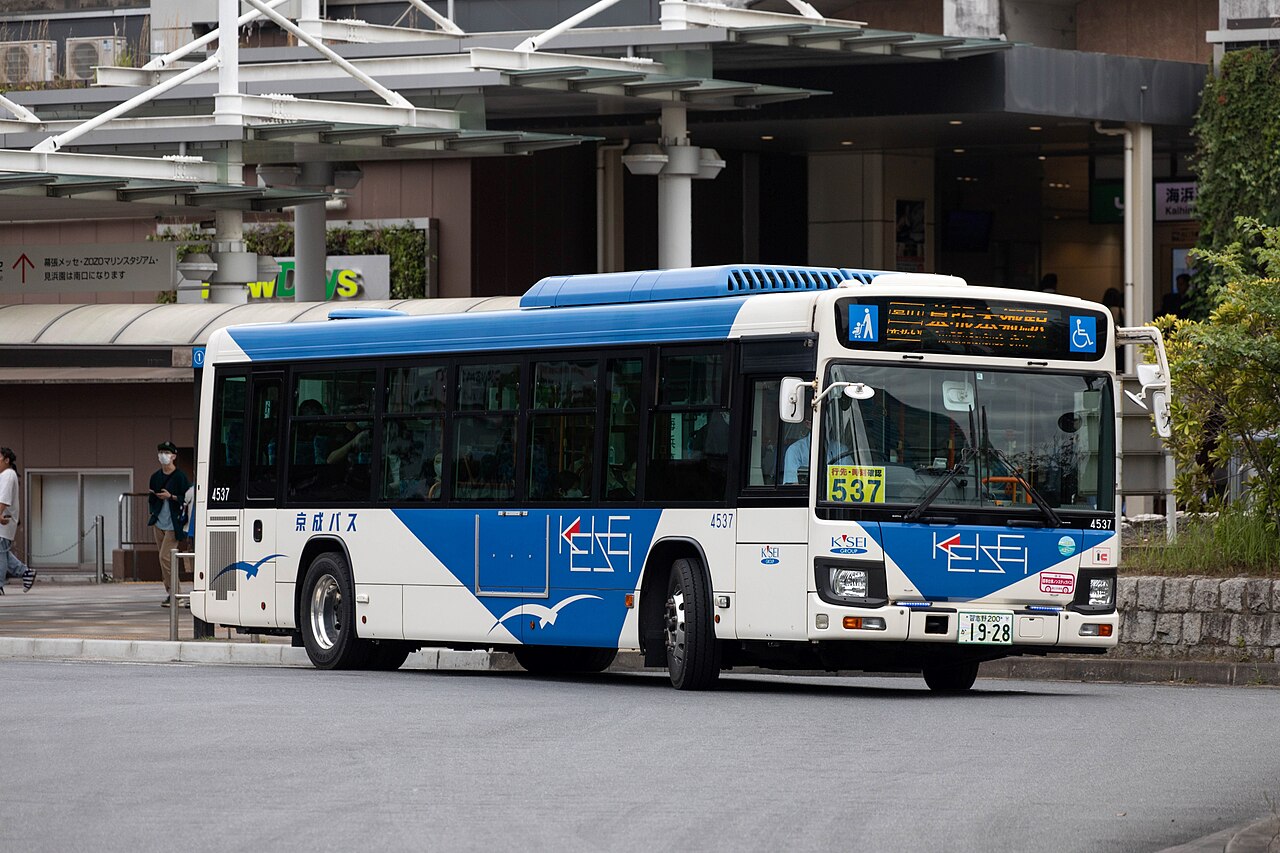
Hino once had its own separate Blue Ribbon design. But when the two companies pooled their bus-building, Hino's version became the Blue Ribbon II, a rebadged Erga — and in 2015 Hino simply brought back the plain "Blue Ribbon" name for the shared model. So today, choosing between an Erga and a Blue Ribbon is a choice of badge, not of bus.
Why rivals share a bus: the J-Bus story
The reason has a name: J-Bus. It is a joint venture set up by Isuzu and Hino in 2002, which began operating in 2004 by merging both companies' bus and coach operations into one. Instead of each rival paying separately to design, test and tool up a big city bus — a hugely expensive thing to do for a shrinking home market — they build one bus together and badge it twice.
J-Bus runs two assembly plants. The one at Komatsu, in Ishikawa, houses the headquarters and mostly builds coaches; the plant at Utsunomiya builds the transit buses. Every Erga and every Blue Ribbon comes down the same lines, which is exactly why they come out identical.
The twinning runs through the whole range
The Erga and Blue Ribbon are the most famous pair, but the trick does not stop at the big city bus. The same shared-then-rebadged logic runs up and down both line-ups — through their medium-size buses and their touring coaches, too. Once you know to look, half of Japan's bus fleet turns out to be pairs of twins wearing rival badges.
It is a very Japanese answer to a hard problem. Rather than let a costly rivalry bleed both companies dry, they compete on sales, service and dealer networks while quietly sharing the vehicle underneath.
What the twins feel like to drive
Here is where the trivia becomes something you can test with a controller in your hands. Load an Erga and a Blue Ribbon back to back in the sim and they drive identically — same responses, same handling, same everything — because there is only one bus under the two names. The "they're the same" claim stops being a fact you read and becomes one you confirm from the driver's seat.
There is one detail that surprises players used to European or American buses: the passenger doors are on the left. Japan drives on the left, so the nearside is the left side, and the whole choreography of pulling into a stop is mirrored. You line the left flank up to the kerb, not the right — a small thing that completely rewires your muscle memory at every stop.
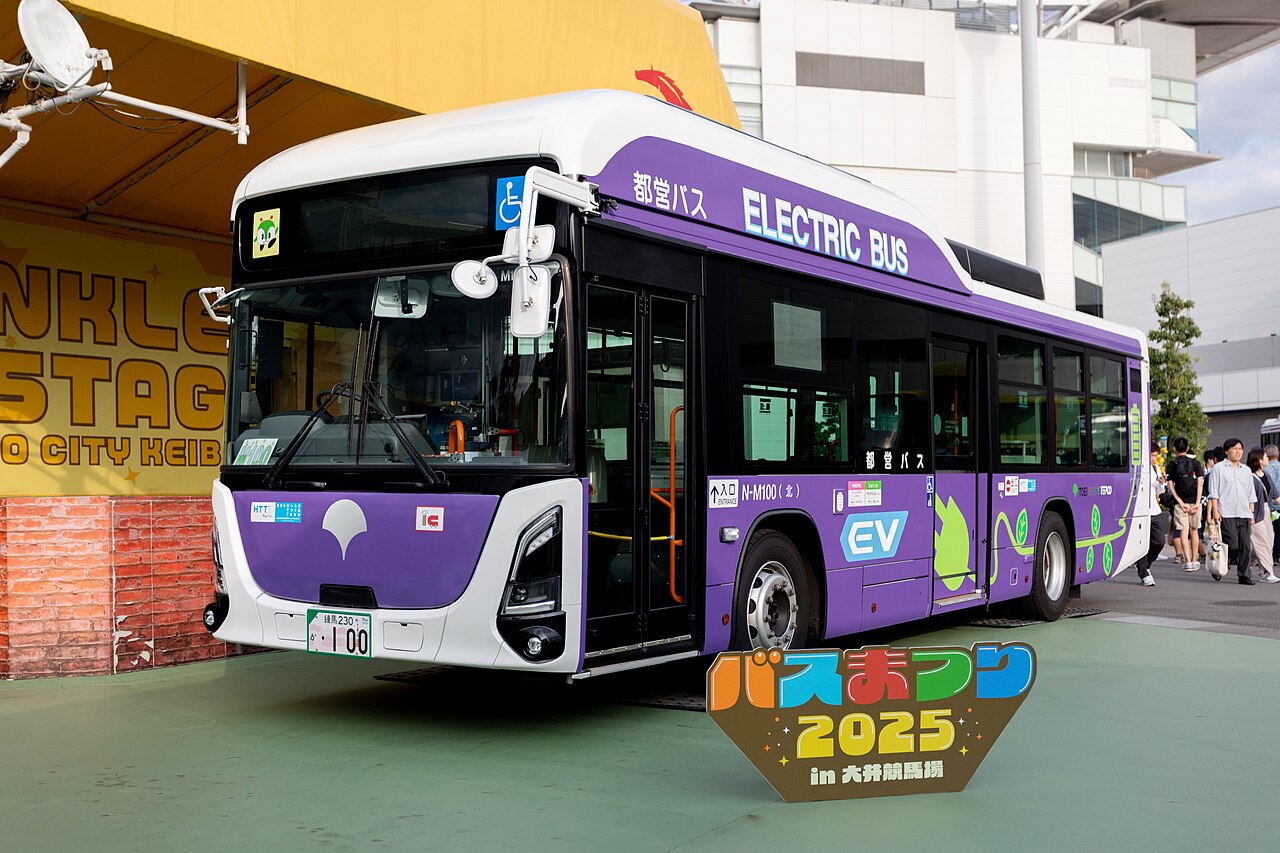
The shared design is now going electric, too, with a battery version of the Erga joining Japan's slow shift away from diesel — the latest chapter in the long history of the electric bus. Whatever badge it wears, it is still one bus doing the work of two.
FAQ
Are the Isuzu Erga and Hino Blue Ribbon the same bus?
What is J-Bus?
Why did Isuzu and Hino build the same bus together?
Why are the doors on the left side of Japanese buses?
Sources
- J-Bus — Wikipedia — the Isuzu–Hino joint venture established in 2002, operating from 2004; the Komatsu and Utsunomiya plants; the paired Erga / Blue Ribbon products.
- Isuzu Erga — Wikipedia — heavy-duty single-decker city bus, produced from 2000 by J-Bus, counterpart to the Hino Blue Ribbon II.
- Hino Blue Ribbon — Wikipedia — the Blue Ribbon II as a rebadged Isuzu Erga, and the "Blue Ribbon" name reintroduced in 2015.
Hero & figures via Wikimedia Commons, all by km30192002: Isuzu Erga (hero) and Hino Blue Ribbon, CC BY 2.0; Isuzu Erga EV, CC BY 4.0.