Why Turkey Is a Bus Lover's Country: Otokar, BMC and Istanbul's Metrobüs

Ask where the world's buses are built and most people will say Germany, Sweden, maybe China. Almost nobody says Turkey — and almost everybody is wrong. Turkey is one of Europe's biggest bus-manufacturing nations, home to brands that export coaches across the continent, and the setting for one of the most extraordinary bus systems on the planet. It also has a bus-fan community so passionate that Turkish buses are among the most-downloaded mods on this very site.
Put those together and Turkey is, quietly, a bus lover's country. Here's the heritage behind that — the factories, the famous Metrobüs, and the everyday yellow city buses of Istanbul.
A country that builds its own buses
Turkey didn't import its way into bus culture — it built an industry. Local manufacturers Otokar, Temsa, BMC, Karsan and Anadolu Isuzu are serious names, and on top of them sits one of the largest bus plants in the world: Mercedes-Benz Türk's Hoşdere factory near Istanbul. Opened in 1995, it has grown into Daimler Buses' biggest bus-production site, having built tens of thousands of vehicles — the great majority of them exported to dozens of countries.
That combination — strong domestic brands plus a giant Mercedes plant building for export — makes Turkey a central hub of European bus production. Many a Mercedes Tourismo or Conecto rolling through a European city was actually born just outside Istanbul. The Turkish-built Mercedes articulated, the O345K Conecto G — its "K" standing for Körüklü, Turkish for "bellows" — is a perfect example: a rugged Hoşdere product that filled Istanbul's articulated fleet and was exported across Eastern Europe.
Coaches that conquer Europe
Turkey's coach industry is its loudest export success. Temsa sends a huge share of its output abroad — the company exports around 40% of its production, the overwhelming majority of it to Western Europe and the United States — and Turkish coaches are a common sight on highways far from home.
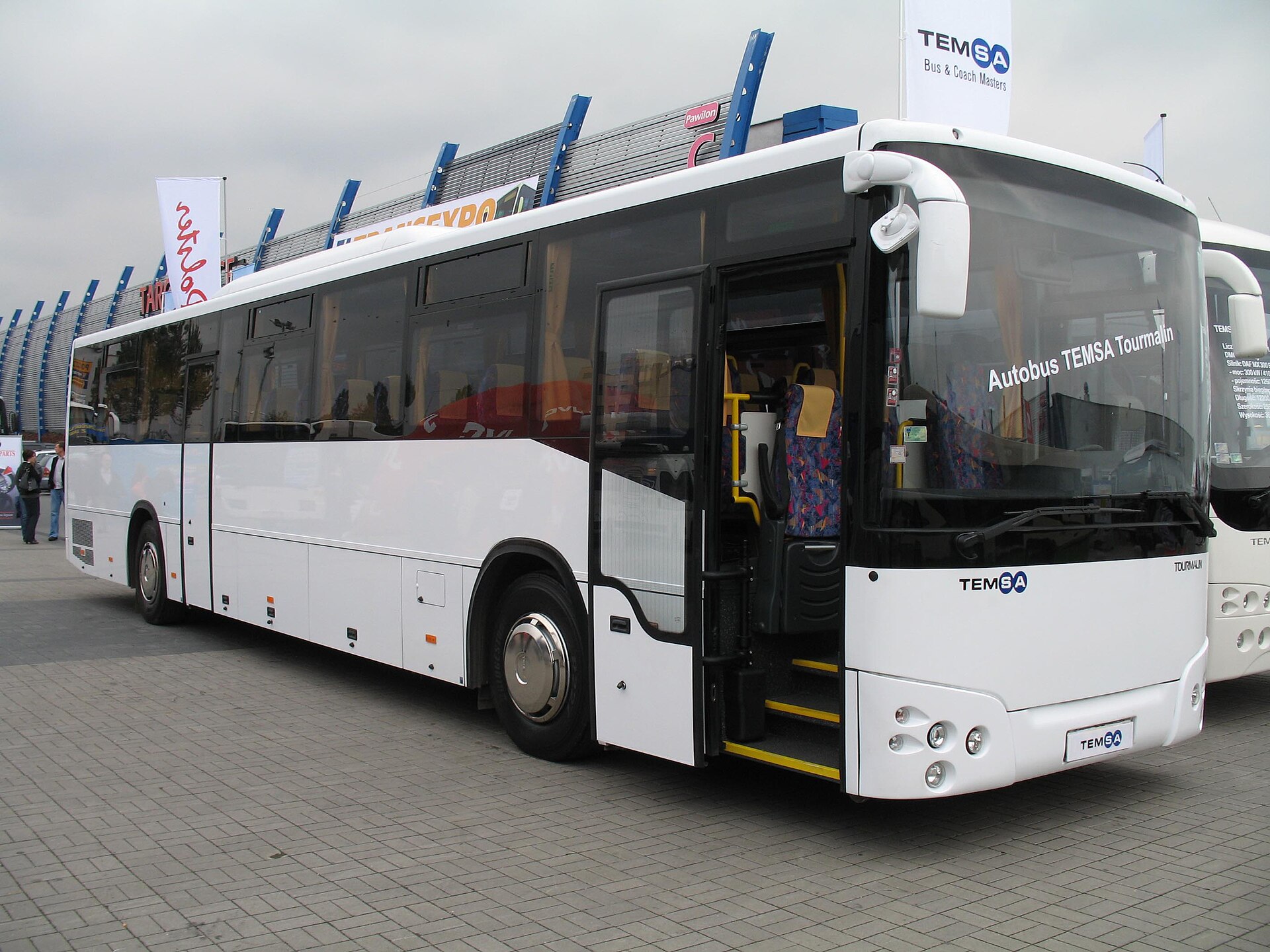
It's backed by a deep domestic coach culture. Turkey's intercity network runs out of vast bus terminals (the otogar), and the long-distance coach — rear-engined, high-floored, built for hours of motorway — is a genuine national institution. In the driver's seat that's a completely different job from city work: a long wheelbase that settles into fast sweepers, the deep diesel pulling up the mountain passes between cities, the high cab that changes your whole sense of the road.
Istanbul's Metrobüs: a BRT across two continents
Then there is the showpiece. Istanbul's Metrobüs is a bus rapid transit line roughly 50 km long with more than 40 stations, opened in September 2007 and operated by İETT, the city's historic transit authority. It runs almost entirely on dedicated lanes — and crucially, it crosses the Bosphorus Bridge, making it a rare BRT that links two continents, carrying passengers from the European side of Istanbul to the Asian side and back.
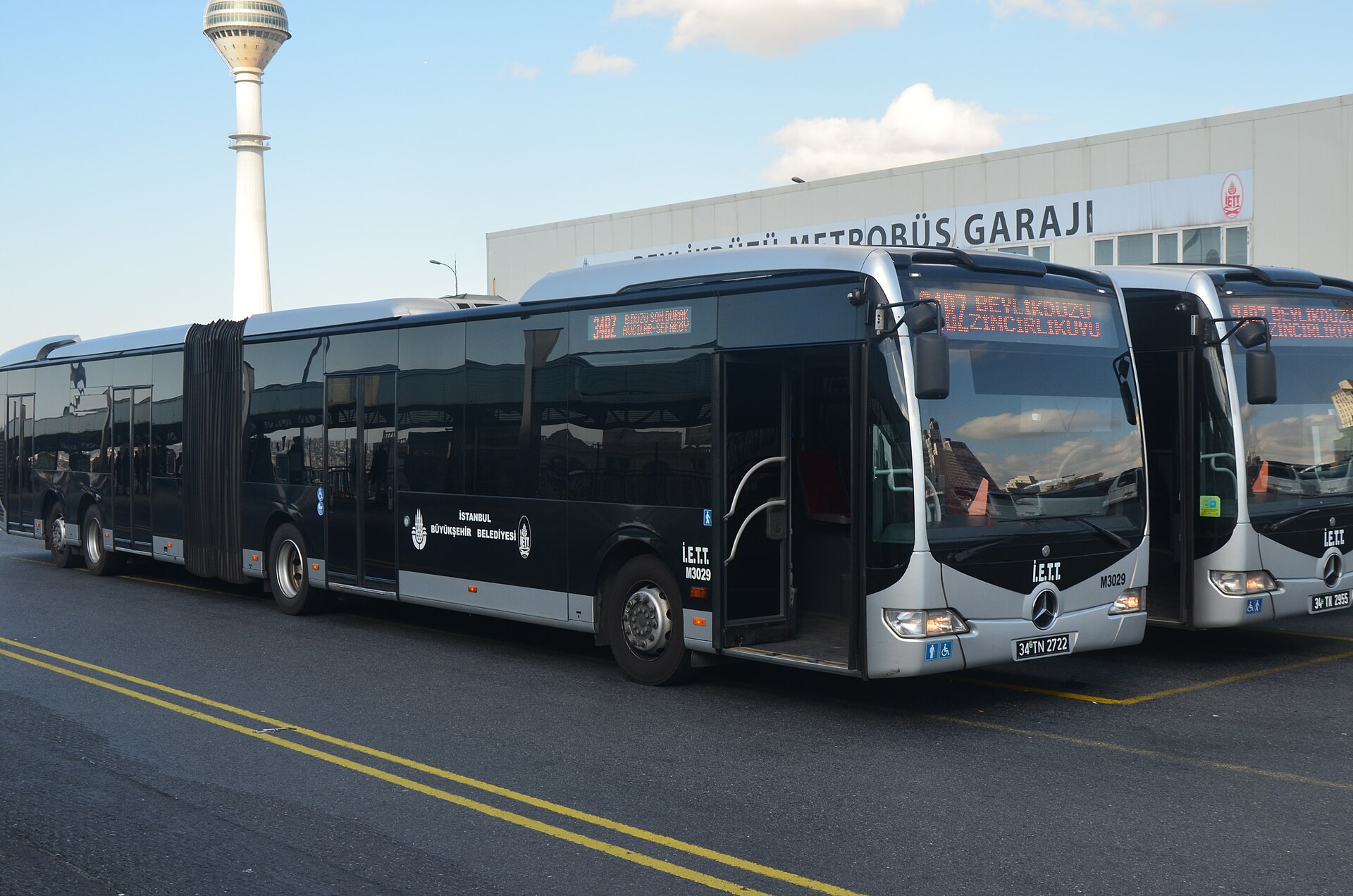
The numbers are staggering: the Metrobüs moves on the order of a million people every day, with long articulated and bi-articulated buses running nose-to-tail at rush hour. To drive that corridor in a sim is pure flow management — relentless boarding, step-free doors emptying and filling in seconds, and a schedule that never lets up. It's the same BRT idea Brazil pioneered, which we cover in how Brazil invented bus rapid transit — but stretched across a strait between two continents.
The everyday İETT yellow
Away from the Metrobüs, the workhorse of Istanbul is the low-floor city bus in İETT's unmistakable yellow. The Otokar Kent — built by Otokar at its Sakarya plant and running in fleets from İETT (Istanbul) to ESHOT (İzmir) — is the archetype, joined by the BMC Procity with its Cummins diesel. These are step-free, accessibility-era buses, part of the same global shift we trace in the low-floor revolution.
For the player, that low floor changes the rhythm of the job: doors at pavement height load a packed stop fast, the kneeling hisses down at the kerb, and you're moving again before the schedule slips. It's a different feel from the high-floor Conecto articulated — and feeling that difference is exactly why people who love this stuff really love it.
Drive Turkey in Proton Bus Simulator
None of this is abstract here, because the Turkish bus-sim community is one of the most active anywhere — and it shows in the catalogue. The Otokar Kent 290LF (with İETT, ESHOT, Kayseri and Belen liveries) and the BMC Procity 12 LF are among the most-downloaded mods on the whole site, sitting right alongside the Turkish-built Mercedes articulated.
As always, every mod in the Proton Bus Mods catalogue is made for Proton Bus Simulator (Android and PC). So if Turkey's bus heritage speaks to you, browse the Turkish buses, drop a .zip into the game, and drive an İETT route across Istanbul yourself — Metrobüs corridor included.
Frequently asked questions
Does Turkey really build a lot of buses?
What is the Istanbul Metrobüs?
Which Turkish buses can I get for Proton Bus Simulator?
What does İETT stand for?
Hero image: an Otokar Kent 290LF in İETT livery, Istanbul — Photo: Ilya Plekhanov, CC BY-SA 4.0, via Wikimedia Commons.