What Is a Jelcz Bus? Poland's Cold-War Icon With a Secret French Heart
Ask about Polish buses today and the answer is Solaris. But rewind forty years, before the Iron Curtain fell, and Poland rode something else entirely: Jelcz. If you drive an Eastern-European map in Proton Bus Simulator, the boxy or bulging shapes you pass are often Jelcz buses — and the story behind that badge is one of the neatest little histories in the whole bus world.
Here is the short version. A Jelcz bus is a Polish bus, and the country built its fleet by quietly borrowing designs from both sides of the Cold War — a rounded "cucumber" copied from Czechoslovakia, and a modern city bus licensed, of all places, from France. We went through the Polish model record to piece the story together.
So what is a Jelcz bus?
Jelcz is named after the place it was built: Jelcz-Laskowice, a town near Wrocław in western Poland, where a former factory was turned over to vehicle production in 1952. For the whole communist era, the Jelcz works (Jelczańskie Zakłady Samochodowe) was Poland's main bus builder — the firm that put a bus at nearly every Polish stop.
That makes Jelcz the Polish cousin of Hungary's Ikarus, the badge we told the Cold War story of separately. The difference is that where Ikarus supplied the whole Eastern Bloc, Jelcz mostly supplied Poland — and it did so by licensing other people's designs rather than drawing its own from scratch. Today the company has left buses behind entirely and builds military trucks for the Polish army.
The "ogórek": Poland's cucumber bus
The first Jelcz everyone remembers has a nickname, not a number. Poles call it the ogórek — the cucumber — because of its rounded, bulging, stretched-out body. Officially it is the Jelcz 043, and it is not a Polish original at all.
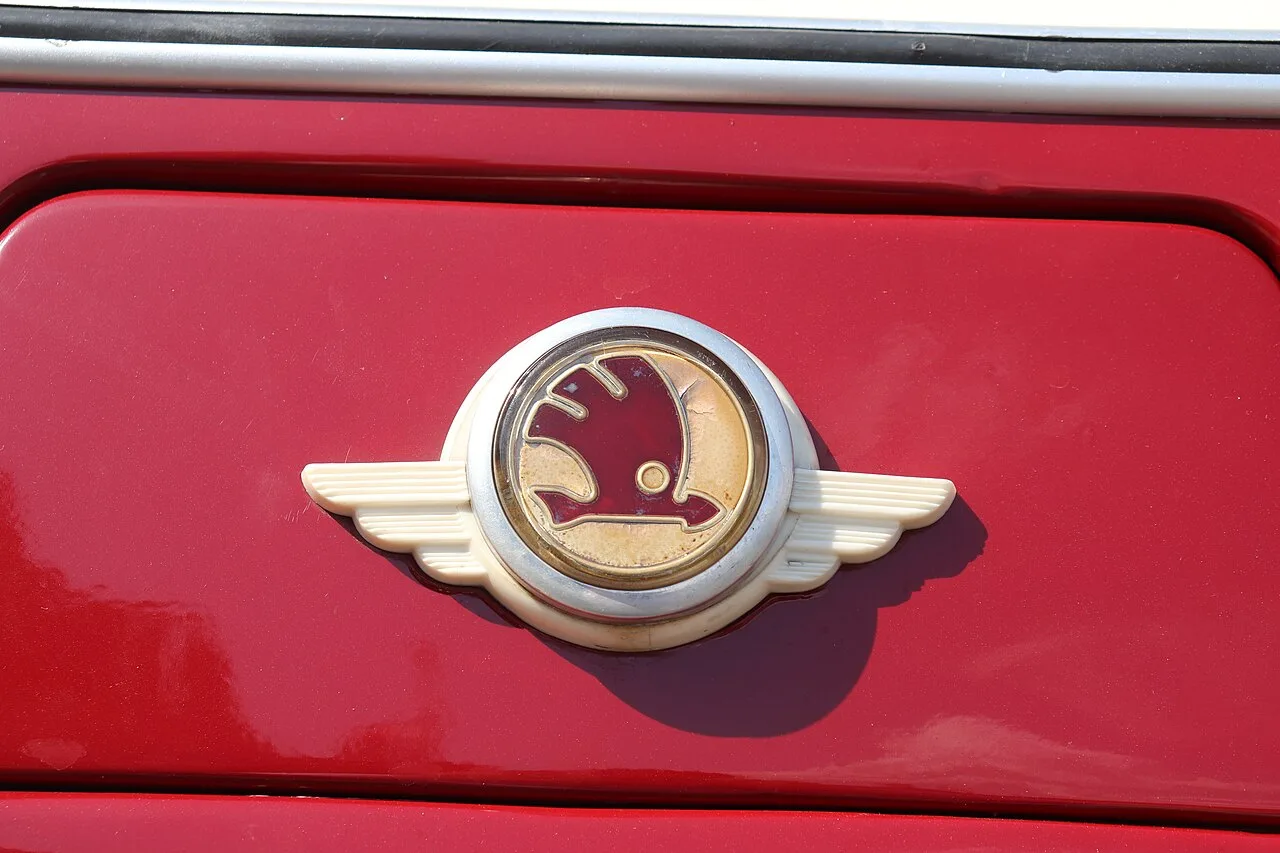
In December 1958 Jelcz took a Czechoslovak licence to build the Škoda 706 RTO with its Karosa body, and produced the result as the 043 from 1959 all the way to 1986. It was a high-floor intercity coach — you climbed up several steps to a raised cabin — and a city version, the Jelcz 272 MEX, was built on the same base for urban routes. For a generation of Poles, "the bus" meant this rounded green machine.
The secret French heart: the Jelcz-Berliet PR110
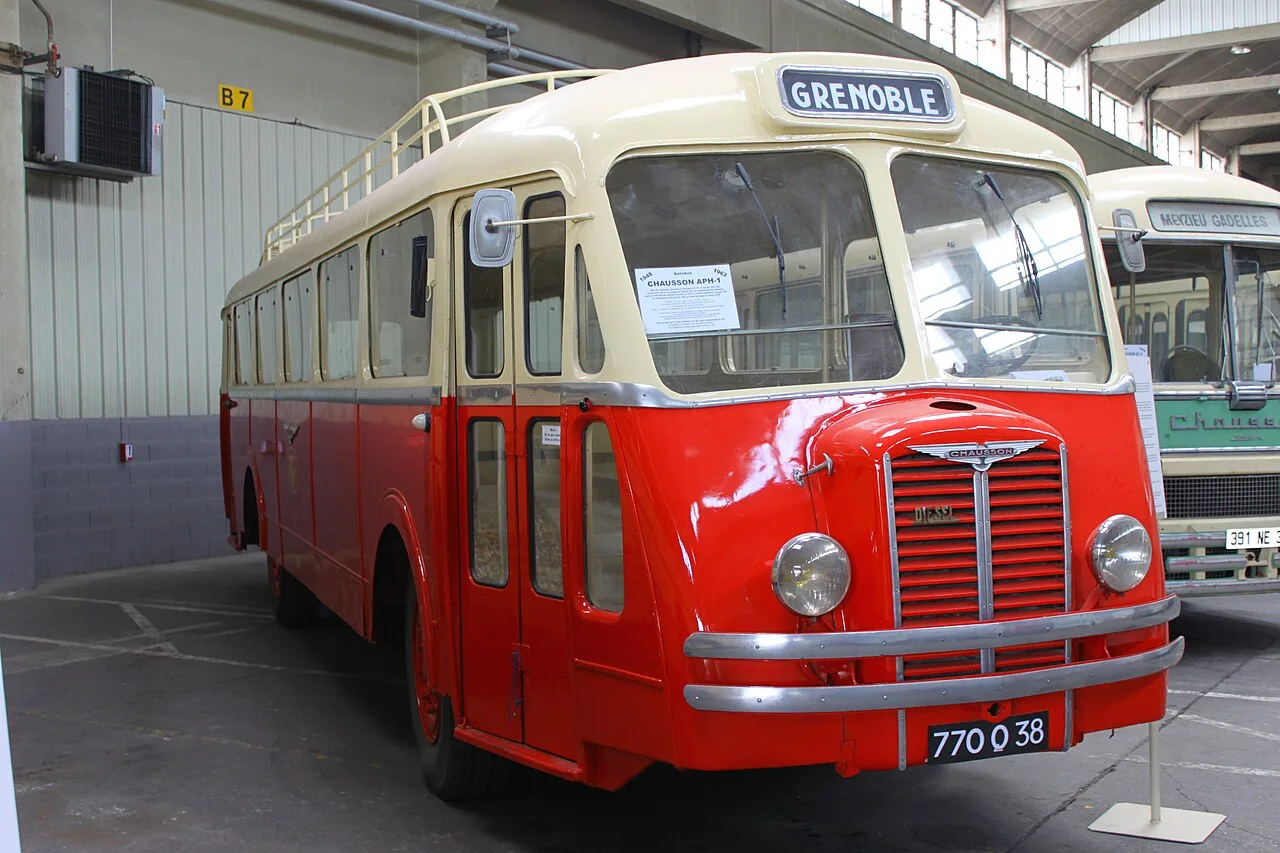
Here is the twist that makes the Jelcz story special. When Poland wanted a proper modern city bus in the 1970s, it did not turn east — it turned to France. In July 1972 Poland bought a licence to build the Berliet PR100, the city bus of the French maker Berliet, choosing it over rival offers from Italy, West Germany, Britain, Spain and Japan.
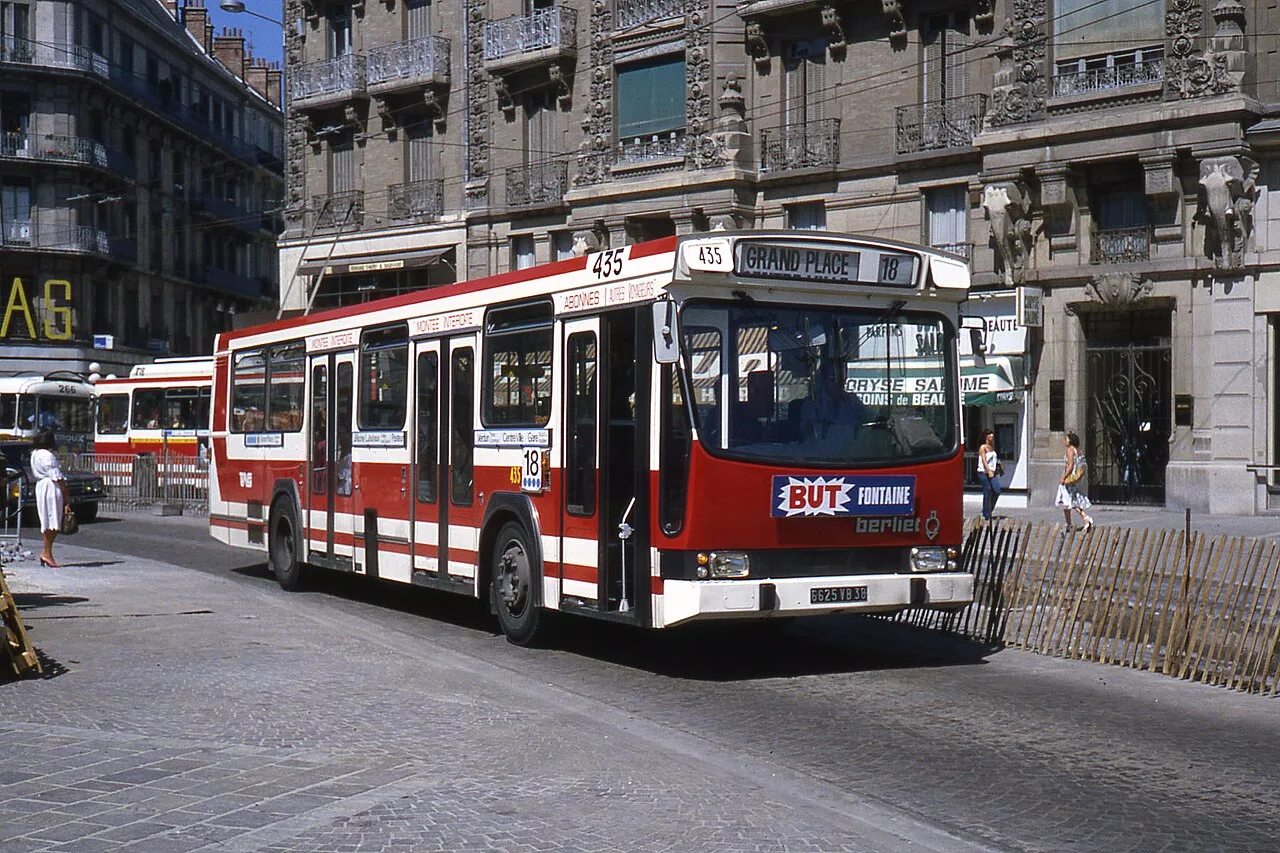
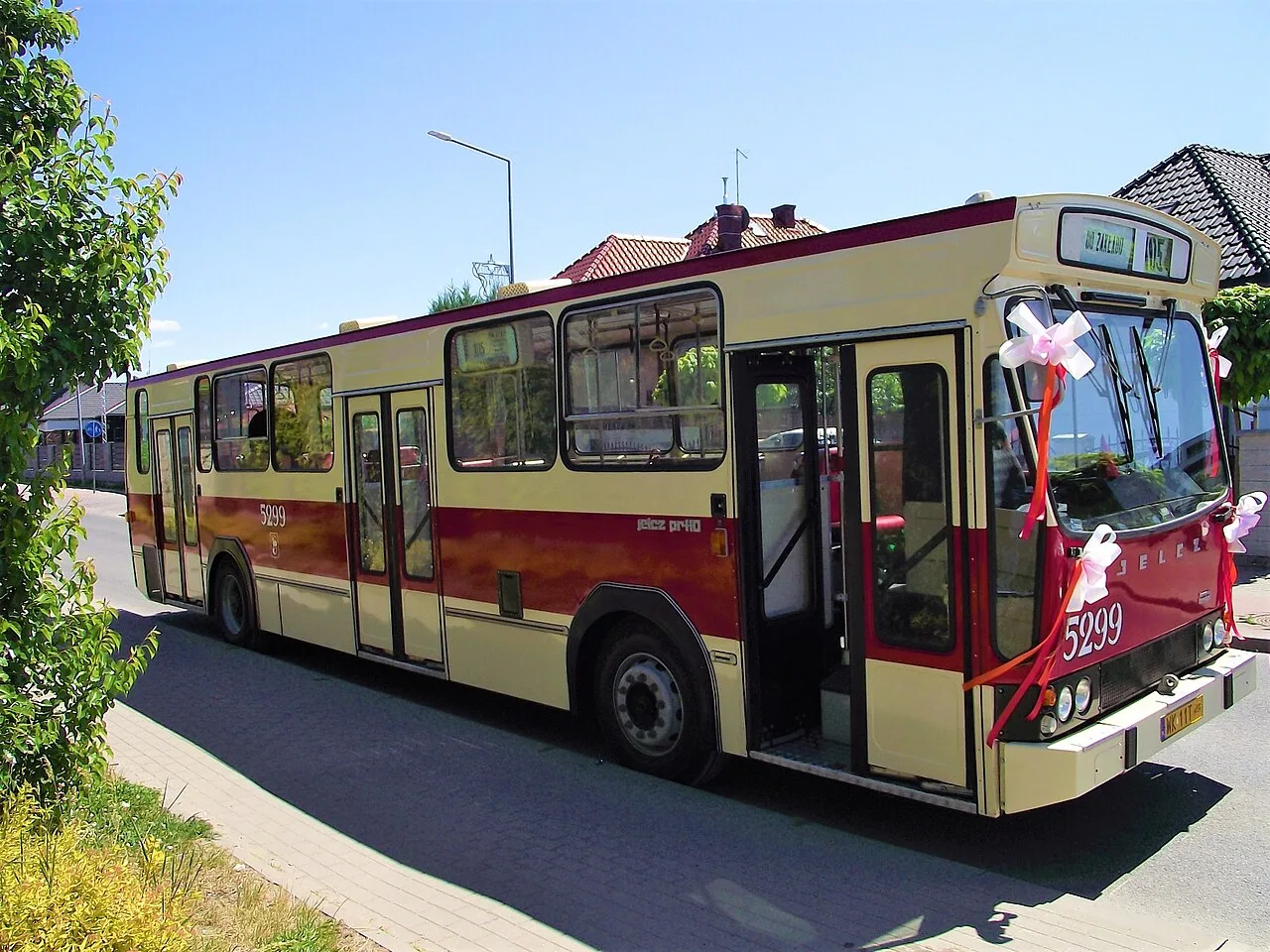
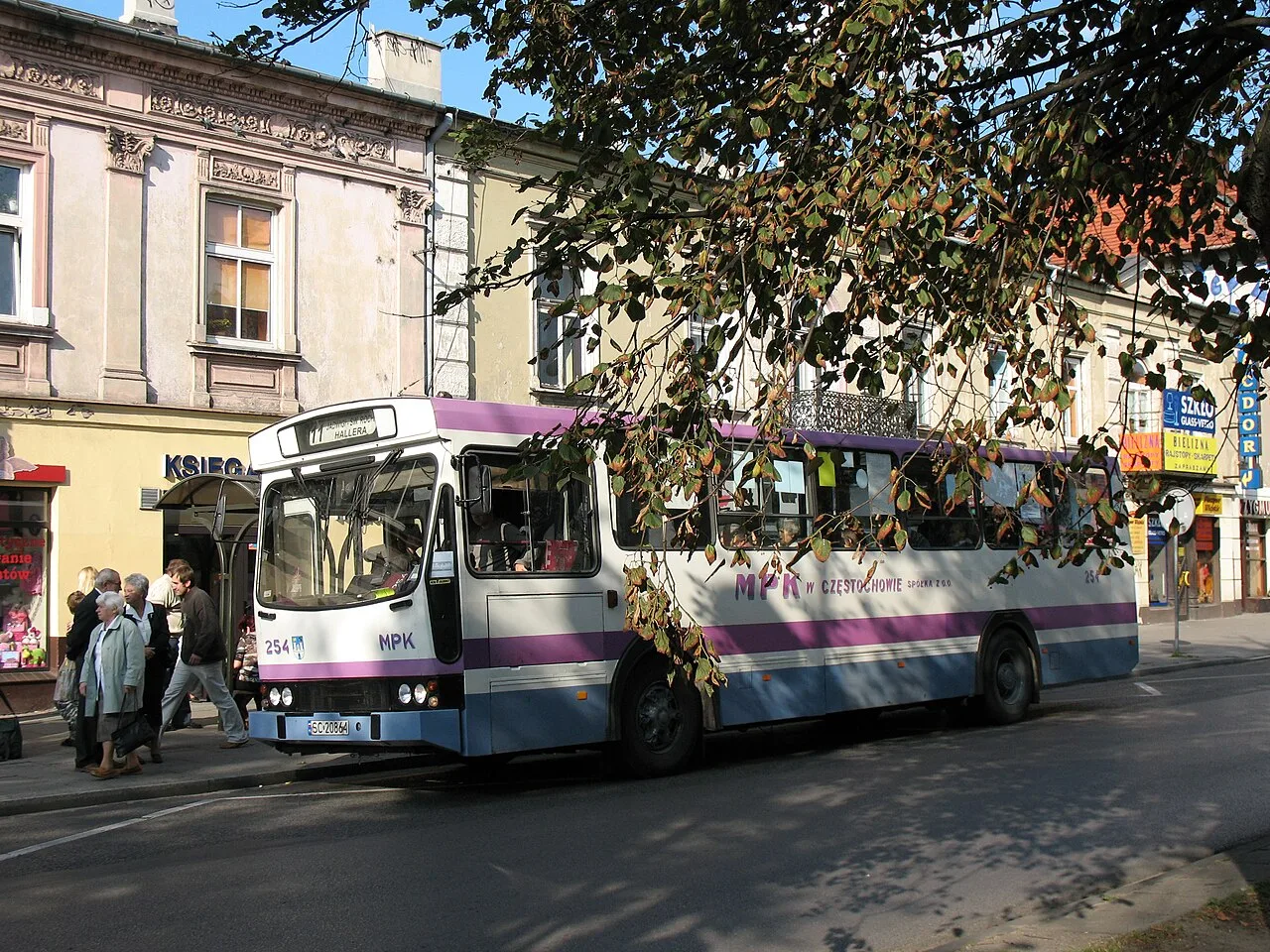
The Polish version was the Jelcz PR110 (the city bus was the PR110U, from Urbain, French for "urban"). It reached the streets from 1976, and about 12,000 were built before the licence expired in 1992. It was a 12-metre, mid-floor city bus with three sets of doors — a genuinely modern machine for its place and time, and a world apart from the high-stepped ogórek.
The borrowing went deeper still: the PR110's engine, a WS Mielec SW680 diesel, was itself built in Poland under a British Leyland licence. So a single Polish bus could carry French body engineering and a British-derived engine — a very Polish solution to being cut off from the Western market. Berliet, incidentally, was later folded into Renault, part of the same French bus story we tell in Renault, Heuliez and the Paris RATP.
What a Jelcz feels like to drive
Driving a Jelcz in the sim is driving the 1970s and 80s, and it feels like it. These are heavy, mechanical machines with no electronic smoothing between you and the road. The SW680 diesel is a slow-revving lump that asks for patience: you build speed gently through a manual gearbox, and you plan your stops early because a full city bus of this era does not shed speed in a hurry.
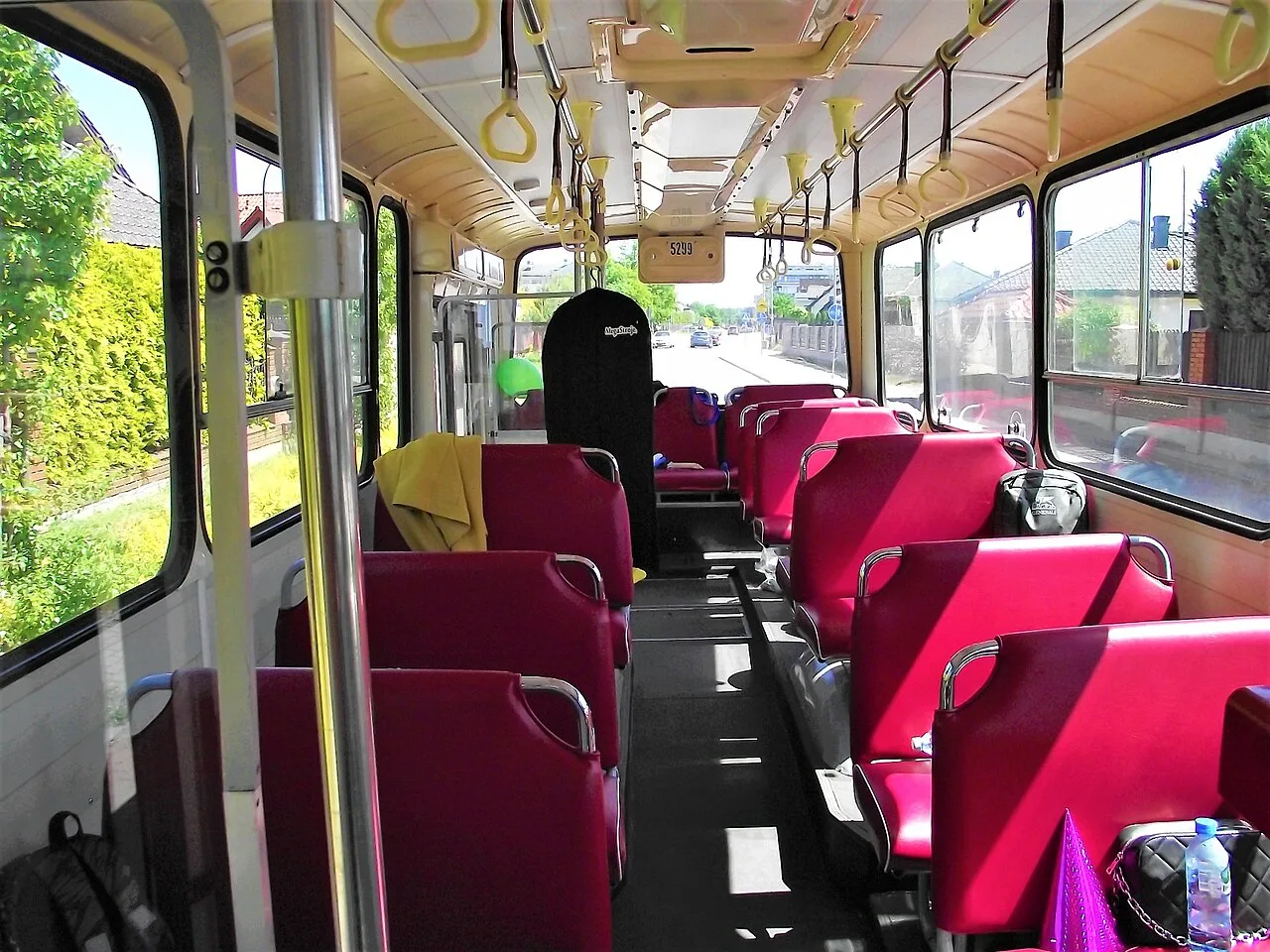
The two families even drive differently from each other. The high-floor ogórek sits you up over the axles like an old coach, with that raised, commanding view; the mid-floor PR110 sits lower and loads passengers faster through its three doors. Take either onto a Polish or post-Soviet map and you are steering a real piece of Cold War history — a bus that existed because a Polish committee went shopping for licences on both sides of a divided Europe.
The long afterlife
When the Berliet licence ran out in 1992, Jelcz replaced the PR110 with its own developments like the 120M, and kept building city buses into the 2000s before the market moved on — much of it to the Poznań upstart that became Solaris. By 2004 Jelcz had pivoted to military trucks, the business it still runs today.
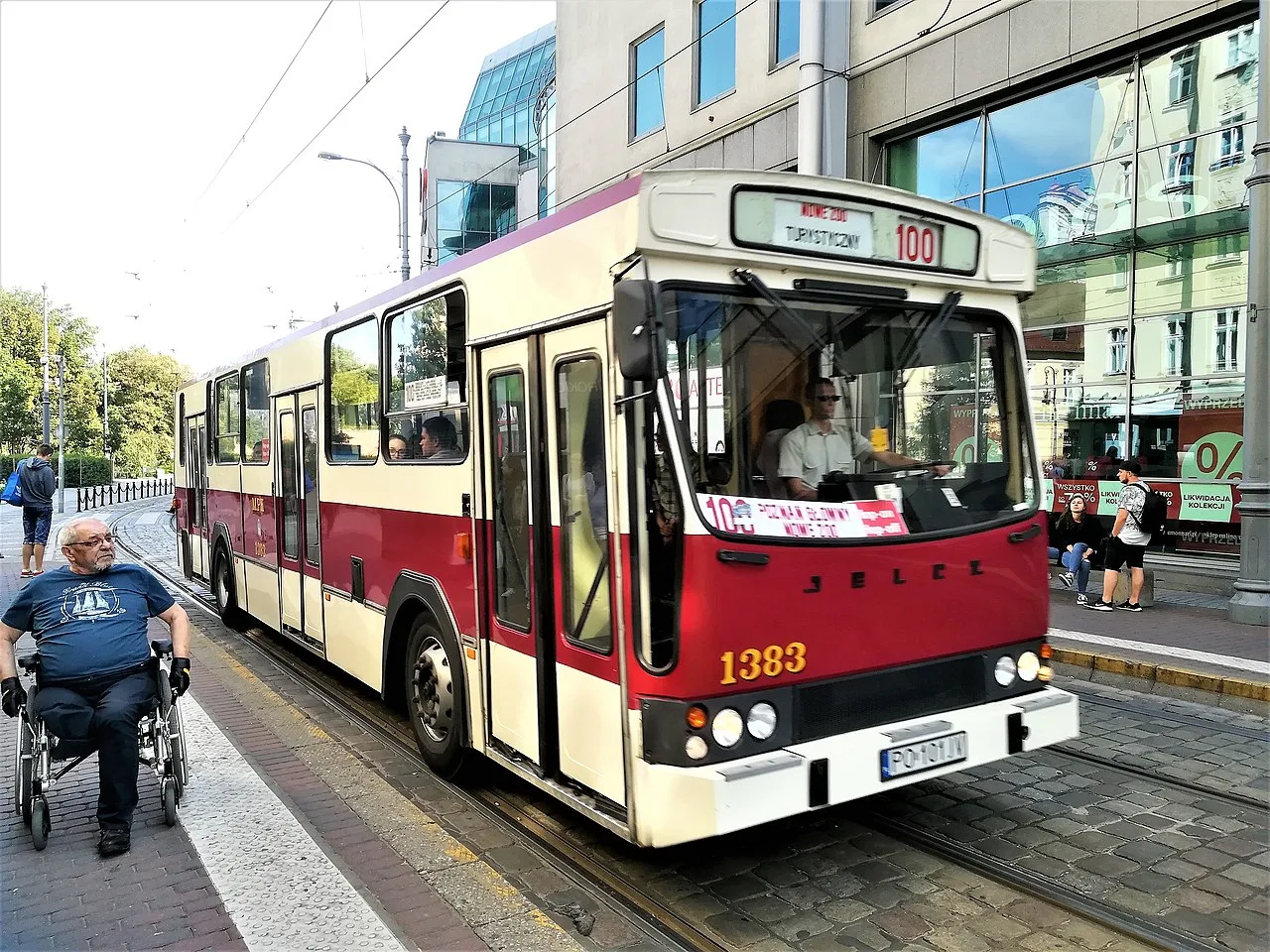
But the old buses refuse to disappear. Preserved ogórki and PR110s still turn out for retro city rides across Poland, and the shapes live on in the modding community — which is exactly why you can still drive one on your phone. Browse the Polish bus mods and take the Cold War for a lap.
FAQ
What is the Jelcz "ogórek"?
What is a Jelcz-Berliet?
Was the Jelcz PR110 really based on a French design?
Where were Jelcz buses made?
Does Jelcz still make buses?
Sources
- Restored Jelcz PR110 "Berliet" — dzieje.pl (Polish History portal / PAP) — the Jelcz-Berliet PR110 as the French-licensed Polish city bus and its preservation.
- 1 August 1972: Jelcz buys the Berliet licence — Interia Historia — the 1972 French licence agreement and the choice of Berliet over other bidders.
- Jelcz PR110 — Wikipedia (background) — production 1976–1992, ~12,000 built, the mid-floor 12-metre layout, and the WS Mielec SW680 engine under British Leyland licence.
- Jelcz 043 — Wikipedia (background) — the 1958 Czechoslovak Škoda 706 RTO / Karosa licence, 1959–1986 production, the high-floor intercity body and the "ogórek" nickname.
Hero & figures via Wikimedia Commons: hero (Jelcz PR110, 1978) — Pavecon, CC BY-SA 4.0; Jelcz 043 ogórek — Andrzej Otrębski, CC BY-SA 4.0; Berliet PR100, Grenoble — Jean-Henri Manara, CC BY-SA 2.0; Jelcz PR110, Częstochowa — photobeppus, CC BY-SA 2.0; PR110 interior — Pavecon, CC BY-SA 4.0; later Jelcz, Poznań — MOs810, CC BY-SA 4.0.