What Is a MAN Bus? The German Giant That Built the First Diesel Engine
Spend an hour in a bus simulator and one badge keeps turning up: MAN. It rides on city buses in Germany, coaches across Spain, and a big slice of the mods on this site. So what is a MAN bus — and why is the name three shouty capital letters? The short answer: MAN is one of the oldest and largest commercial-vehicle makers on Earth, and it is the company where the diesel engine, the thing that powers almost every bus you will ever drive, was first made to work.
We spend a lot of time behind the wheel of MAN buses in Proton Bus Simulator, so we went back through the company's own history to explain who MAN actually is. This is the story of the badge itself — not the model codes (those get their own guide), but the 125-year-old firm behind them.
So what is a MAN bus, exactly?
MAN Truck & Bus is a German maker of trucks, buses and engines, and today it is part of the Volkswagen Group's Traton commercial-vehicle division. That makes the badge on your sim bus a sibling of Scania — both sit under the same parent — and one of the heavyweights of the European road.
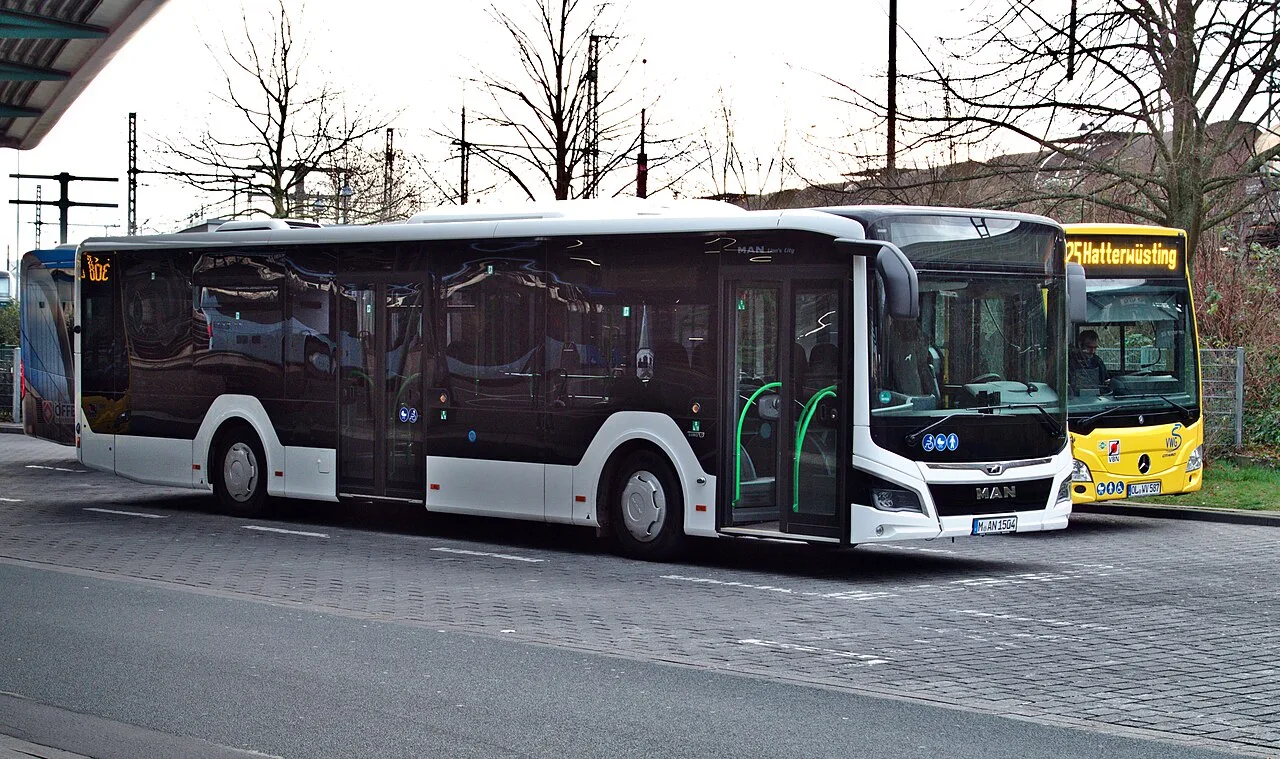
In buses, the range is easy to split in two. MAN's low-floor city buses wear the Lion's City name; its high-deck touring coaches wear the Lion's Coach name. If you have driven a boxy German city bus or a long-distance coach in the sim, there is a good chance it was one of these two. You can see the whole spread in our MAN bus mod collection.
What "MAN" actually stands for
The name is not a founder and not a place. MAN is short for Maschinenfabrik Augsburg-Nürnberg — roughly, "the Augsburg-Nuremberg machine works." It is a factory name, and a very old one.
The company traces to an 1898 merger of two south-German engineering firms, the machine works at Augsburg and the one at Nuremberg, joining forces to build heavy industrial machinery. The three-letter short form we all use, M.A.N., was formalised a decade later, in 1908, per the Volkswagen Group's history of MAN. Long before it built a single bus, MAN built engines, bridges and printing presses — heavy engineering was the trade.
The beating heart: MAN built the first working diesel engine
Here is the fact that makes MAN special, and it is the reason this post exists. The diesel engine that hums under the floor of your sim bus can be traced, in a straight line, back to a MAN workshop.
In the 1890s the engineer Rudolf Diesel had a patent — number 67207, dated 28 February 1892 — for a new kind of engine that ignited its fuel by compression alone, with no spark. A patent is only an idea, though. It was Maschinenfabrik Augsburg that turned the drawing into metal: the firm built the first functioning self-ignition engine, which Diesel himself presented to the Association of German Engineers in Kassel on 16 June 1897. That machine is usually counted as the first working diesel engine in the world.
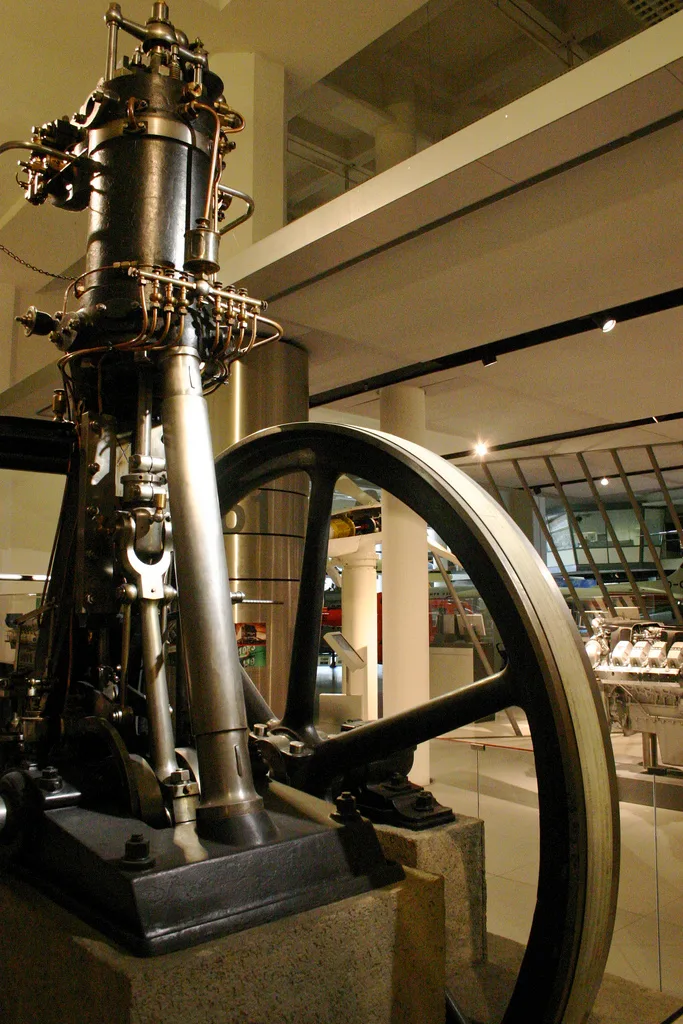
From engines to vehicles: the first diesel truck
An engine maker does not automatically become a bus maker. MAN got there through trucks. In 1915 it set up a joint venture with the Swiss firm Saurer and rolled out its first commercial vehicle, the MAN-Saurer truck — the company's first step off the factory floor and onto the road.
The bigger leap came a few years later. In 1924 MAN put the world's first truck with a direct-injection diesel engine on the road — the layout that made diesel practical for heavy vehicles and, eventually, standard for buses. (MAN's own archive dates the build to 1923 and the public debut to 1924; either way it was the mid-1920s.) From that point the path to the modern bus is short: a rugged, torquey, fuel-sipping diesel is exactly what a full-size passenger vehicle needs, and MAN had the head start.
MAN buses today: Lion's City and Lion's Coach
Fast-forward to now and MAN sells two bus families you will recognise from the sim. The Lion's City is the low-floor city bus — the everyday workhorse, built in rigid and bendy (articulated) lengths, and now in a battery-electric version too. The Lion's Coach is the high-deck touring coach, built for the motorway rather than the bus stop.
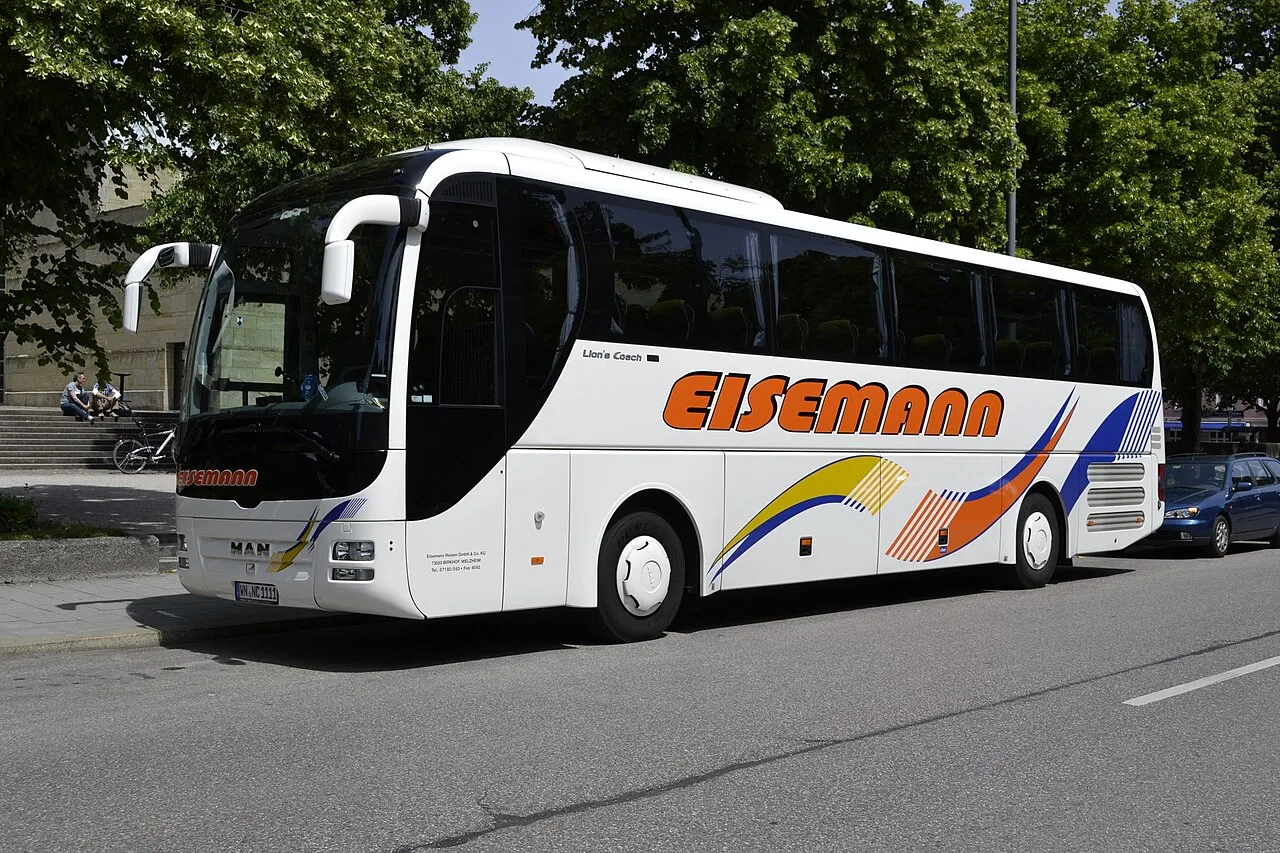
Both families carry a second, quieter layer of naming — the engineering type codes like A21, A23 and the NL/NG low-floor codes, plus the Lion badge itself, which MAN inherited from Büssing. That is a whole language of its own, and we pulled it apart separately in what MAN bus codes mean. Here we will leave the badge at its two sales names and send you there for the decoder.
What a MAN feels like to drive
All that history shows up in the driver's seat as one thing: the engine. Climb into a rear-engined Lion's City in the sim and the diesel note comes from over your shoulder, a low underfloor rumble rather than a sound up front. Pull away from a stop full of standing passengers and you feel the diesel's signature — a thick wall of low-rev torque that gets a heavy bus moving without much drama. On a long downhill you lean on the engine brake instead of cooking the service brakes, letting that same big diesel hold the bus back.
None of that is generic. It is the direct descendant of the compression-ignition engine Maschinenfabrik Augsburg first made to work in 1897 — 125 years of the same basic idea, refined into the note and the pull you hear on every corner. The modern twist is the electric Lion's City, which trades that rumble for near silence; if you want the longer arc from diesel to battery, we told it in 140 years of the electric bus. Want to feel the diesel version first? Take the MAN Lion's City mod out and listen for the engine MAN helped invent.
FAQ
Who makes MAN buses?
Which country makes MAN buses?
What does "MAN" stand for?
Did MAN really invent the diesel engine?
What is the difference between a Lion's City and a Lion's Coach?
Sources
- The history of MAN — Volkswagen Group — the Maschinenfabrik Augsburg-Nürnberg name and 1898 merger, the 1908 M.A.N. short form, Rudolf Diesel's patent 67207 (1892) and the 1897 first working engine presented in Kassel, and MAN as a brand of the Volkswagen Group.
- MAN Truck & Bus — Wikipedia — background on the 1915 MAN-Saurer truck joint venture, the 1924 first direct-injection diesel truck, the MAN Truck & Bus naming (2011), the Lion's City / Lion's Coach ranges, and MAN's bus manufacturing in Turkey.
- 100 years of MAN Truck and Bus — Automotive World — the company's commercial-vehicle centenary and the diesel-truck milestones.
Hero & figures via Wikimedia Commons: hero (MAN Lion's City, Oldenburg) — Jacek Rużyczka, CC BY-SA 4.0; 1897 diesel engine (Deutsches Museum) — Chris Thomas, CC BY-SA 3.0; MAN Lion's Coach, Munich — High Contrast, CC BY 3.0 DE.