What Was the Chausson "Pig-Nose" Bus? France's Post-War Icon Before the SC10
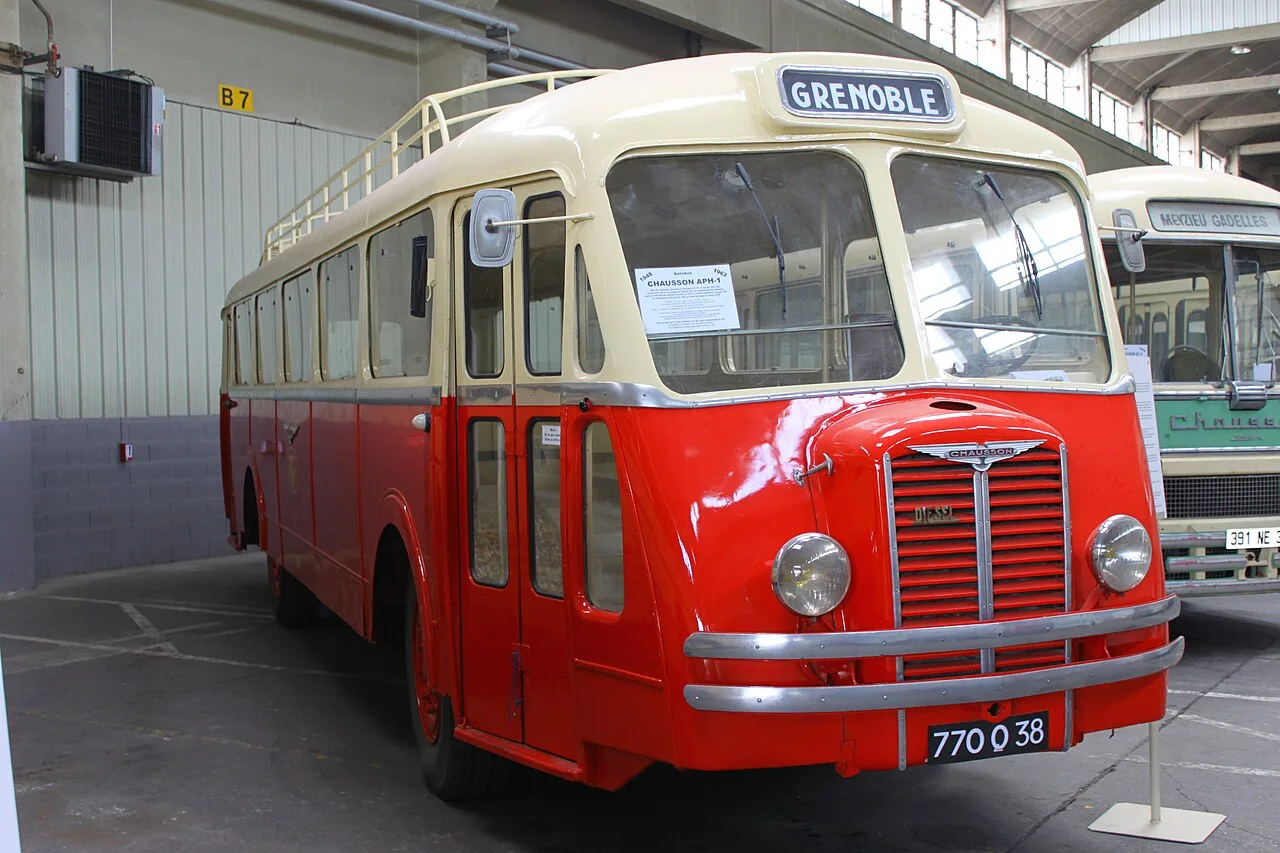
Long before Paris rolled out its famous "standard bus," one machine was the French bus: a rounded, snub-nosed coach that everybody knew by an unkind nickname. They called it the nez de cochon — the pig's nose. Officially it was the Chausson AP series, and for two decades after the war it was everywhere in France, and a fair way beyond it.
It is also the missing first chapter of a story we have already told. The Chausson is the direct ancestor of the Saviem SC10 that later ruled Paris — the bus at the heart of the French bus story. So we went back to the beginning: to the pig-nose that started the line.
So what was the Chausson "pig-nose" bus?
Chausson was a French manufacturer, and its AP-series buses — the APH being the best-known — were the workhorse coaches and city buses of post-war France. You saw them on town routes, on intercity runs and outside railway stations, in the plain liveries of a country rebuilding itself. If a French film from the 1950s has a bus in it, there is a good chance it is a Chausson.
The shape is unmistakable: a smooth, rounded, almost streamlined body — and then that odd bulge at the very front. The nickname wrote itself.
Where the pig's nose came from
The bulge was not a styling choice — it was an engine problem. Chausson wanted to fit a longer Hotchkiss engine, but the bus was capped at a legal length of about ten metres. Something had to give, so the front end grew a rounded appendage to swallow the extra length of the motor. That protrusion is the "pig's nose," and it is pure function: the engine simply would not fit any other way.
It gives the Chausson a face no other bus has — friendly, slightly comical, and instantly recognisable. Six decades later it is exactly why enthusiasts adore the thing.
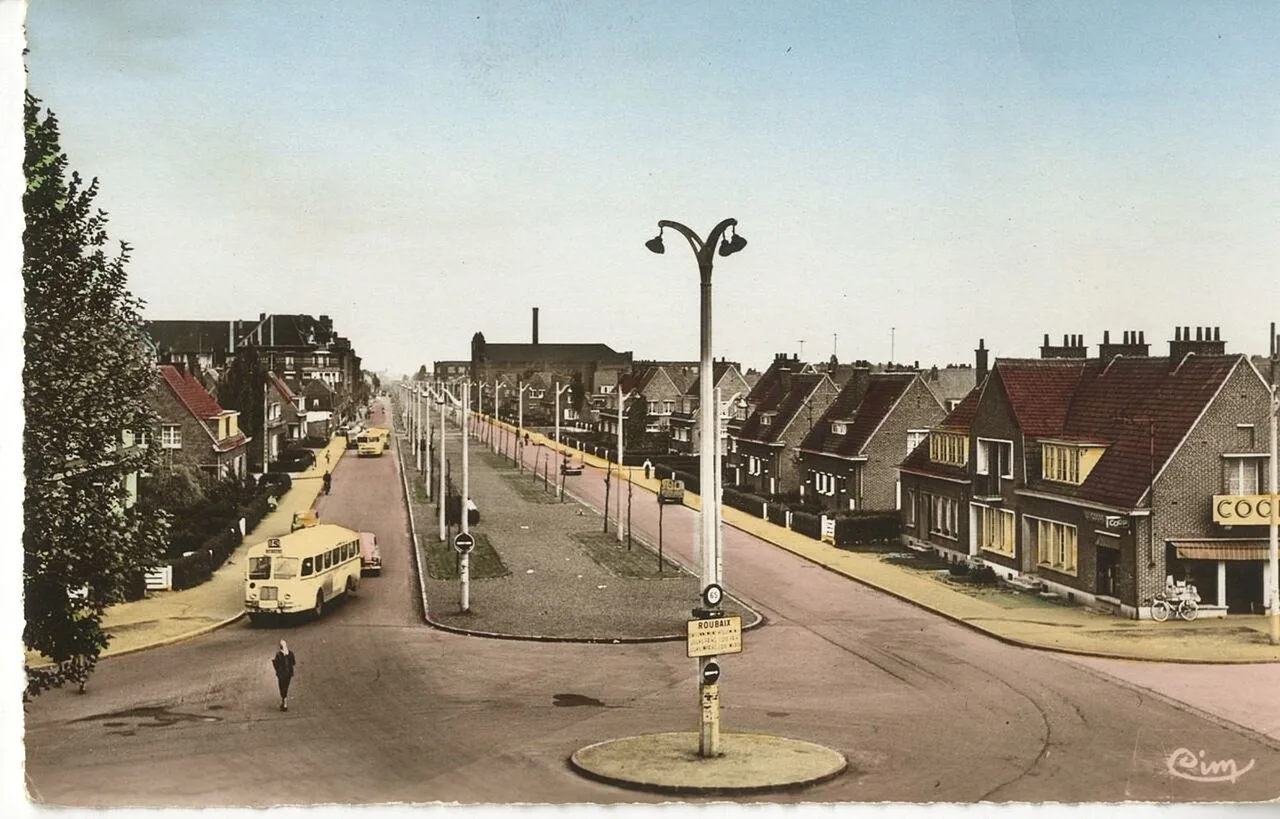
Ahead of its time: a body with no separate chassis
The clever part is hidden under the paint. Most buses of the 1940s were still built the old way — a body bolted onto a separate ladder chassis, the way we explain in why a bus has two makers. The Chausson threw that out. It used a self-supporting (monocoque) body: pressed and welded sheet metal that carried its own loads, with no separate frame underneath.
That made it lighter and let the floor sit lower, and it was genuinely advanced for the late 1940s — the same integral idea that German maker Setra would make famous a few years later. Chausson got there early, and built the pig-nose in serious numbers: production of the AP family ran from 1942 all the way to the mid-1960s.
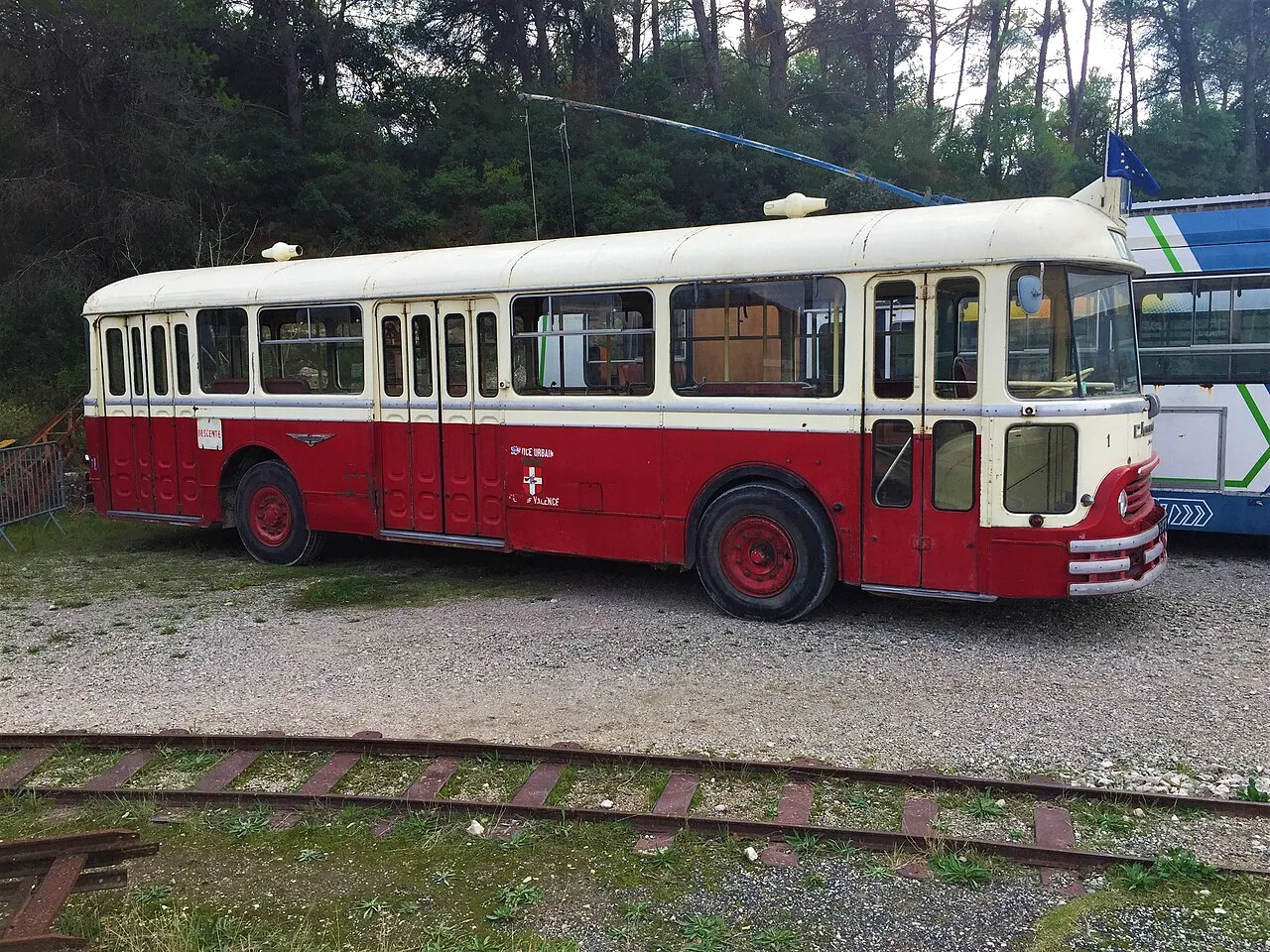
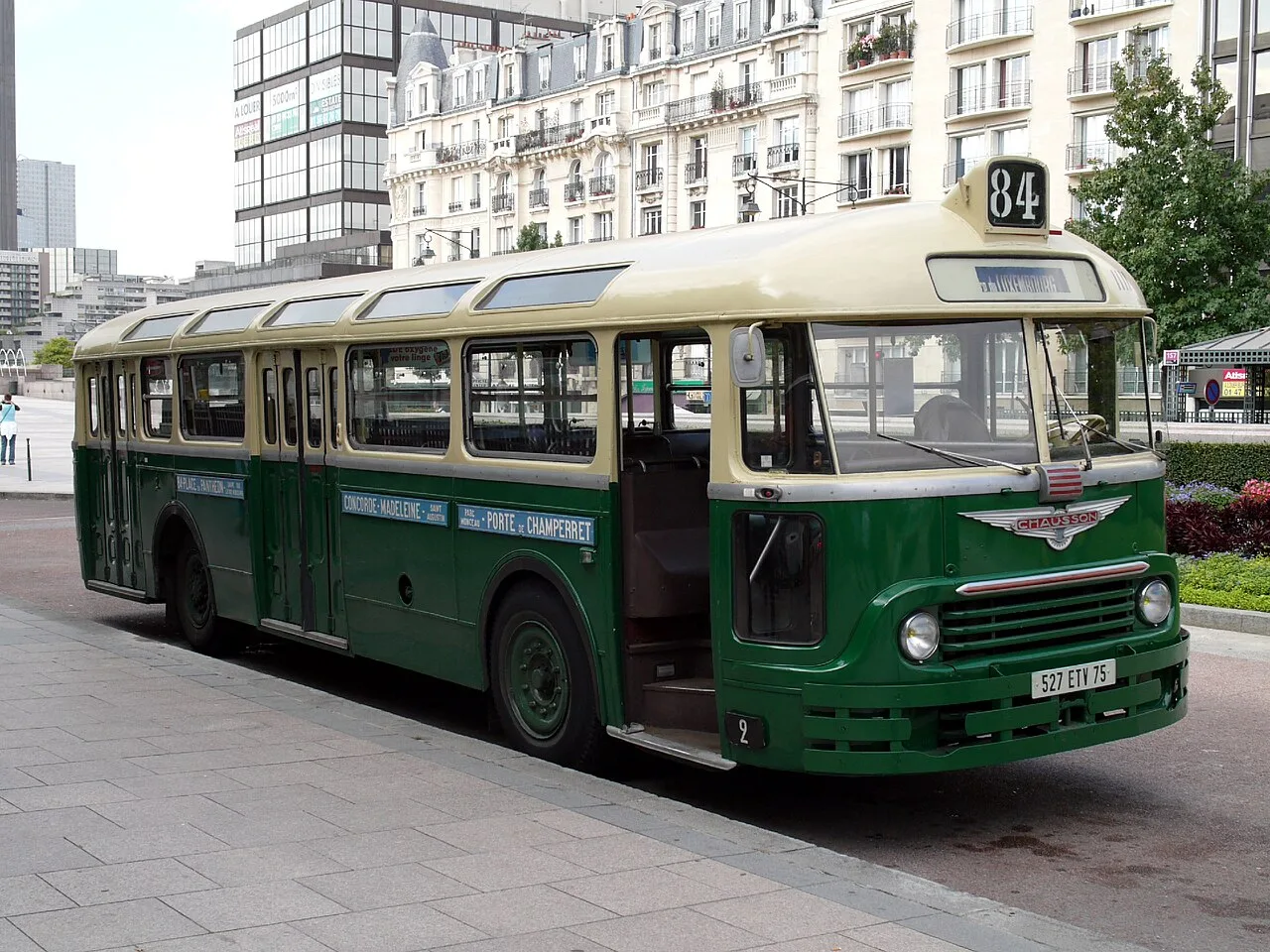
The bus that was everywhere — Paris, Barcelona, Warsaw
By the late 1940s Chausson was one of France's leading bus builders, and the pig-nose spread far past its home routes. It ran for the RATP in Paris itself, decades before the SC10 the RATP would later co-design.
It went abroad, too. Chaussons ran in Spain — a fleet served Barcelona — and, in a nice twist for our readers, Warsaw bought a batch of French Chaussons as early as 1947, while Poland was still finding its feet after the war. (Poland would later build its own buses under a different French licence, the story we tell in the Jelcz "ogórek".)
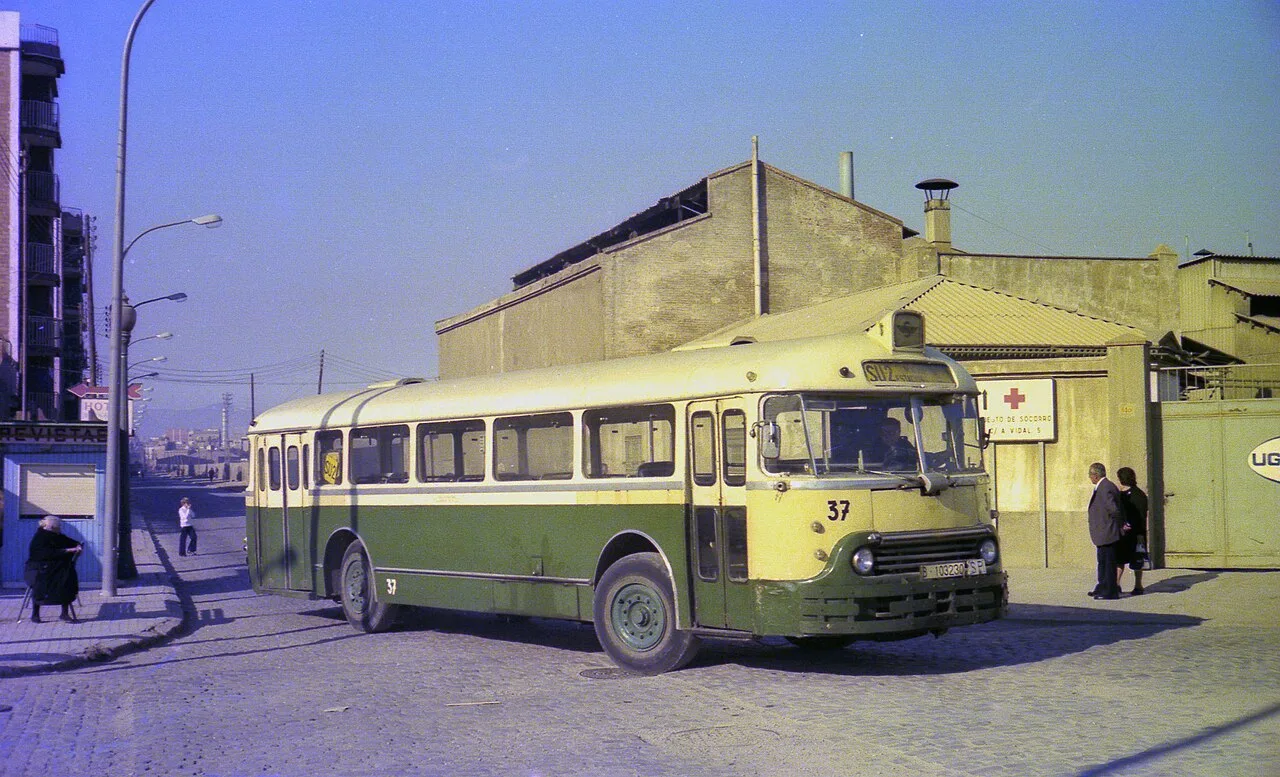
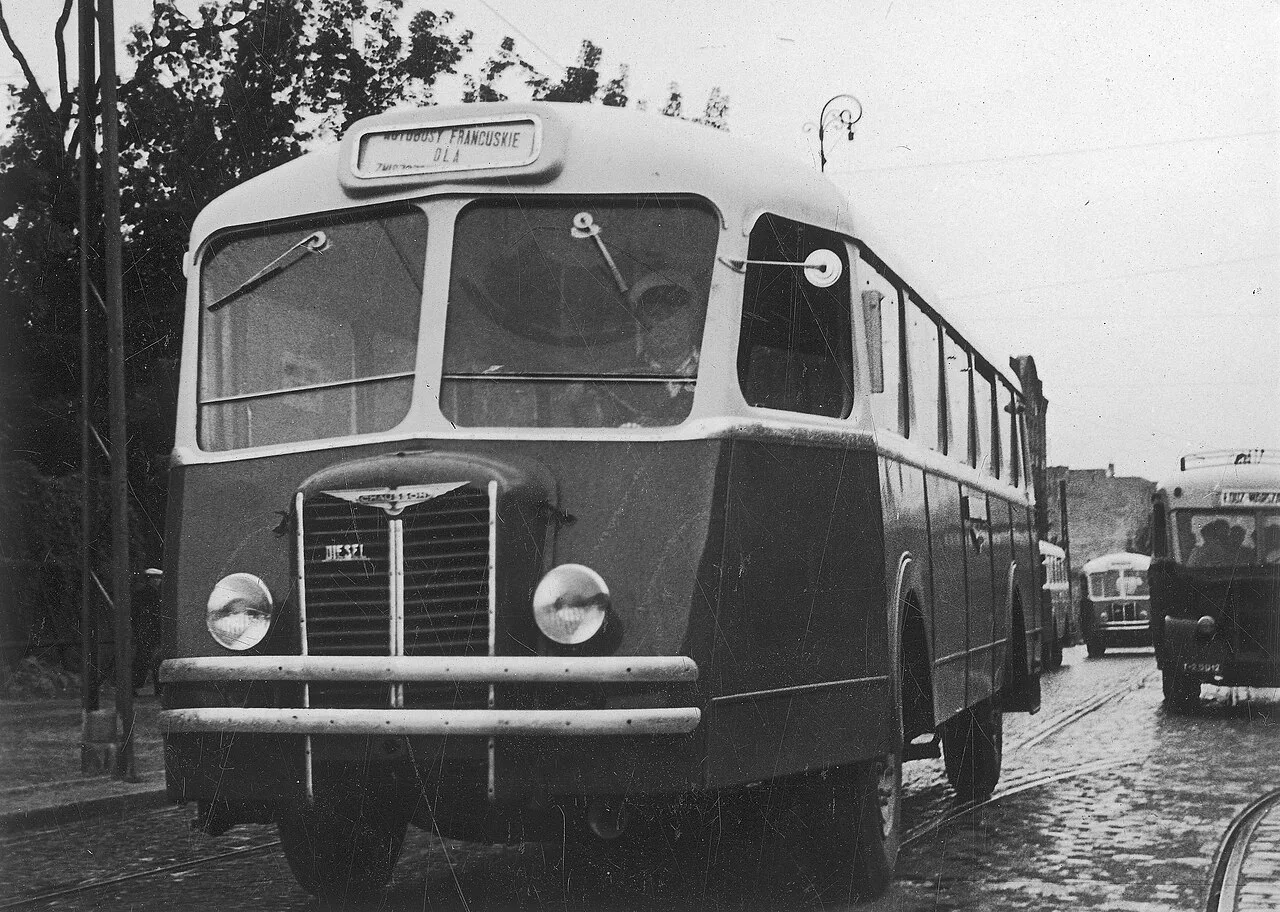
From Chausson to the SC10
Every icon eventually meets a bigger fish. By the late 1950s Chausson was in financial trouble, and on 1 July 1959 its bus and coach division was handed to Renault, which folded it into Saviem. The pig-nose lived on for a while under new names — the Saviem SC3 and SC4 — until production ended around 1965.
And then came the successor that erased it: the Saviem SC10, the RATP-designed "standard bus" that would define Paris for the next thirty years. The line runs straight from the pig-nose to that bus — which is why the Chausson is the prologue to the whole modern French bus story.
What the pig-nose feels like to drive
A Chausson is a front-engined bus, and that changes everything you feel behind the wheel. In most buses the engine lives at the back; here it sits ahead of you, in that famous nose — so the diesel clatter comes from in front, not over your shoulder, and the weight of the motor loads the front axle. You steer a bus that is nose-heavy, with the engine's heat and sound right there in the cab.
Add 1950s mechanicals — a manual gearbox, no power anything, drum brakes — and the pig-nose asks to be driven slowly and deliberately, the way its drivers really drove it. It is a machine from a different age of the road, and that is exactly the appeal. Want the modern French descendants instead? Browse the French bus mods and trace the line forward from the nose.
FAQ
Why was the Chausson called "nez de cochon" (pig's nose)?
Did Chausson buses run in Paris?
What made the Chausson advanced for its time?
How long was the Chausson AP built?
What happened to Chausson?
Sources
- Chausson AP — Wikipédia (FR) — the "nez de cochon" origin (longer Hotchkiss engine within the ~10 m limit), the self-supporting sheet-metal body, the AP1 (1942) to mid-1960s production range, and the 1 July 1959 transfer of the bus division to Renault/Saviem (SC3/SC4, then the SC10).
- L'autobus Chausson — Loire-Atlantique (departmental heritage) — the Chausson as the emblematic post-war French bus and its place in everyday transport.
- Chausson AP Series — Curbside Classic — background on the AP-series coaches, the pig-nose front, and Chausson's standing among French bus builders.
Hero & figures via Wikimedia Commons: hero (Chausson APH-1, SGTE) — Matthieu Riegler, CC BY 3.0; museum Chausson — Atilium, CC BY-SA 4.0; RATP Paris route 84 — Oxam Hartog, CC BY-SA 3.0; Barcelona URBAS — César Ariño Planchería, CC BY-SA 4.0; the early-1950s French street scene and the 1947 Warsaw delivery are public domain.