The Solaris Story: How a Polish Family Firm Out-Electrified the Giants
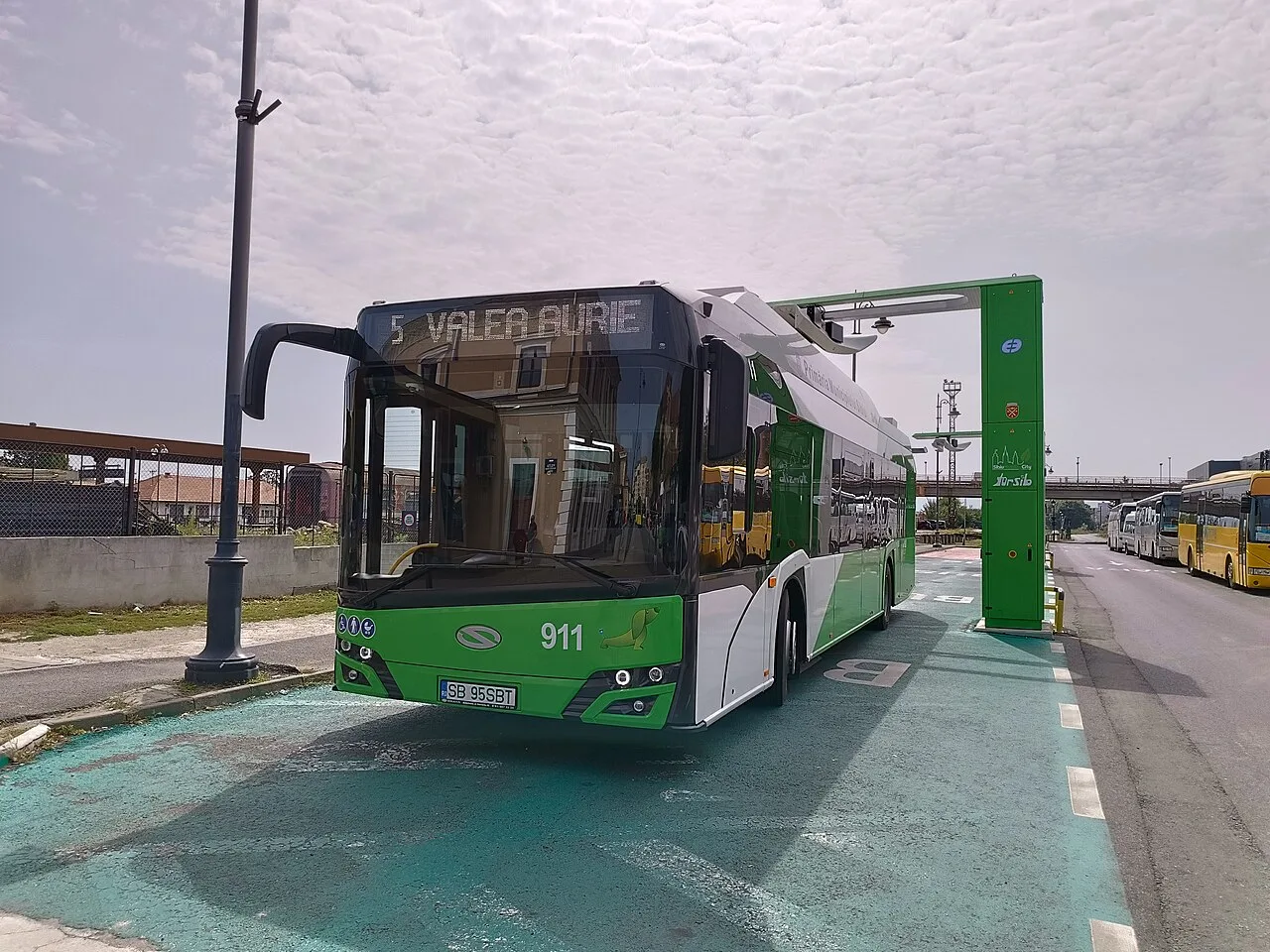
Here is a fact that sounds made up: the company that makes more electric buses than anyone else in Europe is not German, not French, and not Chinese. It is Polish, it is barely thirty years old, and it started life screwing together someone else's buses under licence. That company is Solaris, and its rise from a rented factory near Poznań to the top of Europe's zero-emission market is one of the great underdog stories in the bus world.
We have already decoded what the Urbino numbers mean and where the little green dachshund came from. This is the other half — not the badge, but the business: how a family firm beat the giants at the game everyone thought the giants would win.
So what is Solaris?
Solaris Bus & Coach is a Polish manufacturer based in Bolechowo, just outside Poznań. It builds city buses, but also trolleybuses and trams — and today it is best known as Europe's electric-bus pacesetter, holding roughly an 18% share of the continent's electric-bus market. Since 2018 it has belonged to the Spanish rail group CAF. Not bad for a company that, within living memory, did not have a bus of its own to sell.
From a German licence to its own name
Solaris began as Neoplan Polska, founded by Krzysztof Olszewski, who had spent years at the German coachbuilder Neoplan. In 1994 he set up a Polish arm, and the first bus rolled out of the Bolechowo plant in 1996 — a Neoplan, built under licence, by a tiny workforce.
Then came the twist that gave the company its name. In 2001 the German firm Neoplan was absorbed by MAN — the giant whose own story we tell in what a MAN bus is. Rather than stay a satellite of a brand now owned by a rival, the Olszewskis cut loose: on 1 September 2001 they renamed their company Solaris Bus & Coach and struck out on their own. The name was chosen to sound bright and positive in any language — and, as we explain in the decoder, it even shares its first letter with Solange, the co-founder who drew the famous dachshund.
Betting on electric before the giants
An independent underdog cannot win by copying the market leaders — it has to get somewhere first. Solaris did exactly that with clean drivetrains, years before the big names treated them as serious business.
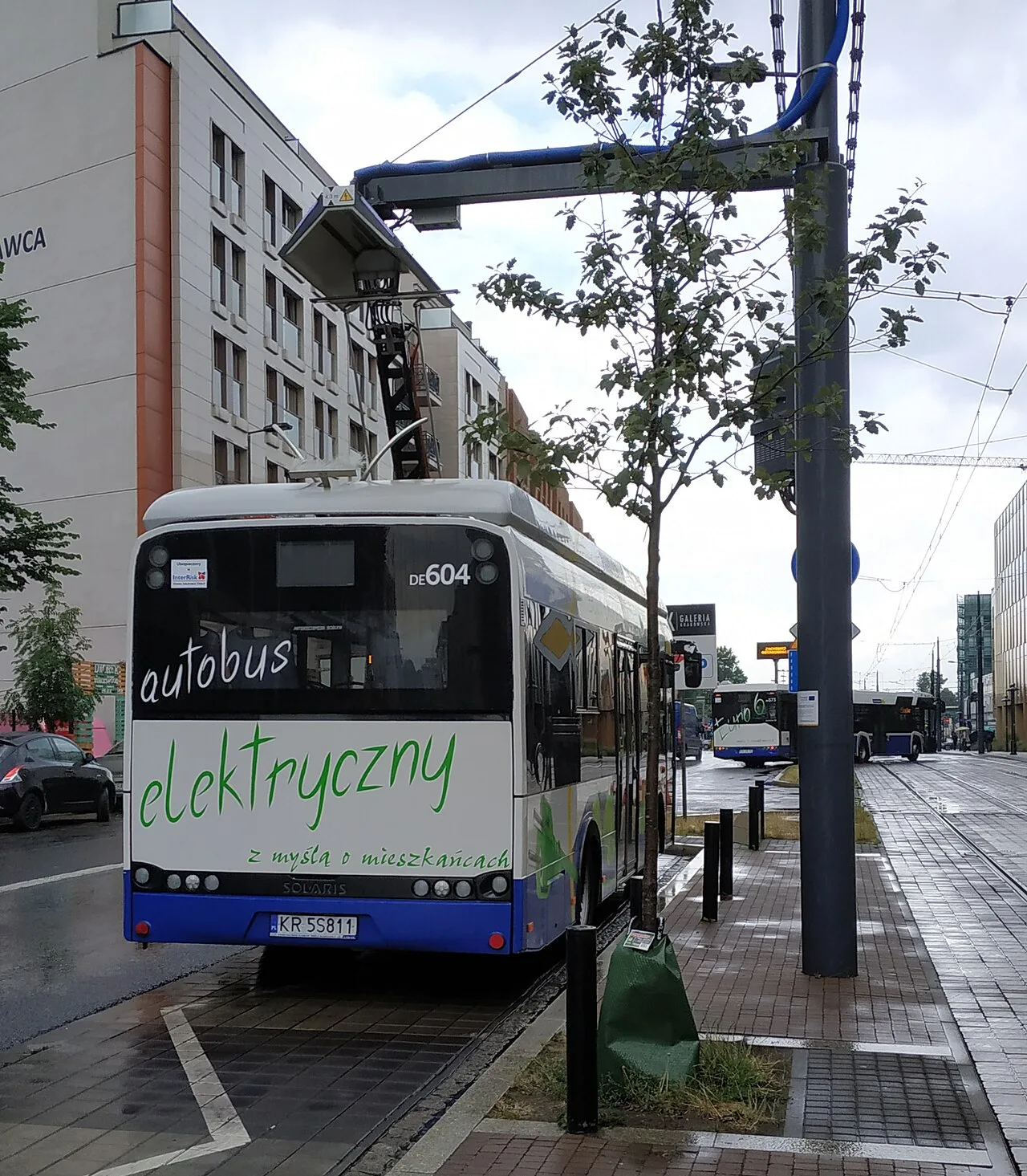
In 2006 it put Europe's first series-produced hybrid city bus on the market. It unveiled its first fully electric Urbino in 2011. And in 2016 the Urbino 12 electric was named Bus of the Year 2017 — the first electric bus, and the first Polish bus, ever to take the title. While much of the industry was still calling electric a niche, Solaris was building a lead it has never given up: it says one in every seven zero-emission buses on European roads is one of theirs.
Not just buses: trolleybuses and trams
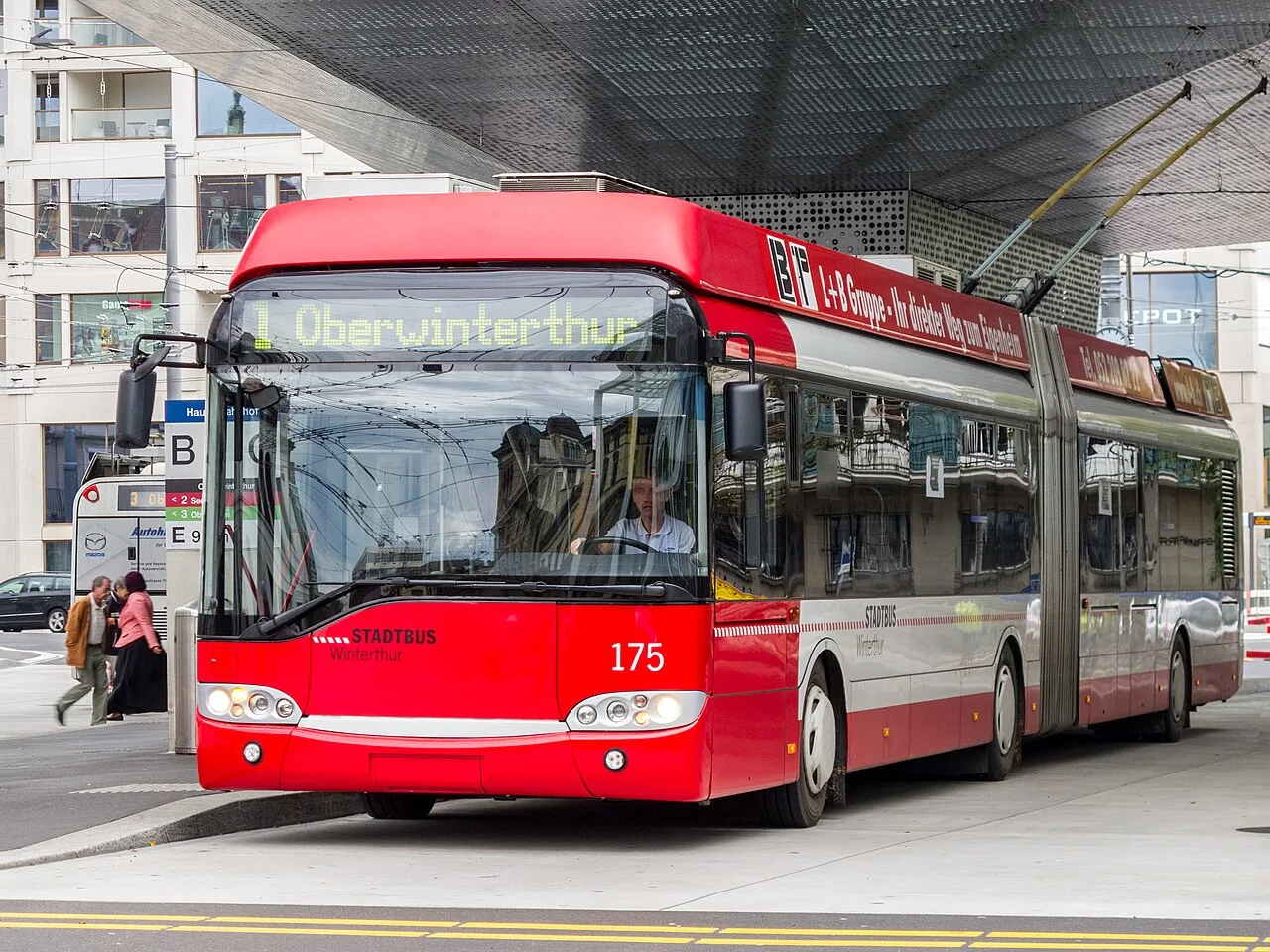
The other half of the underdog playbook is refusing to stay in one lane. Solaris never limited itself to the diesel city bus. It launched its Trollino trolleybus in 2001 — the same year it took the Solaris name — and it now runs in cities across Europe, from Switzerland to Italy.
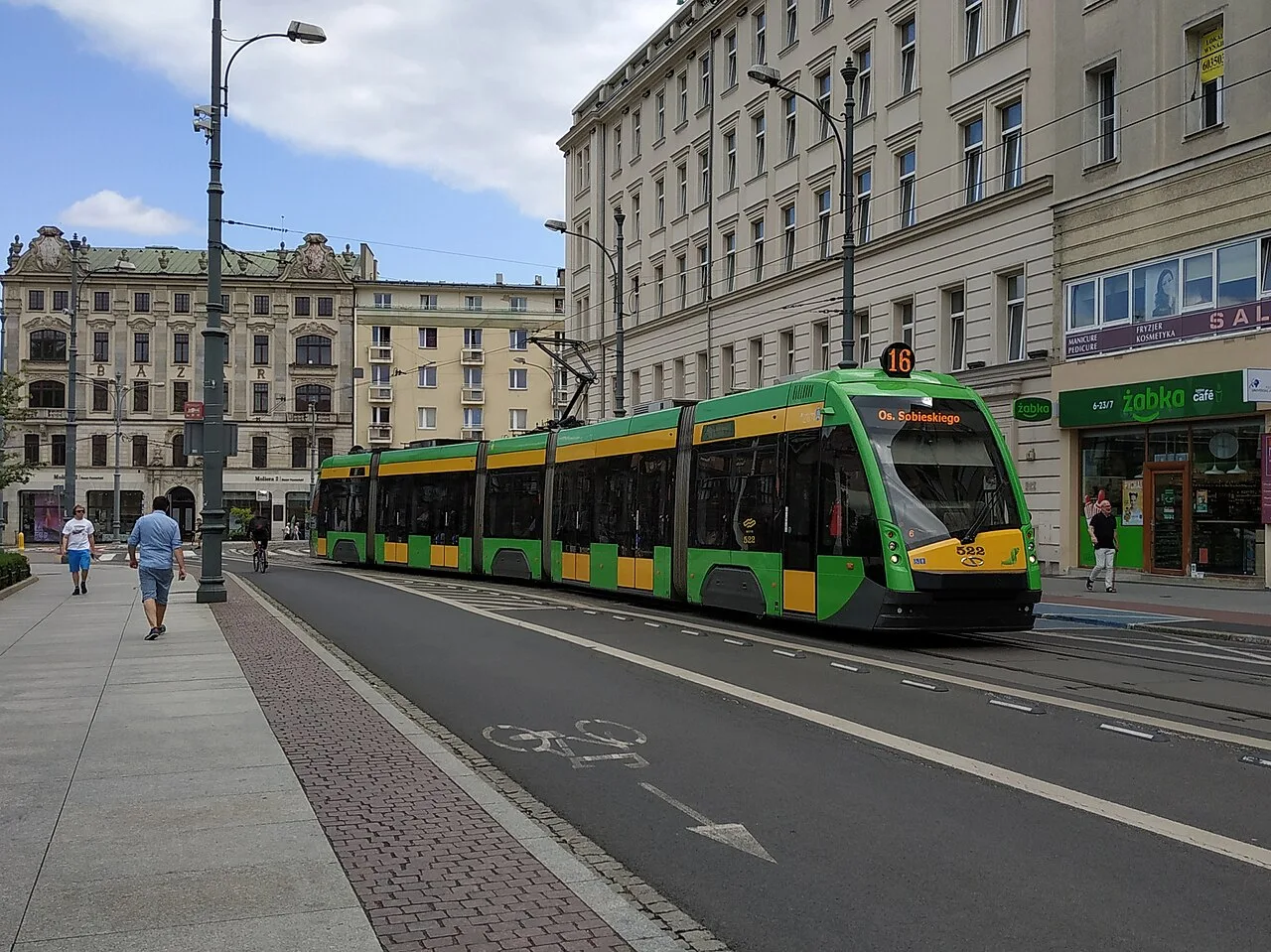
Then, in 2009, it did something few bus makers dare: it built a tram. The Tramino put Solaris on rails, first at home in Poznań and later elsewhere — a striking move for a company that had started out assembling buses under licence barely a decade earlier.
Hydrogen, and the day CAF came calling
Success attracts buyers. In 2018 the Spanish rolling-stock group CAF — a major builder of trains and trams — acquired Solaris. For the family that had renamed the firm in 2001, it was the ultimate validation: the underdog had grown valuable enough for a big European group to buy it outright, and Solaris kept its name, its factory and its dachshund under the new owner.
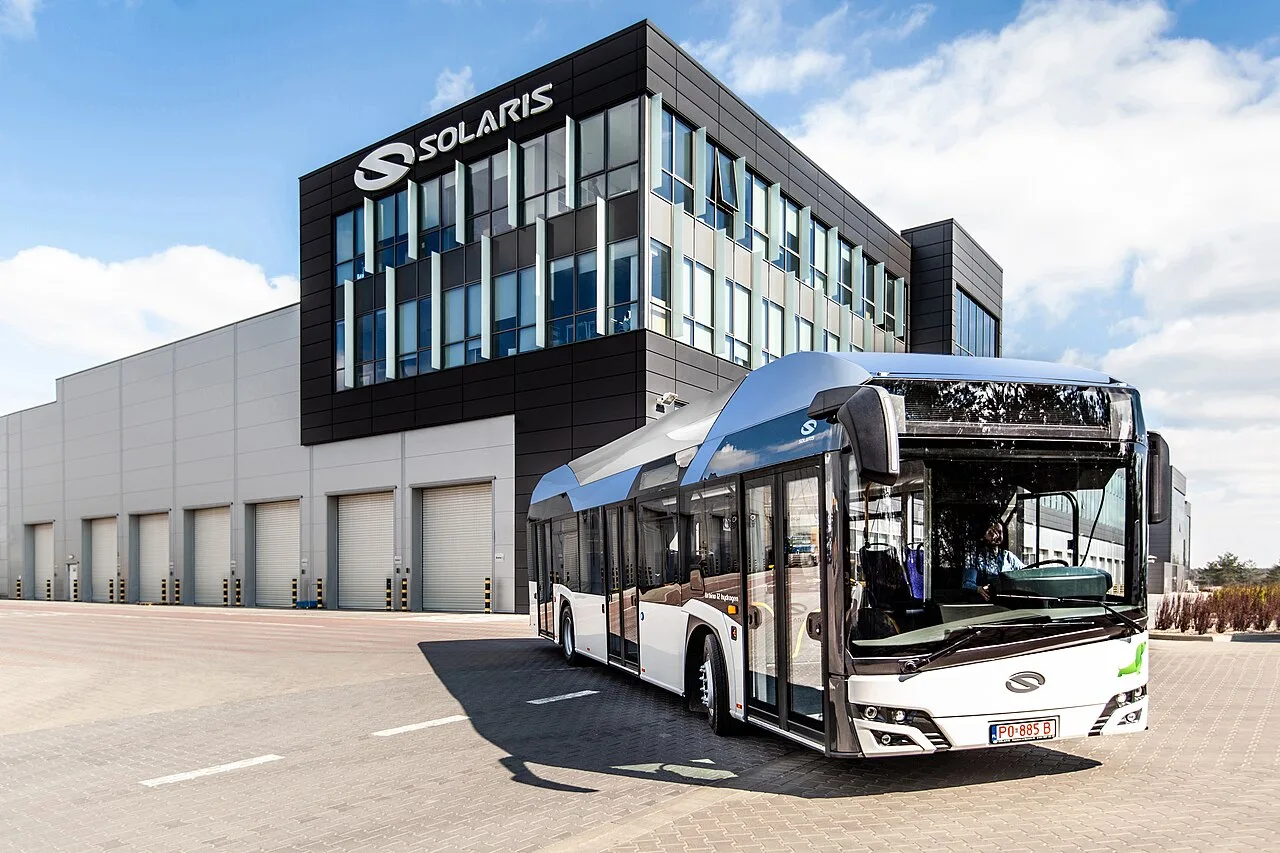
Under CAF the clean-drivetrain push has only accelerated, right up to the frontier of the technology: the hydrogen-powered Urbino, which makes its own electricity from a fuel cell and emits only water. It is the logical next step for the company that made its name betting on drivetrains the giants were slow to take seriously.
What a Solaris feels like to drive
Drive a modern Solaris in the sim and you are driving the company's whole strategy. An electric Urbino has no engine note to speak of — you hear tyre roar, the whine of the compressor and the doors, not a diesel. The torque arrives instantly from a standstill, so pulling away from a stop is smooth and immediate, with no gears to work through. And because the batteries sit low, usually on the roof and floor, the centre of gravity stays planted, so the bus feels stable and flat through corners rather than tippy.
The length still decides the difficulty — and for that side of the story, the Urbino number decoder is your guide, because with Solaris the number really is just the length in metres. Want to drive the underdog's fleet yourself? Browse the Solaris bus mods and start in an electric Urbino.
FAQ
Is Solaris a German company?
Why did Neoplan Polska become Solaris?
Is Solaris still in business?
Are Solaris buses any good?
Why is Solaris such a big name in electric buses?
Does Solaris make anything other than buses?
Sources
- Solaris — Company history (official) — the founding as Neoplan Polska, the first bus in 1996, the 1 September 2001 rename to Solaris Bus & Coach, Europe's first serial hybrid (2006), the first electric Urbino (2011), Bus of the Year 2017, the Trollino (2001) and Tramino (2009), and joining the CAF group.
- Solaris Bus & Coach — Wikipedia (background) — the 2001 rename tied to MAN's takeover of Neoplan, the ~18% European electric-bus market share, and the CAF acquisition finalised in 2018.
- Solaris acquired by CAF — Sustainable Bus — the 2018 acquisition of Solaris by the Spanish rail group CAF.
Hero & figures via Wikimedia Commons: hero (Urbino 12 electric, Sibiu) — Kyah117, CC BY 4.0; Urbino electric charging, Kraków — Kevin.B, CC BY-SA 4.0; Trollino 18, Winterthur — JoachimKohler-HB, CC BY-SA 4.0; Tramino, Poznań — Kevin.B, CC BY-SA 4.0; Urbino 12 hydrogen — Jakub Markiewicz, CC BY-SA 4.0.