What Do Neoplan Bus Names Mean? (Cityliner, Skyliner, Tourliner and the -liner System)
Say "Neoplan" to anyone who has spent time around long-distance coaches and one shape comes to mind first: a tall, glassy double-decker gliding down a motorway with two full floors of passengers behind the windscreen. That image is no accident. For most of its life Neoplan was a German boutique that punched far above its size, and it did something clever with its model names — it baked the vehicle's job straight into the badge. Once you learn the trick, the whole catalog reads like a map.
The trick is the suffix. Almost every Neoplan you can name ends in -liner, and the word in front of it tells you which segment the coach was built for. We put the four most important ones side by side below so you can decode any Neoplan badge on sight — and, because we spend our days putting these buses into a simulator, we close with what the difference actually feels like from the driver's seat.
The -liner system in one sentence
Read the prefix, and you know the segment. City for the premium high-deck touring flagship, Sky for the double-deck coach that reaches for a second floor, Tour for the sensible entry-level long-distance coach, and Centro for the low-floor city bus that broke the pattern by going downtown instead of down the highway. The suffix is the brand; the prefix is the brief.
Cityliner — the high-deck flagship
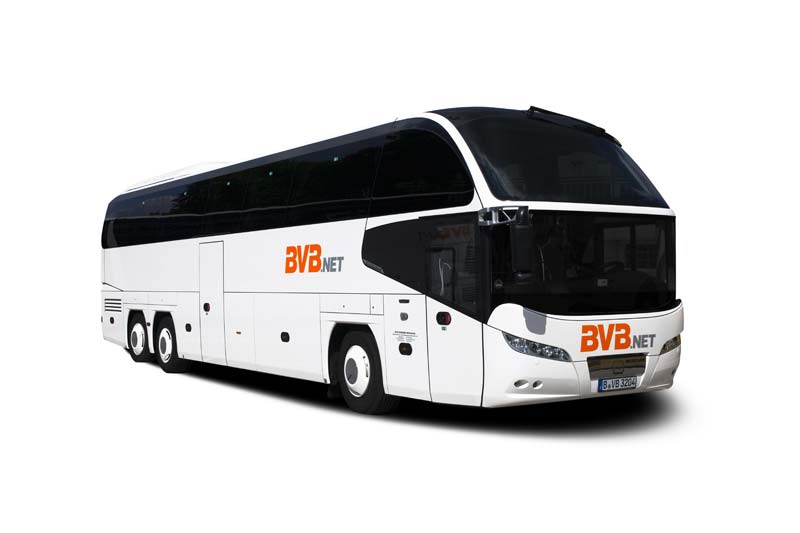
Despite the name, the Cityliner is not a city bus — it is the opposite. Introduced in 1971, it was Neoplan's premium long-distance coach, and its defining party trick was lifting the passenger deck up over the driver. As the original design was described, it "had a passenger platform above the driver's cab, and included an onboard toilet" — the recipe for a high-deck (Hochdecker) tourist coach where the whole seated cabin rides above the luggage bays for a panoramic view.
That formula never went away. Neoplan still positions the current Cityliner as its flagship, calling it "elegant, timeless and incomparable in its class — the Cityliner sets the benchmark for long-distance travel." If you see "City" on a Neoplan, think top-shelf single-deck touring, not urban service.
Skyliner — the double-deck icon
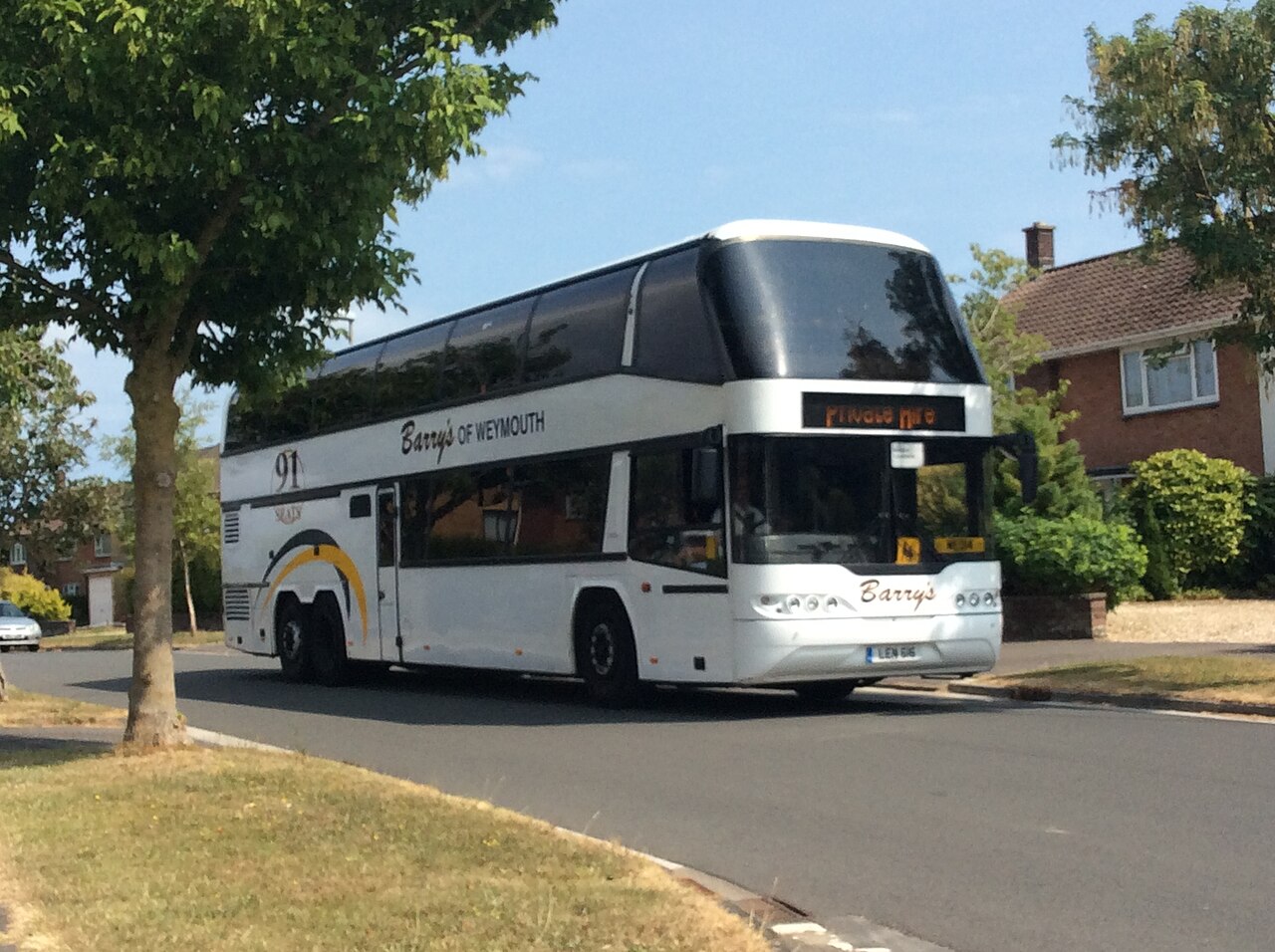
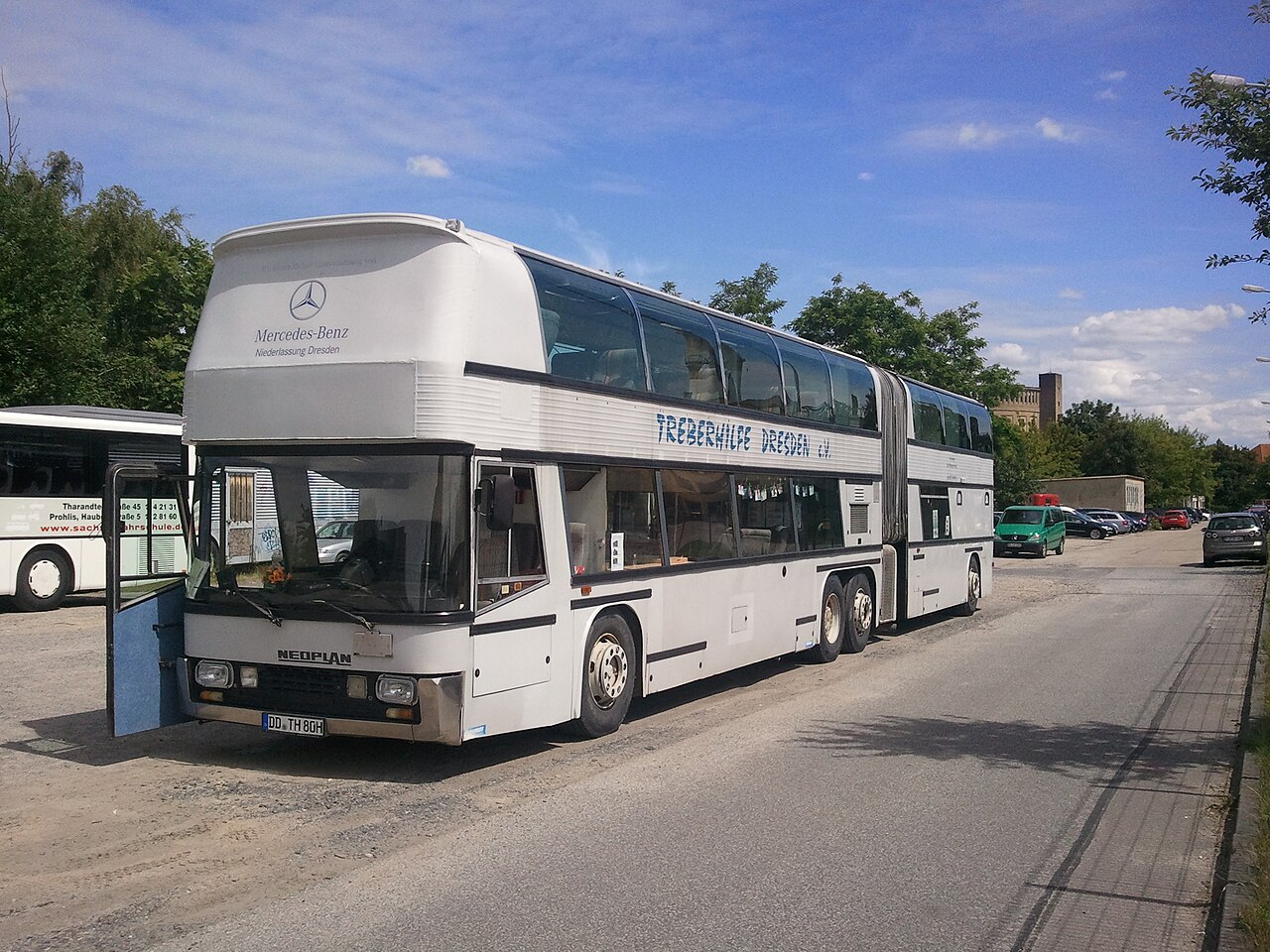
If one model made Neoplan famous, it is this one. The Skyliner is, in Wikipedia's words, "a double-deck, multi-axle luxury touring coach," introduced in 1967. Neoplan took the double-deck principle that everyone associated with the London city bus and applied it to high-speed road touring instead — and the result, as the reference histories put it, "created an image for the company that differentiated the Neoplan brand from its competitors."
The numbers explain the appeal. Classic Skyliners seated around 69 to 77 passengers plus crew; from 2019 the coach was stretched to 14 metres and now seats 83 passengers plus two crew. That is a small apartment block of seats on six wheels, and it is exactly why Skyliners turn up on the busiest intercity and airport runs across Europe today. "Sky" is the tell: a second floor, reaching upward. Neoplan's appetite for the spectacular ran further still — it once built the Jumbocruiser, an 18-metre double-deck articulated giant that remains the largest bus ever made.
Tourliner — the sensible long-distance coach
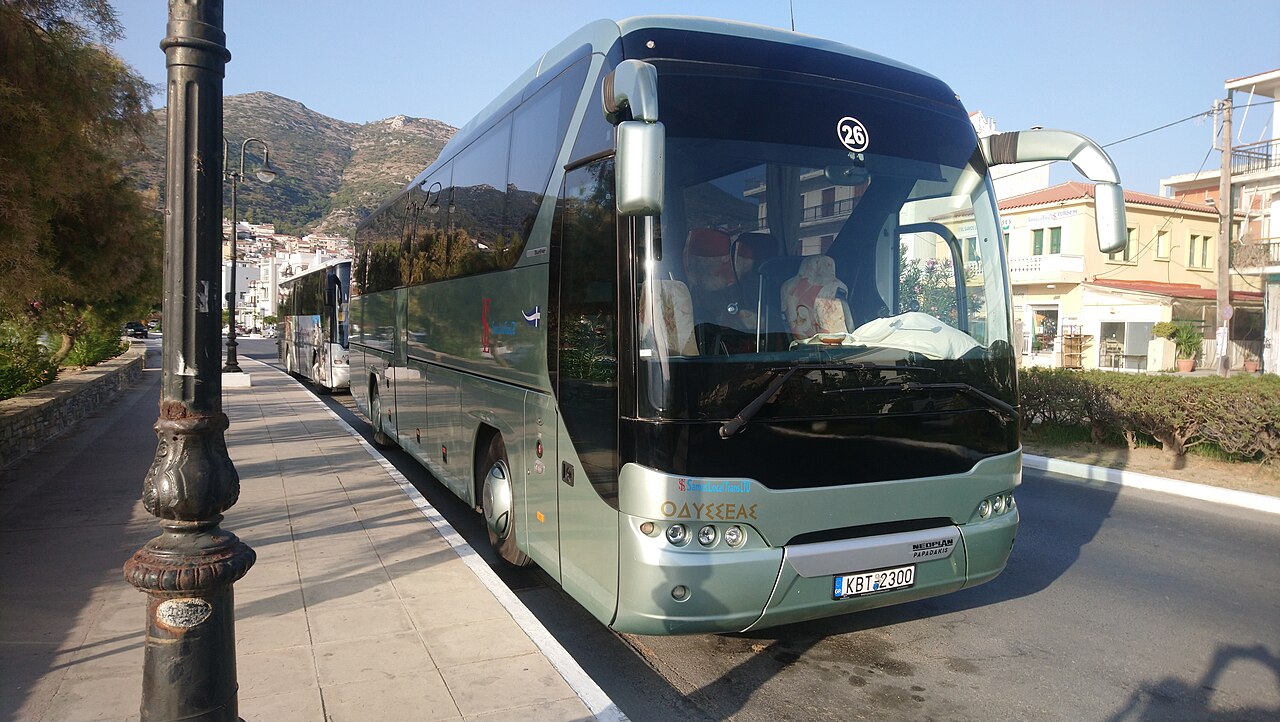
The Tourliner is the youngest of the four and the most pragmatic. Presented in July 2003, it "was launched as a new entry-level class for the NEOPLAN premium brand" — the coach you buy when you want the Neoplan badge and a touring profile without the flagship price. It is also the clearest evidence of the brand's new ownership: it was, in MAN's own words, "one of the first coaches to be built on the common MAN technology platform."
"Tour" signals exactly what it says: a single-deck touring coach for everyday long-distance work, sitting a rung below the Cityliner. It has been a fixture on European roads for over two decades and remains in production in its second generation, which is why it is the Neoplan most travellers actually ride.
Centroliner — the one that broke the pattern
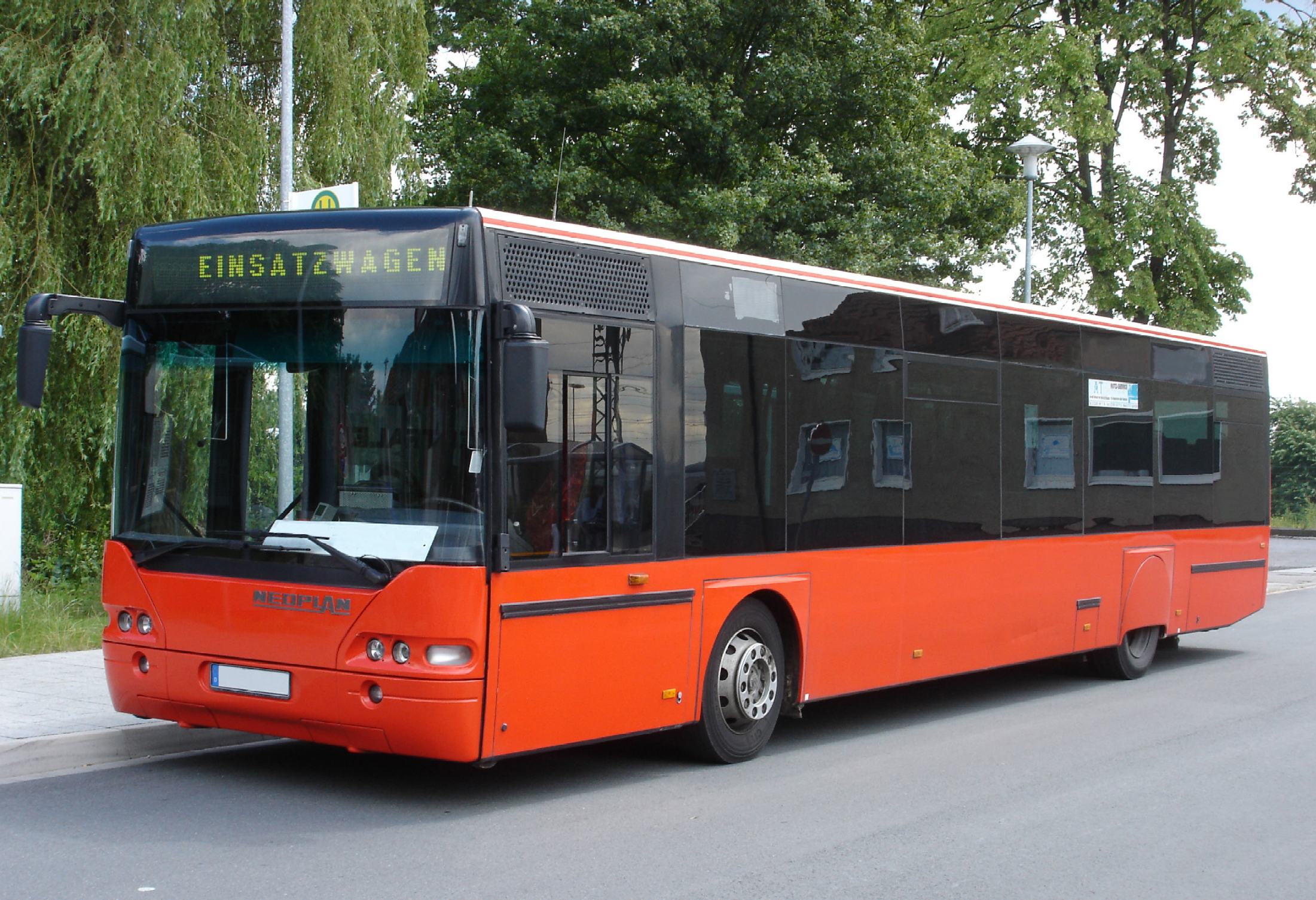
Every system has its exception, and for Neoplan it is the Centroliner. Where the others chase the open road, the Centroliner was a low-floor city bus, produced from 1997 to 2009 — Neoplan's serious attempt to compete downtown rather than on the highway. The prefix even hints at it: "Centro," for the city centre.
It is the model that proves the "-liner" suffix is a brand signature, not a segment lock. Most of the family says "highway luxury"; the Centroliner quietly says "urban route." It also dates the brand's transition: built around modular bodywork and CAN-bus electronics that were advanced for the late 1990s, the line was wound down as MAN restructured its bus division at the end of the 2000s. You can drive the rigid two-axle N4416 Centroliner in Proton Bus Simulator today.
So who actually makes a Neoplan?
This part trips people up, so let's be precise. Neoplan was founded on 1 July 1935 by Gottlob Auwärter in Stuttgart, Germany, and stayed a family firm for decades. Then, in 2001, "Neoplan… was acquired by MAN AG subsidiary MAN Nutzfahrzeuge AG to form Neoman Bus GmbH." That joint venture was a transitional badge: "On 1 February 2008, Neoman Bus GmbH was fully integrated into the bus division of the larger MAN Nutzfahrzeuge Group, and ceased to exist in its own right."
Today Neoplan is a premium coach brand under MAN Truck & Bus, which is itself a wholly owned subsidiary of the Traton Group (the Volkswagen-owned commercial-vehicle holding that also covers MAN, Scania, Navistar and Volkswagen Truck & Bus). So a modern Neoplan is, underneath the badge, a sibling of MAN coaches built on shared engineering — which is exactly why the Tourliner rides on a common MAN platform. The boutique name lives on; the parts bin is now group-wide. You can browse the brand's mods on our Neoplan manufacturer hub.
What the suffix predicts behind the wheel
Here is the part we care about most, because we build these buses for a simulator. The "-liner" prefix doesn't just sort a catalog — it predicts how the vehicle throws its weight around.
A Skyliner stacks two decks of passengers high above the axles, which gives it a tall centre of gravity. Take a roundabout or a sweeping off-ramp and you can see it: the body leans outward, the suspension loads up on the outside wheels, and the whole coach feels like it wants to keep rolling a beat after you've turned in. There's also a real second-deck blind spot — a chunk of the world disappears behind the upper structure that a single-decker driver never has to think about. A Tourliner, by contrast, sits low and planted; its mass is close to the road, so it tucks into the same corner flat and gives the weight nowhere to swing. Same brand, same suffix, completely different physics.
That's the quiet payoff of the naming system. Read "Sky" and you know to brake earlier and turn in gently because the weight is up high and eager to lean. Read "Tour" or "Centro" and you know the coach will stay flat and do what you ask. The badge tells you the segment; the segment tells you the centre of gravity; and the centre of gravity tells you how the bus drives. Neoplan put all of that into one little suffix decades before anyone called it good information design. If this kind of body-shape physics interests you, our story on the history of the double-decker bus goes deeper, and coach vs city bus lays out the wider split.
Frequently asked questions
Is a Neoplan Cityliner a city bus?
No — that is the most common mix-up. The Cityliner is a high-deck long-distance touring coach (a Hochdecker), Neoplan's flagship since 1971. The brand's actual city bus was the low-floor Centroliner.
What is the difference between a Skyliner and a Cityliner?
The Skyliner is a double-deck coach with two passenger floors; the Cityliner is a single-deck high-deck coach where one seated cabin rides above the luggage bays. Both are touring coaches, but the Skyliner carries far more passengers and sits much taller.
Does MAN own Neoplan?
Yes. Neoplan was acquired by MAN in 2001 and fully integrated into MAN's bus division by 2008. MAN Truck & Bus — and therefore Neoplan — is part of the Traton Group, Volkswagen's commercial-vehicle arm.
Is the Neoplan Tourliner still made?
Yes. The Tourliner launched in 2003 as Neoplan's entry-level touring coach and remains in production in its second generation, built on a shared MAN technology platform.
Image credits — Hero: Neoplan N122 Skyliner by Bukvoed, CC BY 4.0. Skyliner (2005): Carfanatic2019, CC BY-SA 4.0. Cityliner: Benjamin Schubert, CC BY-SA 4.0. Tourliner: Yamaxim, CC BY-SA 4.0. Centroliner: O. Nordsieck, CC BY-SA 3.0. All via Wikimedia Commons.