The Greyhound Story: How a 15-Cent Ride Became America's Bus
Picture the American highway and a silver bus with a leaping dog on the side slides into view. That is Greyhound — for more than a century the default way to cross the United States by road. But the running-dog icon did not start as a national institution. It started with a laid-off miner, a second-hand car, and a fifteen-cent ride across the Minnesota Iron Range.
We've told the story of the coaches Greyhound ran (the MCI builder) and the company that eventually bought it (the FlixBus owner). This is the missing middle: the operator's own story, from a Hupmobile in 1914 to a global brand today.
A laid-off miner and a Hupmobile
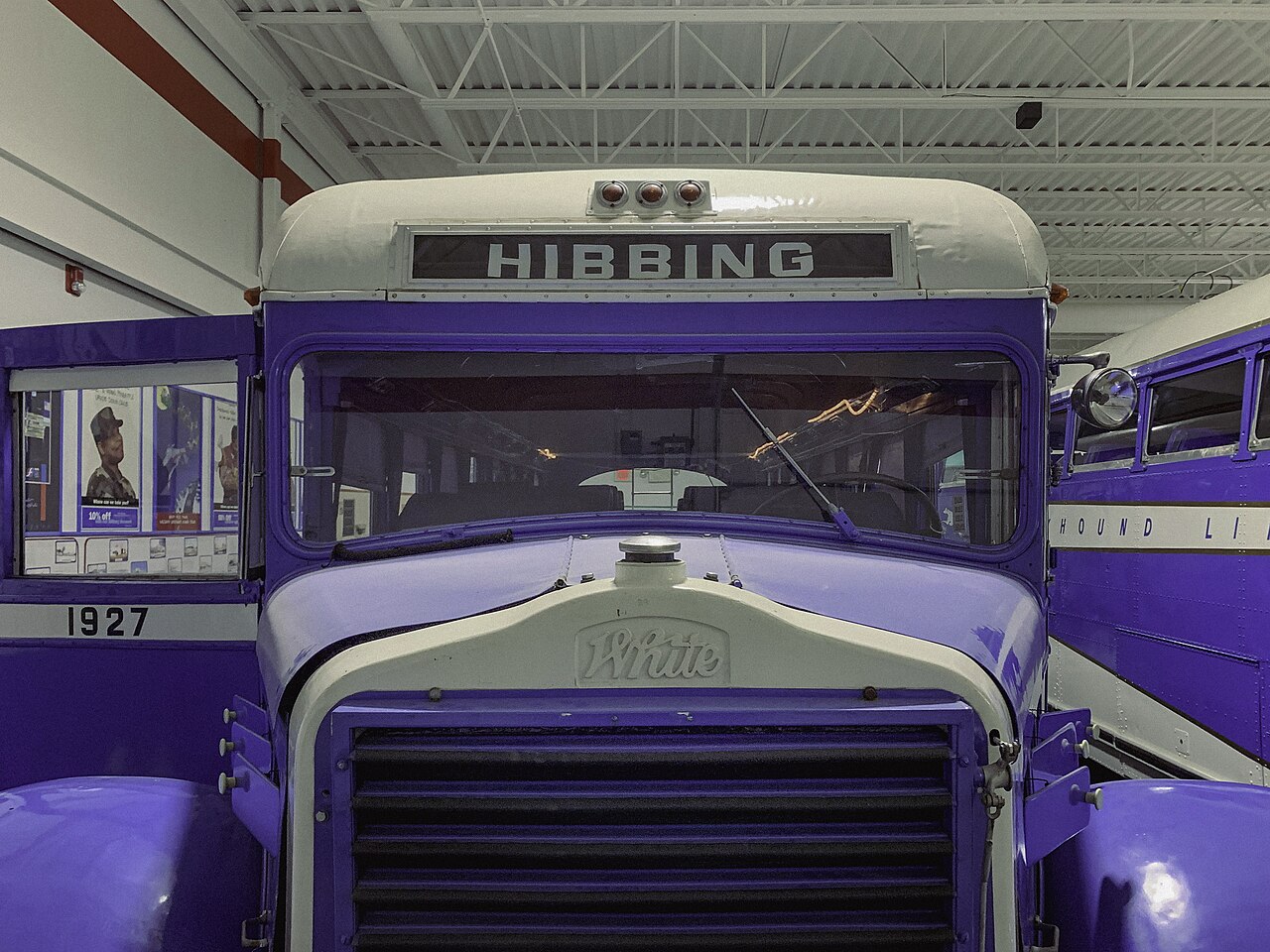
Greyhound began in 1914 in Hibbing, Minnesota. Carl Eric Wickman, a Swedish immigrant, had just lost his job as a drill operator at a nearby mine. He took on a sideline selling a seven-seat Hupmobile car — and when he couldn't sell it, he put it to work instead, carrying iron-ore miners the couple of miles from Hibbing to the mine at Alice for 15 cents a ride.
The trick to making money was simple and uncomfortable: cram in as many miners as possible. Wickman routinely stuffed eighteen men into that seven-passenger car. Within a year he had a partner, Ralph Bogan, and a proper company — the Mesaba Transportation Company — running scheduled buses across the Iron Range. A one-car jitney had become a bus line.
Where the name "Greyhound" came from
The famous name came later, and its exact origin is a matter of company legend. Through the 1920s Wickman's line merged with others into a growing network, and one story holds that the sleek, grey-painted intercity coaches it ran — built by the Safety Coach company — earned the nickname "greyhounds." Another version credits a driver who glanced at a bus's reflection in a shop window and thought it looked like the racing dog. Either way, the company liked it enough to adopt Greyhound as its name around 1929, and the leaping hound has been on the side ever since.
The Scenicruiser and the "Leave the Driving to Us" years
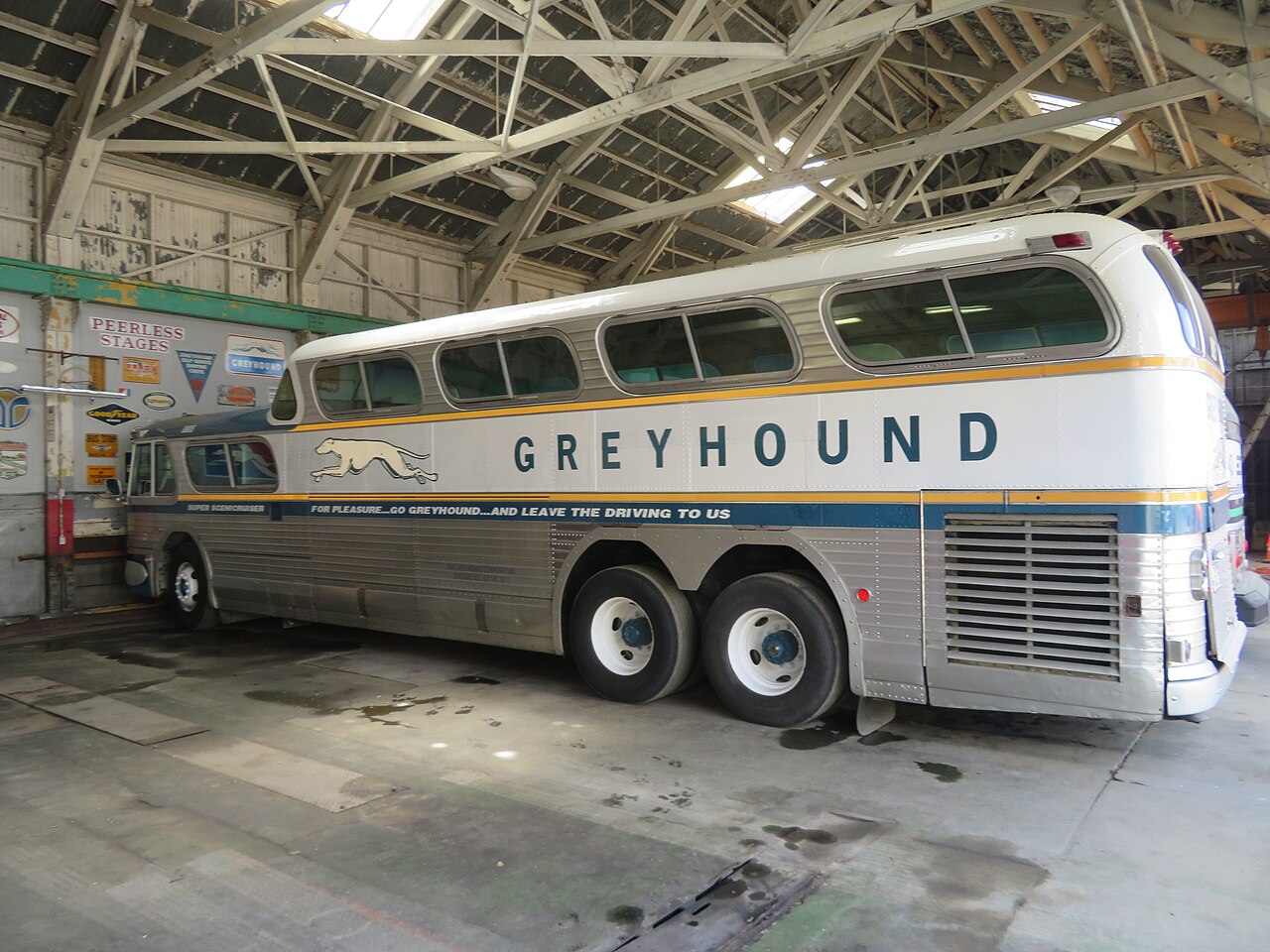
Greyhound's golden age had a face: the GM PD-4501 Scenicruiser. Introduced in 1954 and built by General Motors exclusively for Greyhound, it was a striking split-level coach — a raised rear deck over a lower forward section — with a wall of panoramic windows made for watching America roll by. At 40 feet long it was actually illegal in some states, whose laws capped buses at 35 feet; Greyhound's management lobbied hard to get the limits raised. The preserved Scenicruiser at the top of this article is exactly that machine.
This was also the era of one of advertising's most durable slogans — "Leave the Driving to Us" — which sold precisely what Greyhound offered: sit back, watch the country, and let the professional up front handle the miles. For a mid-century America falling in love with the road but not yet wall-to-wall with private cars, the Scenicruiser and that promise were the height of intercity travel.
Deregulation and the long decline
The empire did not last. The 1982 deregulation of the US intercity bus industry threw open the routes Greyhound had long dominated, while cheap airfares and near-universal car ownership pulled its passengers away. The company that had defined American bus travel spent the next decades shrinking and restructuring, sliding into bankruptcy in 1990 and again in 2001, when its then-owner, the Canadian transport group Laidlaw, sought protection.
From FirstGroup to FlixBus
Ownership changed hands repeatedly. Laidlaw had taken control by 1999; in October 2007 the British transport operator FirstGroup bought Greyhound for about US$3.6 billion. Then, in October 2021, came the twist that closes the circle: Flix SE — the German parent of FlixBus — bought the Greyhound brand and network for a reported US$78 million. The most American of bus lines is now run from Munich, folded into the same asset-light platform as Europe's green coaches.
What it feels like to drive an American cruiser
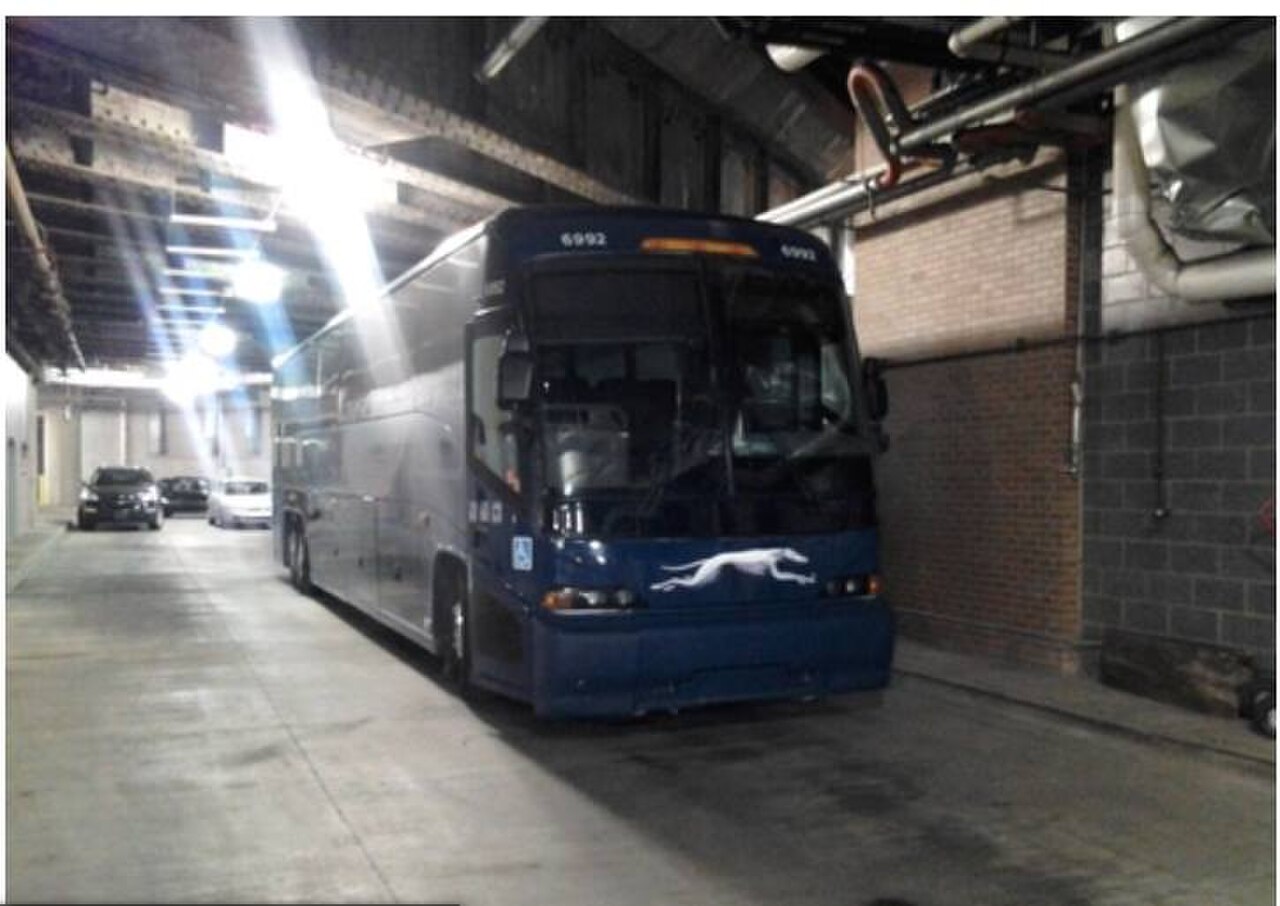
Greyhound's machine is the high-floor intercity coach, and it drives nothing like a city bus. You sit more than a metre off the road, over a deep luggage bay, looking far down the interstate. The rear diesel sits a long way behind an insulated cabin, so instead of a busy city-bus bark you get a deep, distant hum settling into a highway lope. It is the long, composed cruise — brake early, carry your momentum, and let a big, planted machine eat the miles. Driving a Greyhound route is an endurance game, the same one the MCI coaches were built for — and that the luxury Prevost coaches carried to the very top of the market.
Drive the American highway in Proton Bus Simulator
The running dog itself is a livery, but the machines Greyhound made famous — the big high-floor American cruisers — are exactly the kind of coach the catalogue is built for. Browse the North American bus mods and take the interstate the way generations of travellers did: sat up high, watching the country go by, leaving the driving to you.
FAQ
When was Greyhound founded?
Why is it called Greyhound?
Who owns Greyhound now?
What was the Greyhound Scenicruiser?
Sources
- Flix — "FlixMobility acquires Greyhound" (2021) — official announcement of Flix SE's acquisition of the Greyhound brand and US network.
- History of Greyhound Lines, Inc. — FundingUniverse — the 1914 Hibbing founding, the Mesaba/Motor Transit consolidation, the Scenicruiser, and the deregulation-era decline.
- Background: Greyhound Lines — Wikipedia — Carl Wickman and the Hupmobile, the name's disputed origin, the 1990 and 2001 bankruptcies, and the FirstGroup (2007) and Flix SE (2021) ownership.
Hero image: a preserved 1955 Greyhound GM PD-4501 Scenicruiser (Western Greyhound Lines 8005) at the Pacific Bus Museum, by Pi.1415926535, CC BY-SA 3.0, via Wikimedia Commons. Full per-image credits appear in each caption above.