Scania Buses: The Hundred-Year Story Behind the K, N and F Badge
Stand behind a Scania and the badge gives you a tidy little code — K320, N280, F113 — that tells you where the engine sits and how strong it is. We pulled that code apart in our guide to Scania bus names. But the letter on the back is only the tip of the story. Behind it sits more than a century of Swedish engineering.
Scania's bus history doesn't begin with a bus at all. It begins in 1891 with a workshop that built railway wagons, and it runs all the way to the modern chassis that Brazilian, Spanish and Peruvian coachbuilders dress in their own bodywork. Here is how a small Swedish firm became the DNA under buses on every continent.
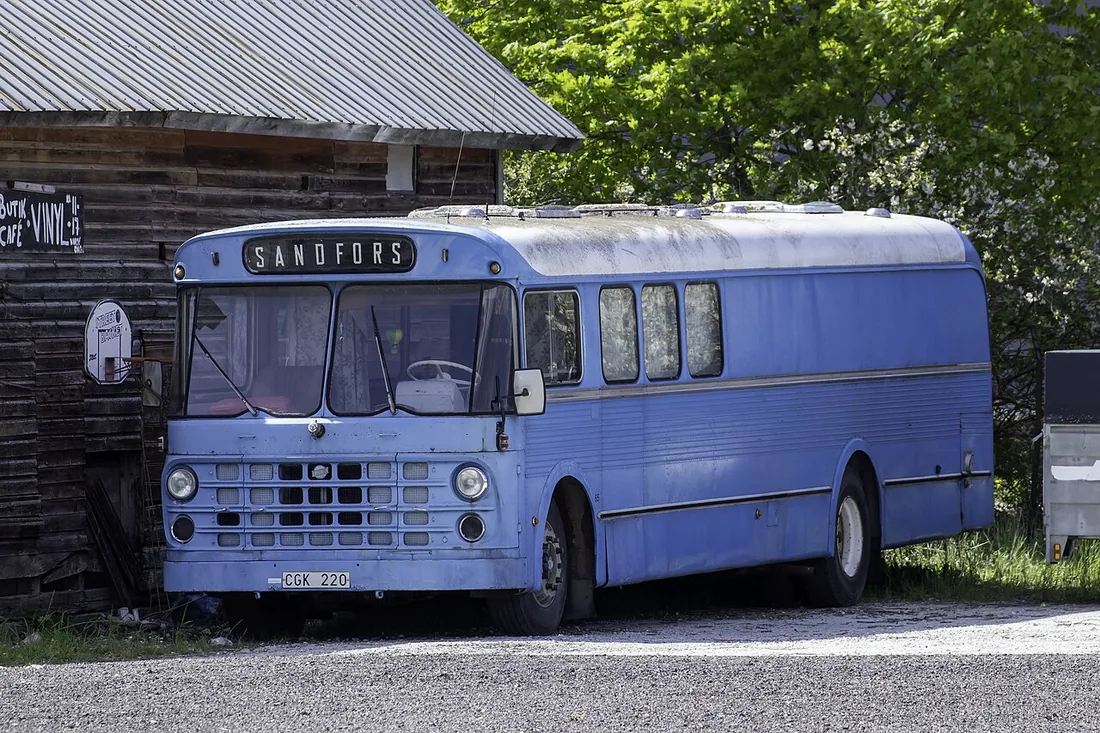
It started with railway wagons: Vabis, 1891
The older half of the company is Vabis — short for Vagnfabriks-Aktiebolaget i Södertelge. Per Scania's own heritage records, it was established in December 1891 in Södertälje, founded by the engineer Philip Wersén together with the old ironworks Surahammars Bruk. Its first products weren't vehicles at all: open goods wagons, baggage cars and railway carriages.
The other half was Scania — Maskinfabriks-Aktiebolaget Scania, a company in Malmö that started out making bicycles and then early cars and trucks. Two separate Swedish firms, one just outside Stockholm and one in the far south, both feeling their way from their first products toward the motor vehicle.
Two companies become one: Scania-Vabis, 1911
In 1911 the two merged. Malmö's Scania and Södertälje's Vabis joined forces to form Scania-Vabis, and the combined company set out to build trucks, buses and engines. That hyphenated name — Scania-Vabis — is the one you'll see on the oldest buses, and it stuck for nearly sixty years.
The bus era proper kicked off in the 1920s. A bulk order from Stockholm's transport authority got the production lines rolling, and between 1923 and 1929 Scania-Vabis built and sold roughly 350 buses. It was a modest start, but it set the company on the road to becoming Sweden's bus builder.
The bus era begins: the "Bulldog" and the forward-control leap
The breakthrough shape arrived in the early 1930s. Scania-Vabis built a forward-control bus — nicknamed the "Bulldog" — that moved the engine and the driver's cab forward into the passenger compartment instead of behind a long bonnet. Per Scania's heritage record of the 1932 Bulldog bus, it became the dominant bus model in Sweden.
Why it mattered is simple: pushing the driver forward and freeing up the length behind is exactly how you fit more seats into the same overall bus. That "make the most of the length" instinct is the same logic that later shaped low-floor city buses — and it's the reason Scania's engineers kept obsessing over where to put the engine, the theme that eventually produced the K, N and F chassis letters.
One brand, one name: from Scania-Vabis to Scania
The company kept growing through the mid-century, and it kept quietly innovating — Scania even delivered its first electric bus back in 1940, long before the modern battery era. In 1967 it bought the coachwork company Svenska Karosseriverkstäderna and created a dedicated bus subsidiary, Scania-Bussar, moving bus production and development to Katrineholm the following year.
The name changed too. In 1969 Scania-Vabis merged with the aircraft-and-car maker Saab to form Saab-Scania, and the old "Vabis" tail was dropped — from then on the buses simply read Scania. (Saab and Scania later went their separate ways again in 1995, which is why they are two unrelated companies today.)
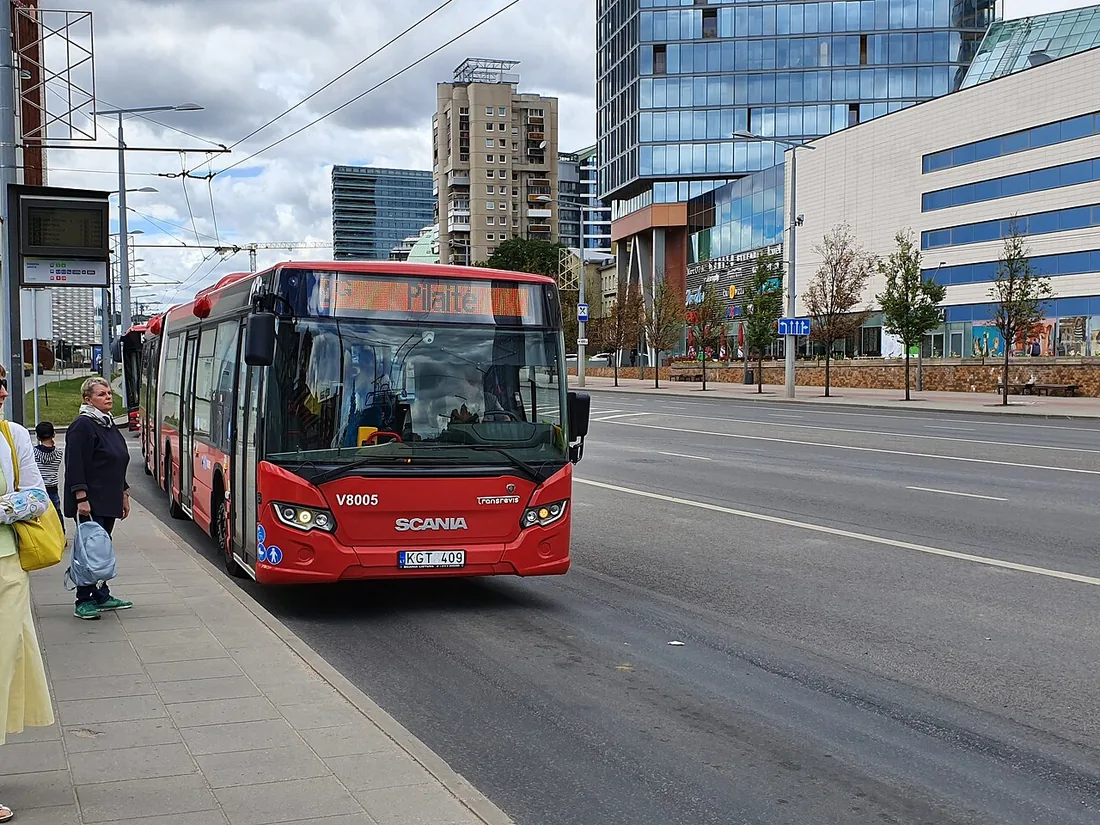
The modular idea: one chassis, a world of bodies
Here is the part that made Scania a global bus name without Scania building most of the bodies. For a huge share of its range, Scania doesn't sell you a finished bus — it sells you a chassis and powertrain, and a separate coachbuilder bolts on the body the local market wants.
That is why one Swedish DNA wears so many different faces:
- In Brazil it becomes a front-engined "frontal" service bus, like the Caio Vitória on a Scania F113 that ruled São Paulo's streets.
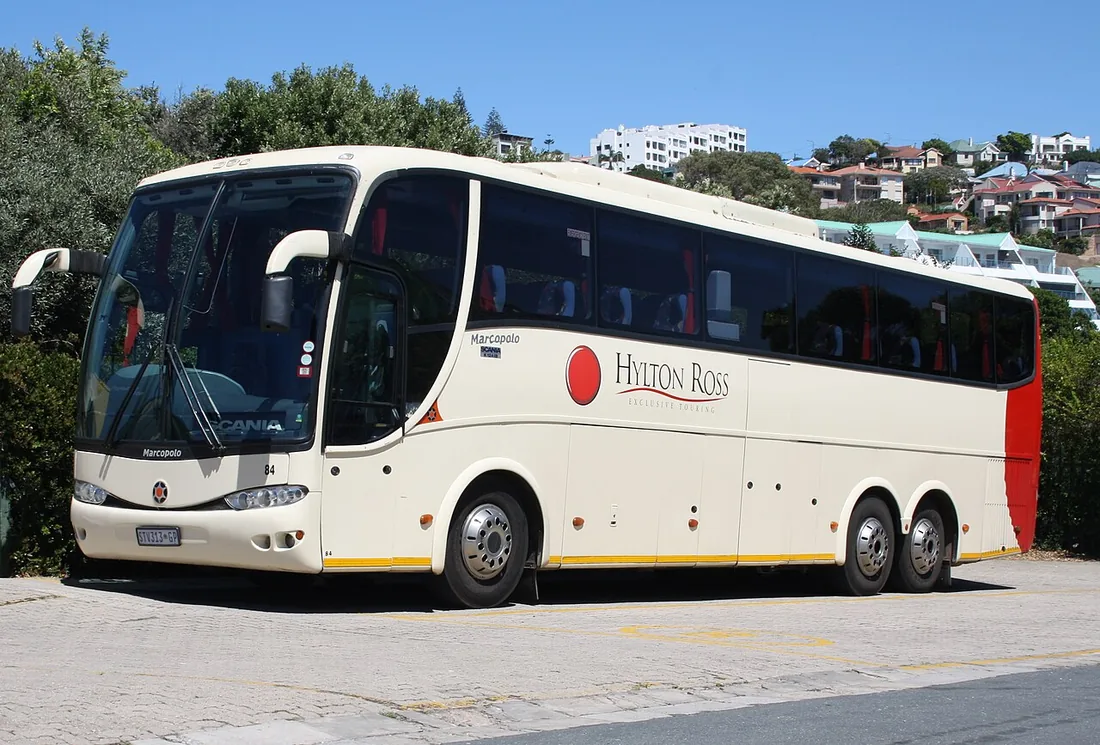
- In Europe and South America it turns into a premium coach under a Marcopolo or Irizar body.
- In Peru it stretches into a double-decker, like the Modasa Zeus 5 on a Scania K450.
Underpinning all of it is Scania's famous modular system: a set of standardised, shared components that snap together into many different vehicles. It keeps the engineering consistent no matter which coachbuilder finishes the job — so a Scania feels like a Scania whether it's wearing a Caio, an Irizar or a Marcopolo body. Where Scania does build the whole bus, it uses friendly range names instead of raw codes: the Citywide for the city, the Interlink for regional work, the Touring for long-distance coaching.
Reading the century in the badge
Put the history together and the modern badge stops being a random code. That K for an upright rear engine, N for a sideways rear engine and F for a front engine is the direct descendant of a hundred years of Scania asking the same question the Bulldog first answered: where do you put the engine, and what does that do to the bus?
You can feel the answer in the simulator. The same modular inline-six standing upright at the back of a K-chassis coach gives you that deep growl from behind the last row and a bit of tail weight in fast bends. Laid sideways at the back of an N-chassis Citywide, the very same engine family drops the floor flat and plants the bus at the kerb. One Swedish DNA, a completely different drive — and the letter told you which before you turned the key.
The best way to feel the century is to drive across it: take the front-engined Scania F113 Caio Vitória, the low-floor Scania Citywide and the K-chassis Modasa K450 double-decker back to back, and browse the whole lineup on the Scania mods hub. Then read the badge again with our Scania name decoder — it'll mean a lot more now.
FAQ
Is Scania a Swedish company?
Is Scania owned by Volkswagen?
Are Scania and Saab the same company?
Does Scania build the whole bus or just the chassis?
Sources
- Scania Group — "1891: Vabis is established" — the founding of Vabis in Södertälje, its railway-wagon origins, and founders Philip Wersén and Surahammars Bruk.
- Scania Group — "1932: First forward-control Bulldog bus" — the Bulldog's integrated engine-and-cab layout and its status as Sweden's dominant bus model.
- Scania Group — Heritage timeline — the 1911 Scania-Vabis merger, the 1940 first electric bus, and the 1967 Scania-Bussar subsidiary / Katrineholm move.
- TRATON — "Scania: A look at the company history" — the 1920s bus era, the roughly 350 buses built 1923–1929, and Scania's place in the Volkswagen/TRATON group.
- Background: Scania AB — Wikipedia — the 1969 Saab-Scania merger and 1995 demerger, and the chassis-plus-coachbuilder model.
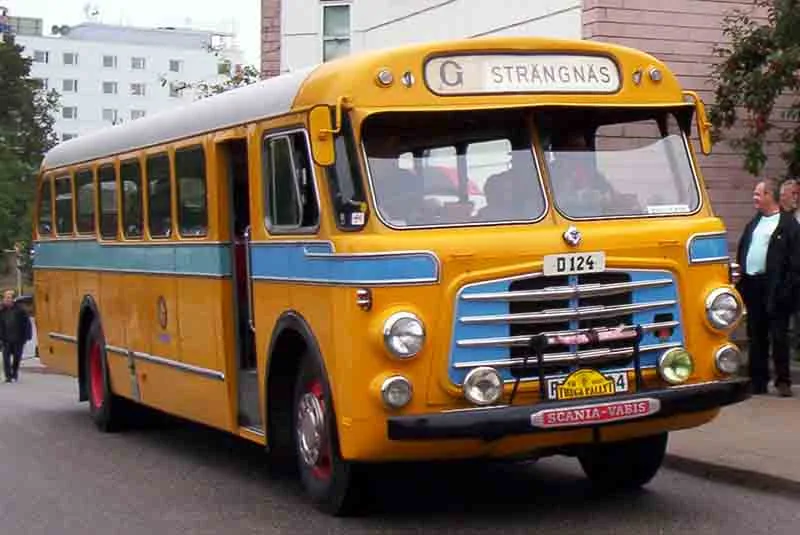
Hero & illustrations via Wikimedia Commons: hero (1949 Scania-Vabis) by Lars-Göran Lindgren, CC BY-SA 4.0; Scania-Vabis B76 by Bene Riobé, CC BY-SA 4.0; Scania Citywide LF by Pofka, CC BY-SA 4.0; Scania K-chassis Marcopolo coach by Bob Adams, CC BY-SA 2.0.