Korea's Quiet Bus Empire: Daewoo, Hyundai and the BS-Series Workhorses
If you drive bus simulators, there's a decent chance you met a Korean city bus inside a game years before you ever noticed one on a real street. A boxy little single-decker pulls up to a virtual stop, the turbo diesel settles into a low idle, two doors hiss open in a pattern that doesn't quite match the European buses you grew up with — and somewhere along the line you realise you've been driving a Daewoo. Not a household name in the West, but in South Korea, Daewoo and Hyundai quietly built one of the densest, most export-hardened city-bus empires on earth.
This is the story behind that mod: how two industrial giants turned the humble urban bus into a Korean export staple, what the cryptic "BS" badges actually mean, and why one specific model — the BS090 — became the kind of bus that sim players fall for before they know its real history.
From a US Army depot to a national bus builder
Daewoo's bus story doesn't begin with Daewoo at all. Its roots trace back to Shinjin Industry, founded in Busan in 1955 by the brothers Kim Chang-won and Kim Je-won — who got their start, fittingly, by buying up a former US military maintenance depot and turning scrap into vehicles. That lineage threads through Korea's industrial boom: Shinjin became part of the constellation of companies that the Daewoo Group eventually consolidated when it acquired Saehan Motors in 1978 to form Daewoo Motor.
The bus operation as a distinct company crystallised in 2002, when Daewoo Bus was established as a successor to the Daewoo Motor era following the wider collapse and break-up of the Daewoo Group. In 2003 the bus business was taken over by the Young An Hat Company — yes, a hatmaker — based in Busan, and in 2013 it was renamed Zyle Daewoo Bus. (It's worth keeping this separate in your head from Daewoo's truck business, which Tata Motors bought in 2004 and runs as Tata Daewoo — a different company entirely.)
By then the formula was set: rugged, no-nonsense city buses, built cheaply and in huge numbers, designed as much for export to developing transit markets as for Seoul and Busan. You'll still spot Daewoo BS-series buses in service from Vietnam to Jordan to the Russian Far East — a quiet global footprint that almost nobody in the European simulator scene knew about until the mods arrived.
Cracking the BS code: 090, 106, 110
The "BS" badges look like random alphanumerics, but the family follows a logic once you see it. BS stands for the mid-size-to-large city-bus series Daewoo launched in the 1980s, and the number that follows is essentially a length class.
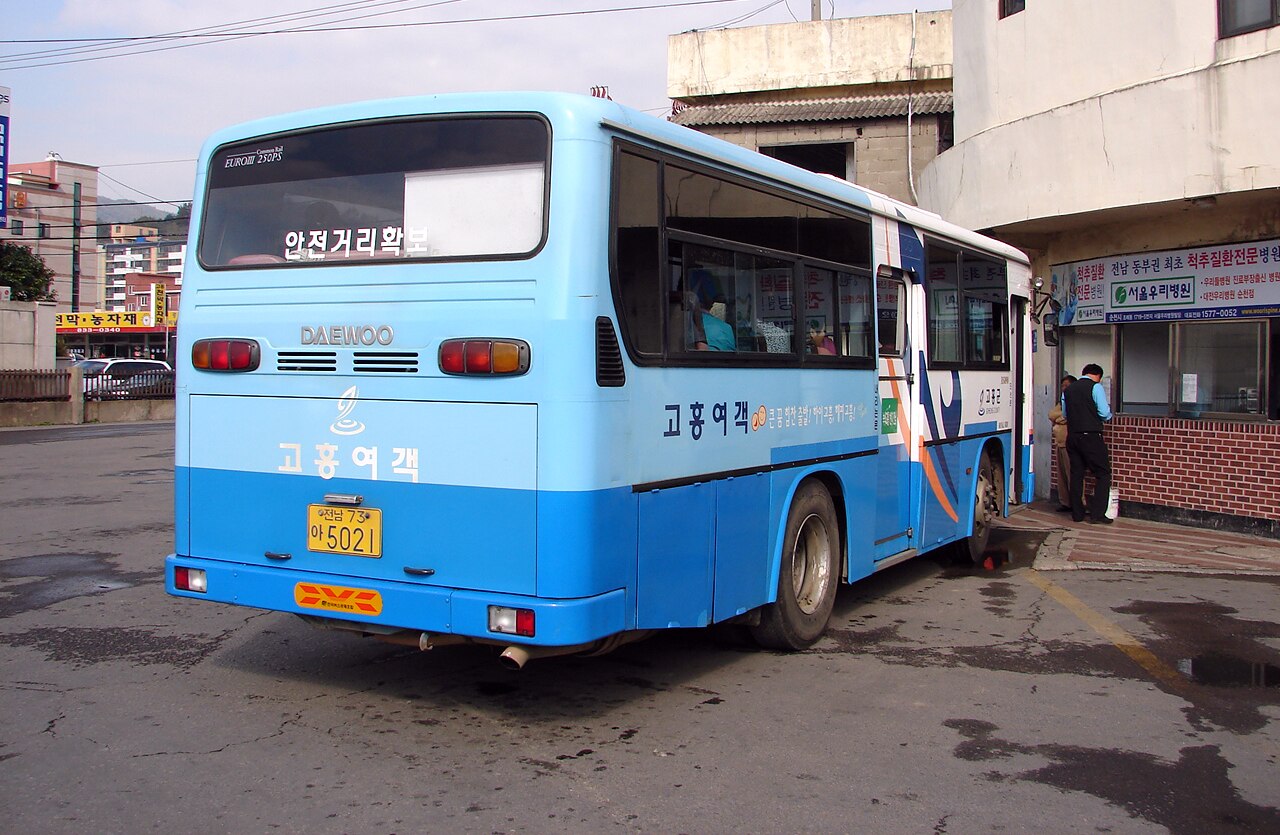
- BS090 (Royal Midi) — the "090" marks it as a roughly 9-metre midibus (about 8.93 m long, 2.49 m wide). It split off in 2002 from the older combined BM090 line as the dedicated urban model, sized for short city hops and rural feeder routes where a full-length bus is overkill. This is the one the sim community adopted.
- BS106 (Royal City) — the workhorse standard-length city bus, in production since 1991 and the longest-lived nameplate of the whole Daewoo bus catalogue. If you've seen a generic Korean city bus in a photo, it was probably a BS106.
- BS110 — the modern low-floor city bus, roughly 10.6 m long, introduced for accessible urban service. It later spawned a battery-electric version.
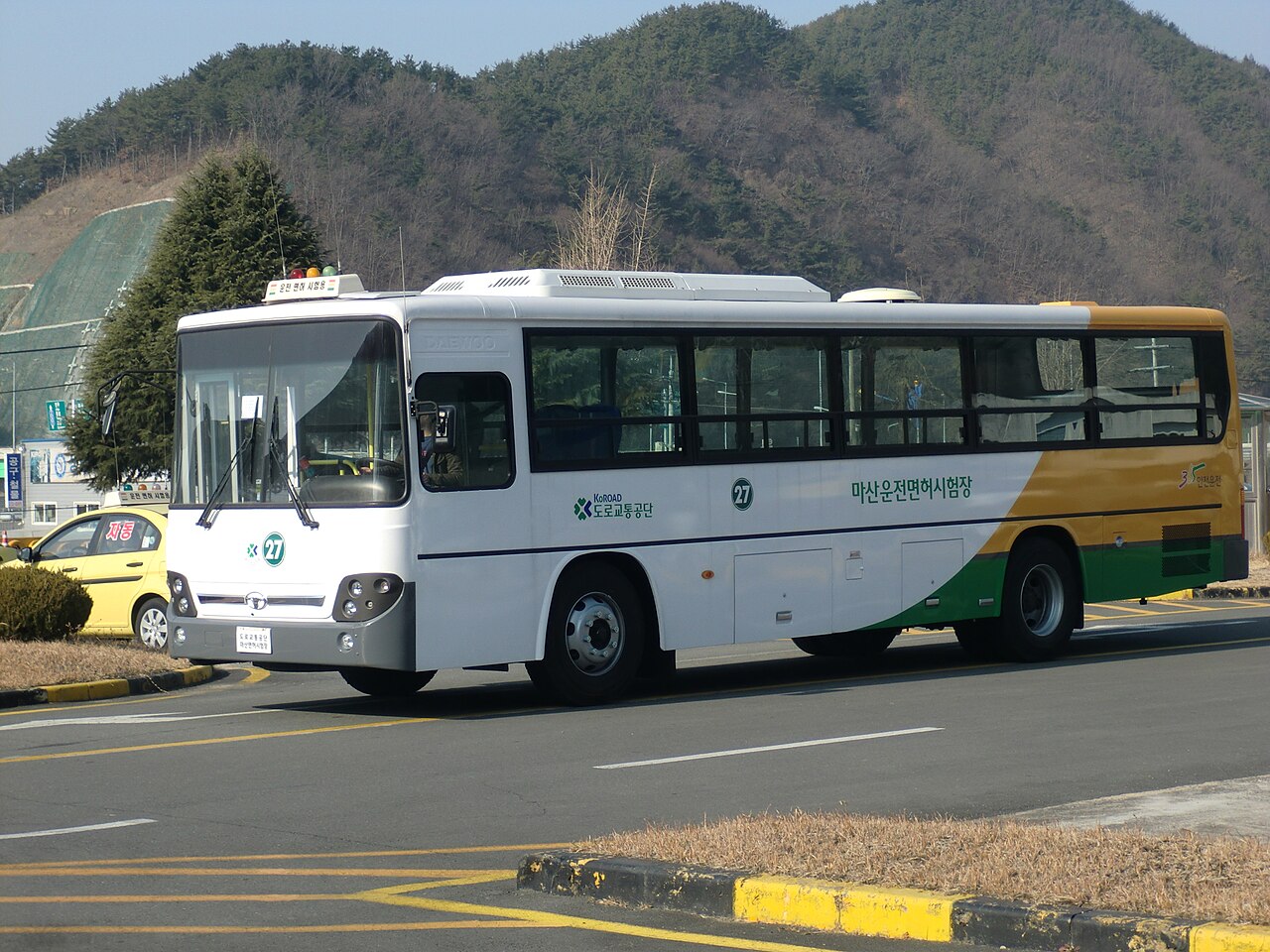
The DL08 under the floor
The engine that powers much of this family deserves its own footnote, because it's a neat illustration of how interconnected Korean heavy industry is. The DL08 is a 7.6-litre inline-six turbo-diesel built by Doosan Infracore (today HD Hyundai Infracore) — a company that itself descends from Daewoo Heavy Industries' engine division. So the diesel humming away under a Daewoo bus is, in a roundabout way, still family. It's the powerplant community modders point to when they recreate the BS090's distinctive low, torquey note.
The end of the line — and a move to Vietnam
Zyle Daewoo's domestic chapter closed quietly and recently. The company's Ulsan plant ceased operation on 30 June 2022, and a notice for the sale of the plant's assets went up later that year. Production didn't stop so much as relocate: the brand's models moved to a factory in Vietnam, where Daewoo-badged buses continue to be built and sold for Asian markets. The BS110 electric low-floor bus — produced in small numbers from 2017 — was among the casualties of the wind-down, with only a handful sold domestically before it dropped off Korea's zero-emission subsidy list.
It's a fittingly understated end for an understated company: no fanfare, no famous swan-song model, just a steady builder of buses that did their job for decades and then moved the factory south.
Where Hyundai fits — the other half of the empire
Daewoo never had the Korean city to itself. Its great domestic rival, Hyundai Motor Company (founded 1967, bus production centred on its Jeonju plant), built a parallel empire with the Aero City and Super Aero City urban families and the Universe luxury intercity coach launched in 2007. Between them, Daewoo and Hyundai effectively are the Korean bus — the two badges you'll see on the overwhelming majority of city buses in Seoul, and across the Korean-influenced transit fleets of the Philippines, Vietnam and beyond.
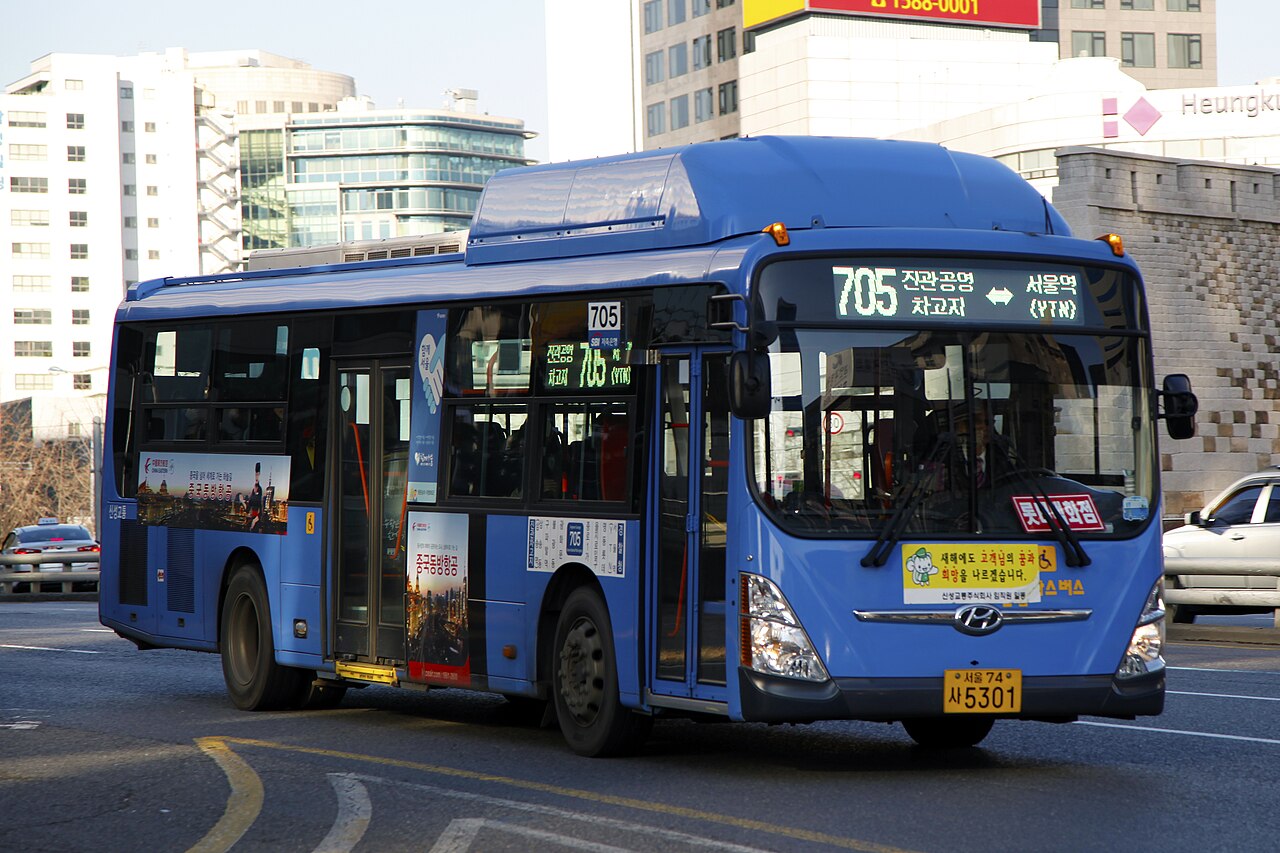
That rivalry is exactly why the Korean fleet translates so well into a simulator: you get two distinct design languages, a shared set of urban operating quirks, and decades of real-world variety to recreate. On ProtonBusMods you can dig into the Hyundai half of this story directly — the Hyundai bus manufacturer hub collects the Korean entries, including the Hyundai Super Aerocity urban bus and the Universe Noble EX12.5 coach.
Why the BS090 became a modder favourite
So why this bus? The Daewoo BS090 is a popular OMSI 2 mod — community listings model it on a 2005 BS090, complete with the DL08 turbo diesel, an automatic transmission, a simulated CPC passenger-control system, an interactive cabin, and — the detail that hooks people — two selectable door configurations. (We're attributing those specific feature claims to the community mod listings rather than asserting them as factory spec; the real-bus facts above are separately sourced.)
That door choice is the whole experience in miniature. One version gives you a sliding "coupé"-style middle door with a folding front door; the other runs double-leaf folding doors at both positions. It sounds trivial until you actually drive a service: the door layout changes how passengers flow on and off, how long you sit at each stop, and the rhythm you fall into across a route. Pair that with a midibus that's short enough to feel nimble and a diesel note that sits low and grumbly, and you get a bus that rewards attention rather than just looking pretty in the depot.
That's the real gateway effect. You download what looks like a random Korean bus, you drive it for an evening, and somewhere around the third stop you stop thinking "what is this" and start thinking "I understand what I'm driving." The history was always there — the US Army depot, the hatmaker owner, the Doosan engine, the factory that sailed off to Vietnam. The mod is just what made you go looking for it.
If that itch to understand the machine under you is familiar, it's the same one that powers the whole scene — see what makes OMSI 2 a cult bus simulator and why bus sims have the biggest modding communities for the wider picture.
Frequently asked questions
Is Daewoo Bus still in business?
The Korean operation, Zyle Daewoo Bus, closed its Ulsan plant on 30 June 2022. The brand's models were relocated to a factory in Vietnam, where Daewoo-badged buses are still produced for Asian markets. Daewoo's truck business is a separate company, Tata Daewoo, owned by India's Tata Motors since 2004.
What does "BS090" mean?
BS is Daewoo's mid-to-large city-bus series, and the number is roughly a length class. The BS090 is a ~9-metre midibus (the "Royal Midi"), the BS106 is the standard-length city bus, and the BS110 is the modern low-floor model.
What engine does the Daewoo BS090 use?
It's powered by the DL08, a 7.6-litre inline-six turbo-diesel from Doosan Infracore (now HD Hyundai Infracore), a firm descended from Daewoo Heavy Industries' engine division.
Are there Daewoo bus mods on ProtonBusMods?
The catalog currently focuses on Hyundai's Korean buses — the Super Aerocity and Universe Noble coach. The classic Daewoo BS090 lives mainly in the wider OMSI 2 community mod scene. Browse the Hyundai hub for the Korean buses available here.
Images: Daewoo BS090 Royal Midi by Steve46814 (CC BY-SA 3.0); Daewoo BS106 Royal City by hyolee2 (CC BY-SA 3.0); Hyundai Super Aero City by byeangel (CC BY-SA 2.0) — all via Wikimedia Commons.