What Is OMSI 2? The Cult Bus Simulator That Defined the Genre
Here is a strange fact about gaming: one of the most devoted communities in all of simulation grew up around a bus that drives a single route through a Berlin suburb in 1989. The game is OMSI, and more than a decade after release people are still building maps for it, still recreating their home cities in it, and still arguing about the right way to hold a timetable in it.
OMSI never had a marketing budget, a sequel treadmill, or a console launch. It had something rarer — obsessive accuracy — and that turned out to be enough. If you have heard the name and wondered what the fuss is about, here is what OMSI 2 actually is, and why it quietly became the simulator every other bus game is measured against.
What OMSI actually is
OMSI — The Omnibus Simulator was built between 2007 and 2011 by just two people, Marcel Kuhnt and Rüdiger Hülsmann, working under the name M-R Software. It was released digitally in February 2011 and on DVD that March, published by Aerosoft. The far more widely played OMSI 2 followed on 11 December 2013, expanding the same world rather than replacing it.
The premise is almost defiantly unglamorous. There are no missions, no money meter forcing you onward, no story. You are handed a bus and a timetable in a recreation of Berlin as it was around 1989, and your job is simply to run the service properly. OMSI doesn't try to be a game in the arcade sense. It tries, very hard, to be a bus.
The Berlin you drive: Spandau and Grundorf
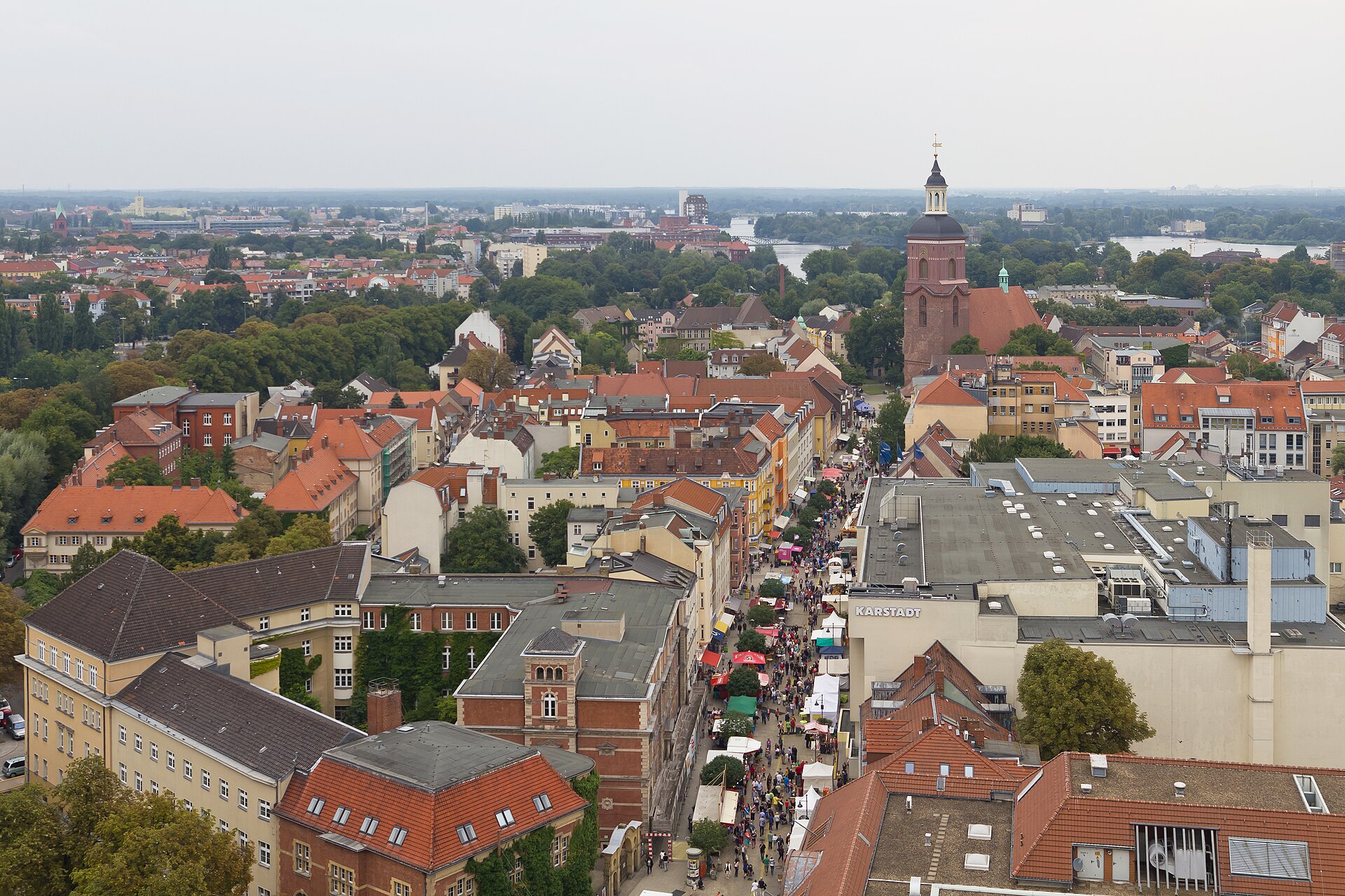
OMSI 2 ships with two maps. The small one, Grundorf, is a fictional village with a single short route (line 76) and exists mainly as a tutorial — a gentle place to learn the controls before the city swallows you. The real star is Berlin-Spandau, a meticulous recreation of the borough where you mostly drive the BVG line 92.
What makes the Spandau map special is time. It carries a chronology that runs from 1986 to 1994, so you can drive the same streets across the fall of the Berlin Wall and watch the network change around you — routes renumbered, services rerouted, the city literally reunifying through its bus timetable. Few games have ever turned a transit map into a history lesson this quietly.
The fleet: a yellow wall of MAN
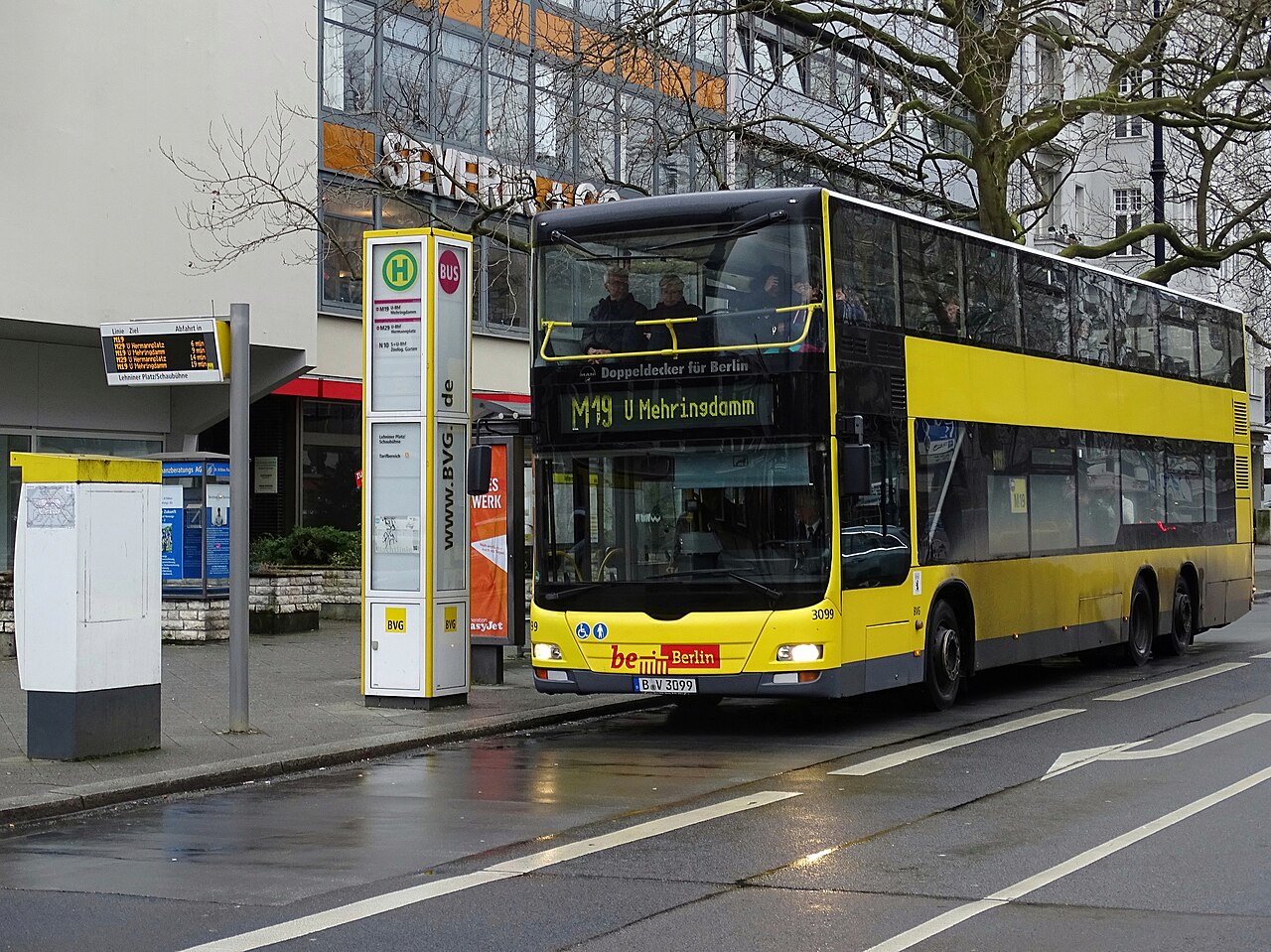
The base game is built around a single manufacturer — MAN — and a fleet of classic Berlin buses. You get the MAN SD200 and SD202 double-deckers, the MAN NL202 single-decker, and the three-axle MAN NG272 articulated bus, each with a wall of livery and detail variants. The double-decker in particular is the face of OMSI: a tall, square, unmistakably 1980s Berlin machine in BVG yellow.
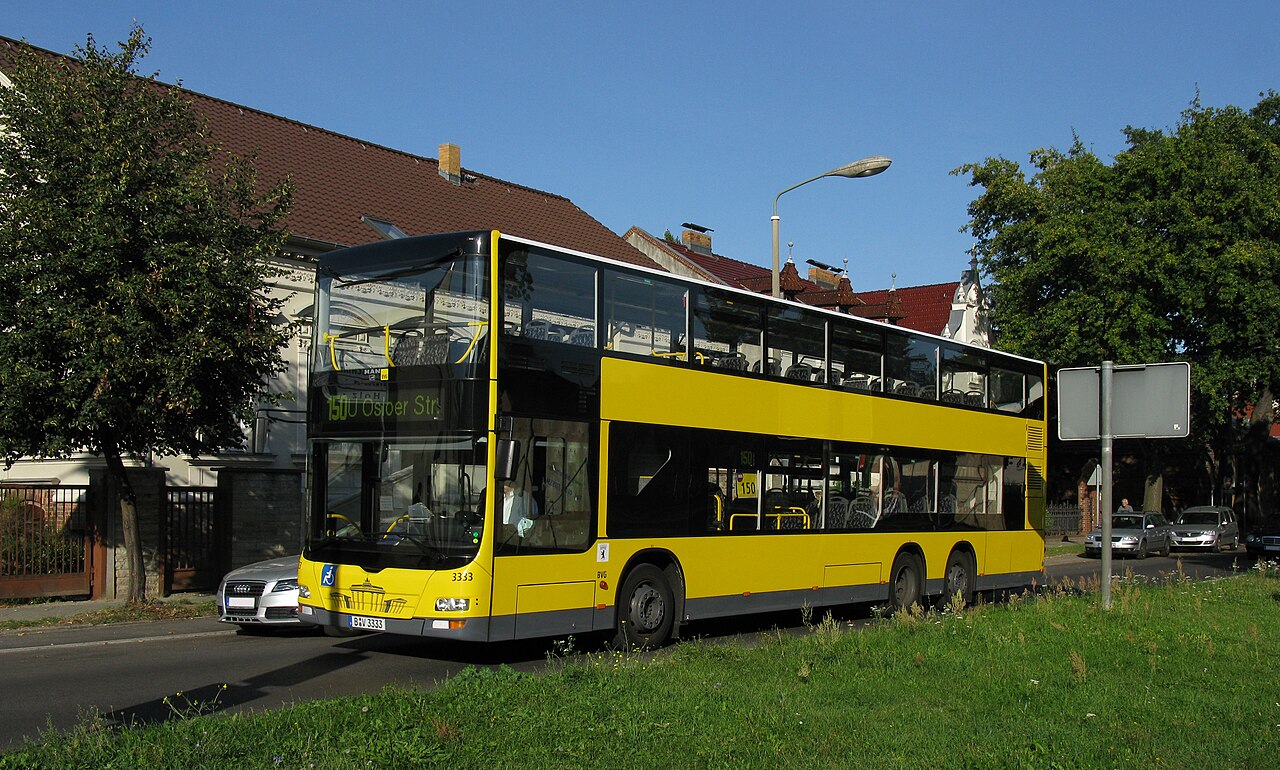
Even the destination displays are modelled by era. The oldest SD200 variants carry the old manually-set roller display, while the later SD200s and every SD202, NL202 and NG272 use the IBIS computer to drive their matrix displays automatically. That is the level OMSI operates at — the kind of detail most games would never notice was there to get wrong.
Why it felt different: simulation, not arcade
This is the heart of OMSI's cult status. Underneath the buses sit systems no game had bothered with. There is a "fully functional IBIS" — the integrated onboard information system real Berlin drivers used to key in their line and trip. There is a "system damage model including different malfunctions which take time to fix." There is realistic weather, full day-and-night lighting, "advanced and improved AI traffic," four switchable views, and an articulated bus with an "exact physical and visual recreation of the joint kinematics."
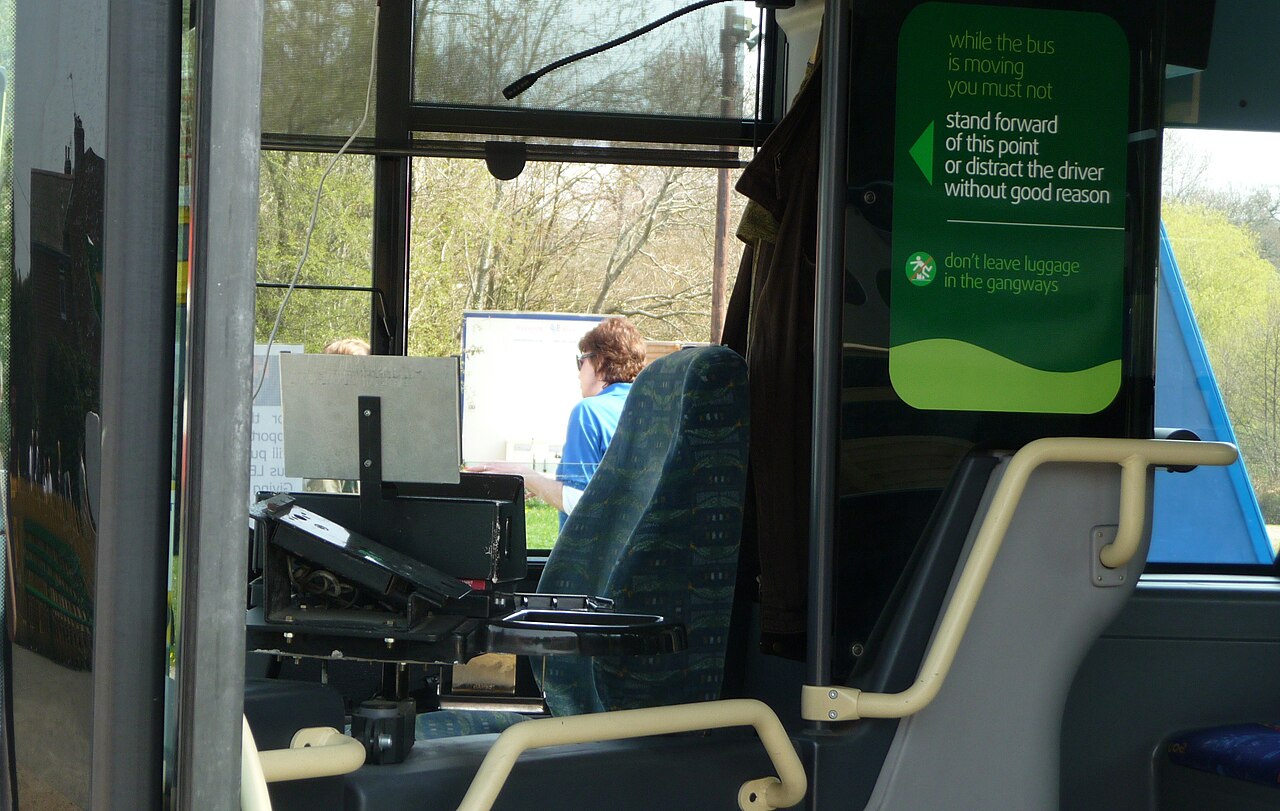
Put together, it means you don't "play" a route so much as work it: charge the air, set the IBIS, pull away without throwing your standing passengers, cycle the doors in order, and accept that a 12-metre bus does not stop on a coin. That purposeful, deliberate pace is exactly what bounces some players off OMSI and hooks the rest for life.
The mod engine that won't die
OMSI's real masterstroke was openness. A built-in script engine lets modders "influence the handling characteristics and functions of the bus," and a full track editor lets them build entire cities from scratch. Players can install mods — freeware or payware — to add maps, buses, objects and roads. That toolkit turned an audience of drivers into an army of creators.
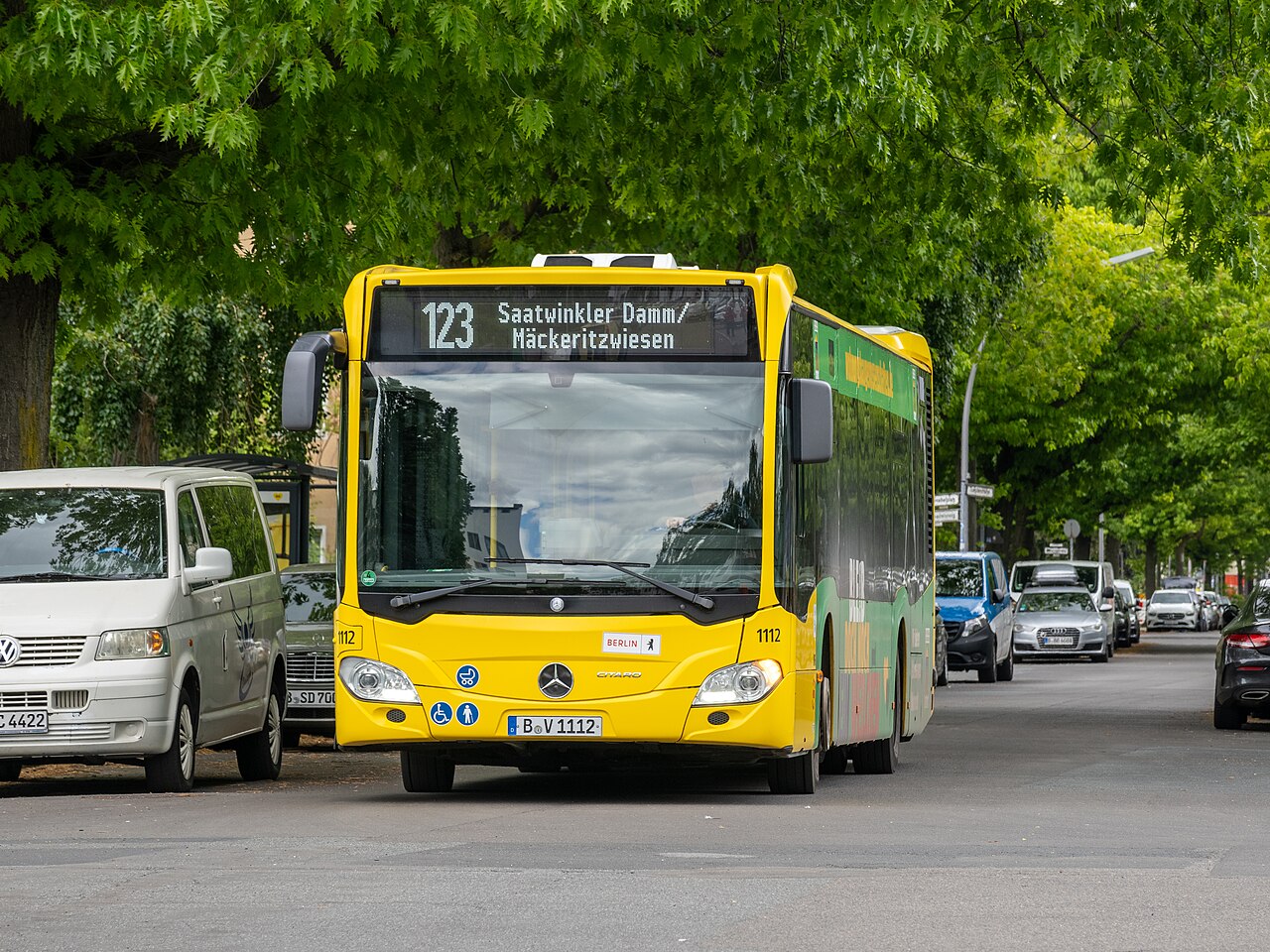
The result is a community that simply refuses to let the game die. M-R Software itself disbanded in September 2014 — Marcel Kuhnt went on to develop a spiritual successor, LOTUS, under the name Oriolus Software — yet OMSI 2 kept gaining new maps and buses for years afterward, made entirely by fans. A great deal of that work recreates real, modern fleets: the Mercedes-Benz Citaro that replaced those old MAN double-deckers on Berlin's streets is one of the most-modded buses in the scene.
Loved OMSI? The genre kept moving
OMSI proved that an audience exists for serious, unhurried bus simulation — and that the mod community is half the reason these games endure. That lesson carried straight into the mobile era with Proton Bus Simulator, which brought OMSI-style depth and open modding to phones. If you came here from our wider history of bus simulator games, this is the chapter where the genre's DNA was set.
One important note for newcomers: OMSI and Proton Bus Simulator use completely different mod formats. Every mod in the Proton Bus Mods catalogue is made for Proton Bus Simulator (Android and PC), not for OMSI. But the appeal is the same one OMSI invented — pick a real bus, drop it into the game, and drive your own city. You can browse the full catalogue, including the Mercedes-Benz buses and other German city buses that defined the OMSI era, such as the Citaro O530.