Why Do Buses Hiss? The Air-Brake System Explained
Stand near a bus at a stop and you'll hear it: a loud pshhh as it pulls in, and another as it pulls away. It sounds like something is broken or leaking. It isn't. That hiss is the single most normal sound a big bus makes — it's the sound of compressed air doing the work of stopping fifteen tonnes of vehicle.
So why do buses hiss? Because a bus doesn't brake with fluid the way your car does. It brakes with air. Once you know how that air system works, the pshhh stops being a mystery and becomes something you can actually read — and, in a simulator, something you have to manage. Here's the whole thing.
The short answer: buses brake with air, not fluid
A car uses hydraulic brakes: you press the pedal, and brake fluid pushes the pads onto the discs. A big bus or truck is far too heavy for that. Instead it uses an air brake system, where compressed air does the pushing. Air-brake systems typically run at around 100 to 120 psi, and that stored pressure is what gives a heavy vehicle the muscle to stop.
Every hiss you hear is air moving somewhere in that system — being pushed into a brake, released from one, or dumped out on purpose. It's not a leak. It's the system doing exactly what it's built to do.

The compressor and the tanks: why a bus "builds air"
The heart of the system is an air compressor, driven by the engine. It pumps air into a set of storage tanks (reservoirs) under the bus. When a driver first starts a cold bus, the tanks are empty — so they have to wait for the compressor to build up pressure before they can safely drive off. You'll often hear the compressor working and then cutting out once the tanks are full.
From those tanks, the air is ready to do three jobs: work the brakes, hold the parking brake off, and run things like the doors and the kneeling suspension. Everything flows from that stored pressure.
The hiss you hear: releasing and purging air
The obvious hiss happens when the driver works the brakes. Pressing the brake pedal sends air to the brakes to stop the bus; easing off releases that air, and the release is what you hear as the sharp pshhh at a stop.
There's a second, quieter hiss too. Air brake systems automatically purge moisture and top-up pressure — a small valve lets out quick bursts of air to keep water out of the system. So a bus can hiss even when it's just standing there with the engine running. Both sounds are the system keeping itself healthy.
The spring brake: why a bus with no air can't move
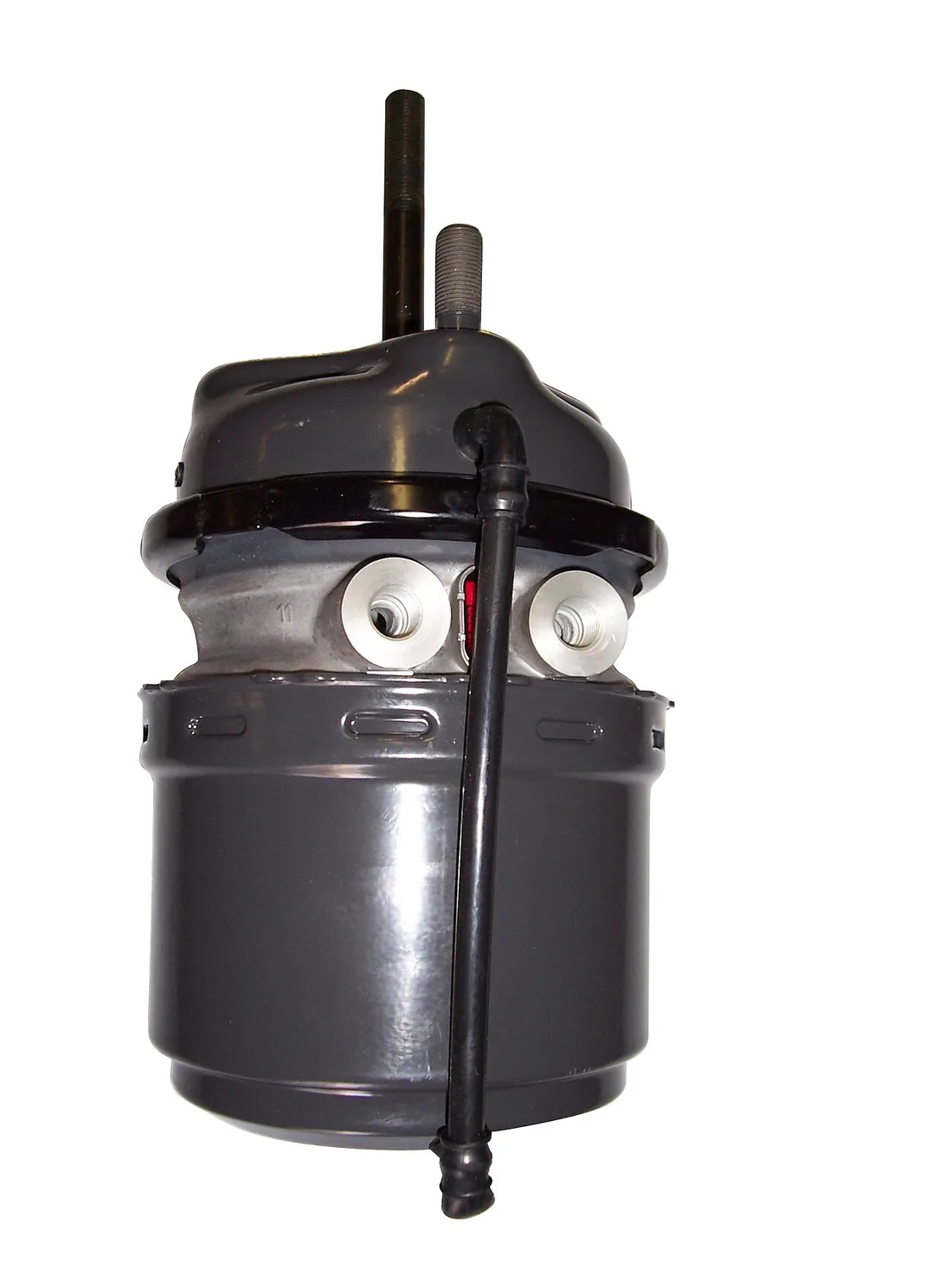
This is the clever part, and it's the opposite of what most people expect. A bus's parking brake — the "spring brake" — is held off by air pressure. Big, powerful springs want to clamp the brakes on; the only thing holding them back is the air in the system.
That makes the whole thing fail-safe. If pressure drops too far — a burst line, a big leak — there's no longer enough air to hold the springs back, and they slam the brakes on by themselves. Per commercial-driver air-brake guidance, the spring brakes come on automatically when system pressure falls to somewhere around 20–45 psi. A bus that has lost its air doesn't roll away; it locks up and stops.
The flip side is the bit drivers feel every day: a bus with empty tanks cannot move at all, because there isn't enough air to release the spring brake. You have to build pressure first. That loud release when a bus finally pulls away is the spring brake letting go.
Air does more than brake: kneeling, doors and suspension
Once a bus is carrying all that compressed air, engineers use it for more than stopping. On a modern low-floor city bus, the same air system:
- runs the air suspension, and lets the bus kneel — dropping the doorway toward the kerb for easier boarding (part of the low-floor accessibility story);
- opens and closes the doors, which is why the doors hiss as they cycle;
- and on many buses, releases the parking brake.
So the soundtrack of a city bus — the kneel, the doors, the brakes — is really one air system doing several jobs. That's a lot of hissing from a single tank of compressed air.
Why heavy vehicles use air, not hydraulics
Air brakes cost more and are more complex, so why bother? Three big reasons. First, force: compressed air can generate the huge clamping pressure a 15-tonne bus needs, without the driver having to push impossibly hard. Second, fail-safe: as we just saw, a leak makes the brakes come on, not fail — the opposite of a hydraulic system, where a leak means no brakes. Third, connections: air lines are easy to couple and uncouple, which matters for buses that tow, and the supply is simply the air around us.
What it feels like in the simulator
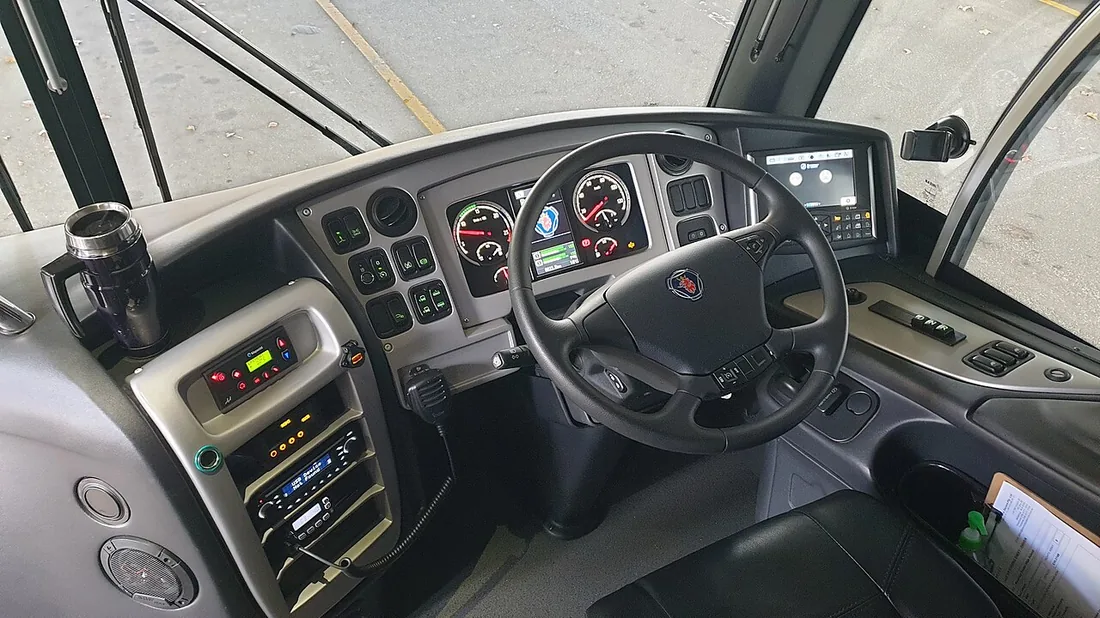
Here's where the hiss stops being background noise and becomes part of the driving. In a detailed bus simulator you don't just turn a key and go — you charge the air system first. Start the engine, watch the pressure climb on the gauge, and only when it's high enough does the spring brake release and let you move.
Let the pressure run low — too many brake applications, or an idle with the compressor off — and a low-pressure alarm sounds. Ignore it and the spring brake applies itself and locks the bus where it stands, exactly like the real fail-safe. Suddenly that pshhh at every stop isn't a sound effect; it's a resource you're spending and refilling, and managing it well is part of driving the bus properly.
You feel the difference most on the big machines: a long-distance coach or a full-size city bus leans on its air the whole trip. Take a heavy bus like a Scania through a busy route and pay attention to the gauge — you'll never hear that hiss the same way again.
FAQ
Why do buses hiss when they stop?
What is that "tsss" noise a bus makes?
What is a spring brake on a bus?
Why can't a bus move until it "builds air"?
Sources
- Georgia Department of Driver Services — CDL Handbook, Air Brakes — the official commercial-driver explanation of air-brake operation, the compressor and reservoirs, and spring (parking) brakes.
- School Bus Fleet — "The ABCs of Air Brakes for School Bus Drivers" — how springs held off by air apply the brakes when pressure is lost, and the roughly 20–45 psi spring-brake range.
- SlashGear — "Why Do Trucks Use Air Brakes And How Do They Work?" — the ~100–120 psi operating range and why heavy vehicles use air rather than hydraulic brakes.
Hero & illustrations via Wikimedia Commons: hero (Scania coach dashboard) by ZidaneHartono, CC BY-SA 4.0; coaches at Golders Green by Martin Addison, CC BY-SA 2.0; spring-brake air chamber by Panoha, CC BY-SA 3.0; Marcopolo Audace coach by MB-one, CC BY-SA 4.0.