Why Buses Have No Clutch Pedal — and What the Retarder Does
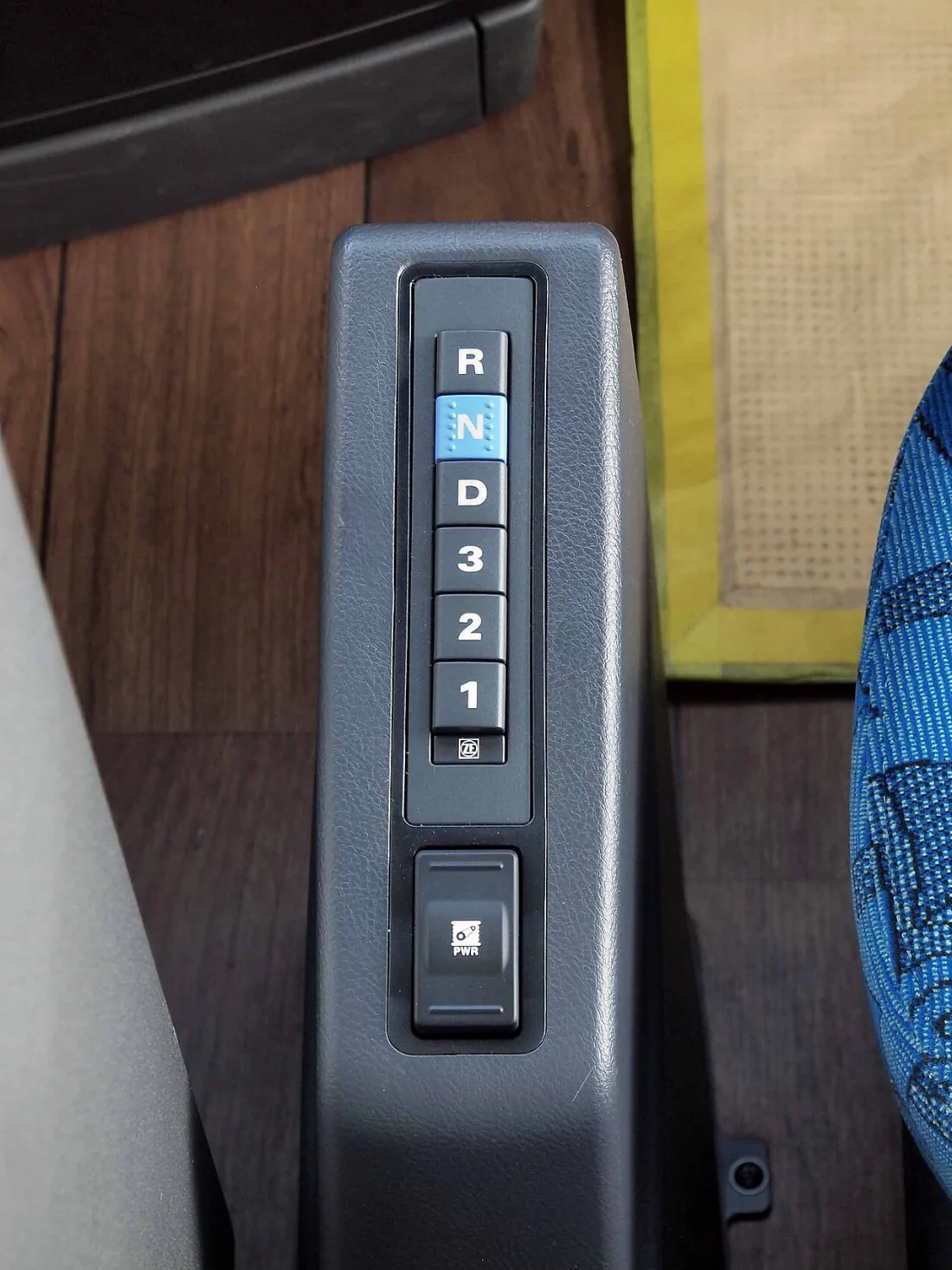
Climb into the cab of a modern city bus and count the pedals. There are two. A car that weighs a tenth as much gives you three, but the bus — fifteen tonnes of it, with a driver who will pull away from a stop several hundred times a shift — has no clutch pedal at all.
That is not a shortcut, and it is not because bus drivers have it easy. The clutch did not vanish; it moved. It is inside the gearbox now, and understanding where it went explains three things you feel every time you drive a bus in a simulator: why the bus creeps forward on its own, why you never stall it, and what that extra lever behind the steering wheel is for.
The short answer: the gearbox does the clutching for you
A clutch has one job. It disconnects the engine from the gearbox so you can change gear or come to a stop without stalling. A manual car makes you do that with your left foot. A bus does it automatically, inside the transmission, using fluid instead of a friction plate.
So the pedal is gone, but the function is not. What replaced it is a torque converter — and that single component is the reason a bus behaves the way it does at every stop.
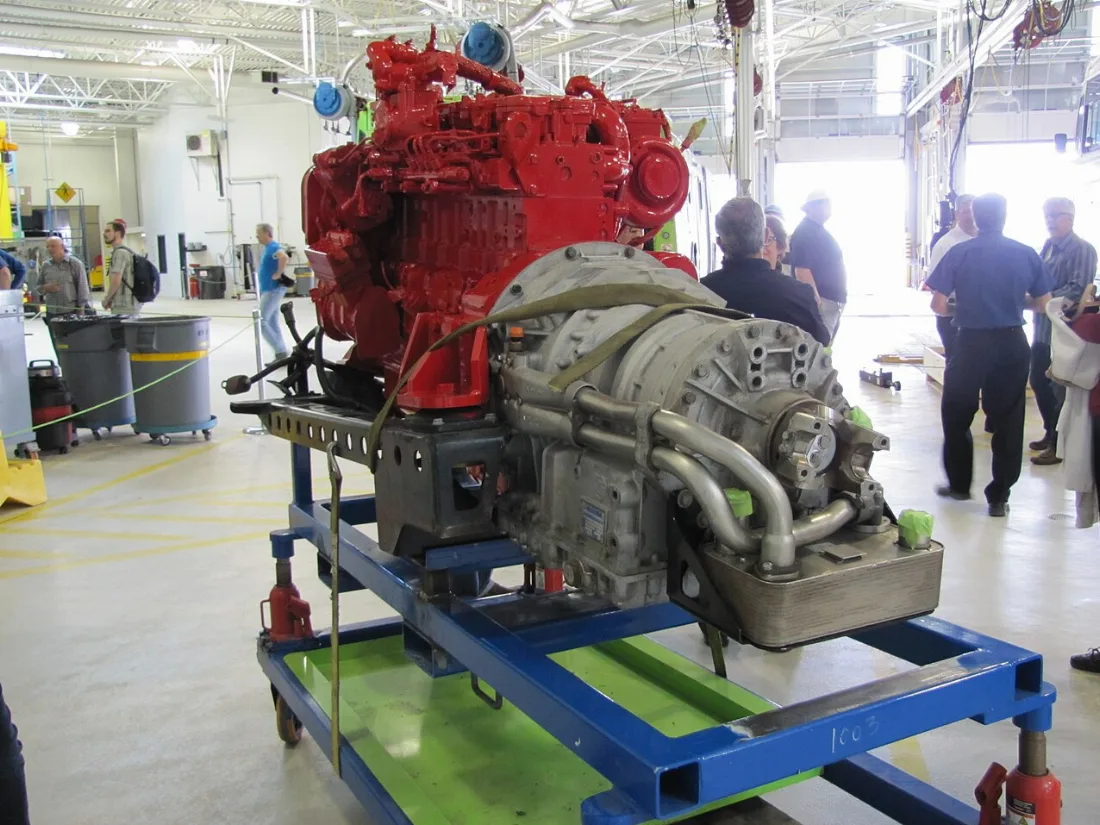
Why a clutch pedal does not scale to fifteen tonnes
The problem is not that a clutch cannot be built big enough. It is what the job would do to the driver and to the parts.
- The workload. A city route is a loop of stops. A driver on a busy urban service pulls away and stops again constantly for hours. Every one of those would be a clutch press.
- The wear. Slipping a friction clutch to move a heavy vehicle from rest generates heat. Do it hundreds of times a day and the clutch becomes a consumable part with a short, expensive life.
- The passengers. A manual gearchange in a full bus is a jolt. People are standing. Smoothness is a safety feature, not a luxury.
An automatic solves all three at once. That is why the automatic became the default for buses long before it did for cars.
Torque converter or AMT: the two ways a bus shifts
Not every clutchless bus works the same way, and the difference is worth knowing because it changes how the bus feels.
A torque-converter automatic uses fluid to transmit drive. There is no friction clutch engaging and disengaging at all in normal driving. An automated manual (AMT) is a conventional manual gearbox with a real clutch, except a computer and an actuator work the clutch instead of your foot. It still has a clutch — you just do not operate it.
| Type | Clutch pedal | How it starts from rest | Typical feel |
|---|---|---|---|
| Manual | Yes | Driver slips the clutch | Full control, high workload, stallable |
| Torque-converter automatic | No | Fluid coupling takes up the drive | Smooth, creeps forward, cannot stall |
| Automated manual (AMT) | No | Actuator works a real clutch | A pause between gears, no creep |
The Voith DIWA and its differential converter
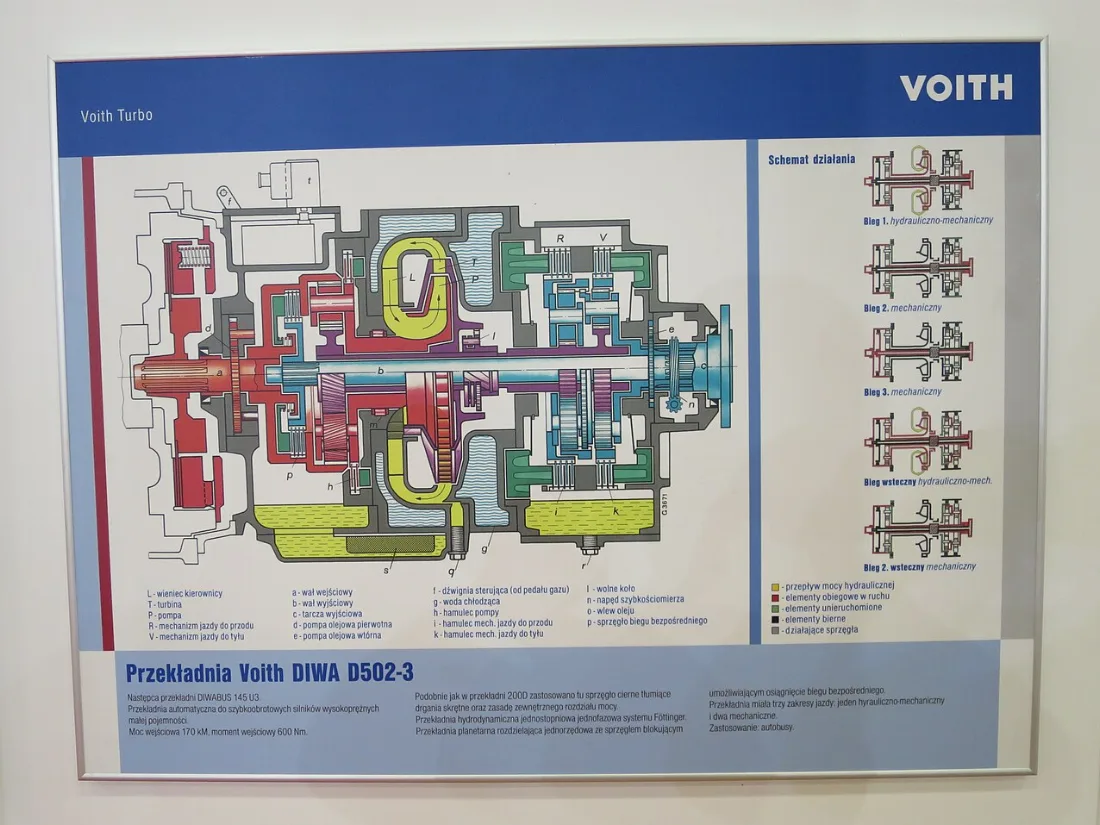
Voith's bus transmission is called DIWA, and the name is the engineering. It is short for Differenzialwandler — German for differential converter. Voith describes the principle plainly: the differential torque converter "splits the engine power between hydraulic and mechanical power branches". Part of the drive goes through the fluid, part goes through gears, and the split changes as the bus gathers speed.
This is not a recent idea. The first DIWA was shown at the IAA in Frankfurt in 1953, which makes the clutchless bus older than most of the people driving one. The latest version has seven gears and a separate secondary retarder — a distinction that matters, and we will come back to it.
The ZF EcoLife and the six-speed standard
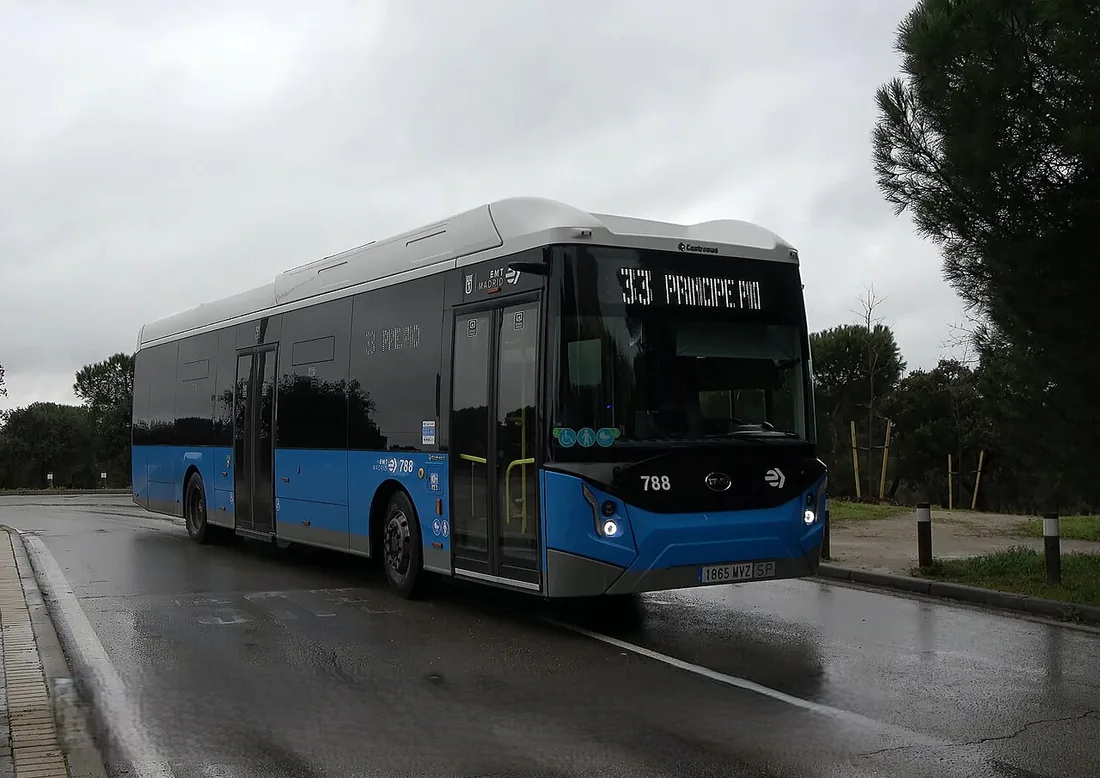
ZF's equivalent is the EcoLife, described by ZF as "the second generation of its proven six-speed automatic transmission". Its converter is a hydrodynamic unit with a torsional damper as standard, which ZF says lets the transmission take high input torque at relatively low engine speeds.
That last detail is why a modern bus can feel unhurried and still pull hard. It is not revving to make progress. It is using torque low down, exactly where a diesel makes it.
The creep: why a bus pulls away uphill without rolling back
Here is the part you feel before you understand it. Sit a torque-converter bus on a slope, release the brake, and it does not roll backwards — it eases forward on its own, with your foot nowhere near the accelerator.
That is the fluid coupling doing its work. The engine is turning one half of the converter, the fluid is dragging the other half with it, and the result is a gentle, constant push at idle. Drivers call it creep. In a simulator it is the difference between a hill start being a non-event and being a problem to manage: you come off the brake and the bus simply goes, where a manual vehicle would need clutch and throttle balanced against gravity.
An AMT does not do this. It has a real clutch, and at rest that clutch is open, so there is no creep and a steeper hill start needs more thought. If a bus in a sim rolls back at you on a gradient, that behaviour is a clue about what gearbox the mod is modelling.
The retarder: the brake that is not a brake
Now the extra control. Many buses have a lever on the steering column, or a switch on the dash, that slows the bus without touching the service brakes. That is the retarder, and on most buses it lives inside or alongside the same transmission.
It works on fluid too. Allison describes its Integral Retarder as a unit that "uses the vehicle's transmission fluid to create resistance and absorbs the energy through the drive shaft, delivering braking power to the wheels". That resistance becomes heat, which the cooling system carries away. Crucially, Allison notes there is "no mechanical friction or wear" in the process — nothing is rubbing against anything, so nothing is being consumed.
ZF builds the same idea into the EcoLife as what it calls an "innovative, integrated primary retarder", and states the point of it directly: it is "effectively reducing the strain on the vehicle's service brakes".
How the driver actually uses it
There is no single standard control, and it is worth saying so, because sim mods vary. Allison lists the options as "a switch on the dash, a hand lever, a separate foot pedal, or automatically when the accelerator is released or the brake pedal is pressed". Where a stalk is fitted, it usually has several steps so the driver can dial in more or less braking rather than getting all of it at once.
One distinction to keep straight: the transmission retarders above are hydraulic. There are also electromagnetic retarders, which brake using magnets rather than fluid and draw meaningful electrical current while doing it. They are a different device with different limits, so advice written for one does not automatically apply to the other.
Why the retarder exists: brake fade on a long descent
The retarder is not a convenience. It exists because service brakes have a failure mode that gets worse the longer you lean on them.
California's official commercial driver handbook describes it without euphemism: "Brake fade results from excessive heat causing chemical changes in the brake lining, which reduce friction, and cause expansion of the brake drums." As those drums grow, "the brake shoes and linings have to move farther to contact the drums, and the force of this contact is reduced." You press the same pedal and get less back.
The cause is stated just as bluntly: "Excessive use of the service brakes results in overheating and leads to brake fade." And the handbook is explicit that the friction brakes are not supposed to be doing the work on a long hill at all — "the use of brakes on a long and/or steep downgrade is only a supplement to the braking effect of the engine."
On a long descent the service brake is the backup. The engine and the retarder are the plan.
That is the whole argument for the retarder in one line. It absorbs the descent so the friction brakes stay cool and stay available for the moment you actually need them.
A historical detour: when drivers pre-selected their gears
Before the fluid automatic settled the question, there was a stranger solution. The pre-selector gearbox let the driver choose the next gear ahead of time with a small lever, then engage it later with a pedal. You decided first and committed second — the opposite rhythm to a normal manual, where the two happen together.
It was a genuine step toward taking the workload off the driver, and it turns up on classic buses that sim communities love to recreate. If a vintage bus mod has a control layout that makes no sense to you, this is often why.
What all of this changes in the simulator
Put the pieces together and the drivetrain stops being background detail.
- You cannot stall it, so smoothness is the only skill left. Without a clutch to fumble, the driving challenge moves to reading the road far enough ahead to keep the bus level for standing passengers.
- Creep is a tool. On a gradient, let the converter hold the bus and ease on. Fighting it with the throttle is how you get a lurch and a cabin full of complaints.
- Treat the retarder as a resource with a budget. Reach for it early on a descent, not after the speed has already built. Get that wrong and you spend the whole hill on the friction brakes, which is precisely the sequence the handbook above warns about.
It also joins up with the other system doing invisible work underneath you. The stopping, the kneeling and the doors all run on compressed air, which we covered in why buses hiss — the retarder is the part that keeps you from needing that air so often. And the balance between the two shifts with the machine: a city bus stops constantly at low speed, while a coach carries long, fast momentum downhill, which is the divide we drew in coach versus city bus.
Drive something heavy and feel it
All of this is easier to understand with your hands on it than on a page. Take a full-size bus through a route with real gradients and pay attention to three moments: the pull away from rest with no clutch, the creep when you release the brake on a slope, and the descent where you choose between the retarder and the pedal. Our Scania bus mods are a good place to start, because heavy machines make every one of those moments obvious.
FAQ
Why do buses not have a clutch pedal?
What is a retarder on a bus?
Why do drivers use the retarder instead of the brakes downhill?
Do all buses have automatic gearboxes?
Sources
- ZF — "ZF Presents EcoLife CoachLine Transmission System" — the six-speed automatic, the hydrodynamic torque converter with torsional damper, and the integrated primary retarder that reduces strain on the service brakes.
- Voith — "DIWA transmission technology for buses" — DIWA as Differenzialwandler, the differential converter splitting engine power between hydraulic and mechanical branches, the 1953 IAA debut, and the seven-speed variant with a separate secondary retarder.
- Allison Transmission — Integral Retarder — how the retarder uses transmission fluid to create resistance, the absence of mechanical friction or wear, and the range of driver controls.
- California DMV — Commercial Driver Handbook, Section 5: Air Brakes — the official definition of brake fade, its causes, and the rule that service brakes are only a supplement to engine braking on a long downgrade.
- Background: Preselector gearbox — Wikipedia — general background on the pre-selection principle described in the historical section.
Hero: ZF EcoLife shift selector in a Hyundai Universe by Comyu, CC BY-SA 4.0. Figures: Cummins ISL with ZF EcoLife by Bouchecl, CC BY-SA 4.0; Voith DIWA D502-3 by Travelarz, CC BY-SA 3.0 PL. All via Wikimedia Commons.