The History of Bus Simulator Games: From Pixels to OMSI to Proton Bus
Most game genres are built on speed. Bus simulators are built on the opposite: stopping on time, pulling away smoothly, and not spilling the standing passengers. It sounds like the least exciting premise in gaming — and yet driving a city bus to a timetable has grown into a worldwide genre with some of the largest, most devoted modding communities anywhere in simulation.
The story runs from clumsy early route-drivers to a cult German simulator that modelled a bus down to its onboard ticket computer, through a glossy console series, and finally onto the phone in your pocket. At each step the bar for immersion crept higher — and the community building add-ons grew with it. Here is how the bus simulator became what it is today.
Where it started: timetables, not trophies
The genre's modern roots are usually traced to Bus Driver, released for Windows on 22 March 2007 by SCS Software — the Czech studio that would later become famous for Euro Truck Simulator. It was deliberately not a racing game. As the design made plain, the player "must be driven along the correct route whilst obeying all traffic rules and stopping at all bus stops," against a timetable, losing points for braking too hard, upsetting passengers, or leaving a stop too early.
That single idea — that the discipline of the job is the fun — is the seed of everything that followed. Bus Driver and its contemporaries in the late 2000s (the European and city-bus titles that filled budget shelves of the era) were still arcade at heart: you drove, you scored, you moved on. There were no air brakes to charge, no doors to cycle, no ticket to sell. But they proved a small, stubborn audience wanted to play the route, not beat it.
OMSI and the depth revolution
Everything changed in 2011. OMSI — The Omnibus Simulator, developed by the small German team M-R Software and published by Aerosoft, arrived first on DVD, followed by the far more widely played OMSI 2 on 11 December 2013. OMSI did not try to be fun in the arcade sense at all. It tried to be a bus.
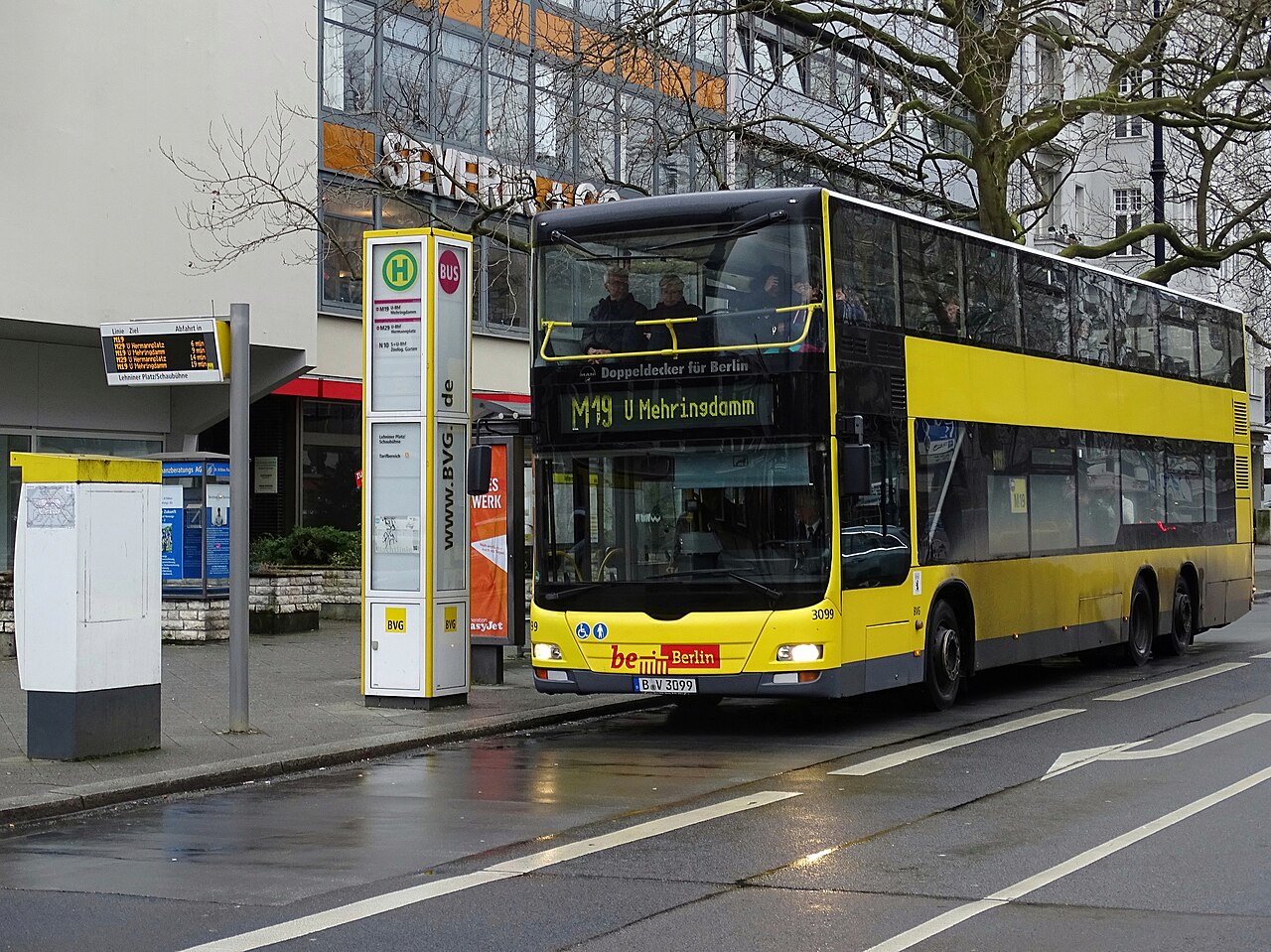
Its default world is a meticulous recreation of Berlin-Spandau, where you mainly drive line 92 — and the map carries a chronology running from 1986 to 1994, so you can watch the routes change across the fall of the Berlin Wall. Underneath, OMSI 2 modelled the things no game had bothered with: a "fully functional IBIS" (the integrated onboard information system real Berlin drivers used), a "system damage model including different malfunctions which take time to fix," realistic weather, day-and-night cycles, and an articulated bus with an "exact physical and visual recreation of the joint kinematics." A built-in script engine let modders "influence the handling characteristics and functions of the bus," and a map editor let them build entire cities.
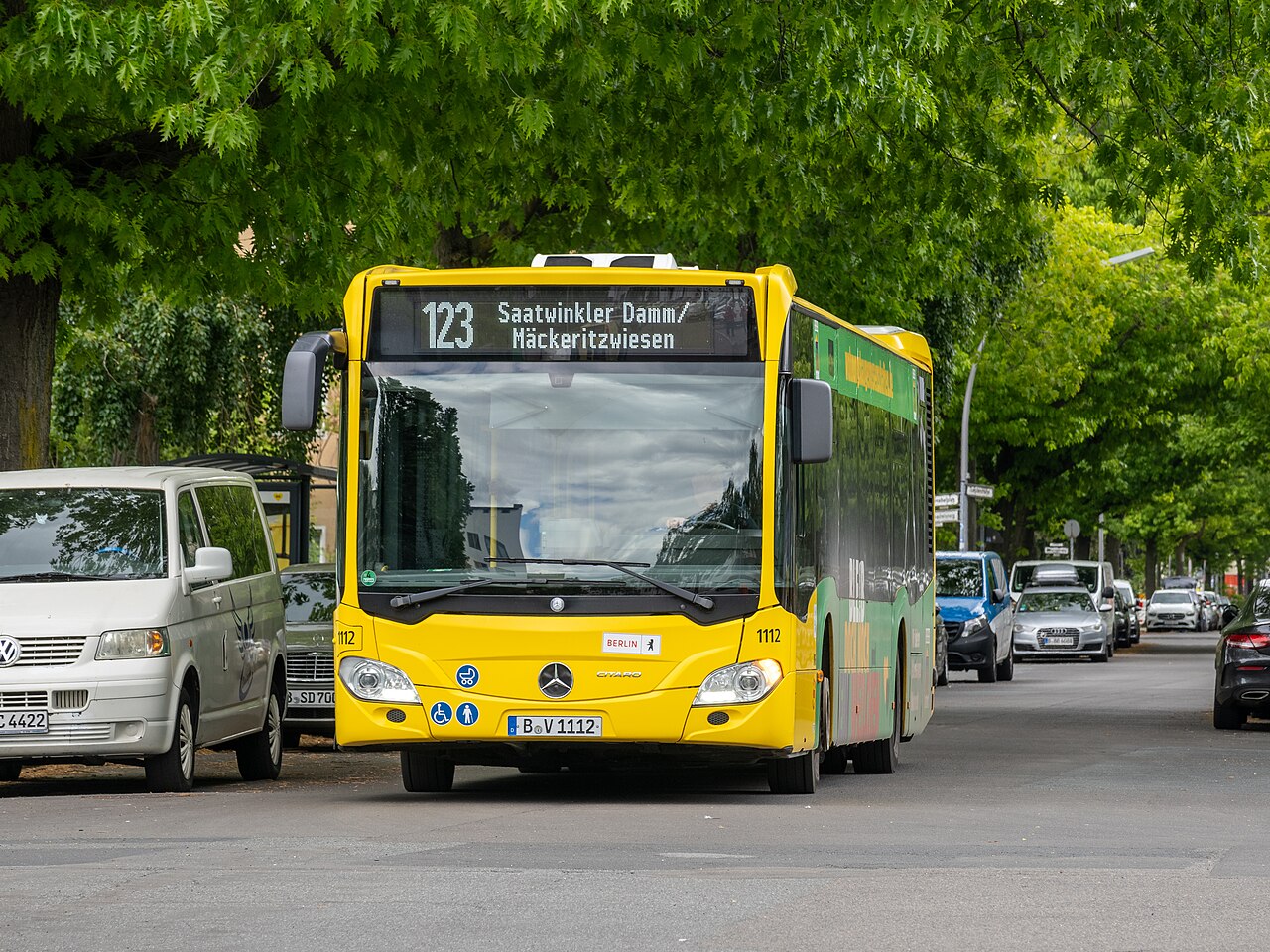
This is the moment the immersion bar jumped. In OMSI you don't just drive: you charge the air system, watch the IBIS roll to the next stop, sell tickets, open and close the doors in sequence, and feel a 12-metre vehicle that genuinely refuses to stop on a dime. That "purposeful slowness" is precisely what hooked people — and the modding scene it created kept a technically ageing engine alive for well over a decade. The bus most associated with that era, the Mercedes-Benz Citaro, is still the archetypal European city bus today; you can drive a first-generation Citaro O530 in Proton Bus Simulator and feel the same lineage.
Going mainstream: the Bus Simulator console era
If OMSI was the connoisseur's simulator, the Bus Simulator series — published by Astragon and, from Bus Simulator 18 (13 June 2018) onward, developed by stillalive studios — was the genre going mainstream. Bus Simulator 21 followed on 7 September 2021, this time reaching PlayStation and Xbox as well as PC, with online multiplayer and a company-management layer where you run a bus operator, not just a route.
Its biggest pull was officially licensed metal. Bus Simulator 21 shipped with 10 real-world brands — Mercedes-Benz, MAN, Scania, Setra, Volvo, IVECO BUS, Alexander Dennis, BYD, Blue Bird and Grande West — across 30 licensed models, including debut double-deckers, articulated buses and electric buses. That polish and brand authenticity is what draws the casual player in.
It also drew the genre's defining tension into the open: console polish versus modding depth. The Astragon series delivers a beautiful, ready-made experience with licensed buses and living cities; the OMSI school delivers a rougher world that the community can rebuild from the ground up. Most casual players arrive for the spectacle. The veterans stay for the open platform — which is exactly where the next chapter comes in.
Proton Bus Simulator: the genre goes mobile
The biggest shift of all wasn't a new feature — it was a new device. Proton Bus Simulator, created by the Brazilian developer known as MEP and built in the Unity engine, launched in 2017 and brought serious bus-simulation fidelity to phones, running on both Android and PC. It proved something the PC sims never had to: that you don't need a high-end rig to play a proper bus simulator.
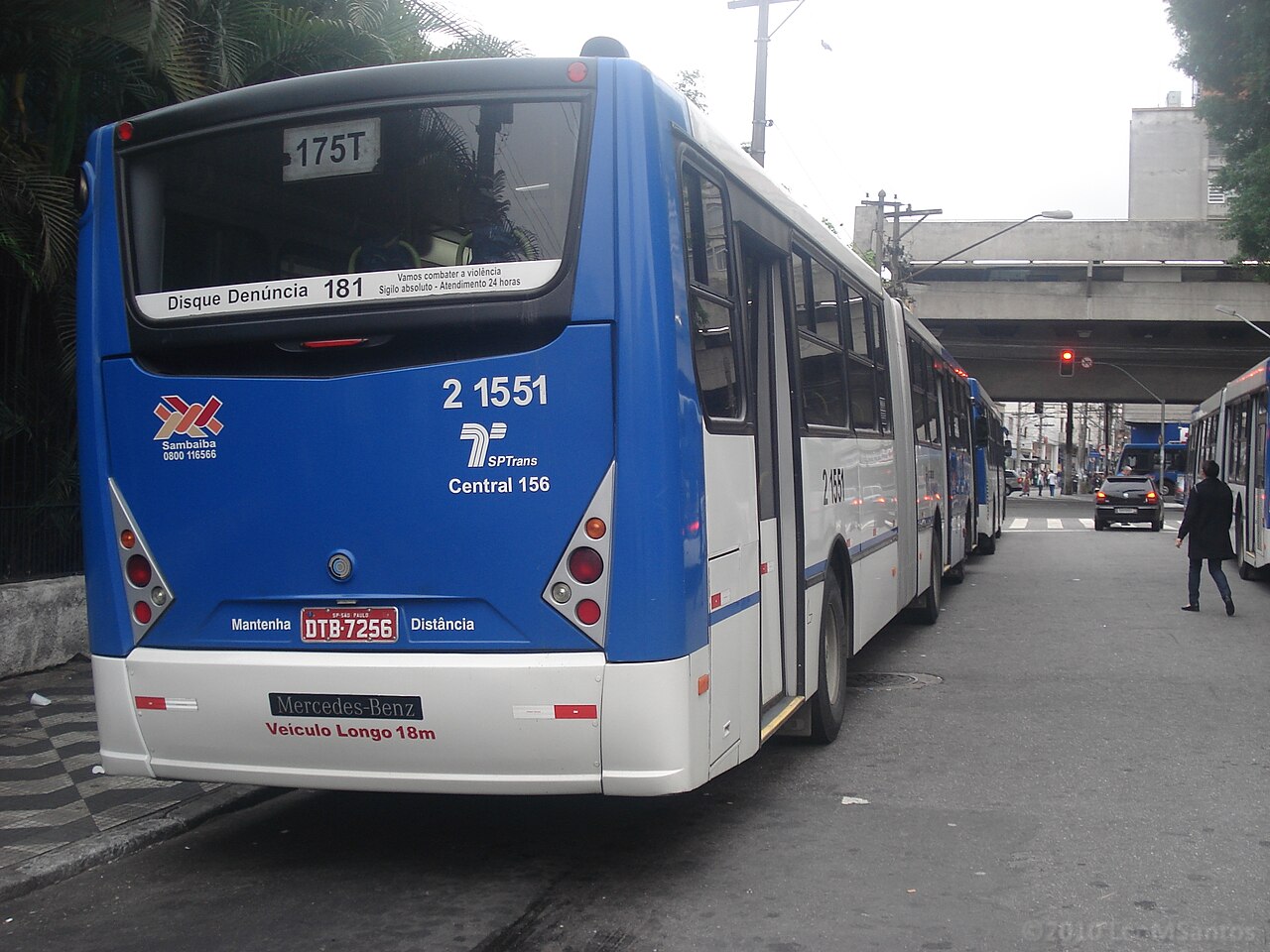
Its masterstroke was full modding support on mobile — still a rare thing in phone gaming. The community took it and ran: hundreds of buses, maps and skins, with the modding system supporting animated doors, wipers, rain, windows and more. Where a console sim gives you a fixed, licensed fleet, Proton Bus hands you an open platform and an endless library of community vehicles — which is the whole reason this site exists.
To be clear about that: every mod in the Proton Bus Mods catalogue is made for Proton Bus Simulator, not for OMSI or the Astragon series. If you play PBS, you can browse the full catalogue and drop in a new bus, map or skin in minutes — including European icons like the Mercedes-Benz lineup and home-grown Brazilian buses that gave the game its roots.
Why bus sims have the biggest mod scenes
Step back and the through-line is obvious. No other simulation subject has bus simulation's combination of three things: near-infinite real-world variety (every city on earth has its own fleet and livery), deep personal attachment (the bus you rode as a kid is a real, specific model), and engines built as open platforms rather than closed products. Put those together and players stop being just players — they become creators, recreating the exact line they ride every day.
The genre's deepest pleasure isn't driving a bus. It's driving your bus — your city's route, in your operator's colours.
That is why a fifteen-year-old German simulator still gets new maps, and why a mobile game from Brazil has one of the most active modding communities in the hobby. The simulator is only ever half the experience; the mod is the other half. From the German city buses that defined the OMSI era to the Brazilian articulated giants that gave Proton Bus its identity, the community keeps the wheels turning.