What Do Turkish Bus Names Mean? (Otokar Kent, BMC Procity & Temsa)
Scroll through the Turkish buses in the Proton Bus Simulator garage and the names look nothing like a Mercedes O500 or an Ikarus 280. There are no three-digit codes here. Instead you get Kent, Doruk, Procity, Safir, Maraton. So what do Turkish bus names actually mean? Mostly, they are ordinary Turkish words — and once you can read them, each one quietly tells you what the bus is for.
Turkey is one of Europe's biggest bus-building nations, and its makers name their buses in plain language rather than part numbers. A name tells you the job: a city bus, a mountain-climbing coach, a town hopper. Here's how to read Otokar, BMC, Temsa and Karsan — and the one letter, K, that changes everything.
Otokar: names that mean "city" and "peak"
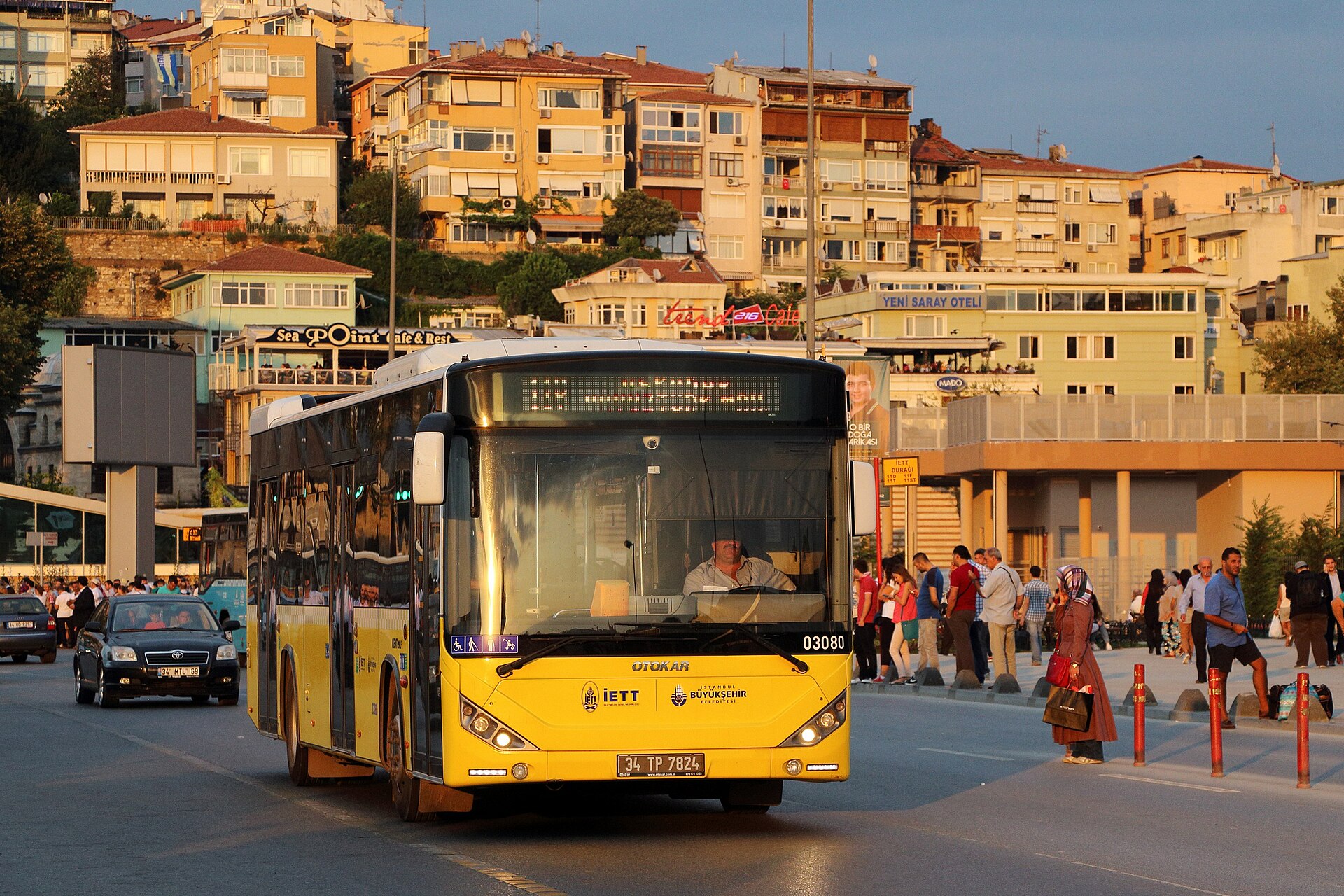
Otokar, based at Sakarya, is the maker you'll meet first, because its city bus is everywhere in Istanbul. That bus is the Kent — and kent is simply Turkish for "city." The name is the job description: the Kent is Otokar's full-size low-floor city bus line, the yellow workhorse of İETT and İzmir's ESHOT. Our Otokar Kent 290LF mod is exactly that bus.
The rest of the Otokar range follows the same plain-word logic, sometimes with a different name for export:
- Doruk — Turkish for "peak" or "summit"; a 9-metre rear-engined bus, sold abroad as the Vectio.
- Sultan — the midibus at home, badged Navigo in export markets.
- Territo — the 12 m and 13.26 m interurban dual-purpose coach, keeping one name in every market.
- Centro — the small urban microbus.
So an Otokar's name is half the spec sheet: "Kent" means city work, "Doruk/Vectio" a small rear-engined runabout, "Territo" the longer intercity job.
BMC: from British Motor Corporation to İzmir's Procity
BMC's name is a genuine piece of history. The company was founded in 1964 in partnership with Britain's British Motor Corporation, which held a 26% stake — that's where the three letters come from. BMC long ago became a fully Turkish manufacturer, building trucks and buses at İzmir, but the British initials stuck.
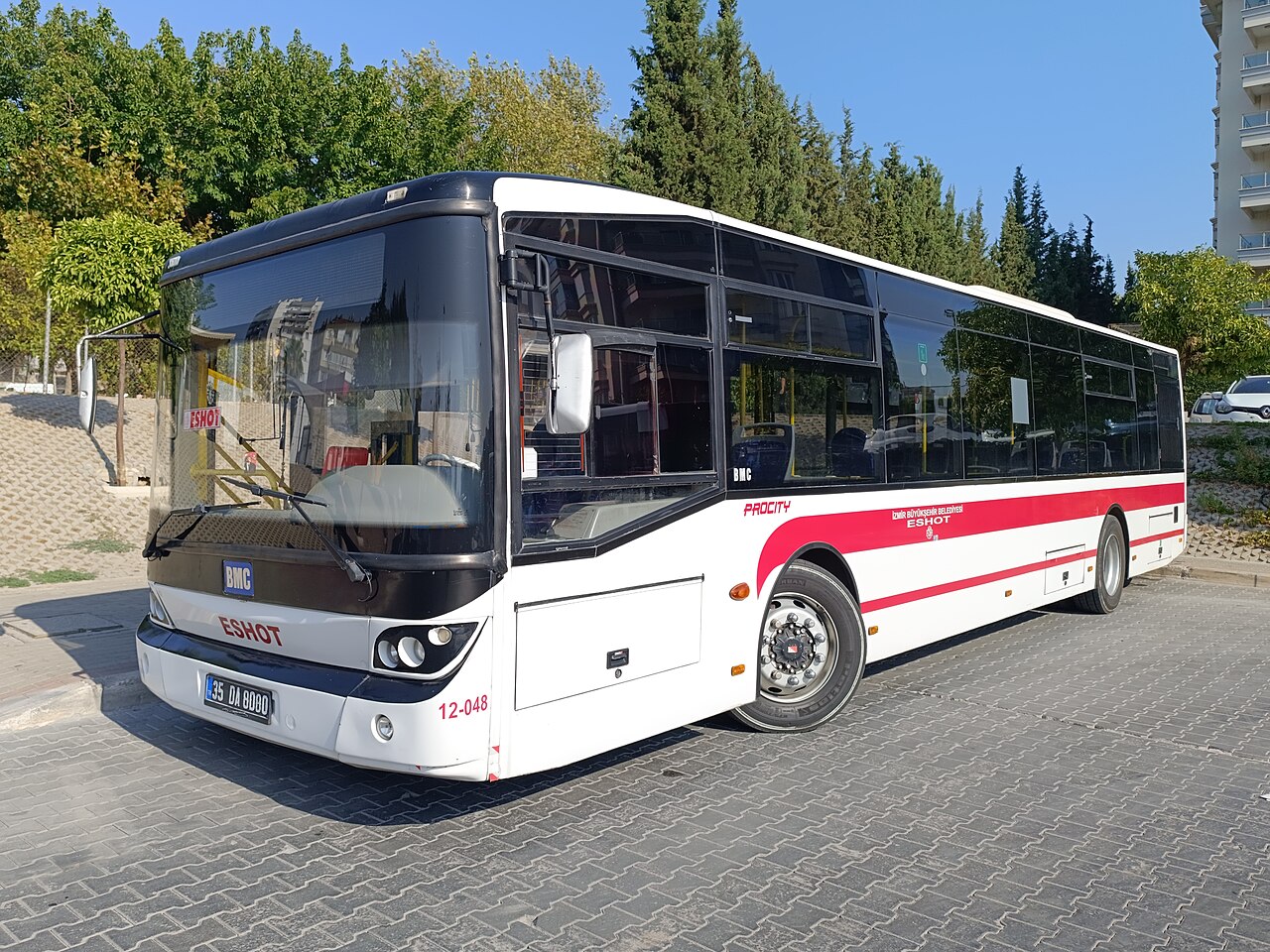
Its city buses carry Turkish names too. The Belde series — belde means "town" or "township" — was BMC's low-floor city bus from the 1990s. In 2008 the first new-generation model even launched as the "Belde 260-SLF" before being renamed; by 2016 it was the Procity ("pro" + "city"), the low-floor city bus BMC builds today with US-made Cummins engines, in 12 m, CNG and 18 m articulated forms. Our BMC Procity 12 LF mod is the diesel 12-metre, a community favourite alongside the Otokar Kent.
Temsa: the export coach giant (Maraton, Safir, Avenue)
Temsa is Turkey's coach-export champion, and its names lean into long-distance travel. The Maraton — "marathon" — is its long-haul coach, first launched back in 1987 and still in production generations later. The Safir ("sapphire") is the premium tourist coach. For the city, Temsa builds the Avenue, a low-floor urban bus aimed squarely at European commuter routes.
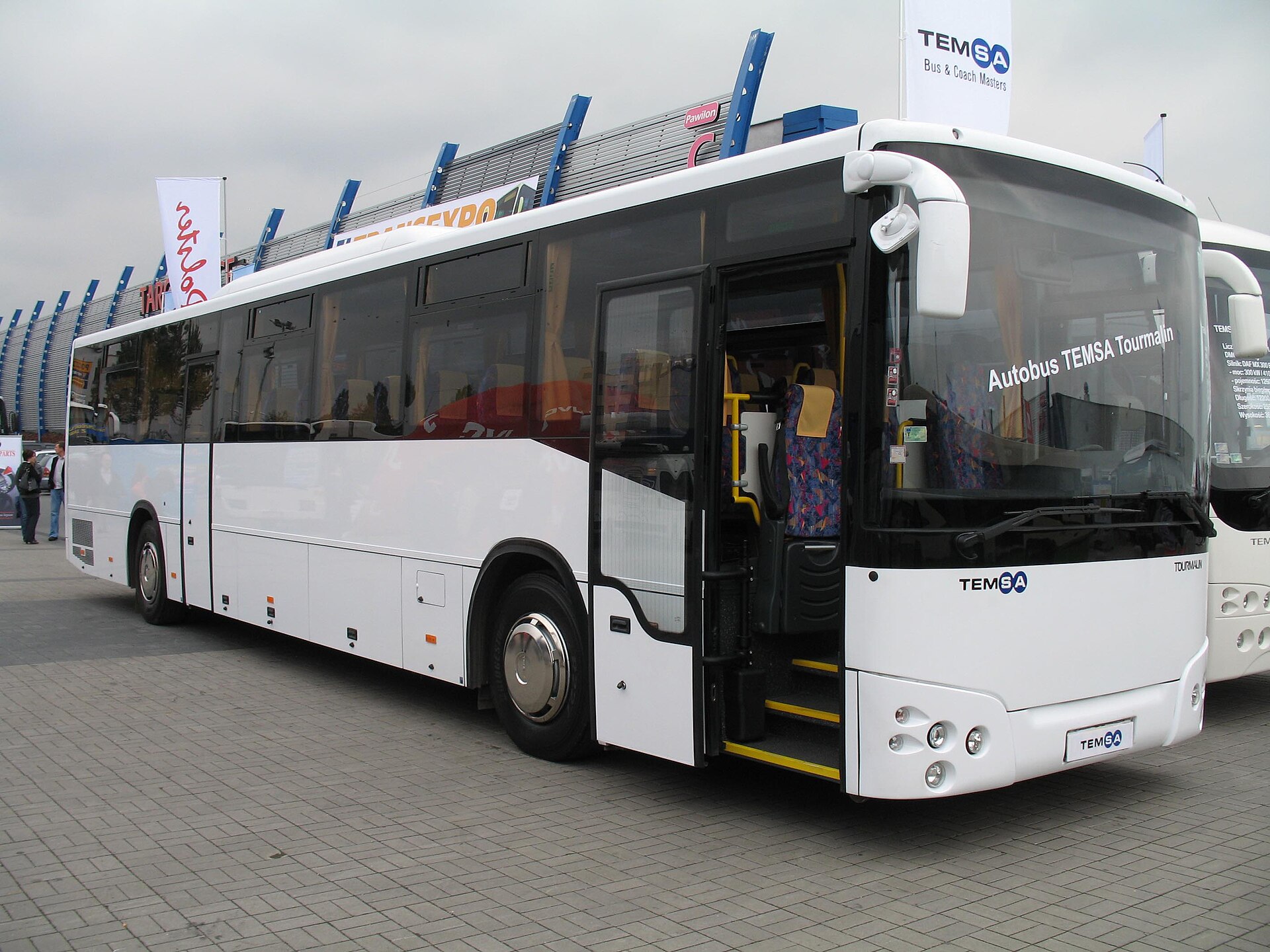
The pattern is the same as Otokar's: the name states the mission. A Maraton is built for the long road; a Safir for tourists; an Avenue for the morning commute. You can browse the wider Turkish fleet on the Turkish buses page.
Karsan and the rest of the family
The newest Turkish names belong to Karsan, the Bursa maker that has gone all-in on small electric buses. Its Atak (Turkish for "agile" or "dash") is an 8-metre midibus, and the Jest is a compact ~6-metre minibus — both sold in battery-electric e-Atak and e-Jest forms, with the e-Jest a runaway leader of Europe's electric-minibus market. Alongside them sit Karsan's bigger e-ATA family and Turkey's other names — Anadolu Isuzu's midis, the Mercedes-Benz buses built at the giant Hoşdere plant near Istanbul — all part of the same deep industry.
The one letter that matters: "K" for Körüklü
If you learn a single piece of Turkish bus vocabulary, make it this one. A K on a Turkish-market bus usually stands for Körüklü — "with bellows" — which is Turkish for an articulated bus. The bellows is the rubber concertina over the joint, so "Körüklü" literally describes the accordion in the middle.
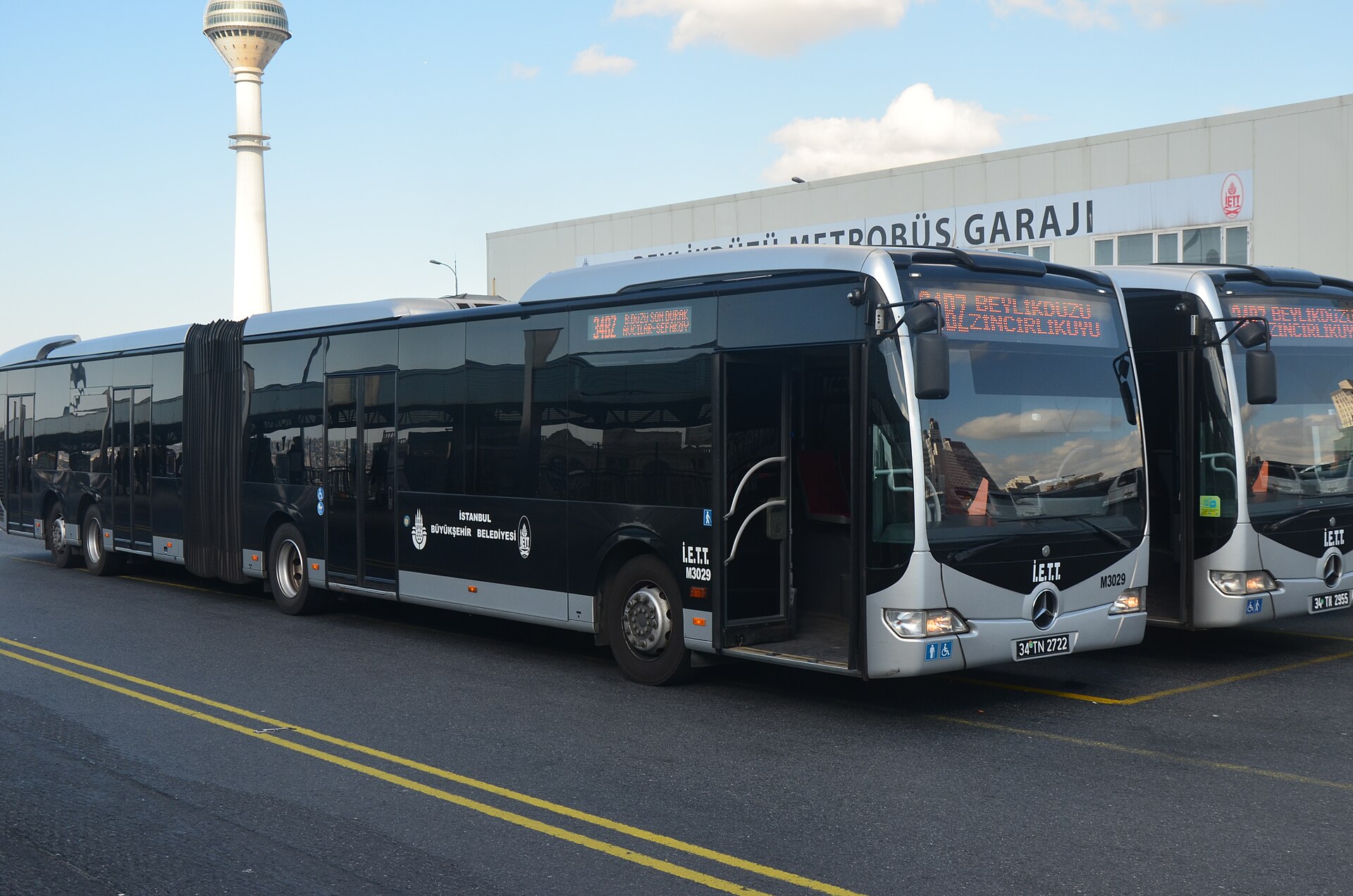
The clearest example is the Turkish-built Mercedes-Benz O345K Conecto G — that K is Körüklü, telling you straight away it's the bent, two-section version that filled Istanbul's articulated routes. Spot a K and you've spotted a bellows before the bus even arrives.
Why this matters when you drive a Turkish bus
Reading the name pays off the moment you take the wheel. An Otokar Kent LF is a low-floor city bus: it kneels at the kerb, loads a packed İETT stop fast through wide step-free doors, and sits planted in corners with its weight down low. A K articulated like the O345K is a different animal — high-floor, two sections, and a rear half that swings wide behind you on a tight turn. The name told you which job you were signing up for before you pressed the accelerator.
That is the quiet genius of the Turkish system: no decoder ring needed, just a little vocabulary. Next time you open the Turkish buses in the garage, read the badge first. And if you want the bigger picture of why this country is such a bus powerhouse, see our feature on why Turkey is a bus lover's country.
FAQ
What does "Otokar Kent" mean?
What does "K" or "Körüklü" mean on a Turkish bus?
Is BMC a British or a Turkish company?
What is a Temsa?
Sources
- Otokar — Wikipedia — the Kent low-floor city line, the Doruk/Vectio 9 m bus ("Doruk means peak in Turkish"), the Sultan/Navigo midibus, and the Territo interurban coach.
- BMC Procity — Wikipedia and BMC (Turkey) — Wikipedia — the 1964 founding with the British Motor Corporation's 26% stake, the Belde-to-Procity line, İzmir production, and the Cummins engines.
- TEMSA — Wikipedia — the Maraton (from 1987), Safir tourist coach, and Avenue city bus, plus Temsa's export focus.
Hero & illustrations: Otokar Kent İETT by Ilya Plekhanov; BMC Procity by ToprakM; Temsa coach by Lukas 3z; Mercedes CapaCity by CeeGee — CC BY / CC BY-SA 4.0, via Wikimedia Commons.