MAZ: Belarus's Bus Champion (103, 203 and the Low-Floor Generation)
Scroll past the Russian buses in the Proton Bus Simulator garage and you'll find their close cousins from next door: the buses of MAZ, the Minsk Automobile Plant in Belarus. They look more modern than a classic LiAZ — low floors, big windscreens, clean lines — but they share the same tough, built-for-bad-roads spirit. So what is a MAZ bus, and how do you read one?
The short version: MAZ is Belarus's answer to Russia's PAZ and LiAZ, and its buses are mostly a single, very legible family of low-floor city machines. Learn three numbers — 103, 203, 303 — and you've got the whole timeline.
Belarus's own bus champion
MAZ stands for the Minsk Automobile Plant, a state-run maker and one of the largest vehicle factories in Eastern Europe. It was founded right at the end of the Second World War, in August 1944, and its first product was the MAZ-200 truck in 1949. For decades MAZ was a truck giant; it only added modern city buses to the range in the mid-1990s. Today those buses run well beyond Belarus — in Russia, Ukraine, Poland, Serbia, Romania, Latvia and Estonia among others.
The low-floor city buses: 103 → 203 → 303
The heart of the MAZ bus range is a 12-metre low-floor city bus that has been renewed in three clear generations. Read the leading number as the era:
- MAZ-103 — the original, from the mid-1990s. A 12 m low-floor city bus (it also spawned a trolleybus, the 103T) that exported across the former Eastern Bloc.
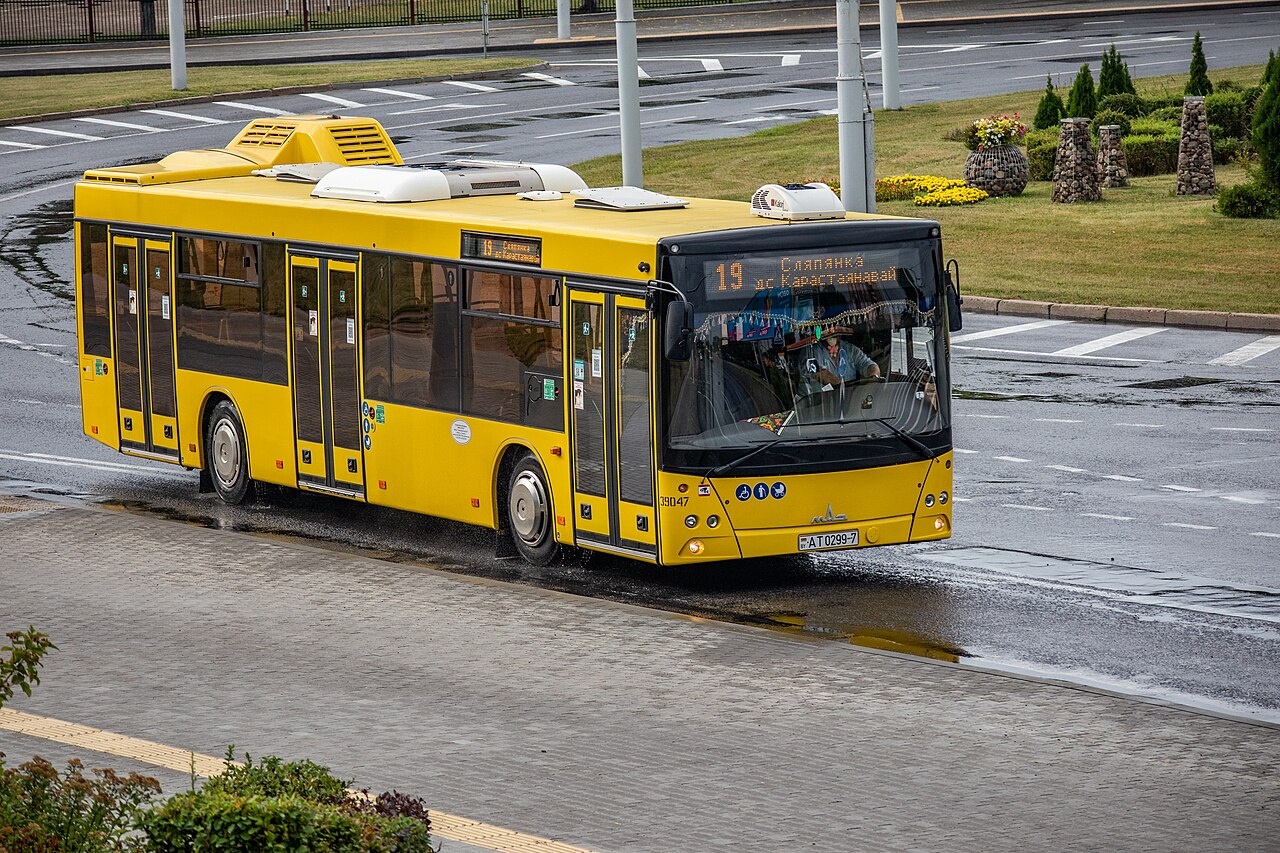
- MAZ-203 — the 2006 successor, a fully low-floor 12-metre bus offered in diesel, CNG and hybrid forms. This is the modern MAZ most players will recognise.
- MAZ-303 — the newest generation, around 12.4 m, which now includes a battery-electric version (the 303E10, built on the low-floor platform with a ZF central motor).
So the leading digit is a clock: a 1 is the 1990s original, a 2 the 2000s renewal, a 3 the current bus. It's the cleanest naming idea in the whole post.
Bending and stretching: the articulated and three-axle MAZ
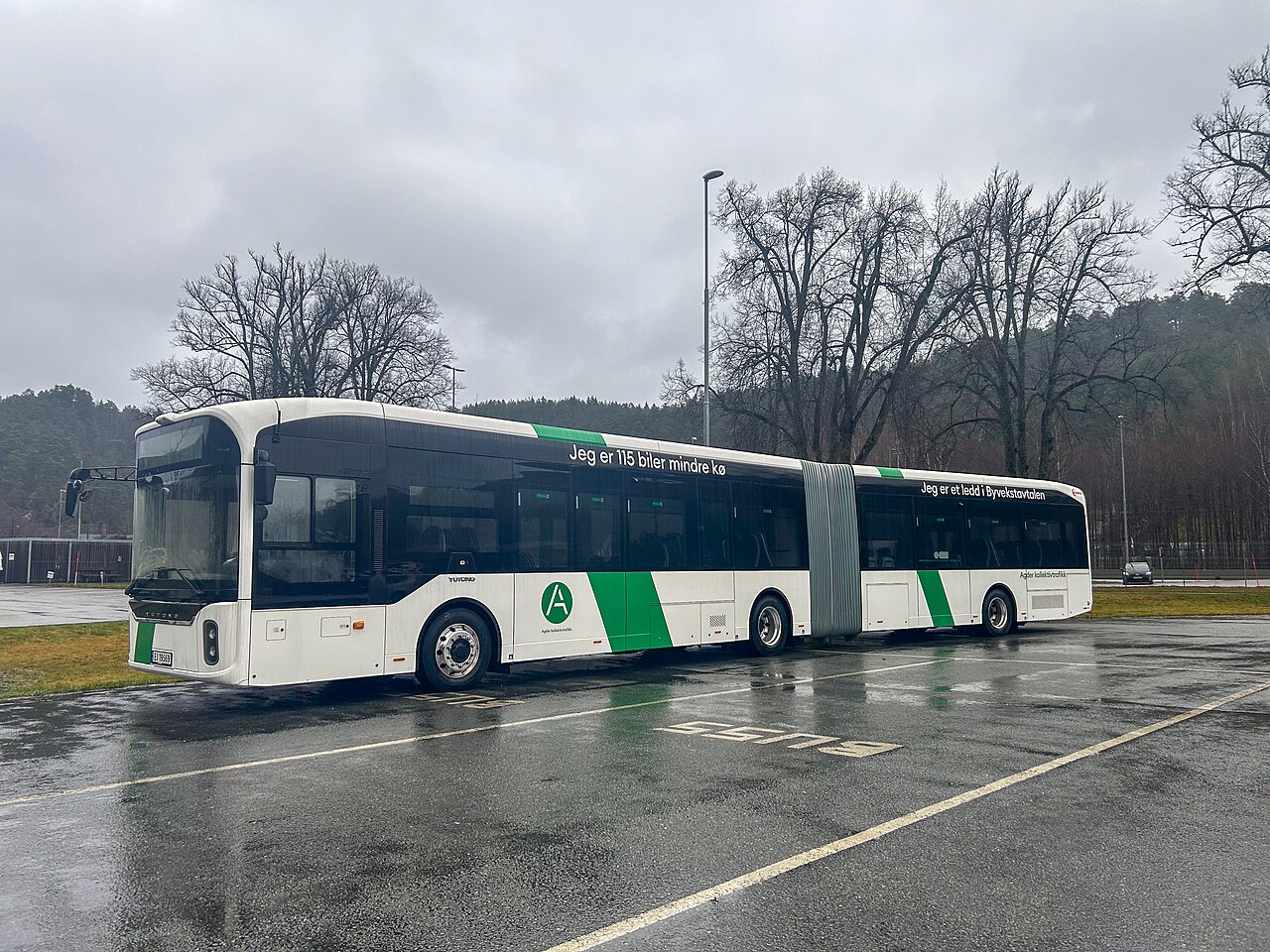
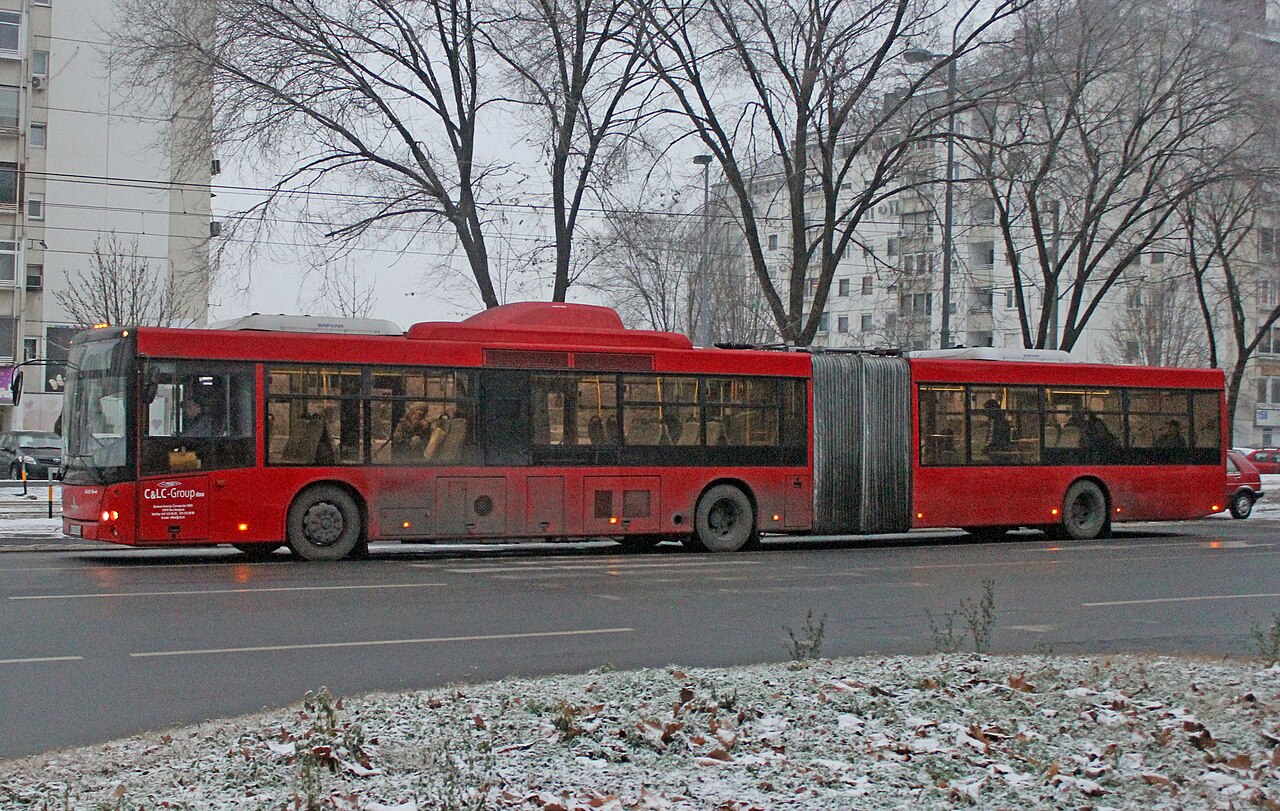
From that core city bus, MAZ branches out by length. Add a joint and you get the articulated family — the MAZ-105 (1997, based on the 103), and later the low-floor MAZ-205 and MAZ-215, the 215 developed in 2014 to move fans around Minsk for the ice-hockey world championship.
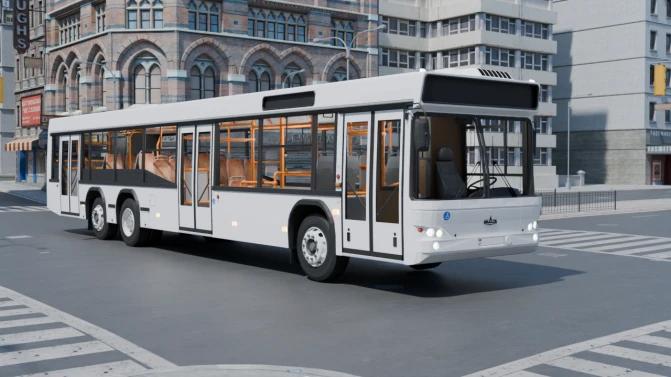
Stretch the rigid bus instead of bending it and you get the MAZ-107, a 15-metre three-axle low-floor bus from 2001 — a rare layout that won a "best low-floor three-axle bus" prize on its debut. It's the long, planted member of the family, and it's already in our garage.
The coaches: the touring side of MAZ
MAZ doesn't only build city buses. The MAZ-251 (from 2006) is a high-deck tourist coach, and the MAZ-241 is its shorter coach sibling — the long-distance end of the range, built for motorway hours rather than city stops. They are far rarer than the city buses, but they round the family out: city work in the 100/200/300 numbers, the road in the 200s coaches.
Why a MAZ feels different in the sim
Here's the fun part. A modern MAZ-203 is the opposite of the rugged old Soviet bus it shares a map with. Where a classic LiAZ-677 is high-floor, heavy and analogue, the MAZ is low-floor and planted: the engine sits low at the rear, so the bus feels stable through corners, and step-free doors load a packed stop quickly. Park a MAZ-203 next to a LiAZ or a little PAZ on the same post-Soviet route and you feel a whole generation of progress in the steering — same hard winters and rough roads, a far more modern machine.
That's the appeal of the Belarusian fleet: it fills the gap between the Soviet classics and Western Europe. Try it for yourself — browse the MAZ mods and drop one onto your CIS map.
FAQ
What is MAZ?
Is MAZ a Russian or a Belarusian company?
What's the difference between a MAZ-103 and a MAZ-203?
Sources
- Minsk Automobile Plant — Wikipedia — the 1944 founding, the MAZ-200 first truck (1949), the city-bus range, and MAZ buses' use across Belarus, Russia, Ukraine, Poland and the Balkans/Baltics.
- MAZ-215 — Wikipedia — the low-floor articulated MAZ, successor to the MAZ-205, developed in 2014 for the Minsk ice-hockey world championship.
- MAZ 303E10 — Sustainable Bus — the battery-electric MAZ-303 on the low-floor platform with a ZF central motor.
Hero & illustrations: MAZ-203 in Minsk by Homoatrox (CC BY-SA 3.0) and MAZ-215 by Srđan Popović (CC BY-SA 4.0), via Wikimedia Commons. The MAZ-107 in-sim render is our own, produced in Proton Bus Simulator.